
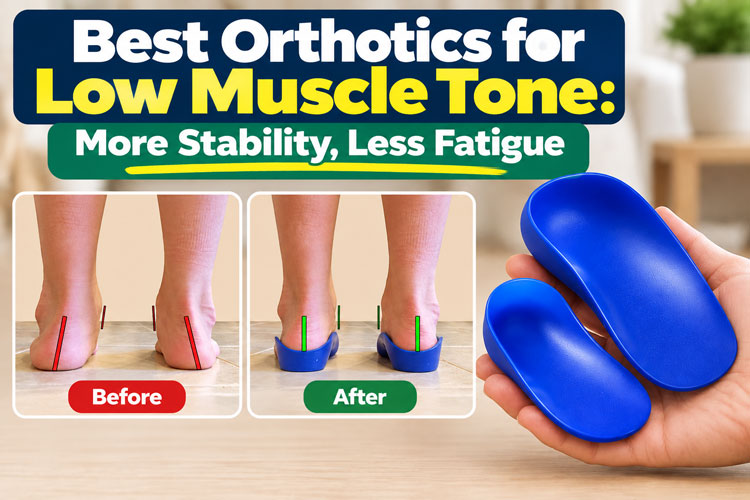
Best Orthotics for Low Muscle Tone: More Stability, Less Fatigue
Last updated: September 14, 2026 · Written by Juan Valenzuela, Certified Children’s Shoe Fitter
Has your child been diagnosed with low muscle tone (hypotonia), and a medical professional recommended fitting orthotics inside their shoes? Have you noticed your child’s feet aren’t in alignment, and it’s affecting their foot posture and walking gait? Early intervention with orthotics and supportive footwear can help address this by providing the support the feet and lower legs need during these critical developmental years.
Does Your Child Have Flat Feet?
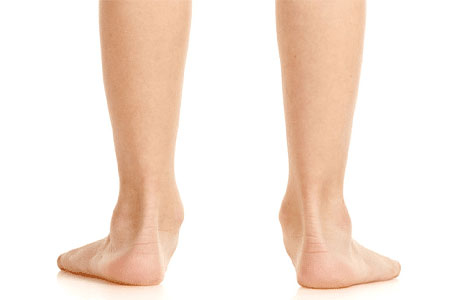
Most kids with low muscle tone fall into pronation. I’ve noticed that children with low muscle tone tend to have flat feet, and kids with flat feet tend to have poorer balance and coordination. Don’t worry too much if your child isn’t walking yet — kids with low tone often walk later, since their feet are in poor alignment and their toes curl under for stability, which tires the feet out faster.
The Role of Orthotics
For kids with low muscle tone, orthotics can help stabilize the gait, improve balance, and encourage proper foot development. By providing additional support, they also reduce the risk of injury and fatigue, helping kids participate more fully in physical activity.
What Makes a Good Orthotic for Low Muscle Tone?
There are plenty of orthotics on the market, which makes it genuinely hard for parents to know which one is right for their child. I’ve tested many of them, watching kids stand and walk in each, and there’s one specific orthotic that provides benefits comparable to custom orthotics at a far more affordable price.
Before and After
Most parents assume orthotics only support the arch. In reality, a good orthotic should mechanically support every part of the foot that contributes to it collapsing — including the heel, not just the arch.
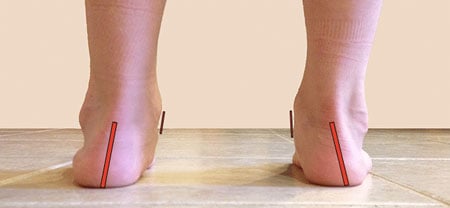
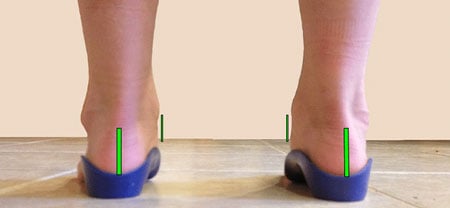
Notice how the deep heel cup stabilizes the heel in a midline position — this is what improves the child’s overall stability.
How Soon Should Children Wear Orthotics?
This is genuinely a complex subject — some medical professionals recommend early intervention, while others suggest waiting until age five or older. In my experience, it shouldn’t be a matter of age; it should be a matter of whether the orthotic can meaningfully improve the child’s stance and posture right now.
I speak with families of kids with low muscle tone every week, and most of them regret not acting sooner. Many are frustrated after being told by a medical professional, “don’t worry, your child will outgrow it.” I’d strongly discourage playing the “waiting game” with a foot condition — waiting for it to resolve on its own often just lets it get worse.
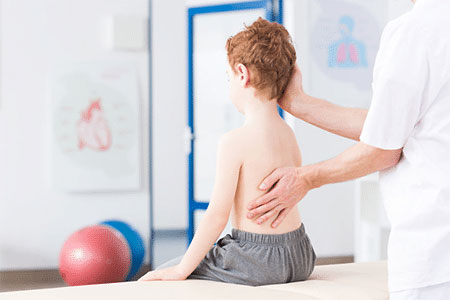
The Cost of Leaving Low Muscle Tone Untreated
When a child’s feet are out of alignment, the knees and hips become misaligned too — which means the muscles moving those joints work less efficiently, and your child spends more energy doing what comes easily to other kids. Muscle fatigue and stiff leg muscles are common complaints among kids with persistent foot pronation.
Children between ages 1 and 5 are in a period of rapid neuromuscular development, and foot pronation during these years is often much easier to manage with the right orthotics and footwear. It’s still manageable after age 5, but it tends to be a harder fix.
What Makes This Orthotic Effective for Low Muscle Tone?
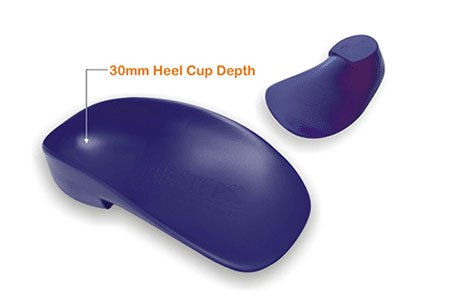
The orthotic I recommend is the least restrictive option available, since it allows for normal foot movement rather than locking the foot in place. Its effectiveness comes largely from a deep, 30mm heel cup that provides stability and improves walking gait.
Deep heel cup (30mm). This provides stability and helps maintain proper foot alignment, preventing excessive pronation or supination. By securely cupping the heel, it keeps the foot in an optimal position and reduces the likelihood of strain or injury.
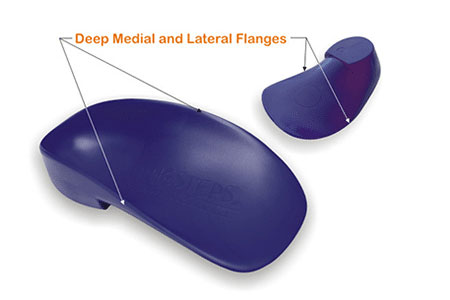
Medial and lateral flanges. These help keep the foot aligned over the orthotic — most prefabricated kids’ orthotics lack this feature entirely, which lets the foot push through the orthotic and move however it wants. The side supports here prevent the foot from rolling inward or outward, which particularly benefits kids with low muscle tone who tend toward flat feet.
Best Orthotic for Low Muscle Tone: LittleSteps
This is the best prefabricated orthotic on the market for treating and controlling low muscle tone. Its main goal is preventing a child’s balance from being affected by their condition.
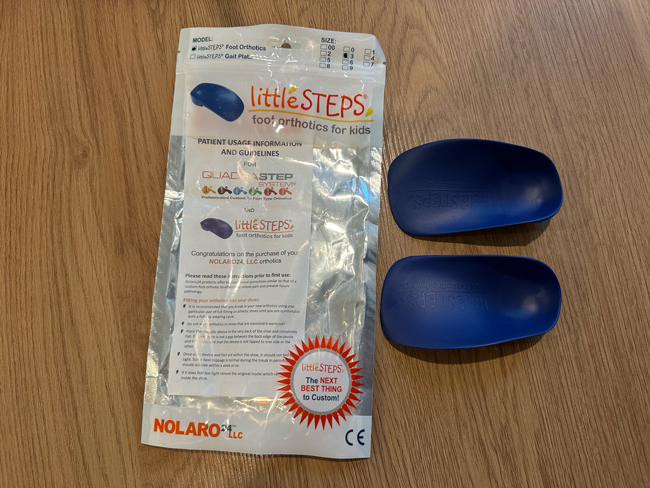
- Order from the official LittleSteps site — referral code JVFCS100121
- No need to remove the shoe’s original insole
- 3/4-length design fits most shoe styles
- Use this sizing chart based on your child’s shoe size
- Ideal for low-muscle-tone-related instability and fatigue
- Ships anywhere — within the US, shipping generally takes about 10–15 days depending on location and method. International shipping is available but costs more.
Is This Better Than AFOs and SMOs?
In my experience, generally yes. I’ve fitted plenty of kids with SMOs and AFOs, and I consistently find them too rigid — they tend to immobilize the foot more than necessary. That said, SMOs and AFOs genuinely can be very effective for the right situation.
I’m not suggesting you go against a medical professional’s recommendation if they’ve prescribed AFOs or SMOs specifically — I simply prefer starting with a less invasive option and going from there when possible. A lot of kids struggle to adjust to wearing AFOs and SMOs, and parents often have a hard time finding shoes that actually fit around the braces.
Choosing the Right Shoes
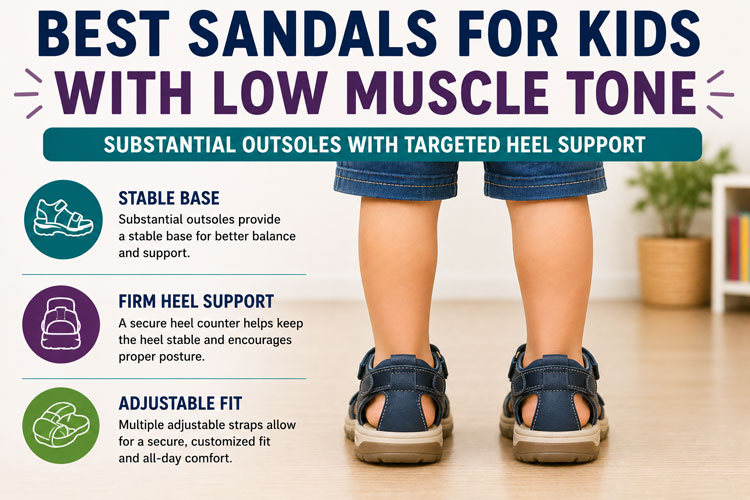
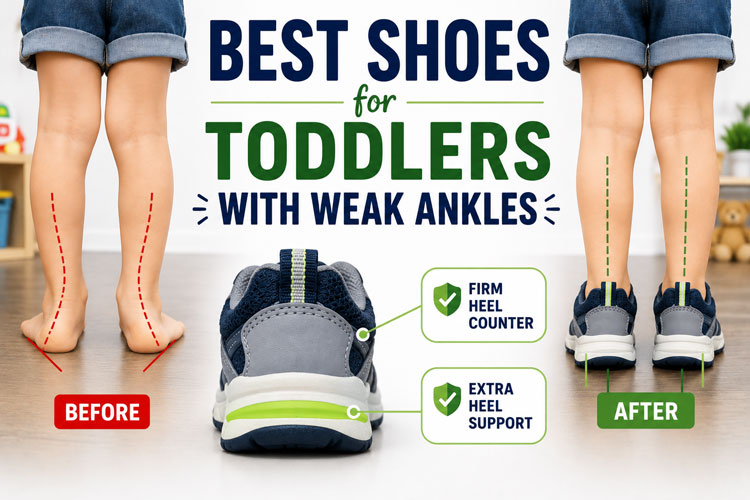
Picking the right shoe matters just as much as picking the right orthotic. Supportive shoes built for orthotics are essential for getting the full benefit of the insert — look for a firm heel counter, a wide toe box, and removable insoles. I’ve also put together a dedicated guide to shoes for low muscle tone specifically, and for warmer months, supportive sandals for low muscle tone offer the same support in an open-toe style.
Keep the Orthotic in Place
A properly laced shoe keeps the orthotic from shifting during activity. This lacing technique is built specifically for kids wearing an orthotic inside their shoes.
Contact Me for a Specific Recommendation
Every child’s foot shape and degree of low muscle tone are different — including width. Reach out directly and I can help you find a shoe and orthotic combination that actually fits, whether your child has narrow feet or extra-wide feet.
Final Thoughts
The right orthotic can genuinely optimize a child’s foot-joint alignment and weight distribution. Supportive shoes and orthotics won’t make your child’s muscles weaker — all they’re doing is providing structural support while those muscles keep developing.
The right orthotic helps capture the heel into a more appropriate position for bearing body weight, while leaving the forefoot free to move naturally. Your child’s walking gait determines how much energy each step takes — if the feet are out of alignment, your child will tire more easily and may become more sedentary as a result. Taking early action helps prevent that, and helps avoid the added challenge of getting a less active child back into regular activity later on.
Sources: “Low Muscle Tone and Your Child – What You Need to Know.” Surestep, 1 Dec. 2016, surestep.net/blog/low-muscle-tone-hypotonia-an-overview-for-parents/. “Muscle Weakness (Hypotonia).” Boston Children’s Hospital, www.childrenshospital.org/conditions-and-treatments/conditions/m/muscle-weakness-hypotonia.
Frequently Asked Questions
Look specifically for shoes offered in extra wide (XW), not just wide (W) — the width difference matters more than it might seem, and an extra-wide width paired with a shoe’s extra depth is usually what makes room for the orthotic. The shoes for orthotics guide above lists styles available in extra wide specifically.
No. An orthotic provides structural support — it doesn’t take over the job the muscles are doing. Your child’s foot and leg muscles continue developing normally while the orthotic handles the alignment and stability work the foot may not be managing well on its own yet.
Not really — it’s less about a specific age and more about whether the orthotic can meaningfully improve your child’s current stance and posture. Starting earlier tends to be easier to manage than waiting, since foot pronation is generally more responsive to treatment in the 1–5 age range.

My nephew has low muscle tone and the PT recommended a pair of supportive shoes with his orthotics. Is there a specific style that you can recommend? He has extra extra wide feet and the orthotics can’t seem to fit in any of the shoes I buy. I am tired of wasting money in shoes that don’t work. Any suggestions will be greatly appreciated.
Hello Ann,
Sure, I am happy to help. The shoes I recommend in this article are available in different widths such as wide (W) and extra wide (XW). Make sure that you select the extra wide width (XW) when you choose your nephew’s shoe size. These shoes also provide extra depth which makes them ideal for orthotics.