How to Tell If Your Child Has Outgrown Their Shoes — 2 Simple Steps
Are you trying to figure out whether your child can keep wearing their current shoes a little longer? It’s worth remembering that kids’ foot growth isn’t steady — there are sudden growth spurts followed by stretches of slower growth, which is exactly why shoe checks need to happen often and thoroughly, not just when you notice a problem.
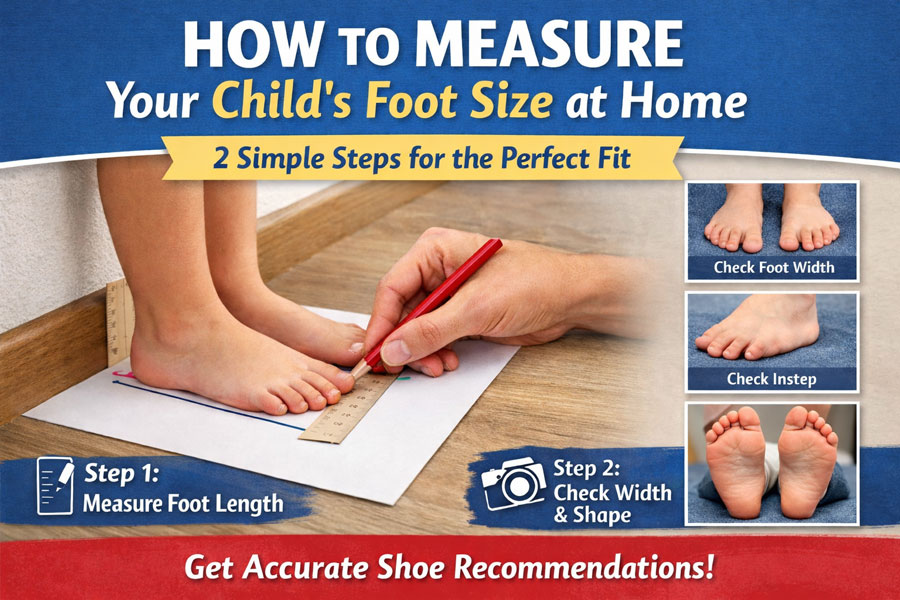
I’m a certified children’s shoe fitter with over 10 years of experience, and in that time I’ve put together a simple system that lets parents check for growing room right at home — no measuring tape or trip to the store required.
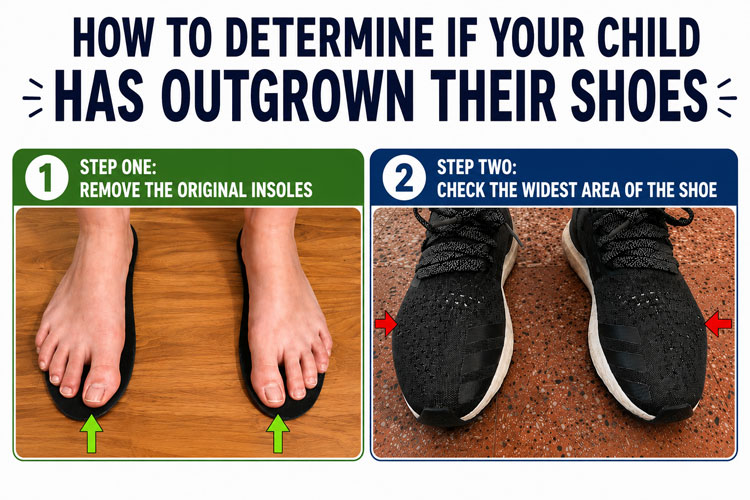
Step One: Remove the Insole and Check for Growing Room
The first step in determining if your child’s shoes are too small is to remove the original insole. This gives you a clear, direct picture of how their foot fits inside the shoe — no guessing through the material.
Place the insole flat on the floor and have your child stand on it with their full weight. Check both feet, since it’s completely normal for one foot to be slightly bigger than the other, and you want to base the decision on the larger one.
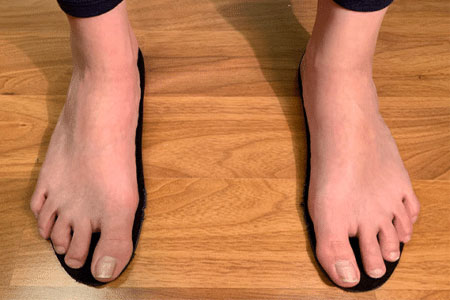
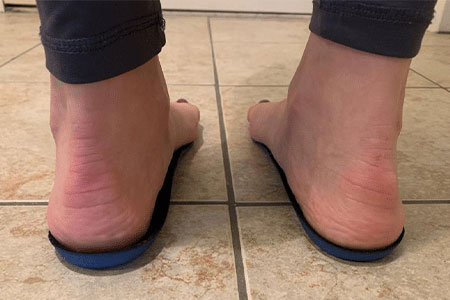
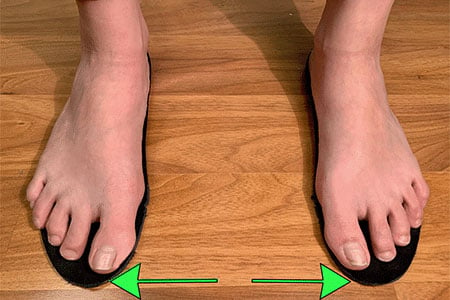
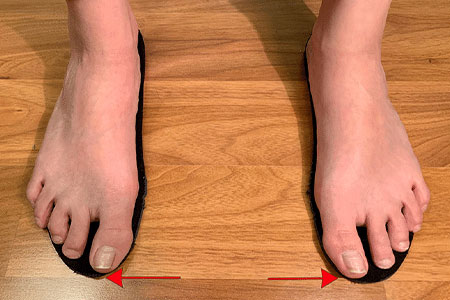
Step Two: Check the Widest Area of the Shoe
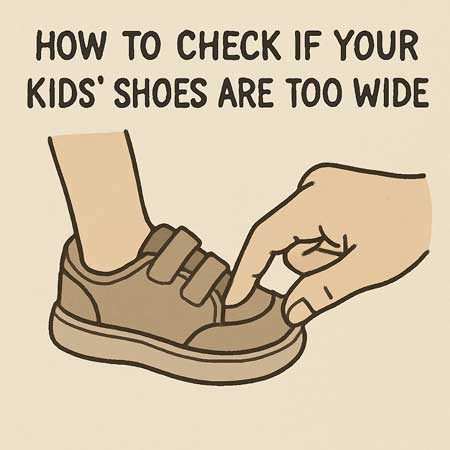
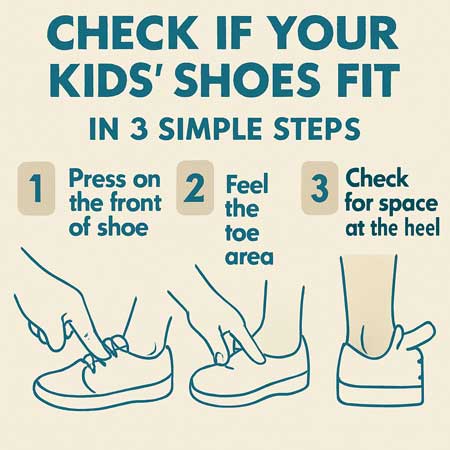
With the shoe back on your child’s foot, press down gently on the widest part — usually right over the ball of the foot. There should be enough give for the foot to spread naturally without feeling pinched or cramped anywhere.
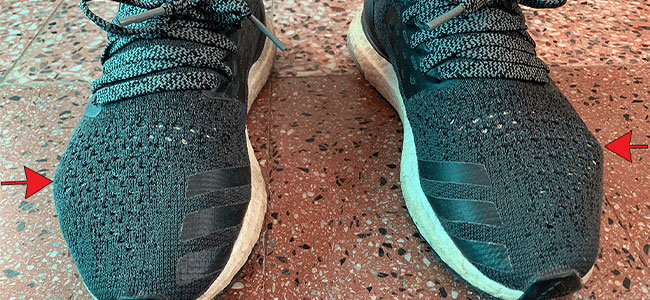
Width matters just as much as length here. A shoe that’s too narrow can squeeze the foot, leading to discomfort and, over time, blisters or calluses — even if the length still looks fine.
In my experience, this two-step check is the most reliable way for a parent to tell whether a shoe still fits, especially if there isn’t a specialized children’s shoe store nearby to help.
What to Do If You’re Still Unsure
If you go through both steps and you’re still not sure whether your child can keep wearing their current shoes, reach out to me directly via email or in the comments below. As a shoe fitter, I’m happy to help you work through it.
Other Signs Your Child Has Outgrown Their Shoes
Beyond the insole and width checks, keep an eye out for these everyday signs between fittings:
Toe crunching. If your child complains their toes feel squished, or you notice their toes curling inside the shoe, that’s a clear sign the shoe has gotten too small. Growing toes need room to move.
Red marks or blisters. Check your child’s feet after they’ve worn their shoes for a while. Redness, indentation lines, or blisters mean the shoe is rubbing or pressing somewhere it shouldn’t.
Difficulty putting shoes on or off. When a shoe that used to slide on easily suddenly takes real effort, that’s usually the shoe telling you it’s too tight — not a lacing problem.
How Often Should You Check?
Because growth happens in unpredictable bursts, I recommend checking every 8–10 weeks for toddlers and younger kids, and roughly every 2–3 months for older kids whose growth has slowed down. If your child is in a known growth spurt — which often lines up with big jumps in height — check more frequently during that window.