
Best Sandals for Kids with Low Muscle Tone – Supportive Outsoles with Targeted Arch and Heel Support
Last updated: June 2026 | By Juan Valenzuela, Certified Children’s Shoe Fitter | Est. reading time: 14 minutes
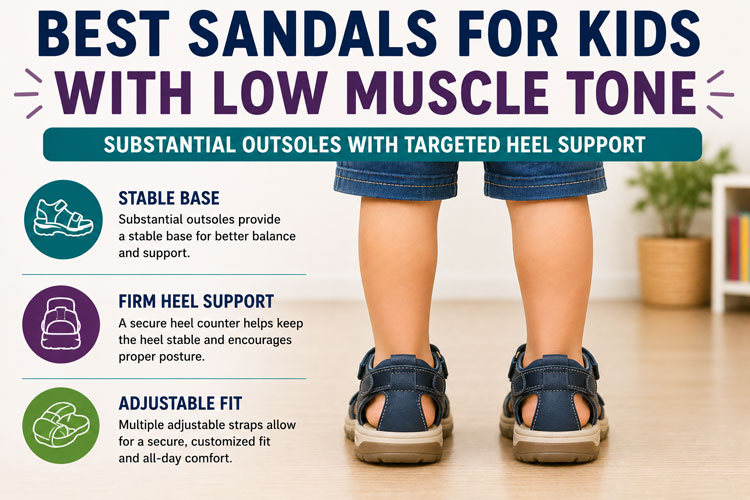
Children with low muscle tone (hypotonia) need supportive shoes that promote stability, comfort, and alignment. Does your child already wear supportive sneakers and orthotics, and you’re not sure what to do once summer arrives? As a shoe fitter with years of experience, I’ve seen how the right sandals can act as an extension of supportive sneakers and complement the physical therapy work aimed at building muscle tone and coordination.
Supportive Sandals Can Help Improve Posture and Stability
I like to make the analogy that if you want to build a strong house, you need a strong foundation. Supporting your child’s feet is essential for their legs and body to function properly.
Before going further, I want to clear up a common misconception: many parents associate low muscle tone with a child being weak. That’s far from accurate — low muscle tone is a stability problem, not a strength problem. Your child can be genuinely strong and still have low muscle tone.
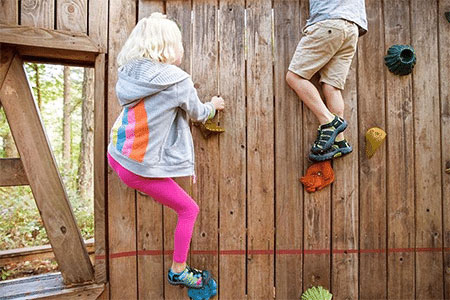
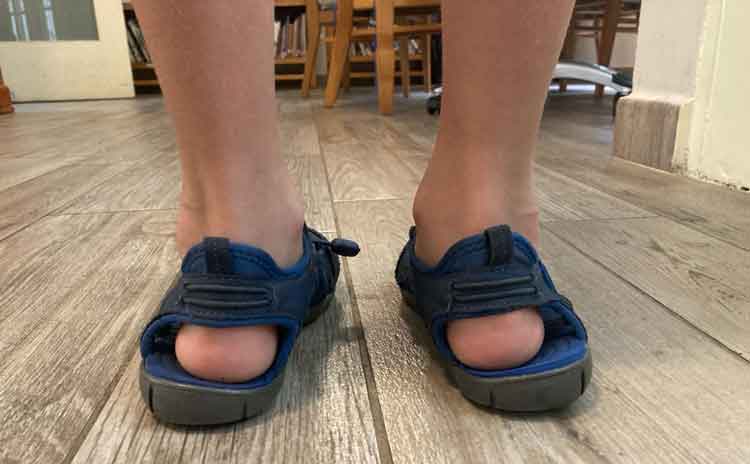
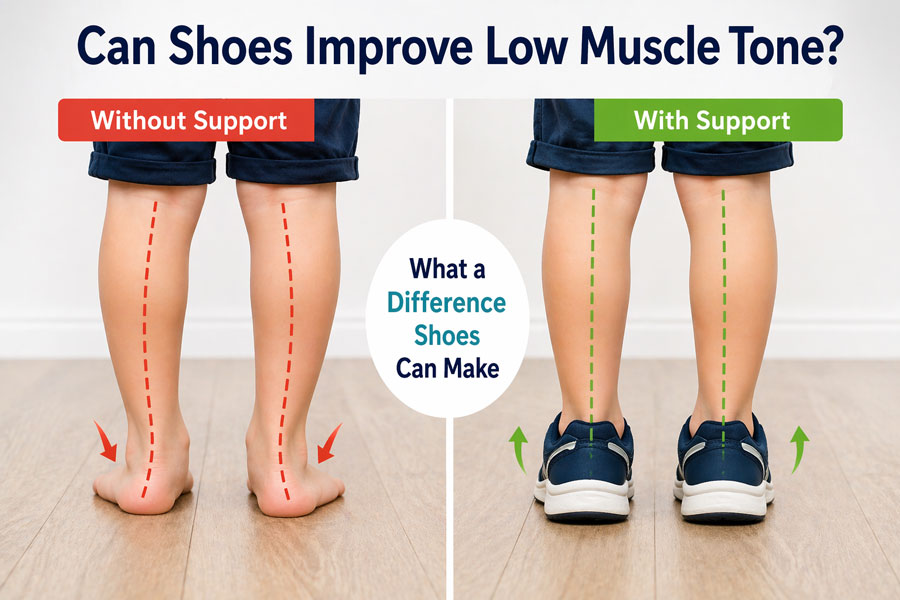
The issue most children with low muscle tone face is a lack of arch development, and therefore a lack of stability. I’ve helped many children with low muscle tone and loose ligaments find the right pair of shoes to improve their foot posture and stability.
The Importance of Supportive Sandals
By choosing sandals that provide real support, you can help mitigate some of the challenges associated with hypotonia, allowing your child to engage more fully in daily life. Supportive sandals can also ease some of the fatigue associated with hypotonia, since they help distribute weight more evenly across the foot.
Why Crocs and Flip-Flops Aren’t an Option
While Crocs and flip-flops are popular thanks to how easy they are to put on and how many fun colors they come in, they’re not a good fit for kids with low muscle tone. These styles typically lack the support and stability needed, which raises the risk of falls and improper foot development. Yes, they’re comfortable, practical, and kids love them — but they offer essentially no real support.
Key Features of Supportive Sandals for Kids with Low Muscle Tone
Sandals that provide substantial outsoles with arch support are essential for children with low muscle tone and/or loose ligaments. This external support is critical to ensure a strong and stable base for your child.
1. Feature One: Stable Base of Support
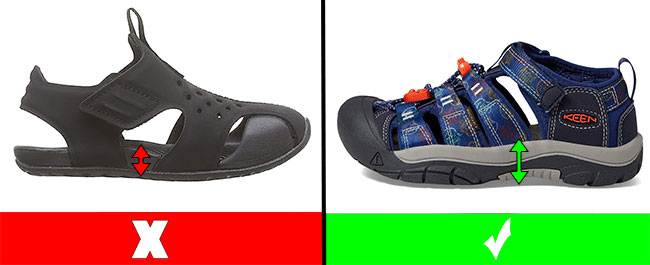
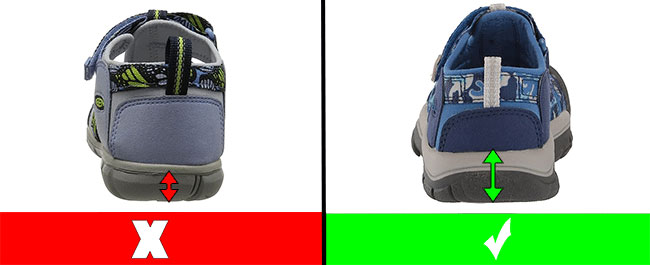
A stable base of support is crucial for children with low muscle tone. This feature helps maintain balance and provides the necessary foundation for walking and playing. A stable base often includes a wide sole that offers more surface area for contact with the ground, reducing the risk of falls.

A well-designed stable base acts as a foundation, encouraging more natural and secure steps. Let me help you visualize the difference between most children’s sandals and one of the specific sandals that I recommend.
Feature Two: Targeted Cushion and Padding Below the Heels
Cushioning and padding are important for absorbing shock and providing comfort. Sandals with targeted cushioning below the heels can reduce stress on the feet and legs, managing fatigue and allowing children to remain active for longer periods without discomfort.
Feature Three: Lightweight and Flexible
Lightweight and flexible sandals allow for easier movement, reducing the effort required to walk. This feature is particularly beneficial for children with hypotonia, who may tire more quickly.
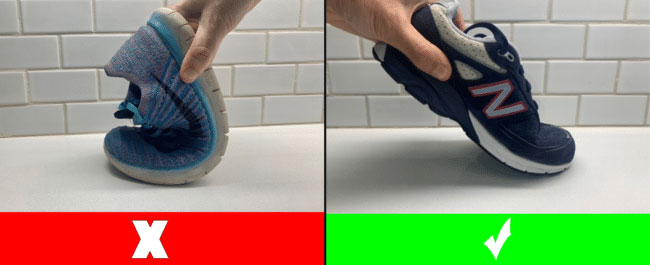
Every sandal I recommend below covers these three features, and most also come with a velcro strap and a toggle closure to hold your child’s foot securely in place. Disclosure: This post contains affiliate links, and I may earn a small commission at no extra cost to you if you make a purchase through them.
Best Sandals for Kids with Low Muscle Tone to Improve Balance
These sandals help realign your child’s feet and provide a more stable base of support so they can balance better.
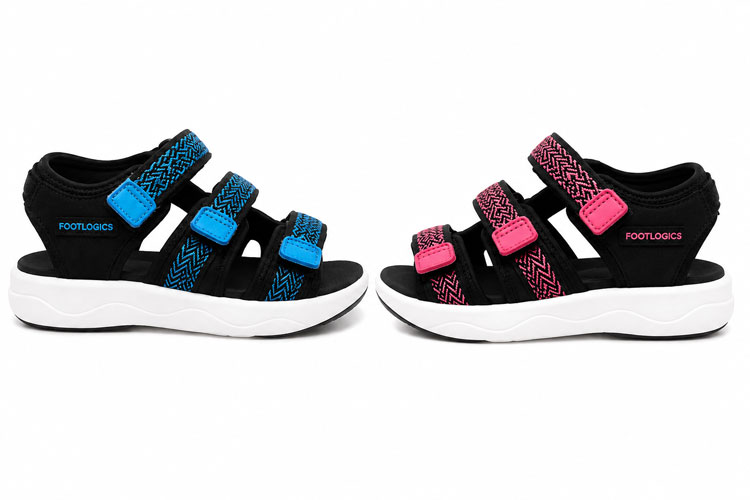
Footlogics Arch-Up Kids Orthotic Sandal
This is one of the most supportive sandals available for children with low muscle tone. Unlike most kids’ sandals with flat, unsupportive footbeds, this sandal features a biomechanical arch support, deep heel cup, and metatarsal support that work together to improve alignment, stability, and balance. The lightweight design helps reduce muscle fatigue during walking and play, while the three adjustable Velcro straps provide a secure fit for children with different foot shapes, including those with wide feet or high insteps
Key Features
- Order on Amazon
- Fits medium, wide, and extra wide feet (fits high insteps)
- Built-in orthotic footbed with biomechanical arch support
- Deep heel cup and metatarsal support improve stability and foot alignment
- Triple adjustable Velcro straps for a secure and customized fit
- Lightweight cushioned outsole for all-day comfort
- Fitting tip: size a full size up from your child’s current foot length
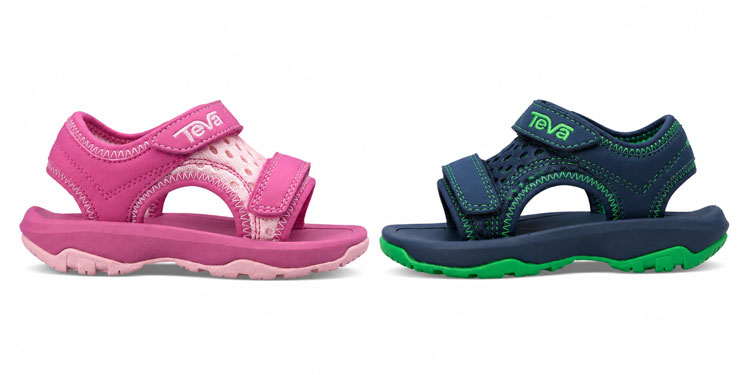
Psyclone by Teva
These supportive sandals by Teva are designed with a cushioned footbed and adjustable straps, to provide your child with low muscle tone with comfort and stability.
Key Features
- Order on Amazon
- Fits medium, wide, and extra wide feet (fits high insteps)
- EVA foam footbed cushions and softly supports the foot
- Rubber outsole for great traction
- Fitting tip: size a half size up from your child’s current foot length
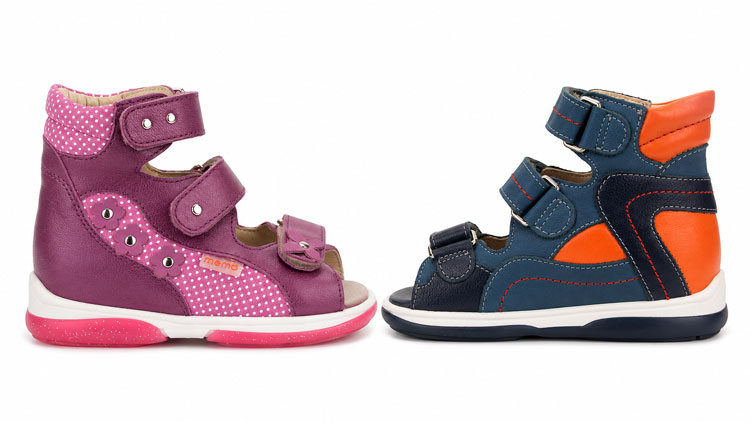
Agnes by Memo
These orthopedic sandals by Memo come with built-in arch support and heel stabilization, which are crucial for children with hypotonia. These features can help maintain proper foot alignment.
Key Features
- Order on Amazon
- Fits medium and wide feet (fits high insteps)
- 100% leather made
- Ability to adjust the Hook and Loop strap length to the different foot width
- I suggest that you get this sandal a whole size larger than your child’s current foot size
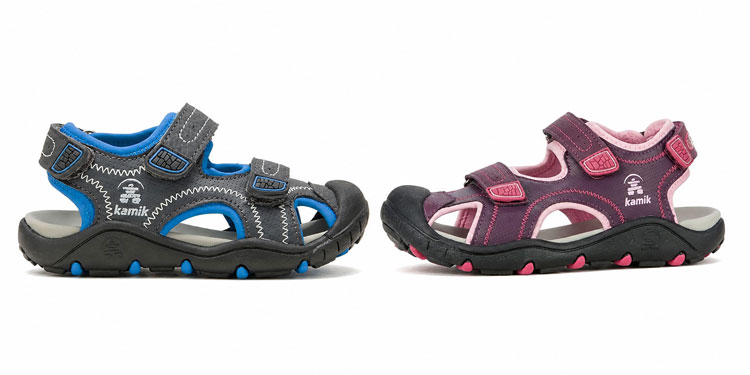
Seaturtle by Kamik
These open-toe sandals provide a cushioned footbed and adjustable straps. Their lightweight and flexible design makes it ideal for active children, while the durable outsole ensures long-lasting wear.
Key Features
- Order on Amazon
- Fits medium, wide, and extra wide feet (fits high insteps)
- Triple Velcro straps for easy on and off
- Quick-drying, moisture-wicking lining Vegan-friendly
- Fitting tip: size a full size up from your child’s current foot length
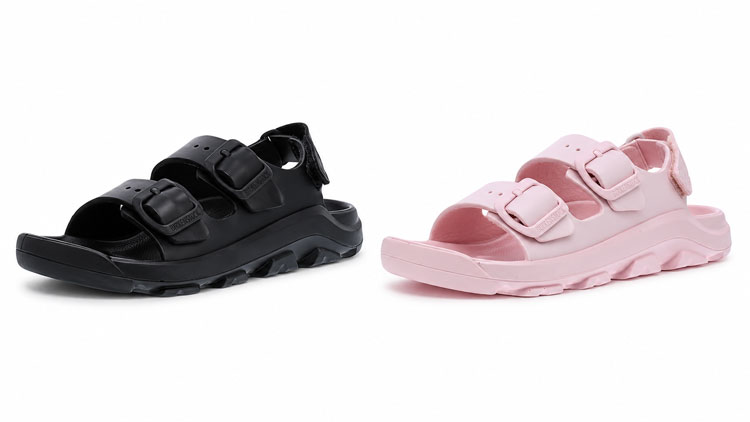
Mogami by Birkenstock
Birkenstock is known for its exceptional arch support, and the Mogami sandal is no exception. It features a contoured cork footbed that provides natural arch support, making it ideal for children who require additional support and stability.
Key Features
- Order on Amazon
- Fits medium and wide feet
- Contoured cork footbed for natural arch support
- Hook-and-loop closure for easy on and off
- Fitting tip: size a full size up from your child’s current foot length
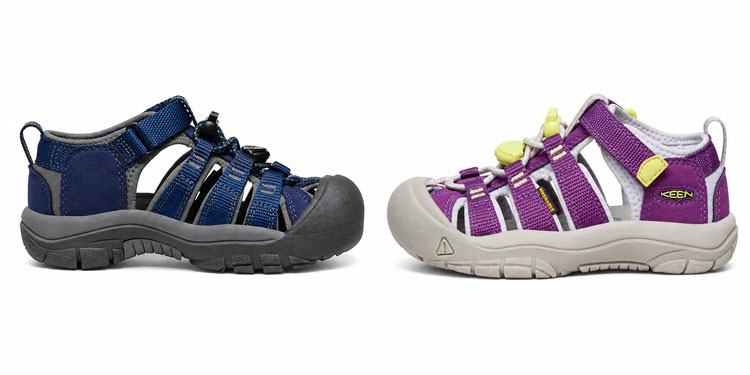
Newport by Keen
Newport by Keen is a versatile sandal with a supportive footbed and adjustable straps. This is one of my go-to sandals for kids with flat feet and low muscle tone.
Key Features
- Order on Amazon
- Fits medium and wide feet
- Anatomically engineered internal support for excellent arch support
- Multi-directional lugs with quick water channeling help provide superior grip on slippery and wet terrain
- Washable polyester webbing featuring quick dry lining
- Fitting tip: size a half size up from your child’s current foot length
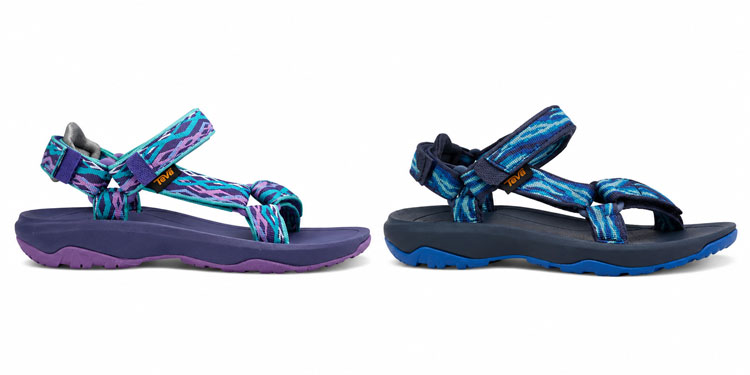
Hurricane by Teva
The Hurricane by Teva offers a lightweight, water-friendly design with an adjustable fit. Its contoured footbed provides excellent support and stability.
Key Features
- Order on Amazon
- Fits medium, wide, and extra wide feet (fits high insteps)
- Easy hook-and-loop closure comes on and off quickly and gets the fit just right
- Rubber outsole for durability and traction
- Fitting tip: size a half size up from your child’s current foot length, since the strap pattern runs slightly snug
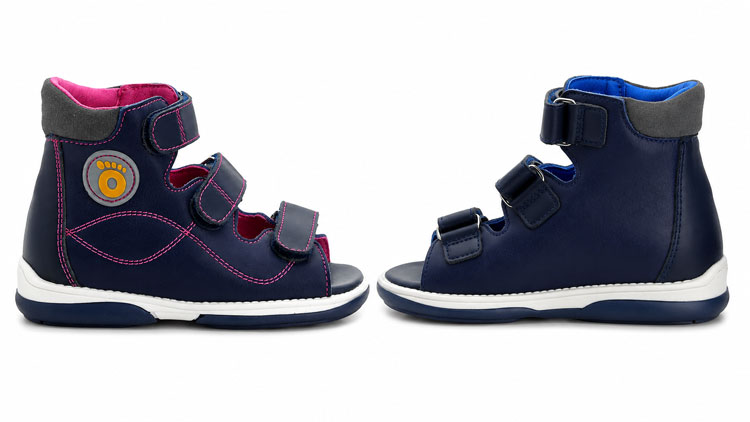
Betti and Pedro by Memo
Orthopedic sandals are specifically designed to support foot health and address various conditions, including low muscle tone. Memo’s Betti and Pedro sandals are equipped with a robust support system, including a firm heel counter and arch support.
Key Features
- Order on Amazon
- Fits medium and wide feet
- Orthopedic sandal
- Thermoplastic asymmetric stiff heel counter for proper foot protection and support
- Genuine leather lining
- Fitting tip: size a full size up from your child’s current foot length
How low muscle tone impacts a child varies quite a bit from one kid to the next, so how effective any of these sandals will be for yours depends on whether their low muscle tone is mild, moderate, or severe.
Reach Out for Personalized Recommendations
Selecting the right sandals for your child can feel overwhelming, but you don’t have to do it alone. If you’re unsure which sandals are best for your child’s low muscle tone, reach out through our contact page for recommendations based on your child’s specific foot shape and needs.
Important: Read This Before Ordering Your Kids’ Sandals Online
Ill-fitting shoes can cause discomfort and make existing issues worse. Properly sized sandals make sure all the supportive features actually function as intended, giving your child real stability and cushioning instead of just sitting loosely on the foot.
To get the full benefit from any of these sandals, ordering the correct size matters. I created a virtual shoe fitting service to help you get your child’s shoe size from home. That resource will also help you determine whether your child has narrow, medium, wide, or extra wide feet, and whether they have a high instep.
Make sure your child spends most of the day in good supportive sneakers to help their movement and protect their joints from becoming permanently misaligned.
Bonus Resource: Supportive Sneakers and Orthotics
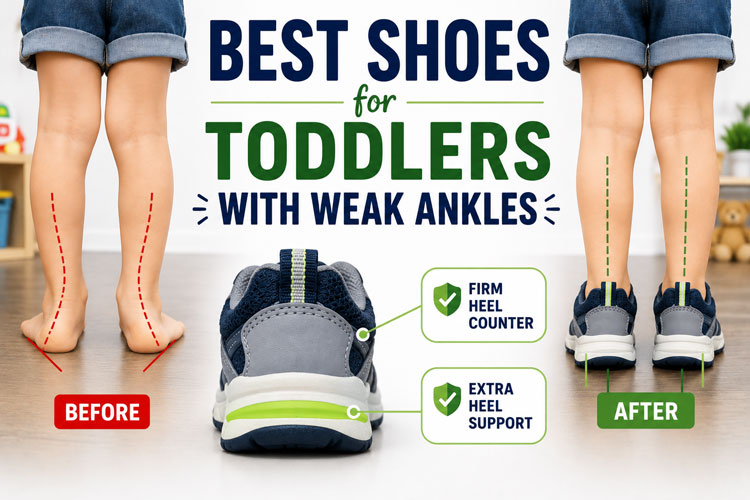
In addition to sandals, supportive sneakers and orthotics play a vital role in managing hypotonia. Sneakers with a firm heel counter, arch support, and a stable sole offer strong support for daily activity, with a more enclosed fit that helps control foot movement and adds a greater sense of security.
Orthotics can further help correct foot alignment and improve overall stability. These custom devices can be tailored to target the areas that need it most, and pairing orthotics with supportive sneakers can boost the benefit of both — leading to better balance and mobility for kids with hypotonia.
Should You Invest in a Pair of Orthopedic Sandals?
You certainly can provide your child with a pair of orthopedic sandals if you believe that your child might benefit from wearing them. Maybe your medical professional recommended a pair of orthopedic sandals and you are willing to try and do everything that’s in your hands to help your child.
Orthopedic sandals often incorporate advanced features and materials that cater to the specific needs of children with hypotonia. However, the issue is that they can range anywhere from $100 to $150. .
Supportive Sandals for Kids with Low Muscle Tone – Watch Video!
I created a video where we dive deep into the best sandals designed to support and encourage proper walking mechanics for children with low muscle tone. This video will help you visualize what specific features your kids’ sandals should provide to help improve your child’s walking gait, foot posture, and stability.
My Final Thoughts on Children with Low Muscle Tone
Every child’s situation is different. In my experience, most children with low muscle tone do best in sandals with flexible outsoles that still provide a firm heel counter and a substantial outsole at the same time — that combination is what to look for in your child’s summer shoes.
Pediatric physical therapy can also be very helpful, since it activates your child’s muscles by guiding them into proper alignment through targeted exercises. Another piece of the puzzle is guiding the feet and ankles into proper alignment through the right footwear, and in some cases, orthotics as well.
Trust your parental intuition if you notice something off about your child’s feet or walking gait. You’re the one living with your child every day — not their doctor.
Some common signs of low muscle tone in children include:
- Poor posture
- Increased flexibility in the joints
- Tiring easily, due to the extra effort needed to activate muscles or maintain posture
- Delays in reaching gross motor milestones, such as rolling, sitting, crawling, or walking
Frequently Asked Questions
Good catch, and it’s worth clarifying: the straight-last guidance matters most for everyday sneakers, since those are worn for the majority of the day and are doing the heavy lifting for ongoing correction. Sandals are typically worn for shorter stretches and for more casual activity, so a slightly curved last with strong arch and heel support, like the Keen styles here, is a reasonable trade-off for the water-friendliness and adjustability sandals need to offer. If your child’s degree of low muscle tone is more severe, it’s worth leaning toward the straighter-lasted options on this list, or reaching out for a recommendation specific to your child.
That depends on the severity of your child’s hypotonia and whether a medical professional has specifically recommended orthopedic footwear. Orthopedic sandals often include more advanced support features, but they typically run $100–$150, noticeably more than a regular supportive sandal. If your child’s case is mild to moderate, a supportive everyday sandal like several on this list may be enough.
How do I know if my child might have low muscle tone?
Some common signs include poor posture, increased flexibility in the joints, tiring easily from the extra effort it takes to activate muscles or hold posture, and delays in reaching gross motor milestones like rolling, sitting, crawling, or walking. If you notice several of these, it’s worth bringing up with your pediatrician.
Sources
- “Low Muscle Tone And Your Child – What You Need To Know.” Surestep, 1 Dec. 2016, surestep.net/blog/low-muscle-tone-hypotonia-an-overview-for-parents/.
- “Muscle Weakness (Hypotonia).” Boston Children’s Hospital, www.childrenshospital.org/conditions-and-treatments/conditions/m/muscle-weakness-hypotonia.

Thanks for sharing your thoughts in these posts! Question: The Keen sandals you link to have curved lasts, but in your article on best shoes for kids with low tone, you suggest shoes with straight lasts. If that’s important, why do you recommend the Keens?
Hello Elisa,
There are very few kids’ sandals that provide straight lasts. The reason why I recommend the Newport style by Keen is that even though t doesn’t provide a straight last, it provides an anatomical footbed with a stable base of support that can help improve the child’s posture and walking gait. With that said, sandals should not be any child’s primary piece of footwear, as they don’t provide the same features as a sneaker.
Thanks!
I am happy to help!
Do you recommend the Keen sandal above for a child who typically wears a wide width and needs a wide toe box? One child measures 10 wide and another 1 wide. Both wear custom-cast half-foot orthotics in their sneakers.
Thank you.
Nicole
Hello Nicole,
From Keen the most supportive style that is also capable of fitting a child with wide feet is the Newport Style
The other Keen sandal styles don’t provide enough support and won’t fit the shape of a child with wide feet.