Best Boots to Prevent Toe Walking (Rigid at the Front)
Last updated: September 14, 2026 · Written by Juan Valenzuela, Certified Children’s Shoe Fitter
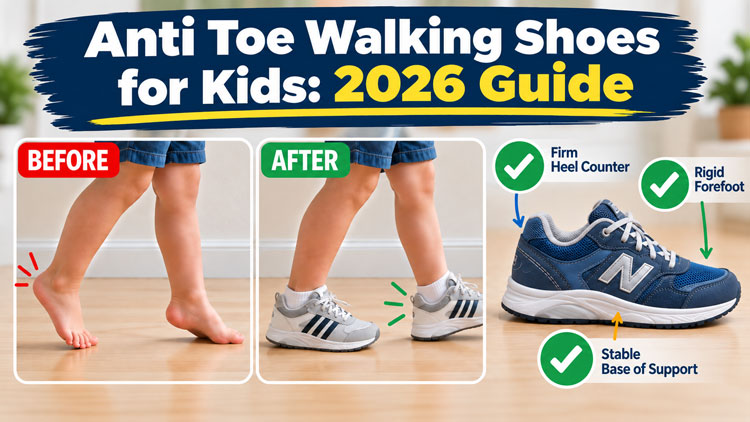
After writing a guide on the best sneakers for children who walk on their toes, several families asked for something similar covering boots. Certain boots are actually more effective than sneakers at discouraging toe walking, since they tend to be stiffer at the front. The key is finding a pair that offers a stable base of support and stays rigid at the front rather than flexing too easily.
I’ve been helping children find properly fitting shoes for over a decade, and I’ve consistently seen that boots with a rigid front provide real resistance against toe walking, encouraging a more natural gait. If your child’s toe walking stems from a neuromuscular condition, the right shoes — and sometimes orthotics — can make a real difference.
What Makes a Boot Effective Against Toe Walking
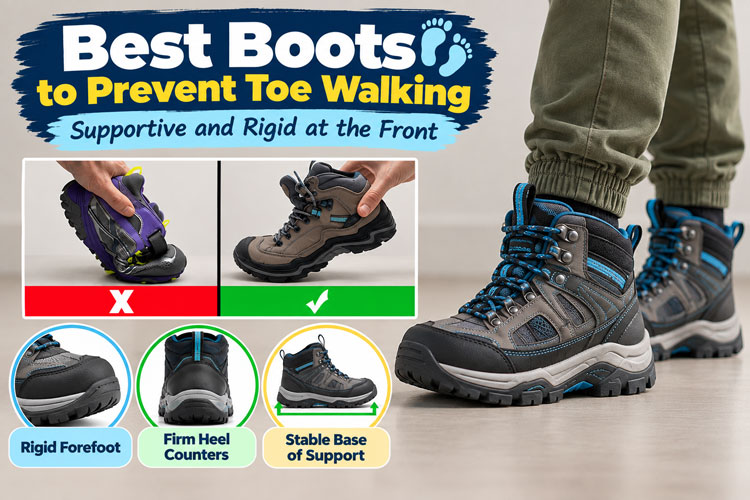
1. Rigid instead of overly flexible at the front. A boot that flexes too easily at the front makes it easy for a child to rise up onto their toes. The boots recommended below stay rigid there specifically to discourage that.
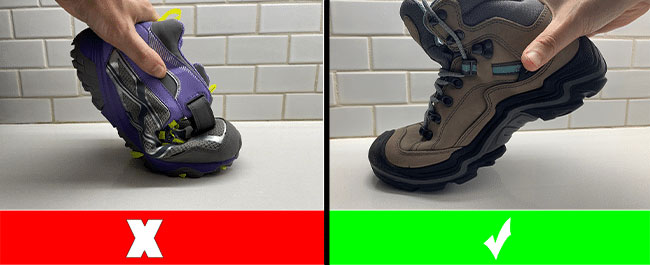
2. A stable base of support. This helps improve balance and coordination. Some kids toe walk partly because of flat feet, and a stable base encourages a more grounded step — distributing weight evenly and reducing the tendency to tip forward onto the toes.
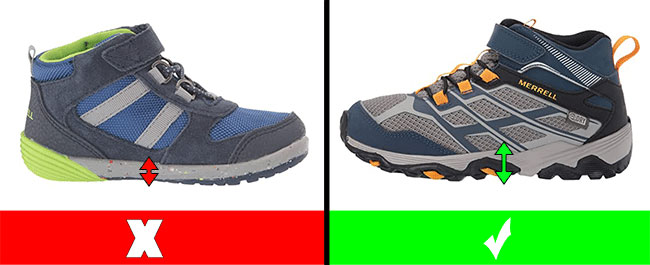
3. Firm heel counters. This helps control alignment of the heel and lower leg. Press on the back of your child’s boot — that area should feel firm, not soft or flimsy.

Optional: laces over Velcro. Boots with laces generally offer better support and stability than Velcro closures, making them somewhat more effective for discouraging toe walking specifically.
The Importance of Correct Shoe Size
When boots are too long, kids may end up walking on their toes simply because they can’t control the excess length at the front — it throws off their gait. Give your child enough growing room, but not so much that it makes toe walking easier rather than harder.
I’ve spoken with several pediatric physical therapists who get genuinely frustrated seeing kids in the wrong type or size of shoe — it makes an already difficult condition harder to manage. One recurring example: kids whose shoes are too big, who stay up on their toes just to keep the shoe from slipping off. Sometimes the correct shoe size alone makes a real difference. This virtual shoe fitting guide helps you retrieve your child’s exact shoe size from home, for free.
Best Boots for Toe Walking: Rigid at the Front
Each boot below includes an “Ideal for” bullet noting the degree of toe walking it’s best suited to. Disclosure: some links below are affiliate links — we may earn a small commission at no extra cost to you.
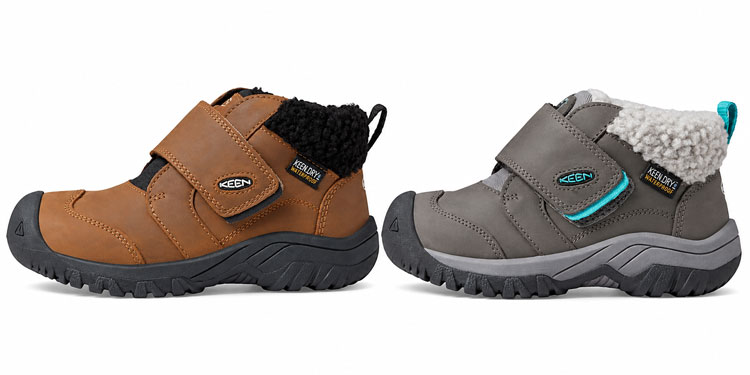
Kootenay by Keen
These rigid boots feature a sturdy sole and firm heel counter, making them ideal for promoting a proper walking gait. Known for their durable construction and excellent support, these boots feature a waterproof design, a secure fit, and an insulated lining to keep little feet warm.
Key Features
- Available for toddlers, little kids and big kids
- Order on Amazon
- Fits medium and wide feet (accommodates high insteps)
- Ideal for moderate to strong cases of toe walking
- This is a waterproof and insulated boot that can be used in the snow and rainy days
- Velcro closure
- Insulation helps keep feet warm in temperatures down to -4F / -20C
- Sizing tip: order a half size larger
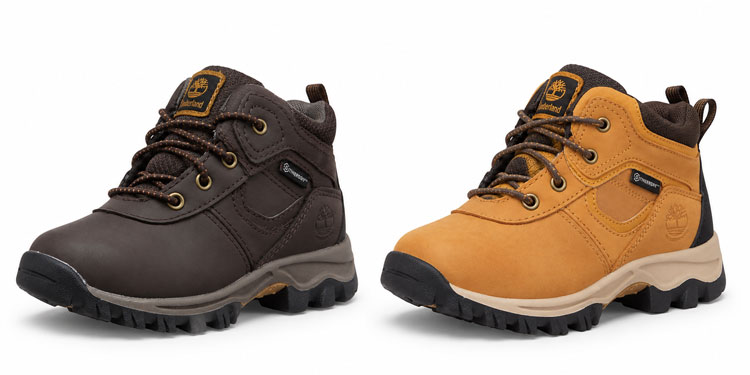
Mt. Maddsen by Timberland
These anti-toe walking boots provide excellent ankle support and are equipped with a cushioned footbed, enhancing comfort while encouraging a flat-footed walk.
Key Features
- Available for toddlers, little kids and big kids
- Order on Amazon
- Fits medium and wide feet
- Ideal for mild to moderate cases of toe walking
- Waterproof; traditional lace closure
- Padded tongue and collar to increase comfort and prevent blisters around the heel and ankle area
- Sizing tip: order a full size larger
Littleplum Snow Boots
For those chilly winter months, Littleplum Snow Boots are a great choice. The triple Velcro straps and rigidity at the front help discourage toe walking.
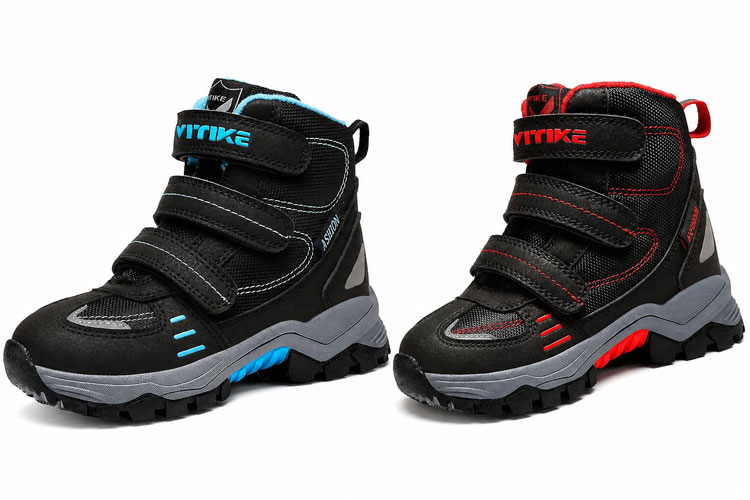
Key Features
- Available for little and big kids
- Order on Amazon
- Fits medium, wide, and extra wide feet (accommodates high insteps)
- Ideal for moderate to strong cases of toe walking
- This is a snow boot that can be used in the snow and rain as well
- Rubber outsole with ice cleats to help prevent slips and falls
- Waterproof
- Removable insoles
- Triple velcro straps for easy on and off
- Sizing tip: order a half size larger
Tracks by Timberland
These boots are designed to withstand rough play and provide a stable walking platform for children.

Key Features
- Available for toddlers and little kids
- Order on Amazon
- Accommodates medium or wide feet
- Ideal for mild to moderate cases of toe walking
- High-top design for extra ankle support
- Water-friendly construction
- Sizing tip: order a full size larger
Atlas by See Kai Run
This is one of the most versatile hiking boots with a stable base of support and firm heel counters. This is an awesome boot that can be worn to school, snow play, or rainy days.
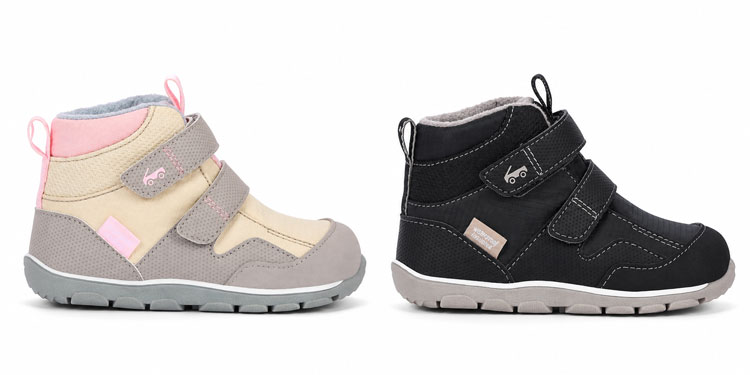
Key Features
- Available for toddlers and little kids
- Order on Amazon
- Fits medium, wide, and extra wide feet (accommodates high insteps)
- Ideal for moderate cases of toe walking
- This is a waterproof and insulated boot that can be worn in the snow and rain
- Double velcro straps
- Awarded the Seal of Acceptance from the American Podiatric Medical Association (APMA)
- Sizing tip: order a full size larger
6. Davos by Memo (Orthopedic Boot)
For children who require additional orthopedic support, the Davos by Memo is an excellent choice. These boots are specifically designed with orthopedic features, including a reinforced heel and arch support.
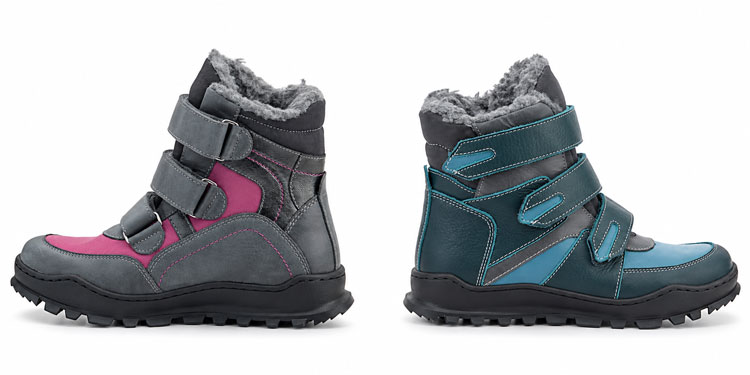
Key Features
- Available for toddlers, little kids, and big kids
- Order on Amazon
- Fits medium and wide feet (accommodates high insteps)
- Ideal for strong cases of toe walking
- This is a waterproof and insulated boot that can be worn in the snow and rain
- Triple velcro straps
- Waterproof
- Sizing tip: order a full size larger. Refer to Memo sizing chart
By choosing boots with a rigid front, firm heel counters, and a stable base of support, you can help promote healthier walking habits in your child.
Did You Choose a Pair of Boots with Laces?
There’s a specific lacing technique that helps secure your child’s feet inside the boot and provides better support and stability — worth using regardless of which boot above you choose.
Personalized Shoe Suggestions
If you’re unsure about the best choice for your child, reach out via email with your child’s specific needs and foot shape — narrow, medium, wide, or extra wide — and I can help you find the most effective option.
More Anti-Toe-Walking Options
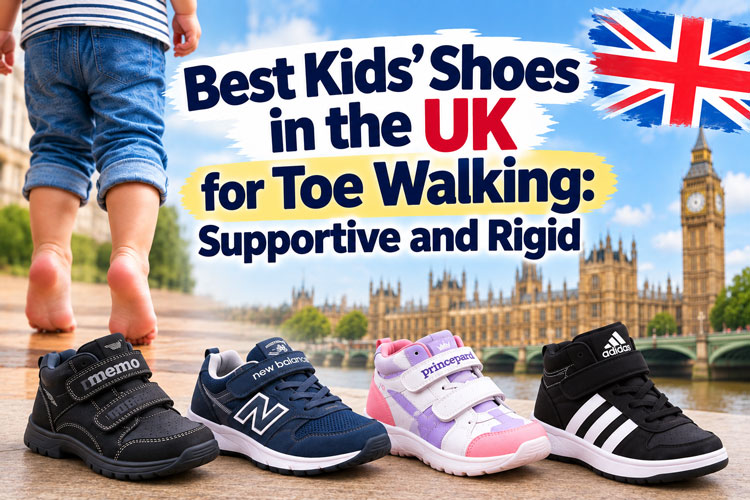
For everyday wear, see my full guide to anti-toe-walking sneakers, built around the same supportive features covered here — the boots and sneakers work well as a combined approach across the year.
Can Orthotics Help Treat Toe Walking?
Certain orthotics can help discourage toe walking and reinforce a proper heel-to-toe gait. See Orthotics for Toe Walking if you think your child might benefit from one alongside supportive footwear.
Is Toe Walking Really “Idiopathic”?
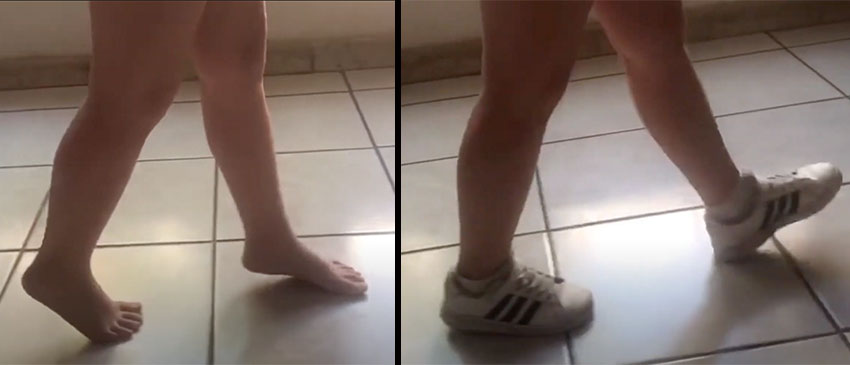
Several doctors describe toe walking as “idiopathic” — meaning the cause is unknown, and the assumption is the child simply prefers to walk that way. I disagree with that framing. In my experience, there’s consistently a specific, identifiable reason a child continues to toe walk, even when it isn’t immediately obvious.
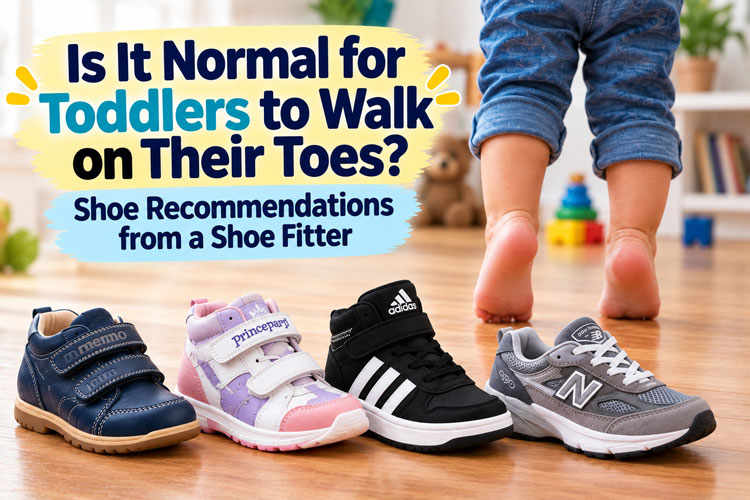
Toe walking happens when a child consistently walks on the balls of their feet without their heels touching the ground. It’s a typical part of early development for many toddlers and usually fades by age two or three. If it continues past that point, it may point to something worth investigating — muscle tightness, a neurological factor, or a developmental delay.
Frequently Asked Questions
In my experience fitting shoes for kids who toe walk, there’s almost always an identifiable contributing factor — whether that’s shoe fit, muscle tightness, or an underlying condition — even in cases initially labeled idiopathic. That doesn’t mean every case has an obvious single cause, but I don’t think “the child just prefers it” is usually the full story.
It varies by child, but many parents notice some improvement in gait within a few weeks of consistent wear, especially when paired with the recommended lacing technique. More entrenched or condition-related toe walking may take longer and benefit from orthotics or therapy alongside the footwear.
Both can help, and they’re not mutually exclusive — boots tend to be stiffer at the front by nature, which can make them somewhat more effective, but sneakers are more practical for daily indoor and warm-weather wear. Many families use both across the year.
If supportive footwear alone isn’t producing a noticeable change after several weeks, or if your child’s toe walking seems tied to a diagnosed neuromuscular condition, it’s worth discussing orthotics with your child’s doctor or physical therapist alongside the footwear.