How to Lace Kids’ Shoes to Prevent Heel Slippage – 3 Easy Steps
Is your child complaining that their heels keep slipping out of their shoes? Have you noticed blisters forming around their heels? Heel slippage is one of the most common reasons kids refuse to wear their shoes, and it’s also a common cause of heel blisters. After more than a decade as a shoe fitter, I’ve seen this exact issue play out with countless families — and the good news is, it’s almost always fixable with the right lacing technique.
Why Does My Child’s Heel Slip Out of Their Shoes?
Here are the four most common reasons a child’s heel slips inside their shoe:
- Improper Shoe Size — Shoes that are too big or too wide are one of the most common causes of heel slippage. Getting an accurate measurement of your child’s feet is the first step to solving it.
- Inadequate Lacing — Shoes that aren’t laced properly won’t grip the heel area securely, which leads directly to slippage.
- Shoe Design — Some shoe styles simply have a looser heel construction than others, making slippage more likely regardless of size.
- Foot Shape — Every child’s foot is different. Kids with narrower heels often experience more slippage in shoes built for an average foot shape.
Why Proper Lacing Matters — Use Every Eyelet
Proper lacing isn’t just about keeping the shoe on your child’s foot — it provides real stability and support while they walk, run, and play. A correctly laced shoe can help prevent injuries and noticeably improve comfort throughout the day.
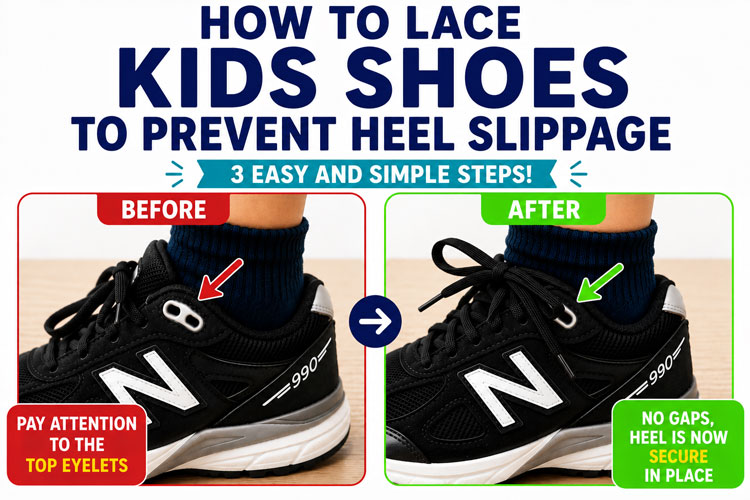
Most parents don’t realize how important it is to use every eyelet on the shoe. In my years of fitting experience, I’ve found that most kids dealing with heel slippage simply aren’t using the top two eyelets.
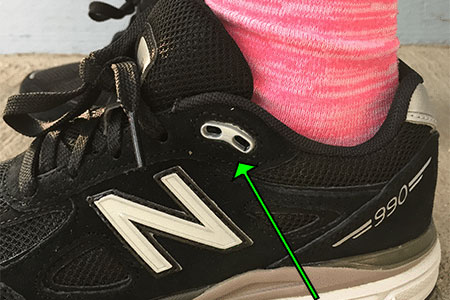
The Heel Lock (Lace Lock) Method
This lacing technique works on any sneaker with shoelaces, and it’s the method I recommend most often for fixing heel slippage.
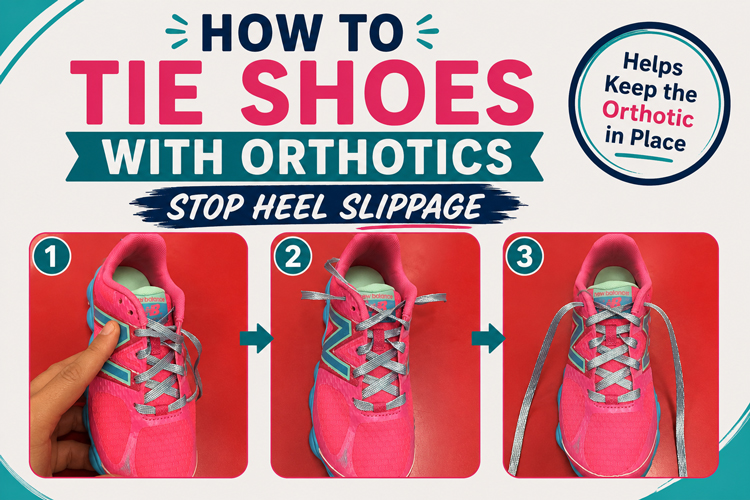
Step 1: Leave the Top Two Eyelets Open. Start by leaving the two top eyelets (the small holes closest to the top of the shoe) on each side open.
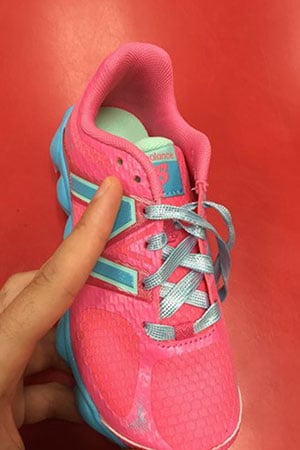
Step 2: Thread the Lace Through the Top Hole First. Take the shoelace and thread it through the top eyelet first, creating a small loop on each side.
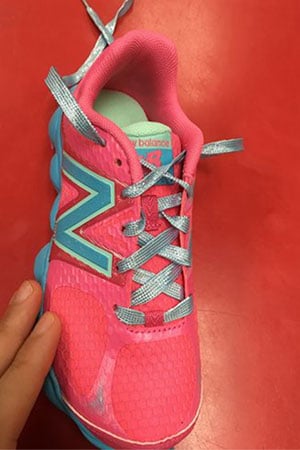
Step 3: Cross the Laces Through the Loops You Left Open. Finally, cross each lace end through the loop on the opposite side, then pull snug and tie as usual.
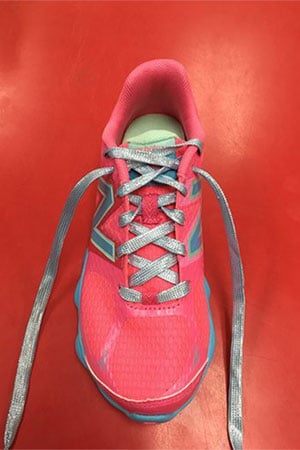
This technique essentially pulls your child’s foot back and secures it snugly against the back of the shoe — locking the heel in place and stopping it from lifting or sliding.
Getting Durable Shoelaces for Your Child’s Shoes
Choosing the right shoelaces matters just as much as the lacing technique itself. Durable laces hold up to daily wear and keep your child’s shoes securely fastened all day long.
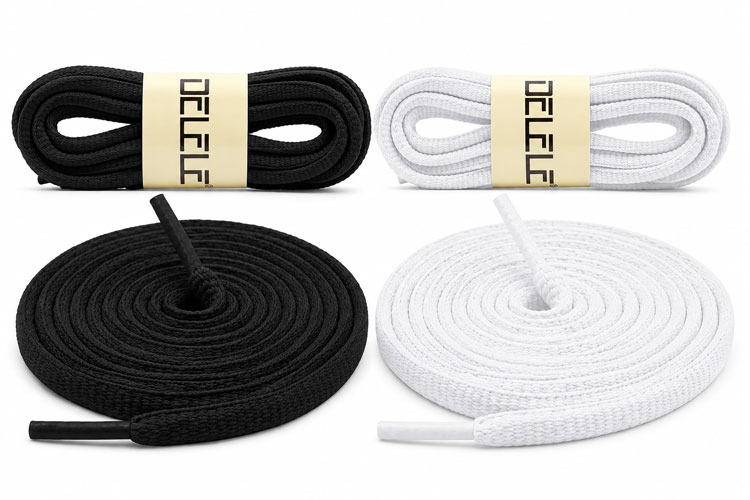
- Order on Amazon
- 1/4″ oval (half-round) profile, polyester construction
- Sold in packs of 2 pairs (4 individual laces)
- Available in 40+ colors and multiple lengths
- Count your child’s eyelets to order the correct length
- Disclosure: this post contains affiliate links
Personalized Shoe Recommendations for Kids with Narrow Feet
If your child has narrow feet, finding the right shoe can be its own challenge — you want a snug fit that doesn’t cause discomfort. I’ve put together a full guide to the best sneakers for kids with narrow feet if that’s what you’re dealing with.
Always Undo the Laces Before Taking Shoes On or Off
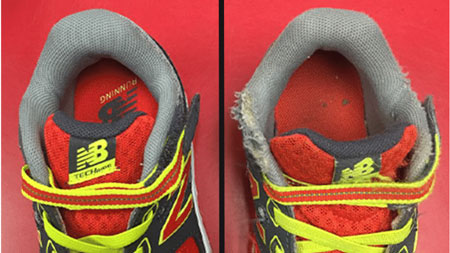
Encourage your child to undo their laces (or Velcro straps) fully before taking their shoes on or off. This one habit prevents unnecessary stretching and helps the shoe hold its shape and fit for much longer. The comparison below shows a brand-new shoe next to one that’s been repeatedly forced on and off without loosening the closure — notice how the heel counter on the right has stretched out of shape.
Proper lacing is a simple, no-cost way to prevent heel slippage and help your child’s shoes fit comfortably and securely all day.
Frequently Asked Questions
The most common causes are an improperly sized shoe, laces that aren’t using all the eyelets, a shoe design with a looser heel construction, or a naturally narrow heel shape. Start by confirming the shoe size is accurate, then try the heel lock lacing technique below.
It works on any sneaker with shoelaces and at least two sets of eyelets. It won’t work on Velcro or slip-on styles, since there’s no lacing to adjust.
Forcing shoes on or off without loosening the laces (or Velcro) stretches out the heel counter over time, which can actually cause or worsen heel slippage in a shoe that originally fit well. Undoing the closure fully each time helps the shoe keep its shape and support much longer.