Orthotic Inserts for Kids with Flat Feet: Enhance Gait and Posture
Last updated: August 2026 | By Juan Valenzuela, Certified Children’s Shoe Fitter
Has your child been diagnosed with flat feet and complains about foot or leg pain? As a shoe fitter, I’ve helped many children with flat feet find the right combination of shoes and orthotics. Orthotic inserts for kids with flat feet can provide the support needed to alleviate pain and improve foot alignment. By supporting the arch, orthotics help distribute pressure more evenly across the foot, reducing strain on the muscles and ligaments.
My Take on Orthotic Inserts for Kids with Flat Feet
Over the years, I’ve become familiar with the shoes and orthotics that genuinely help kids with flat feet. I want to be upfront: I’m not a medical professional, but I’ve seen firsthand the real difference the right orthotic can make in a child’s life. It’s remarkable how something as simple as fitting a child with the correct orthotic can improve their walking gait, balance, and overall posture.
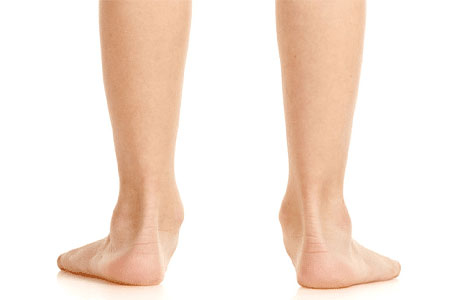
Be Proactive — Don’t Take a “Wait and See” Approach
If your child has been diagnosed with flat feet, I recommend taking action sooner rather than later. The first seven years of a child’s life are considered the “golden years of treatment opportunity” — during this window, structural changes in the foot and lower extremities are much more achievable with supportive treatments like orthotic inserts.
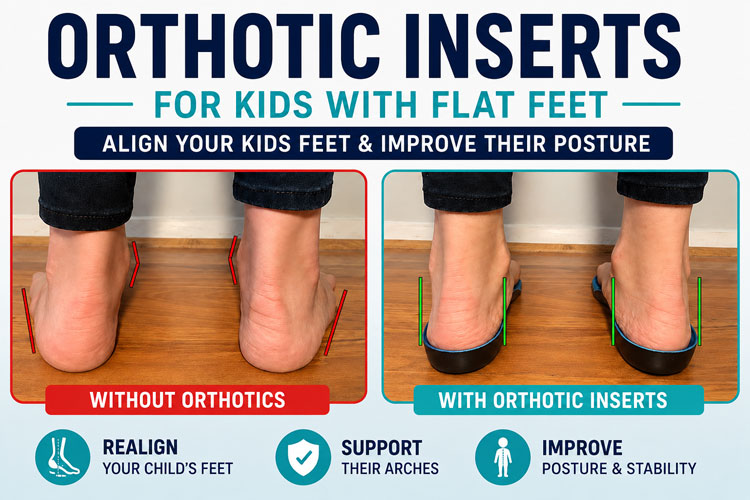
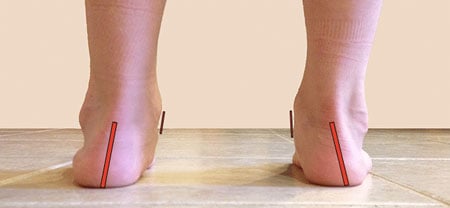
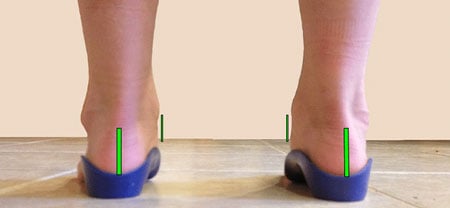
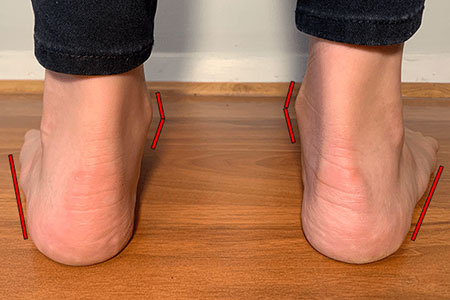
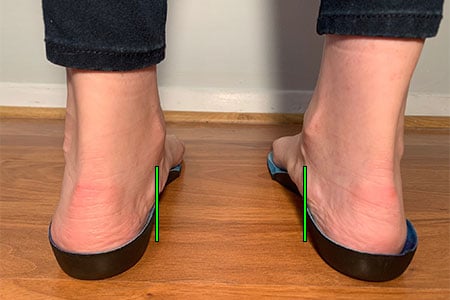
The right orthotic insert can help align a child’s feet, preventing them from collapsing and helping your child walk and run straighter. Below are a couple of before-and-after examples showing children with flat feet standing barefoot versus wearing supportive orthotics.
Before and After: The Impact of Supportive Orthotics
How Do Orthotic Inserts Help Kids with Flat Feet?
The orthotics I recommend help promote better posture, which can positively affect the body’s overall biomechanics. By supporting proper foot alignment, orthotics can also reduce the risk of related issues, like knee or back pain, as a child grows.
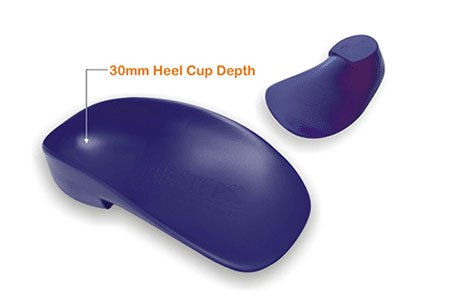
1. Deep Heel Cups. With flat feet, you’re not just supporting the arch — you’re mechanically supporting the part of the foot that’s actually causing the flatness: the heel. A deep heel cup stabilizes the heel and provides the additional support needed to help prevent overpronation, the excessive inward rolling of the foot.
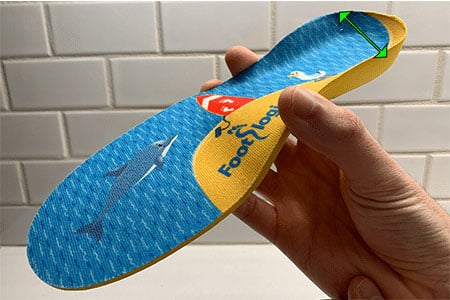
2. Built-In Arch. The orthotics I recommend provide genuine arch support that helps lift a child’s arch and align the foot correctly. This support is important for maintaining balance and reducing strain on the feet and legs — proper arch support can meaningfully ease the discomfort associated with flat feet and promote healthier foot mechanics over time.
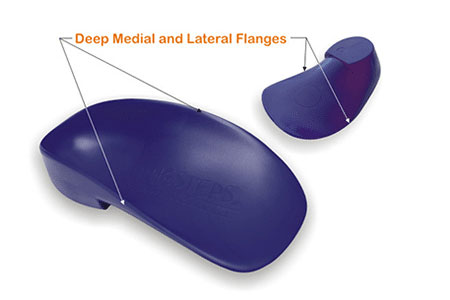
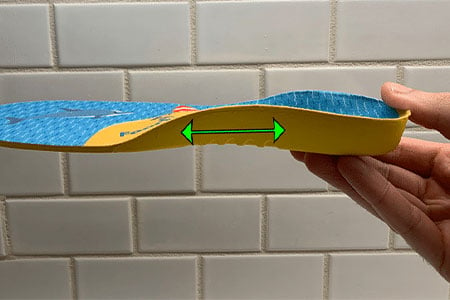
I recommend two specific orthotic inserts for kids with flat feet, and which one fits your child’s needs best depends on the degree of their pronation. The main reason I recommend these two is that they provide genuine arch and heel support while remaining less invasive than some other options — letting a child’s foot and leg muscles keep developing on their own while still being supported.
Orthotic Inserts for Mild Pronation
These are my go-to orthotic inserts for children with mild cases of pronation who occasionally complain about foot or leg pain. Disclosure: this post contains affiliate links, and I may earn a small commission at no extra cost to you.
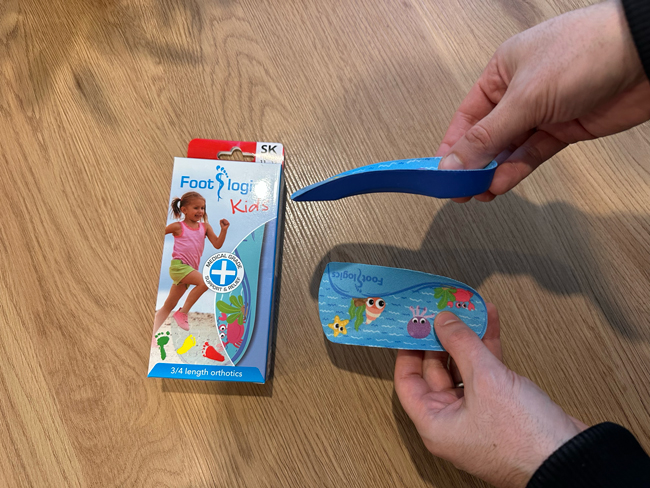
- Order the 3/4 length Footlogics orthotic inserts for toddlers on Amazon
- Fits toddler shoe size 5 through little kid shoe size 13
- 3/4-length design makes it easy to fit into most shoes
- Can be trimmed to size with scissors if needed
- No need to remove the shoe’s original insole before fitting this orthotic
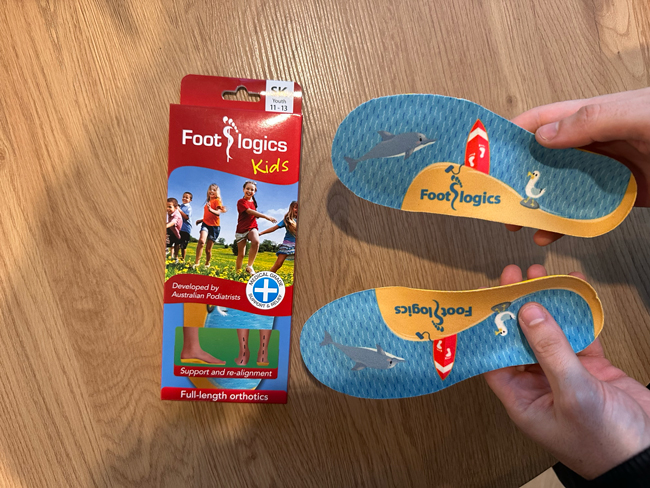
- Order the full-length Footlogics orthotic inserts on Amazon
- Fits toddler shoe size 5 up to big kid shoe size 3
- Can be trimmed to size with scissors if needed
- You must remove the shoe’s original insole before placing this orthotic inside
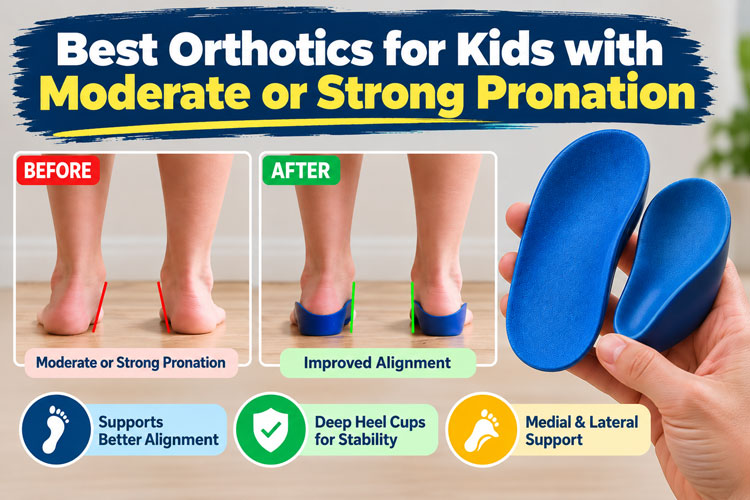
Orthotics for Moderate to Strong Pronation
These orthotic inserts work best for children whose feet turn inward considerably and who complain more regularly about foot or leg pain.
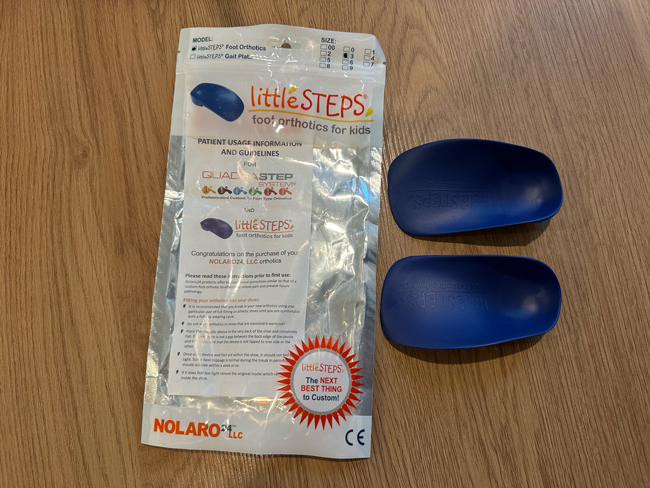
- Order littleSTEPS® Orthotics from their official website — use referral code JVFCS100121 at checkout
- No need to remove the shoe’s original insole before fitting this orthotic
- The 3/4-length design makes it easier to fit into a range of shoe styles
- Use this sizing chart to find the right size based on your child’s shoe size
Choosing the Right Shoes for Orthotics
For your child to get the full benefit these orthotics offer, they need to be fitted inside the right pair of shoes — supportive and genuinely deep.
Deep shoes give the orthotic room to sit properly without crowding the foot, so it can actually do its job rather than fighting for space. I’ve put together a separate resource with a list of supportive, deep shoes that work well alongside orthotics.
Are Laced Shoes More Supportive Than Velcro?
For children who wear orthotics, I recommend lace-up shoes over velcro closures. Laces provide better support and stability, and hold an orthotic in place more effectively than a velcro strap typically does. Laces also lock and support the heel more securely. I use a specific lacing technique for children who wear orthotics that’s worth checking out if heel slippage is an issue.
Personalized Orthotic and Shoe Recommendations
Every child’s feet are unique, and so are their needs. A personalized approach ensures an orthotic doesn’t just fit well but actually addresses the specific issue your child is facing. Don’t hesitate to reach out by email if you’re having trouble finding the right orthotic or shoe for your child with flat feet.
This article reflects my experience as a shoe fitter and isn’t a substitute for medical advice. If you have concerns about your child’s flat feet or pronation, please consult their pediatrician or podiatrist.
Yes — both Footlogics and littleSTEPS are non-prescription, over-the-counter orthotics, which is part of why I recommend them as a starting point. If your child’s condition is more severe or these don’t provide enough relief, a custom, prescribed orthotic through a podiatrist may be the better next step.
It depends on the depth of your child’s current shoes. If there’s enough internal depth for the orthotic to sit without crowding the foot, you can often use existing shoes. If the shoes feel tight once the orthotic is in, that’s a sign you need a genuinely deeper style — see my linked resource above for options built with that extra room in mind.
This varies by child and by the degree of pronation, but many parents notice improvements in gait and comfort within a few weeks to a couple of months of consistent wear. For more structural changes, ongoing use through the “golden years” of foot development tends to produce the most lasting results.
A general guide: mild pronation usually shows a slight inward roll with only occasional foot or leg pain complaints, while moderate to strong pronation shows a more pronounced inward collapse and more frequent discomfort. That said, this is a judgment call best made alongside your child’s pediatrician or a podiatrist, especially if you’re unsure which category applies.