
Lacing Technique to Help Prevent Toe Walking
Last updated: August 2026 | By Juan Valenzuela, Certified Children’s Shoe Fitter
Do you have a child who’s been toe walking lately? As a shoe fitter with a passion for helping children achieve optimal foot health, I’ve seen firsthand how the right shoes and lacing technique can make a real difference. If left untreated, toe walking can lead to poor coordination, muscle tightening and stiffness, and pain in the Achilles tendon.
Choosing the right shoe helps prevent toe walking by encouraging a more natural gait. But once you have the correct anti-toe-walking shoes, it’s just as important to lace them correctly, so your child gets the full benefit the shoe is designed to provide.
How to Tie Shoes to Prevent Toe Walking
There’s a specific shoe lacing technique that’s the most effective for toe-walking children. A coworker with over ten years of shoe fitting experience taught me this technique, and it’s made a real difference in helping “ground” the kids I’ve worked with.
Step One. Begin by lacing your child’s shoes normally with a crisscross pattern, but leave the top two eyelets unlaced.
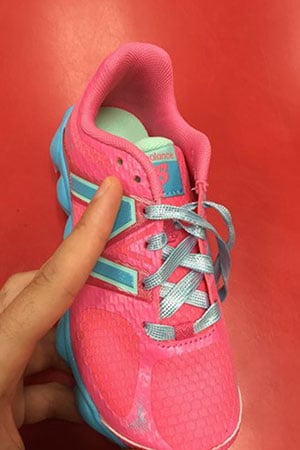
Step Two. Thread each lace end through the top eyelet on the opposite side first.
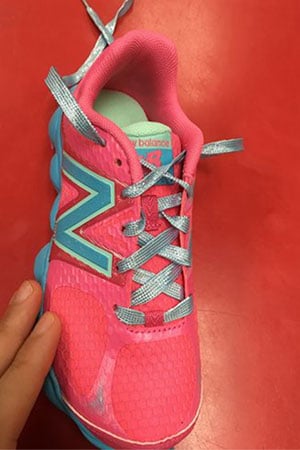
Step Three. Pull the laces back through the eyelets you originally left open, then cross and tie as usual.
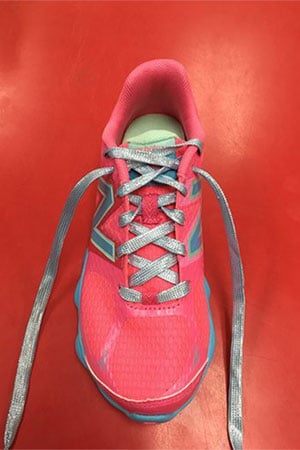
Why Is This Lacing Technique Effective for Toe-Walking Children?
This technique pushes your child’s foot back, securing it against the back of the shoe — which serves as a physical reminder for your child to stay off their toes.
Many children who toe walk also wear orthotics inside their shoes as part of treatment. This lacing technique works especially well for these kids too, since it prevents heel slippage and helps keep the orthotic properly seated throughout the day.
Getting Durable Shoelaces for Your Child’s Shoes
Selecting the right shoelaces matters just as much as the technique itself. Durable laces that actually stay tied are essential — otherwise, the shoe can loosen throughout the day and undo the fit you just worked to create. I recommend the DELELE Oval Athletic Shoelaces, made from durable polyester with a grippy half-round profile that resists loosening better than the thin, flat laces that come standard with most kids’ sneakers.
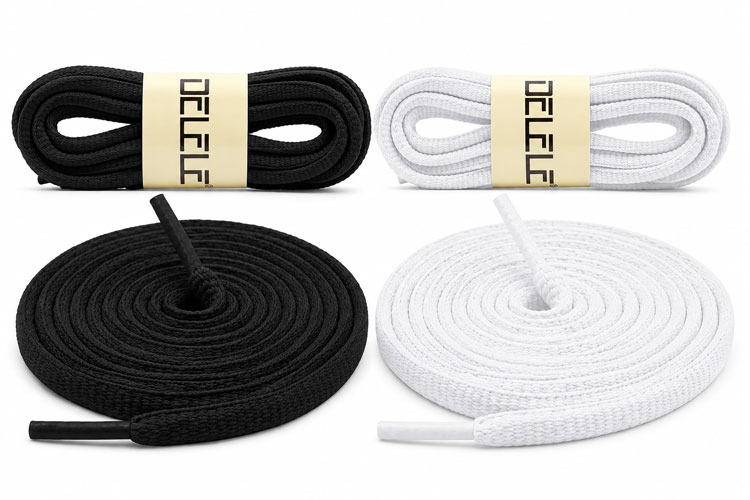
- Order on Amazon
- 1/4″ half-round oval profile, polyester construction
- Sold in packs of 2 pairs (4 individual laces)
- Available in 40+ colors and multiple lengths
- Count your child’s eyelets to order the correct length
- Disclosure: this post contains affiliate links
Additional Resources: Anti-Toe-Walking Shoes for Kids
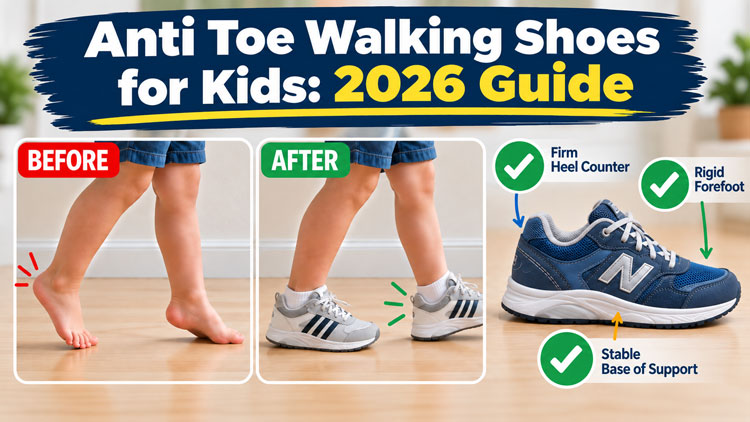
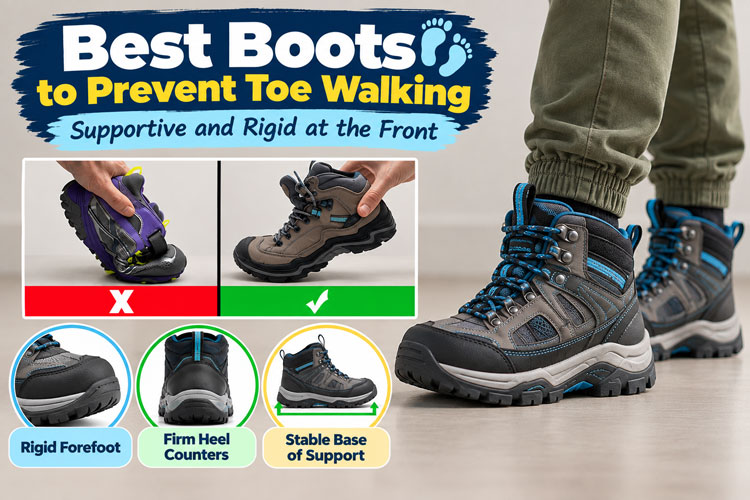
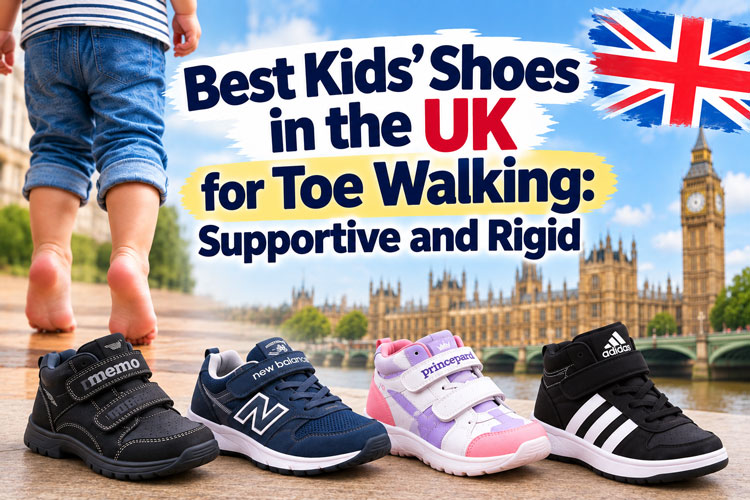
The anti-toe-walking sneakers I recommend are designed with built-in support and features that promote proper foot alignment. They typically include:
- A rigid front to help discourage toe walking
- A firm heel counter to support the rearfoot
- A slightly elevated heel to encourage heel strike
- Structured insoles that provide additional arch support
Contact Me for Specific Shoe Recommendations
Not all toe walkers are the same, and shoes that work really well for one child might not work as well for another. If you’re unsure which shoes are best for your child’s toe walking, or you’d like me to take a closer look, feel free to reach out by email.
Frequently Asked Questions
Yes — the mechanical effect (locking the heel back against the shoe) works the same regardless of the underlying cause. That said, if sensory processing is the primary driver of your child’s toe walking, this technique is best used alongside, not instead of, guidance from an occupational therapist familiar with your child’s specific sensory needs.
This varies quite a bit depending on the underlying cause and how consistently the shoes are worn. Many parents notice a difference in gait within a few weeks of daily wear, especially when the technique is paired with genuinely supportive anti-toe-walking shoes. If there’s no change after a couple of months, it’s worth revisiting the situation with a pediatrician or physical therapist.
These are the three most common reasons: flat feet, sensory issues, and instability. Children who toe walk can genuinely benefit from physical therapy to address the underlying cause and learn to properly walk heel to toe. Whichever approach you take, I strongly encourage you not to take a “wait and see” approach — the longer toe walking goes unaddressed, the more it can affect not just the feet, but the muscles and joints connected to them.

First, I am very grateful for so much information that you have made available to parents of toe-walking children ? In a country where getting proper medical help requires jumping through hoops even after insurance and paying so much – you come across as an angel for your active help.
We asked several doctors in the US about my son’s toe-walking and they all said it will go away. Then when he was 11, we went to India and showed his walking to a pediatric orthopedic surgeon and neurologist both of whom said that it is idiopathic and he does not have a flat foot. We went to a local physiotherapist they recommended while we were in India and she was shocked that my son’s condition was ignored by US doctors for so many years. She said they treat kids with toe-walking in India from 9 months of age right when they start to walk because it’s easiest to fix and prevents problems in the tendon muscles and other hip joints and muscles. In my son’s case, his muscles around his hip and feet have become tight and less flexible because he has compensated for the toe-walking in other connected joints. They said he may never fully regain flexibility and mobility back in those muscles fully but physiotherapy and reversing his toe-walking will give him strength and improvement recovery.
Sorry for the long story, however we will try out the shoes that you are recommending with the shoelace tying technique.
Hello Ananya,
Thank you so much for sharing your experiences and emphasizing the importance of being proactive and not taking the “wait and see approach” when it comes to treating and preventing toe walking.
Keep us posted about how the shoes work out for your son.