
Anti Toe Walking Shoes for Kids: 2026 Guide
Last updated: September 14, 2026 · Written by Juan Valenzuela, Certified Children’s Shoe Fitter
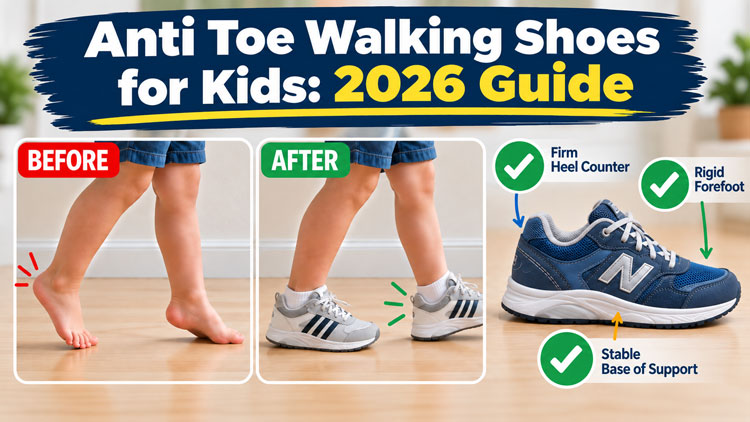
Are you concerned because your child keeps walking on their toes? Toe walking in toddlers isn’t anything to panic about. But if it continues beyond age three, early intervention may be helpful, since the sooner you start addressing it, the easier it tends to be to manage. For older children who walk on their toes, choosing the right shoes matters a great deal. Anti-toe walking shoes can help guide your child’s feet into a more typical walking pattern and promote heel-to-toe walking.
Have You Been Dismissed by Your Family Doctor?
Many families who visit the shoe store where I work raise the same concern: “I took my toe walker to my family doctor and was told not to worry, since the condition might go away on its own — but I am worried!” I always recommend being proactive and avoiding a “wait and see” approach with toe walking, since waiting for the condition to disappear on its own can let it get worse.
The Role of Shoes in Managing Tip Toe Walking
As a certified children’s shoe fitter, I’ve spent years helping kids with foot and leg concerns find the right footwear. The specialized children’s shoe store where I work focuses on fitting supportive shoes for children with conditions such as toe walking, flat feet, and weak ankles. Because of this experience, physical and occupational therapists regularly refer families to our store for properly fitted shoes — and, when needed, orthotics — to support healthier foot posture and walking patterns.
Key Features of Anti-Toe Walking Shoes
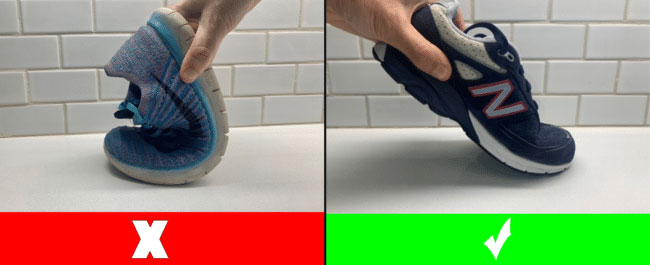
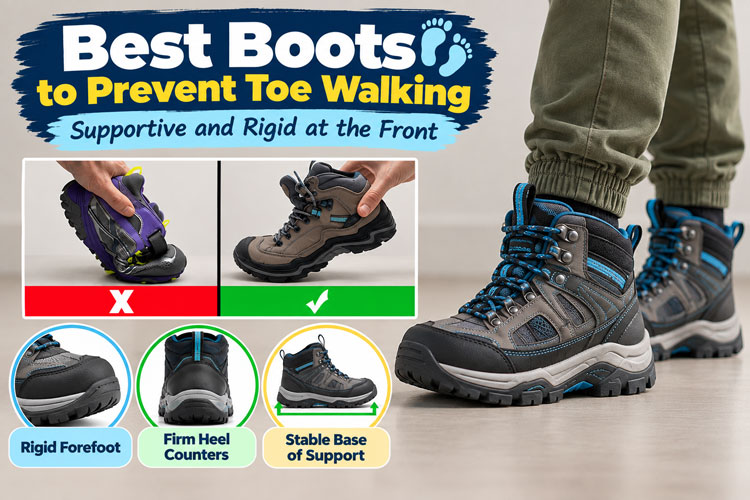
1. Avoid shoes that are too flexible. Shoes with too much flexibility make it easy for children to rise up onto their toes. Look for shoes that are rigid at the front instead.
2. Find shoes with a stable base of support. Some children rise onto their toes to help improve poor balance and coordination. A stable base of support puts your child’s feet in a more grounded position and improves overall balance and stability.
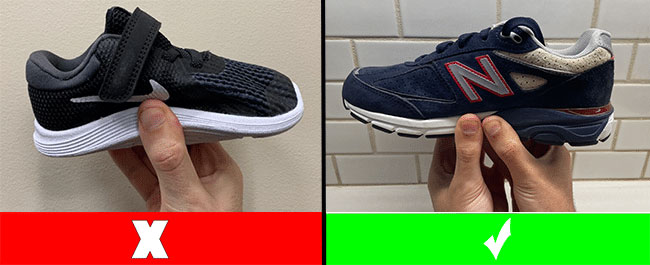
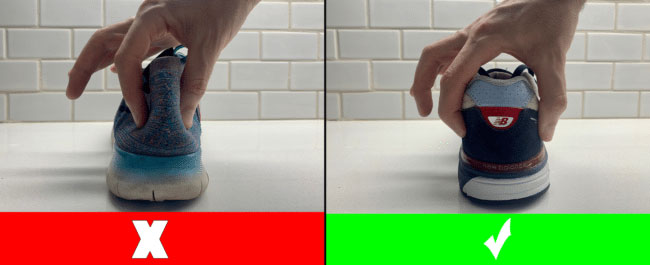
3. Make sure the heel counter feels firm. The heel counter — the stiff part at the back of the shoe — provides the stability your child might need. It should feel firm, not soft.
Can Children Simply Outgrow Toe Walking?
Some children do outgrow this condition, but why take the chance and hope it resolves on its own? Most parents I speak with wish they had acted sooner. Pediatricians aren’t foot experts, and they’re not always aware that certain toe-walking cases can be treated and prevented with the right shoes.
Footwear plays a critical role in supporting your child’s foot development, especially during the “golden years of treatment opportunity” (ages 1–7). Persistent toe walking can lead to muscle stiffness or foot alignment issues over time, which is why early intervention tends to help.
Are High-Top Shoes More Effective for Preventing Toe Walking?
Not necessarily. I’ve fitted plenty of regular sneakers that made a real difference in helping a child walk heel to toe, but I’ve also noticed many medical professionals prefer high-tops over regular sneakers.
Best Anti-Toe Walking Kids’ Shoes to Prevent Toe Walking
I keep this list updated based on what I actually see working in the store — not just specs on a page. Every shoe below has been personally fitted on children who walk on their toes, and I’ve noted the toe walking severity and foot width each style works best for, so you can find the right fit without guessing.
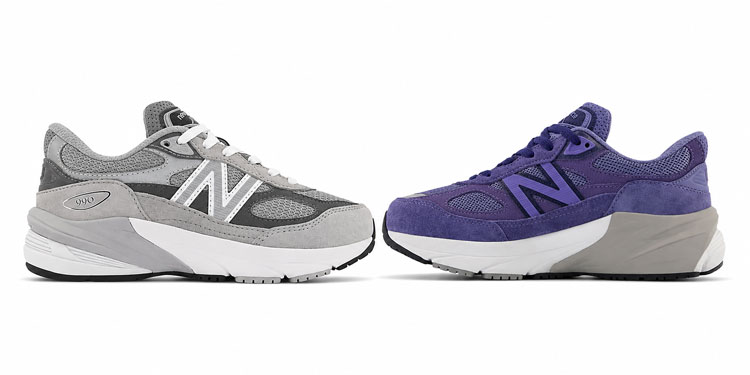
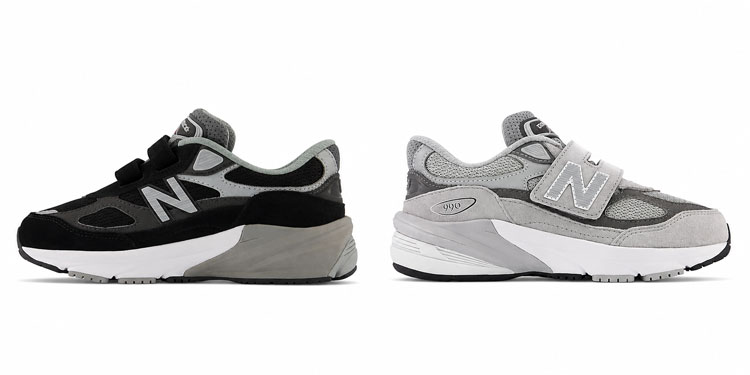
990v6 by New Balance
Best for: Moderate to strong toe walking | All foot widths
This is my top recommendation for children who walk on their toes, across the board. The 990v6 has an exceptionally firm midsole and one of the most rigid front sections available in a children’s athletic shoe — exactly the feature that makes it one of the most effective anti toe walking shoes on the market. The results speak for themselves: this is the shoe most commonly recommended by pediatric physical therapists for children with persistent toe walking and flat feet. The main drawback is price, which is higher than most.
Key Features
- Available for toddlers, little, and big kids
- Order with laces on the New Balance website or Amazon
- Velcro version also available on the New Balance website or Amazon
- Firm heel counters, stable base of support, and semi-straight lasts
- Removable insoles
- Sizing tip: Order a half size larger than your child’s current foot size
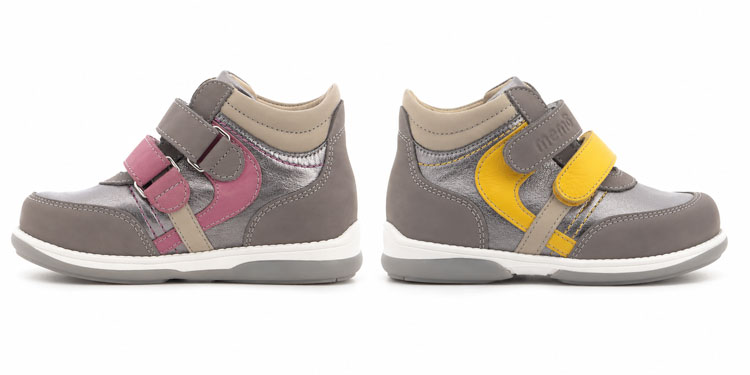
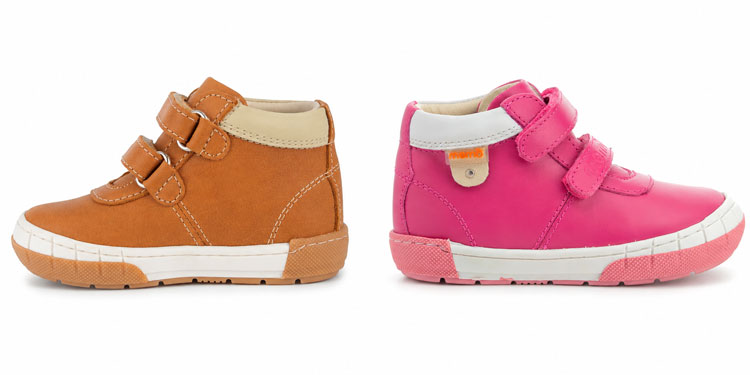
Gabi and Alvin by Memo (Orthopedic Shoe)
Best for: Strong toe walking | Medium and wide feet
The Memo Gabi is a purpose-built orthopedic shoe designed specifically for children with strong toe walking tendencies and flat feet. The rigid outsole — one of the stiffest available in a children’s shoe — is particularly effective at discouraging toe walking because it physically limits the upward bend at the front of the foot that makes getting onto the toes so easy. It’s more expensive than a typical anti toe walking shoe, but the design is medically focused — this is what you buy when standard athletic shoes haven’t been enough.
Key Features
- Available for toddlers and little kids
- Order the model Gabi or Alvin on Amazon
- Also available in a Mary Jane style and a version for older kids called Memo Polo
- High-top design with stiff heel counters
- Sizing tip: Order a half size larger than your child’s current foot size. Refer to Memo sizing chart
Elliott by Stride Rite
Best for: Mild to moderate toe walking | All foot widths
This high-top bootie from Stride Rite is one of the best anti toe walking shoes for toddlers specifically. The ankle-wrapping design provides extra lateral stability that a low-cut shoe can’t match — which is especially important for very young toe walkers whose ankles are still weak and whose toe walking is linked to poor balance. For toddlers who get on their toes to compensate for instability, the extra ankle height combined with the rigid outsole makes a real difference. It’s affordable, easy to put on, and provides significantly better support to prevent toe walking than typical toddler sneakers.

Key Features
- Available for toddlers
- Order on Amazon
- 100% leather construction
- High-top design provides extra ankle support
- APMA Seal of Acceptance
- Sizing tip: Order a whole size larger than your child’s current foot size
Tracks by Timberland
Best for: Mild to moderate toe walking | Medium and wide feet
The Timberland Tracks is a rugged, high-top anti toe walking shoe well-suited for active kids who spend time outdoors or on uneven surfaces. The rigid outsole helps prevent toe walking by limiting forefoot flexibility, while the high-top design adds ankle stability — a useful feature for children who get onto their toes to compensate for poor balance. The trade-off is weight — this shoe is heavier than the others on this list, which may slow down very young walkers who are still building strength.

Key Features
- Available for toddlers and little kids
- Order on Amazon
- High-top design for extra ankle support
- Water-friendly construction
- Sizing tip: Order a whole size larger than your child’s current foot size
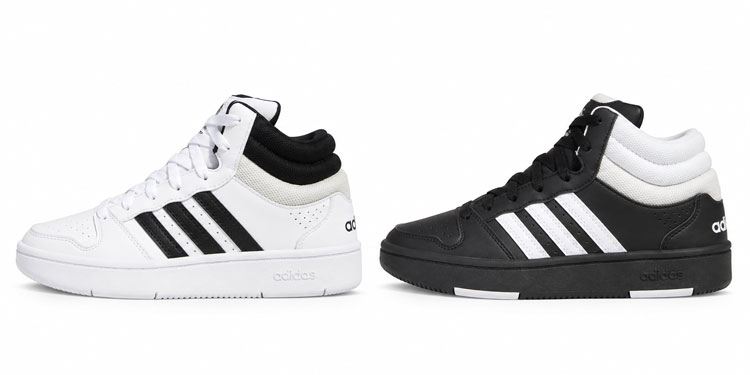
Adidas Hoops Mid Classic Shoe
Best for: Mild toe walking | Medium feet
These Adidas basketball-inspired high-tops work well as anti toe walking shoes for older children who need ankle containment in a more casual, everyday style. The mid-top design provides added ankle support, and the firm, flat outsole is less flexible than most standard sneakers — both features that help discourage toe walking during daily activity. It’s a good option for school-age children who are self-conscious about wearing more clinical-looking footwear.
Key Features
- Available for little and big kids
- Order on Amazon
- Mid-top design for added ankle containment
- Firm, flat outsole with limited forefoot flexibility
- Lace closure for a secure, adjustable fit
- Sizing tip: Order a whole size larger than your child’s current foot size
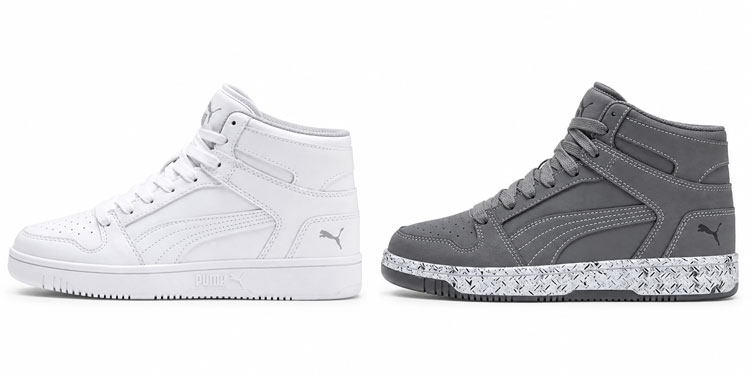
Puma Rebound Layup
Best for: Mild toe walking | Medium and wide feet
The Puma Rebound Layup is a high-top anti toe walking shoe option for older children who need ankle support in a style they’ll actually want to wear. The high-top collar provides meaningful ankle containment, and the structured outsole offers more resistance to forefoot flexion than a typical casual sneaker. Available in both medium and wide widths, it’s one of the more accessible options on this list for children with wider feet who need toe walking support without moving to a medical-grade shoe.
Key Features
- Available for little and big kids
- Order on Amazon
- High-top design for ankle containment and additional stability
- Structured outsole with moderate forefoot rigidity
- Lace closure for a secure, customizable fit
- Available in medium and wide widths
- Sizing tip: Order a whole size larger than your child’s current foot size
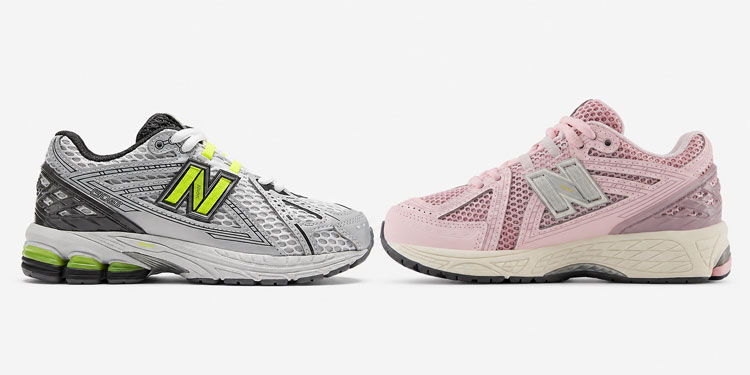
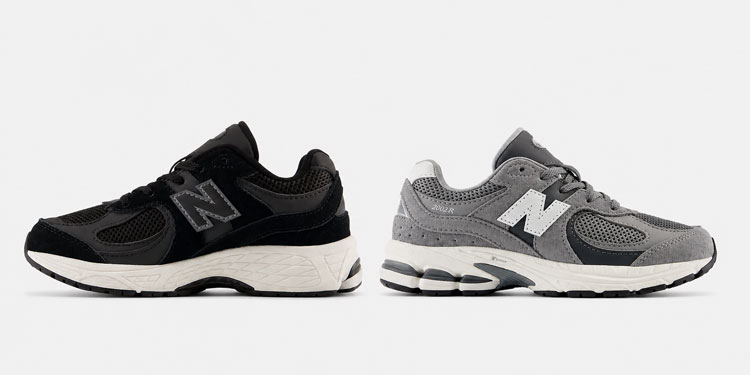
2002/1906 by New Balance
Best for: Moderate to strong toe walking | Medium and wide feet
The 2002 sits between the Arishi and the 990v6 in terms of price and support level, making it a strong all-round anti toe walking shoe for families who want New Balance quality and forefoot rigidity without paying the 990v6 premium. The 2002 is the primary recommendation for toddler and little kid sizes; the 1906 covers bigger kid sizes with the same support profile and the same toe walking prevention benefits.
Key Features
- Available for toddlers, little, and big kids
- Order the 2002 or 1906 on the New Balance website
- Firm heel counters, stable base of support, and semi-straight lasts
- Sizing tip: Order a whole size larger than your child’s current foot size
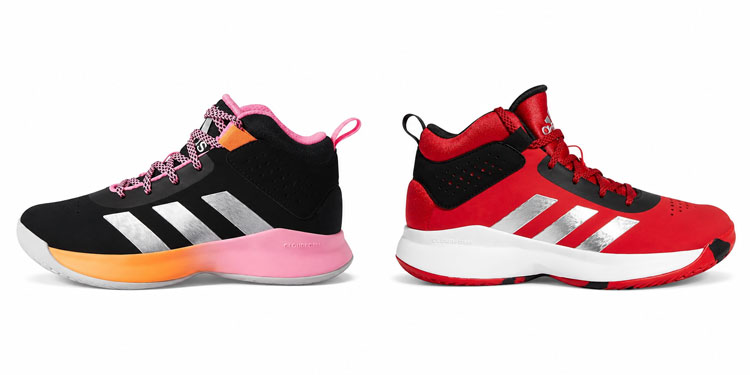
Cross Em Up by Adidas
Best for: Mild to moderate toe walking | Medium and wide feet
This basketball-inspired high-top is one of the best anti toe walking shoes for active, sports-oriented kids. The firm midsole and rigid outsole limit the forefoot flexibility that makes it easy for children to get onto their toes, while the high-top design adds the ankle stability that many toe walkers need. It’s a great choice for children who toe walk and are active in sports, since it holds up well during running, jumping, and quick direction changes.
Key Features
- Available for little and big kids
- Order on Amazon
- High-top design for additional ankle support
- Versatile — suitable for sports and everyday wear
- Sizing tip: Order a whole size larger than your child’s current foot size
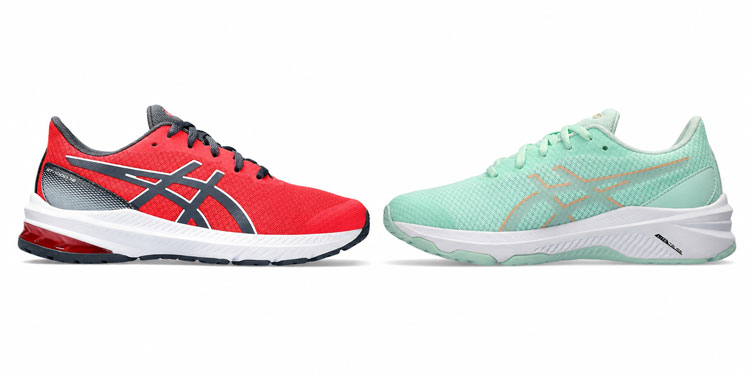
GT-1000 by Asics
Best for: Mild to moderate toe walking | Narrow to medium feet
Most anti toe walking shoes run wide, which works well for wide-footed children but creates a poor fit for kids with narrow feet. The GT-1000 is one of the few structured shoes that effectively prevents toe walking in a narrower profile — making it the top choice for toe walkers who need forefoot rigidity and heel support without the excess width of most stability shoes.
Key Features
- Available for little and big kids
- Order on Amazon
- Firm heel counters, stable base of support, and semi-straight lasts
- Sizing tip: Order a whole size larger than your child’s current foot size
Be Aware of Shoes That Are Too Large — Here’s Why
Don’t leave too much growing room in your child’s shoes, since this actually makes it easier for them to get on their toes. Give your child the correct amount of growing room — not too much.
How to Order the Correct Shoe Size Online
Before buying online, you need your child’s exact foot size. Shoes that are too large can contribute to toe walking, since the extra space at the front makes it easier for kids to get up on their toes. This virtual shoe fitting guide is a free resource to help you get it right.
Would You Rather Receive Specific Shoe Recommendations?
Choosing the right shoe can feel overwhelming with so many options. I’m happy to provide recommendations tailored to your child’s unique foot shape. Reach out via email with:
- Whether your child has flat feet or any other foot condition
- Whether your child toe walks more with shoes on or barefoot
- Your child’s foot shape (narrow, medium, wide, or extra wide)
- Which country you’re contacting me from (so I can recommend shoes available to you)
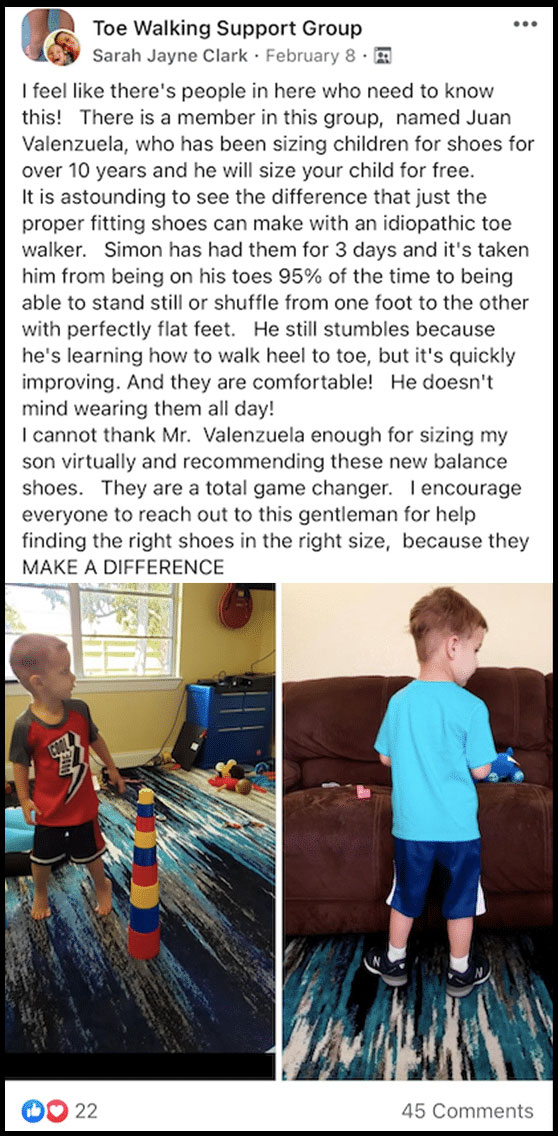
Families Testimonials of Kids Walking On Tippy Toes
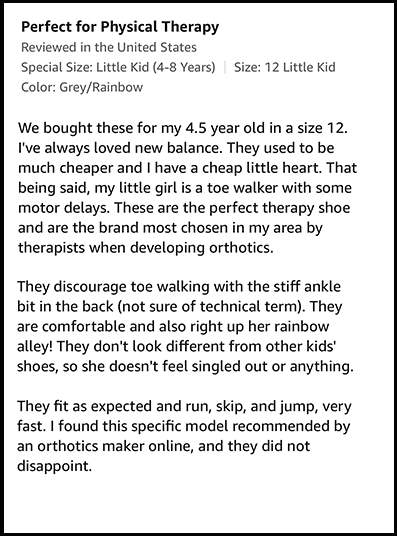
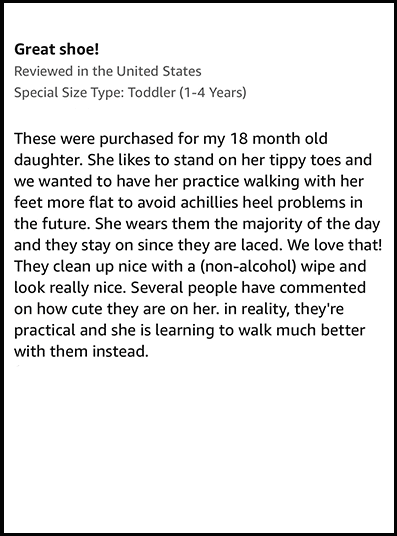
Hearing from families who have experienced success with specific shoes can provide valuable insights for other parents. Here are a few testimonials from families I helped find the right shoes for their tip toe walking children:
Why Do Kids Walk on Their Toes?
Understanding the root cause matters before deciding on the best approach. When doctors can’t identify a reason, they call it “idiopathic” — meaning the exact cause is unknown, with the implication that the child simply prefers walking that way. I’m not a medical professional, but in my experience there’s usually an underlying reason a child continues to toe walk.
The most common reasons I believe children toe walk:
- Flat feet. Kids with flat feet have poor balance and coordination. Rising onto the toes puts the foot in a more stable position and temporarily improves balance — but it’s not normal, and it promotes improper muscle balance development. I’d estimate 80% of the toe walking children I’ve helped were flat-footed.
- Short Achilles tendon. This can physically prevent the heels from touching the ground.
- Sensory perceptions. Check the surface your child is walking on — the feeling of cold tile or a furry carpet can exaggerate the symptoms.
- Vision impairments. A short vision check for tracking and convergence can be worthwhile. Some children need vision therapy to strengthen their eyes, and many vision specialists report seeing a lot of toe walking tied to vision issues.
Watch My YouTube Video
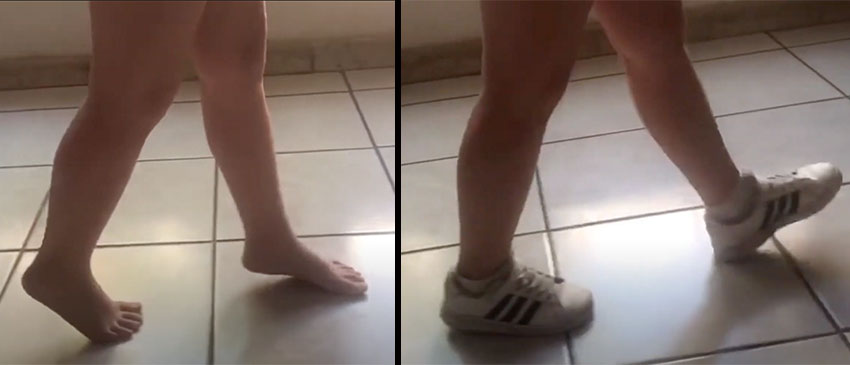
I created a video with real-life examples of children walking barefoot and then wearing a pair of the anti-toe-walking shoes I recommend, so you can better visualize the features your child’s shoes should have.
The list above covers shoes, but sometimes a child needs an orthotic fitted inside the shoe for extra support and stability.
Orthotics to Prevent Tip Toe Walking
I always recommend starting with the supportive shoes above — in many cases, the right shoes alone help improve walking patterns. If you don’t see noticeable improvement after trying supportive footwear, adding orthotics is the next step.
Two types of orthotics have proven especially effective for children who walk on their toes:
- Carbon fiber orthotics: Rigid in the front and help discourage toe walking by limiting excessive upward bending of the foot. Important: place this type under the shoe’s original insole.
- 3/4-length rigid orthotics: Provide targeted support without taking up too much space inside the shoe. I cover the key features and benefits of this option in a separate, dedicated resource.
Don’t Forget Boots and Sandals
Sneakers aren’t the only footwear that matters for toe walking. For colder months, see Best Boots to Prevent Toe Walking — boots tend to be stiffer at the front by nature, which can make them especially effective. For summer, Sandals for Toe Walking covers the one style I’ve found genuinely holds up for toe walkers, since most sandals offer far too little structure.
Lace Shoes the Right Way
Shoes with laces generally support the goal here better than Velcro, but only if they’re tied correctly. This lacing technique is built specifically to help kids walk heel to toe.
Is Toe Walking in Babies and Toddlers Common?
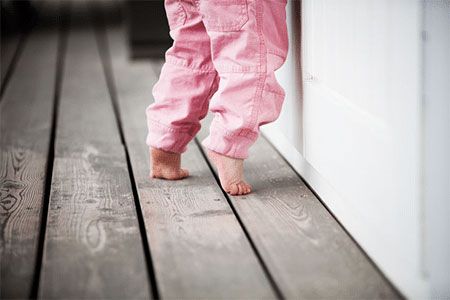
Babies and toddlers often experiment with toe walking as part of natural growth and exploration — many toddlers are simply exploring different ways of moving, or enjoy the sensation of being on their toes. However, if toe walking continues beyond the toddler years (past age 3), it’s worth taking action, since it can lead to stiff muscles — particularly tight calves — and can compromise stability, making falls more likely.
Don’t let a doctor tell you that surgery or casting on both feet is the only approach. Sometimes doctors recommend casts for as long as 8 weeks. Casting, surgery, and leg braces should generally be a last resort — start with the least invasive approach first.
Why Do Autistic Kids Walk on Their Toes?
In some cases, children with autism spectrum disorder (ASD) toe walk as part of sensory-seeking behavior. For these children, the sensation of walking on their toes may provide proprioceptive feedback they find calming or enjoyable.
Effective Toe Walking Exercises for Kids
Footwear is just one part of a comprehensive approach to managing toe walking, which may also include physical therapy or other interventions. This resource has a list of exercises that can further help discourage toe walking alongside the right shoes.
Frequently Asked Questions About Toe Walking in Children
Yes, it’s common and often part of normal development, and many children outgrow it naturally. If it continues past age three, it’s worth monitoring more closely.
Worth looking into further if it continues past age three, happens most of the time, or comes with frequent falls.
Sometimes — high-tops with a firm heel counter and stable sole can limit excessive ankle movement and provide additional support, which may help. But plenty of regular sneakers work just as well if they’re rigid enough at the front.

My granddaughter is now 10 years old and it’s been toe walking ever since she started walking. And we’ve had her tested for autism, and we will be going for a second opinion. But in the meantime we need something really strong and comfortable that can help her.
Hello,
Thank you for reaching out — I’m happy to help.
To recommend specific shoes that may help prevent your granddaughter from walking on her toes, I’ll first need a bit more information. Could you please let me know her foot shape (narrow, medium, wide, or extra wide), the shoe size she currently wears, and the country you’re contacting me from? That way, I can suggest options that are available in your area.
Hi,
Any thoughts on the New Balance 9060 for little kids?
Hi Kris—
It’s definitely a nice shoe, but it’s not my top choice for kids who walk on their toes. The outsole is quite high, and the bungee-style laces don’t provide the same level of stability as traditional laces, which can make it harder to support proper foot positioning.
Do you have any recommendations for running/walking sneakers, for formerly sensorial 6 year old toe walker, who is very active (runs / uses scooter a lot)
Hello Fiora,
To recommend specific shoes for your son/daughter I first would need to know their foot shape (narrow, medium, wide, extra wide), and the country that you are contacting me from to check what specific shoes you might be able to order. Please feel free to email that information here: fittingchildrensshoes@gmail.com
Hi,
My son is 7.5 years old and we are based out of Melbourne. He walks on his tip toes and has got AFO from the orthotics but we need a stiff shoes so that he can go to school and use them for day to day wearing.
Hello Richa,
Please send me an email with the following information:
The shoe size that your son wears with the AFOs
Whether the shoe needs to be made of a specific color
Email: fittingchildrensshoes@gmail.com
Hello
My name is Shannon
I’m trying to find shoes for my 19 month old boy. He been walking on tip toes and I would like to fix it. Please help.
Thank you
Hello Shannon,
To recommend specific shoes for your son I first need to know wether he has narrow, medium, wide, or extra wide feet. I also would need to know from which country you are contacting me to check what specific shoes are available for you to order.
Hello, My son is 4 year old. He is walking on toes. When i tell him to put steps properly, he walks on heels for sometime and then after some time,he again starts walking on toes. Please help me with proper shoes
Hello Srikant,
In order to recommend specific shoes for your son I first need to know his foot shape (narrow, medium, wide, extra wide), and from what country you are contacting me.
Did your medical professional tell you whether your son has flat feet?
Hello. My daughter is 7 years old and is currently in physical therapy twice a week for toe walking. She recently went for an evaluation with an Orthotist for AFO’s (She was referred by her Pediatric Orthopedic Physician). The Orthotist suggested that we purchase her lace up boots without rubbers soles and he would somehow build the sole to accommodate & feet & correct the toe walking. He suggested the boots in lieu of making her wear AFO’s due to the high potential of being made fun of by other children. The problem is that I’ve found it nearly impossible to find a girls size 1 lace up boot without a rubber sole to purchase. Would you happen to know where we can purchase a pair?
Hello Miranda,
I am not sure I understand what the medical professional wants. I have never heard of boots that don’t come with rubber outsoles. What type of outsole does the medical professional want the boots to be made of?
Hii I am looking for a solution for my daughters toe walking , she is two and half years old now, with shoes and outdoor she walks flat ,but at home she walks more on toes, not been identified with any developmental delay or autism ,her size UK 8,Can you suggest good shoes and this orthotic for her and how to order this, I am from Ireland, Is it possible to know cost as well.
Hello Nimitha,
Are you able to order from the shoes I recommend on this article?
Do you believe your daughter can benefit from wearing an orthotic? You state in your comment that when your daughter wears shoes she walks flat on her feet, so I don’t see a reason why you should order the orthotic.
I have been to Physical therapy for my daughter who is 7 years old for her toe walking. But never mention about shoes. A parent told me is because her shoes she walks more on her tippy toes. I need help what shoes I need to buy her to help her from walking on her tippy toes. she has wide feet
Hello Tracy. Have you been told by your medical professional whether your daughter’s toe walking is due to a neurological or neuromuscular condition? Shoes can help treat toe walking as long as it’s due to a neuromuscular condition. For example, children who are flat footed have poor balance and coordination. To combat this, children might raise on the toes to put the foot in a more stable position.
I noticed that you sent me an email so I will be in touch through there.
Thanks for sharing this post it helps to choose the right shoes. Keep it up…
I am happy to help.
Nice tips for shoes
Thank you
Hello there,
I have 7 years old son with autism that started walking on his tiptoe for over a year now. I have tried few different style of shoes with no success. I could really use your guidance in finding the right shoe that could hold up or reduce his tiptoe walking.
Hello Sally,
I am happy to help. I suggest that we start here: How to Measure Your Kids’ Foot – 2 Simple Steps to Determine Foot Length and Foot Width
Once we retrieve your son’s exact foot shape (narrow, medium, wide, extra wide, high instep), I will be able to recommend specific shoes to help treat your sons’ toe walking. Don’t forget to include in your email from which country you are contacting me so I can check what specific shoes are available in your area.
Hi there,
Thank you very much for your website. I so wish that I had access to this years ago. My daughter is 15 years old. She is non verbal autistic. She is 6’5” tall and about 300#. We are unsure as to why she is this tall.
She has a large team of doctors but the orthopedic doctors that we saw were always disappointing. They always said she would either grow out of the toe walking or four years ago said she would eventually end up in a wheel chair but to try wedge sandals. The wedge sandals weren’t a option as she would trip and break a ankle.
We finally found a surgeon who is willing to do tendon release surgery on her soon. It will be a huge undertaking.
She recently had a bone in her foot break from the stress that she is putting on them.
As of now I am finding it very difficult to find shoes that I can get her feet into due to her exaggerated high arches. Plus I will need shoe for her to eventually go into when she can walk again after surgery.
She is walking barefoot right now or very limitedly ( less then 5 minutes) in men’s KEEN Men’s Targhee II Mid Wide Hiking boot in size 10 She has never had orthotics.
I have tried the Keen sandals I saw that you recommended but I could not get her foot in them.
Any advice would be greatly appreciated. There seems to be so little direction out there.
Thank you.
Vicki
Hello Vicki,
I am happy to help.
The first step should be to retrieve your daughter’s exact foot length and shape (medium, wide, extra wide, high instep). You can use this free resource I created: How to Measure Your Kids’ Foot – 2 Simple Steps to Determine Foot Length and Foot Width
Once we retrieve your daughter’s exact foot length and shape I will be able to recommend specific shoes for your daughter.
My 8 year old is on the Spectrum. He has walked on his toes since he started walking which was later than most. Neither his pedi nor his specialist have recommended us to attempt to correct the problem as getting him to stand flat footed causes him much anxiety and balance issues. I’m looking for shoes that will hold up, not deter.
Hello Amber,
I am happy to help you find the correct type of shoes for your son, but first I need to know if your son’s feet are narrow, medium, wide, or extra wide. If you are unsure of your son’s exact foot shape you can follow the instructions here: How to Measure Your Kids’ Foot – 2 Simple Steps to Determine Foot Length and Foot Width
I also need to know from which country you are contacting me from to check what specific shoes are available in your area.
Hi ,
My son is 5 and will not stop toe walking (he can walk heel / toe) but reverts always to toe walking .
We are in the uk and the links you provided don’t do his size 12.5 uk
Could you please advise on a selection of footwear I could try please
Also on the orthotics if possible
Hello Tony,
I am happy to help, but in order to recommend specific shoes I need to know your son’s exact foot shape (narrow, medium, wide, extra wide). If you are unsure of your son’s foot shape please follow the instructions on this article: How to Measure Your Kids’ Foot – 2 Simple Steps to Determine Foot Length and Foot Width
You can also email me at: fittingchildrensshoes@gmail.com
My son is 10 years old and has very wide feet and tiptoes I want to find him some shoes and or Sandals to help his confidence as he will be going into the 5th grade in the fall, Please help!!!
Hello Nancy,
I am happy to help. Do you know if your son’s feet are wide or extra wide? Do you know if your son is flat footed? I suggest that you start by following the instructions on this article and we will take it from there: How to Measure Your Kids’ Foot – 2 Simple Steps to Determine Foot Length and Foot Width
Hello parents I have read some of your comments and I see that your doctors are saying its not a big deal. Well please don’t believe that. They do not grow out of toe walking. My daughter is 9 and is a toe walker. When we finally got to a doctor that referred us to a physical therapist the therapist said to me that she wished doctors would stop telling parents that its not a big deal. My daughter went through serial casting then physical therapy and was fitted for night and daytime braces. She was 7 at the time. The serial casting did work but we were not doing enough physical therapy then insurance only gives a certain amount of visits. Well my daughter is all the way back up on her toes now. Her feet were at negative 10. You help children avoid being toe walkers with certain shoes, but what kind of shoes are best if they are already long time toe walkers like my daughter. Her toes are really spread out from walking on her toes so now we need wide shoes which are almost impossible to find. I’m going crazy we can hardly find shoes for her. Please help.
Hello Kai,
I agree with your statement, most parents I speak with wish they have been more proactive sooner.
Keep in mind that children between the ages of 1 and 5 are undergoing rapid neuromuscular development and toe walking during these years can often be easily managed with proper foot orthotics and correct footwear. Unresolved toe walking after age 5 or older, although still manageable, can become a bit more difficult to control. Your daughter is 9 years old so we might have to try a pair of shoe and orthotics as well.
I suggest that you follow the instructions on this article: How to Measure Your Kids’ Foot – 2 Simple Steps to Determine Foot Length and Foot Width and once I know your daughter’s exact foot shape I will be able to recommend shoes, and probably orthotics as well.
Hi
my little girl is 2 years and 7 months and walks on her tiptoes It might be a sensory issue ,just wondering if u could recommend a boot or shoe to try and stop her from doing it ?
Thanks
Hi Mel,
I believe you contacted me via Facebook as well. I am waiting for you to send me your child’s foot measurements to proceed with specific shoe recommendations.
Hi Juan Pablo
I have an almost 7 year old who persistently toe walks. She was cast for a few weeks at 5 years old which helped but she soon reverted to tip toes. She saw a lovely physiotherapist for 3 years who really helped with her balance and coordination but now she’s at school full time she doesn’t want to return.
The other challenge is that she has to wear school uniform and school schools which must be black and leather. She’s managed to “break in” her Clark’s Mary Janes so that she can effectively toe walk and in sneakers she’s on her toes constantly. Sandal wise (we live in Australia so they are necessary, she’s worn Birkenstock’s as people claimed she wouldn’t be able to toe walk. We’re just heading into summer again and 6 weeks off school do you have any recommendations for her?
Thank you in advance
Hi Holly,
We need to look for shoes that are rigid at the front. Other factors to consider are that you shouldn’t allow for too much growing room inside the shoes (as this makes it easier for kids to get on their toes), and shoes that come with shoelaces are more effective in preventing children from toe walking.
I suggest that you send me an email: fittingchildrensshoes@gmail.com with your daughter exact foot size and shape so I can send you specific shoe recommendations. It sounds like your daughter might also benefit from wearing an orthotic.
If you are unsure of your daughter’s exact foot size and shape refer to the following article:
How to Measure Your Kids Foot – 2 Simple Steps to Determine Foot Length and Foot Width
My son is 10 years old, he started Toe walking when he 8 years old. It’s gradually getting worse.
We saw a physiotherapist last year, which she recommended a special shoe to used. I think this is not helping him much.
Please can you advise me on what to do next.
Hi Loveline,
I need to know what type of shoes your son is wearing right now. You can try attaching the image here or you can email it to me: fittingchildrensshoes@gmail.com
Are Crocs good for Tippy Toe walkers? What’s the best sandal for tippy toe walkers? Besides the New Balances you recommend.
Hi Rob,
I don’t recommend Crocs for children who toe walk as they allow for too much foot movement and they don’t provide any support.
I recommend Keen sandals There is one specific style from Keen I recommend and you can learn more about it here:
Sandals for Toe Walking – Let’s Prevent Your Kids From Walking On Their Toes!
I hope this helps!
Thank you.
Hi, my son is 20 months old and walks on his toes. He started walking 3 months back and is very high on toes. He did cruising on his toes only. We have seen pediatric orthopedics and were recommend Ikiki Squeaky shoes. These shoes don’t really help as he still continues to walk on his toes. If he has to stand or pick something up then he would go on his heels. We have been doing physical therapy sessions but it doesn’t seem to help and so far no noticeable improvement.
Could you please recommend me some shoes or orthotics that would help?
Thanks
Hello,
I hope you and your son are well.
You need to look for shoes that are not as flexible in the front and they need to come with a substantial outsole and a firm heel counter. I suggest that you start by trying a pair of supportive shoes and if your son continues to tip toe walk after wearing the shoes for a month we will proceed by fitting an orthotic inside of the shoes.
Before I send you specific shoe recommendations I would like to know whether your son has narrow, medium, wide, or extra wide feet.
Hi, thank you for you response. I think my son has medium to wide feet.
Hello,
Below you can find my recommendations:
Option 1
Option 2
I hope this helps.
Thank you. Which one is better Stride Rite or New Balance?
Both styles have been effective in helping ground children who tend to walk on their toes. It’s up to you which one you decide to try, but make sure that you tie them properly and that you don’t leave too much growing room in front of the shoes as this makes it easier for kids to get on their toes.
If your son has wide or extra wide feet then I recommend the New Balance styles.
I hope this helps.
Hi, I also have the same question as above. My 10 year old son still toe walks especially if he is barefoot at the pool or outside. The doctors say he will outgrow it. His shoe size is also a 7 and the amazon link only goes to a size 7. Can I send a picture of his feet to see what orthotics you recommend? I noticed you stated that above in another response. Thank you!
Hi Kerri,
Email me a picture of your son’s feet to: fittingchildrensshoes@gmail.com
You can send me pictures of your son’s feet with and without the shoes.
Thanks so much for the article. My son is 12 and is still not heel to toe. He does a lot better with shoes on, but most weekends he’s not wearing shoes. I wonder if hiking boots would be a good option for him since their sole is so rigid? Also, have you heard or recommended pyramid orthotic inserts? My son wears a size 7 big boys shoe and the amazon link for the orthotic doesn’t go that large. Any suggestions?
Hi Terri,
Do you think your child might be a candidate for orthotics? I recommend that you visit Cascade Dafo, they have all different types of orthotics. If you are unsure which one he needs you can send me a picture of your child’s feet at: fittingchildrensshoes@gmail.com and I will help you determine which orthotic will work better for his feet.
I don’t recommend that your child wears a pair of hiking boots in order to try to help treat his toe walking condition. There are certain sneakers that are less flexible, and that will definitely help “ground him”. Here is one of the shoe styles that I recommend the most for children who toe-walk:
New Balance Shoe Style for Toe Walking
You mentioned that most weekends he is not wearing shoes. There is a specific sandal style that has proven to be the most effective one when it comes to treating children who toe walk. You can find the style I recommend here:
Sandal for Toe Walking
I hope this helps!
Helo, is baby one leg toe walking cure in how many days using shoes
Hello Sama,
It’s hard to predict how many days it will take for your baby to improve his/her walking gait, but you should see an improvement in the way your baby walks during the first month of wearing the shoes. If you don’t see any improvement your baby might need a pair of orthotics to help him/her “ground the feet”.
Hi, I am based in the uk and after finding this page last September I purchased the NB 990v5 for my then 5 year old son and they have been the only shoes that stay on him more! As they are in high demand I am unable to get more in his size, is there any alternatives which you can recommend that is similar as I have no clue. Many thanks.
H Michelle,
Yes, please find two alternatives below:
Option 1
Option 2
I hope this helps.
Hello! I could not find my son’s size on the 990v4 and KJ990v4 New Balance. Will a 990v5 work?
We just took him to a physical therapist yesterday and he is going to start therapy once a week for a month for his toe walking. We also have exercises and stretching we need to do with him at home.
I am looking for shoes that will help him.
Thank you!
Hello Mccor,
Yes, this style will also work: New Balance 990V5
Please make sure that you tie your son’s shoelaces properly and keep an eye on them so they don’t become untie.
This shoe style will definitely help ground your child, but if after wearing the shoe for 2 months you don’t see an improvement, please get back at me and I will recommend an orthotic.
Hello, my son is 6 years old and he still walks and even run on his toes. I have tried exercises but to no avail. I need some assistance. Thank you.
Hello Carine,
You need to look for shoes that don’t flex easily in the front, and if his walking gait doesn’t improve, then you will have to try an orthotic inside the shoes.
Here are the shoe styles that I recommend for a child that walks on his toes. Make sure you choose the shoe width accordingly since these shoe styles are available in medium, wide, and extra wide widths.
Shoe for Tip Toe Walker: Option 1
Shoe for Tip Toe Walker: Option 2
Both of these shoe styles are also available in Velcro closure but I recommend shoelaces instead of Velcro since it will provide more support and stability to your child’s feet and help “ground” him. Please make sure that you tie his shoelaces properly.
If you need to try an orthotic also, I recommend that you research for Cascade Orthotics and the Pattibobs styles in particular.
I hope this helps!
My little one just turned 1 year old two weeks ago. He has been standing on his toes (ballerina style) from the time he started pulling up at age 8 months. He is currently in physical therapy and we do stretching exercises and massages at home as well. It has been determined that there is muscle stiffness and some shortening in one leg in particular but he tip toes on both feet. He is not standing alone yet or attempting to step. We’ve been keeping sturdy sole sneakers on him a lot during the day but they seem to get in his way more than help him at this stage which results in him wanting to continue crawling more than standing. We have a consultation with the pediatric ortho specialist to determine how to proceed or to consider ankle-foot orthosis.
Would you recommend the same shoes for his age and his issues? Would high top laced sneakers help as some kind of brace in the interim?
Hello Monique,
Before you provide your boy with a pair of orthotics, there is a particular shoe style that you should try that has proven to be really effective for children who tip toe walk.
Here you can find the style I recommend:
Shoe Style for Tip Toe Walking
In order to prevent children to go on their toes, the shoe needs to be stiff at the front rather than flexible. Please make sure your are tying the shoelaces properly.
I hope this helps!
My eight year old, toe walks almost constantly. I do not want her to suffer from any complications due to this. Our family doctor told us for years at each annual check up that this was not uncommon and was so thing she would outgrow, but I can see now it is not. She has seen a chiropractor several times and was fitted for orthotics but they have done little to help. What shoes would you recommend?
Hello Audrey,
I am sorry to hear that. Please remember that the shoes and the orthotics work together in helping “ground” your child. I am curious to know what type of orthotic and shoes she is wearing. Remember that the shoes need to be stiff at the front instead of flexible. Those four shoes that you see under the section “The Best Shoes for Tip Toe Walking” are the most recommended ones. There is also one more recommendation:
Shoe for Toe Walking
All of these shoe styles are deep and supportive, in order to accommodate an orthotic.
Don’t forget to send me what orthotics and shoes she is currently wearing.
Thank you for your response. I am so busy I apologize it took so many weeks to respond. Her orthotics, although they are not that old, are pretty worn and I do t see any markings on them to let me know where they are from. I could find out from the chiropractor LD office where they were ordered. I will say they are not very firm in the front. We purchased her some nice New Balance sneakers at the beginning of the school year because I was told they were good and firm so I’m hesitant to spend another $50-60 if they will not do the trick. I appreciate any advice. Please also feel free to email me as I can respond much faster:
aeanderson2010@gmail.com
Hello Audrey,
No worries. I would have to see what shoe style she is currently wearing to figure out whether it’s supporting her feet properly or not. You can send me an email with pictures of the shoes she is currently wearing to: fittingchildrensshoes@gmail.com
Hi
My 9 year old has just had serial casting – it really helps – you need to see an orthopaedic consultant ideally. Her calf’s are still tight and she may need surgery to lengthen her tendons. My advice is keep annoying your doctors until they refer you.
Hello Ann,
Thank you for sharing your experiences, a lot of parents will find it helpful.
Thank you, Ann, for the suggestion! I will look into it:-)
My son is 12 and is currently having serial casting. He was tip toe walking very high and also growing very fast. I was told he would grow out of it and this is simply not true and he developed very short and strong achilles. The casting is working well but I am concerned how he will learn to walk on his heels. The NHS hospital have said they will give us sensory exercises but I am looking for advice on shoes, orthotics and how he will learn to walk. Many thanks
Hi Grace,
Thank you for sharing your experiences. I am always trying to emphasize to parents to be proactive and don’t take the “wait and see approach” when it comes to treating their children’s foot conditions, since this can lead to the condition getting worse.
The type of shoes that you want to provide to your child need to be supportive but not as flexible on the front. There is a particular style that has proven to be really effective in preventing children from getting on their toes:
Shoe for Tip Toe Walking Boy
Shoe for Tip Toe Walking Boy
I need to now what shoe size your son wears and what foot shape your child has. This style will only work if your child has medium, wide, or extra wide feet (choose the shoe width accordingly).
Once you send me your child’s shoe size I can recommend an orthotic as well.
I took my nephew to the doctor , he has severe toe walking. His case requires surgery to correct the achilles tendon that super tight .
Hello Kira,
In some cases surgery might be necessary. Please let us know how your nephew does after his surgery.