Best Sandals for Children with Bunions – Extra Deep and Round Toe-Boxes
Is your child developing or has developed bunions? Did you take your child to your foot specialist but were told that there is nothing you could do about the bunions except wait until getting surgery? I work for a specialized children’s shoe store, and you will be surprised about the number of children who visit the shoe store and have already developed bunions. I already created several resources that describe the best everyday sneakers for children with bunions, so in this article, I will show you a list of the best sandals for children with bunions.
The exact cause of bunions is unknown, but it is believed to be hereditary. People who have bunions in the family, especially with particular foot shapes, are more likely to get bunions themselves. Just the other day, I was contacted by a mother of 3 daughters (ages 7, 9, and 11) who were all developing bunions. The father of the girls had surgery for bunions when he was 15, and the grandmother had 4 surgery’s already and is still having problems with the pain.
Bunions can begin to form from the earlier stages in kids when the bone tissues are still soft. I have seen many cases of bunions in kids due to ill-fitted shoes, especially in girls. Did you know that teenage girls are three times more likely than boys to get bunions?
Most children I have seen develop bunions also had the following foot conditions:
- Flat Feet
- High Arches
- Overpronation
How to Help Prevent Your Child from Developing Bunions
These factors might increase the risk of your child developing bunions:
- Wearing shoes that are too short or too narrow. This is something that you can prevent by making sure that your child wears shoes in the correct size. I will expand on this shortly.
- An inherited problem with the structure or anatomy of your child’s foot. This is something that is out of your control, but you can be extra careful and proactive and make sure that your child wears proper shoes from an early stage.
- Wearing high heels forces your child’s toes into the front of the shoes, often crowding the toes. It is common for parents to buy their girls’ high heel shoes that are pointed at the top and tight-fitted at the edges. This will tend to push the toes inward as the joint in the toe deviate to form bunions.
Now that I gave you some background on what might have caused your child bunions, let’s take a look at what sandals will work best for your child’s feet.
What Sandals Work Best for Children with Bunions?
The sandals that I recommend for children with bunions provide 3 key features that make them ideal for children with bunions:
1️⃣ Multiple Points of Adjustability
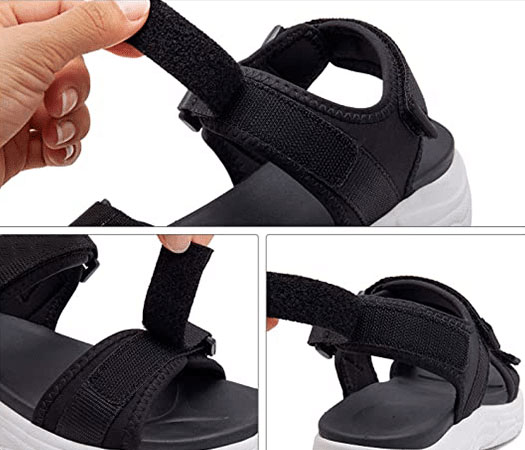
I usually go with open toe sandals that have multiple points of adjustability, that way children can better control how much pressure they want to put around the bunion. It’s important that the sandals are adjusted properly to prevent your child’s feet from moving excessively inside the sandals, as that can lead to the sandals rubbing against the bunions.
2️⃣ Round Toe-Boxes
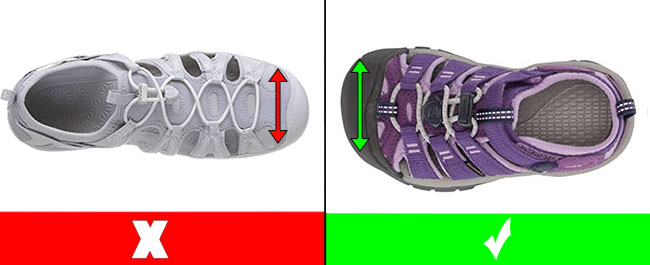
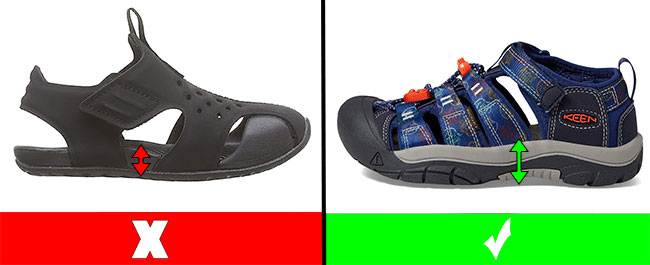
Sandals with round toe-boxes help prevent the toes from squeezing against one another or the side of the sandals. For example, the sandals in the image below are the same size in length. However, do you notice how the sandal on the right has a rounded toe-box compared to the sandals on the left?
3️⃣ Stable Base of Support
Bunions can create difficulty in walking and promote an abnormal walking gait. If your child is dealing with a foot condition such as flat feet and overpronation, the sandals to be supportive to help improve foot posture and walking gait.
Keep in mind that providing your child with the correct types of sandals and shoes can help treat the symptoms and prevent pain, but won’t correct the joint deformity.
As promised, let’s take a look at a list of the best sandals for children with bunions. Disclosure: Some links in this post may be affiliate links and we may receive a small commission (at no extra cost to you) when you click our links and make purchases.
Best Sandals for Children with Bunions
If you prefer closed toe-sandals over open toe-sandals, I suggest that you try the ones with mesh around the bunion area to limit irritation to that part of the foot. Take a look at the description below each sandal to find out the features that the sandals provide, whether they can accommodate your child’s foot shape, and the size you should order to allow for the correct amount of growing room.
Toddler Sizes (0 to 10)

- Shoe style Hurricane by Teva
- Fits medium and wide feet
- 3 points of adjustability so children can make the sandals as tight or loose as they want
- Eva foam footbed cushions and softly supports for all day comfort
- Rigid at the toe box
- Order this sandal a whole size larger than your child’s current foot size

- Shoe style Hurricane by Teva
- Fits medium and wide feet
- 3 points of adjustability so children can make the sandals as tight or loose as they want
- Eva foam footbed cushions and softly supports for all day comfort
- Rigid at the toe box
- Order this sandal a whole size larger than your child’s current foot size

- Sandal style Cyrus by See Kai Run
- Fits medium, wide, and extra wide feet (fits high insteps)
- Water-friendly and machine washable
- Generous toe box and EVA molded footbed promotes healthy foot development
- Order this sandal half a size larger than your toddler’s current foot size

- Shoe style Pale II by See Kai Run
- Fits medium, wide, and extra wide feet (fits high insteps)
- 2 points of adjustability
- Water-friendly and machine washable
- EVA foam footbed cushions and softly supports for all-day comfort
- Rigid at the toe box
- Order this sandal half a size larger than your child’s current foot size

- Shoe style Aru by Stride Rite
- Fits medium, wide, and extra wide feet
- 3 points of adjustability so children can make the sandals as tight or loose as they want
- 100% leather
- Flexible grooves on the outsole for a barefoot feel
- Convenient alternative closure for a snug fit and easy on/off
- Order this sandal half a size larger than your child’s current foot size

- Shoe style Knotch Creek by Kee
- Available in medium, wide, and extra wide widths (fits high insteps)
- Triple velcro straps for easy on and off
- Soft fabric lining and anti-odor footbed promotes a healthy foot environment
- M Select GRIP for superior non-marking traction
- Order this sandal half a size larger than your child’s current foot size

- Sandal style Cyrus IV by See Kai Run
- Fits medium, wide, and extra wide feet (fits high insteps)
- Water-friendly and machine washable
- Generous toe box and EVA molded footbed promotes healthy foot development
- Order this sandal half a size larger than your toddler’s current foot size

- Sandal style Billie by See Kai Run
- Fits medium, wide, and extra wide feet (fits high insteps)
- FlexiRun EVA foam outsole is ultra-lightweight and flexible with durable traction pattern for outdoor wear
- Dual hook-and-loop straps allow for a secure fit and custom adjustability
- Water-friendly and machine washable
- Order this sandal half a size larger than your toddler’s current foot size

- Sandal style Archie by Stride Rite
- Fits medium, wide, and extra wide feet (fits high insteps)
- Fisherman sandals with hook and loop closure
- Easy on-and-off with an oversized opening and hook and loop closure
- Slip-resistant traction with sensory pod technology to help feel the ground underneath
- Order this sandal half a size larger than your toddler’s current foot size

- Sandal style Summer Time by Stride Rite
- Fits medium, wide, and extra wide feet (fits high insteps)
- 100% leather
- Padded heel collar for comfort
- Memory foam insole for enhanced comfort
- Order this sandal half a size larger than your toddler’s current foot size

- Sandal style Lucky Brand
- Fits medium and wide feet (fits high insteps)
- Supportive footbed
- Adjustable buckles at the front and velcro strap at the back for easy on and off
- Order this sandal half a size larger than your toddler’s current foot size

- Sandal style Eco-Tide by FootMates
- Fits medium and wide feet (fits high insteps)
- Lightly padded insole
- Waterproof leather and corrosion-resistant buckles make the shoes ideal for use in warm weather conditions
- Hook-and-loop with adjustable buckle closures for a secure fit
- Order this sandal half a size larger than your toddler’s current foot size
Little/Big Kid Sizes (10.5 to 7)

- Shoe style Hurricane by Teva
- Fits medium and wide feet
- 3 points of adjustability so children can make the sandals as tight or loose as they want
- Eva foam footbed cushions and softly supports for all day comfort
- Rigid at the toe box
- Order this sandal a whole size larger than your child’s current foot size

- Shoe style Hurricane by Teva
- Fits medium and wide feet
- 3 points of adjustability so children can make the sandals as tight or loose as they want
- Eva foam footbed cushions and softly supports for all day comfort
- Rigid at the toe box
- Order this sandal a whole size larger than your child’s current foot size

- Sandal style Newport Adaptive by Keen
- Fits medium, wide, and extra wide feet (fits high insteps)
- Water-friendly and machine washable
- Adjustable back strap
- Order this sandal half a size larger than your child’s current foot size

- Sandal style Newport Adaptive by Keen
- Fits medium, wide, and extra wide feet (fits high insteps)
- Water-friendly and machine washable
- Adjustable back strap
- Order this sandal half a size larger than your child’s current foot size

- Shoe style Seaturtle 2 by Kamik
- Fits medium and wide feet (fits high insteps)
- Triple velcro straps for easy on and off
- Quick drying moisture wicking lining
- Vegan-friendly
- Order this sandal half a size larger than your child’s current foot size

- Shoe style Seaturtle 2 by Kamik
- Fits medium and wide feet (fits high insteps)
- Triple velcro straps for easy on and off
- Quick drying moisture wicking lining
- Vegan-friendly
- Order this sandal half a size larger than your child’s current foot size

- Sandal style Elle by Keen
- Fits medium and wide feet (fits high insteps)
- Rounded toe-boxes and extra deep
- Double adjustable velcro straps
- Order this sandal a whole size larger than your child’s current foot size

- Sandal style Arizona by Birkenstock
- Fits medium and wide feet
- Suede-lined cork footbed offers excellent arch support, a deep heel cup, roomy toe box, and molds to the shape of each individual’s foot
- Flexible and lightweight EVA outsole is durable and shock-resisting
- Order this sandal a whole size larger than your child’s current foot size

- Sandal style Newport H2 by Keen
- Fits medium and wide feet
- EVA insole with arch support for all-day comfort
- Machine washable
- Order this sandal half a size larger than your child’s current foot size

- Sandal style Newport H2 by Keen
- Fits medium and wide feet
- This internal support mechanism is anatomically engineered to provide excellent arch support
- Machine washable
- Order this sandal half a size larger than your child’s current foot size

- Sandal style Rio by Birkenstock
- Fits medium and wide feet
- Suede-lined cork footbed offers excellent arch support, a deep heel cup, roomy toe box, and molds to the shape of each individual’s foot
- Flexible and lightweight EVA outsole is durable and shock-resisting
- Order this sandal a whole size larger than your child’s current foot size

- Sandal style Milano by Birkenstock
- Fits medium and wide feet
- Suede-lined cork footbed offers excellent arch support, a deep heel cup, roomy toe box, and molds to the shape of each individual’s foot
- Flexible and lightweight EVA outsole is durable and shock-resisting
- Order this sandal a whole size larger than your child’s current foot size
Keep in mind that what might work really well for some children with bunions might not work as well for others.
Get in Touch With Us for a Personalized Suggestion
If none of these sandals are available in your child’s shoe size or if you need a different type of sandal to help treat and prevent your child’s bunions from getting worse, you can ask your question in the comments section below or contact me via email:
If you have an older girl who developed bunions and she is already wearing women’s shoe sizes I suggest that you take a look at this resource.
The Importance of Providing Your Child with the Correct Shoe Size
When children are wearing the wrong shoe size they are more likely to develop bunions. Your child should wear their well-fitting shoes all the time as poorly fitting shoes that squeeze the toes will be painful and could increase the risk that your child’s bunions will become larger and more painful.
If you are unsure about what shoe size your child should wear I suggest that you take a look at a different resource I created where I help families retrieves their child’s exact foot length and shape (narrow, medium, wide, extra wide, high insteps).
Bunions Can Affect Your Child’s Performance and Overall Health
Just recently I got an email from a mother of a 7-year-old child who was diagnosed with high arches and overpronation and as a result, developed bunions on both feet. The child will complain about foot pain all the time and refuse to participate in high-intensity activities (she used to be extremely active).
Don’t let your child’s bunions get in the way of your child living a healthy lifestyle. Consult with your medical professional and make sure that your child wears the correct types of shoes.
Can My Child’s Bunion Go Away On Its Own?
Unfortunately, no. Bunions do not go away on their own and can often get bigger over time and become more painful.
It’s important to be proactive and don’t leave this condition untreated, as wearing the correct type of shoes will prevent bunions from forming, and at the same time reduce or fully eliminate the pain that your child might be experiencing. This simple, non-surgical method will treat the symptoms. However, when nothing else works, surgery can be a good option.
Feel free to leave a comment with your favorite sandals for bunions that have helped you or your child or any other feedback that you can provide that may be helpful to other families.