
Best Orthotics for Toe Walking: A Shoe Fitter’s Guide
Last Updated: August 2026 | Juan Valenzuela, Certified Children’s Shoe Fitter
Have you taken your child to a medical professional and been told that toe walking will eventually stop on its own? I’ve helped several children who were walking on their toes learn to walk the correct way — heel to toe — and I believe I can help your child too. The best orthotics for toe walking work by addressing the underlying causes, which can improve balance, posture, and overall walking patterns.
As a dedicated shoe fitter with years of experience, I understand the concerns parents feel when they notice atypical walking patterns in their children. Early intervention is key to preventing this condition from getting worse.
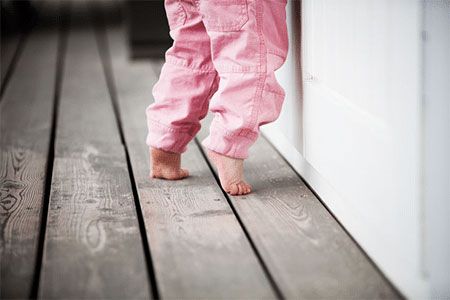
Be Proactive — Don’t Assume the Condition Will Disappear on Its Own
I always recommend that parents be proactive and start addressing toe walking early, since doing so significantly reduces your child’s likelihood of needing more invasive treatments later, like serial casting, Botox injections, or surgery. Taking a “wait and see” approach and hoping the condition resolves on its own can allow it to get worse instead.
Children between one and five undergo rapid neuromuscular development, and toe walking during these years can often be managed effectively with the right orthotics and footwear. Unresolved toe walking after age five, while still manageable, tends to become more difficult to control.
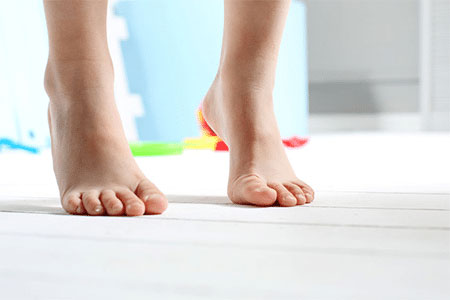
The longer a child continues to toe walk, the more likely it is to become a sustained habitual pattern, with real risk of tendon tightness and ankle stiffness.
Is It Normal for Toddlers to Walk on Their Toes?
It’s common for toddlers who are just learning to walk to get up on their toes, and in most cases this resolves on its own with no lasting concern. That said, I’d encourage parents to keep a close eye and stay proactive if it doesn’t improve. Children who toe walk often experience frequent falls or stumbles, which is another reason not to leave the condition untreated.
Toe walking also becomes a bigger issue once the calf muscles start to shorten, which reduces ankle movement and can cause long-term damage to the foot and ankle from the abnormal forces acting on them.
Keep in mind that pain isn’t the only reason to treat this. Toe walking isn’t inherently painful, so a child not complaining about discomfort doesn’t mean it’s fine to leave untreated, or that they’ll simply outgrow it.
My Experience Helping Children Who Toe Walk
I’ve helped improve the walking gait of several children who toe walk by fitting them in the correct shoes and orthotics. To be clear: I’m not a doctor. I’m a shoe fitter with over a decade of experience fitting children in shoes and orthotics.
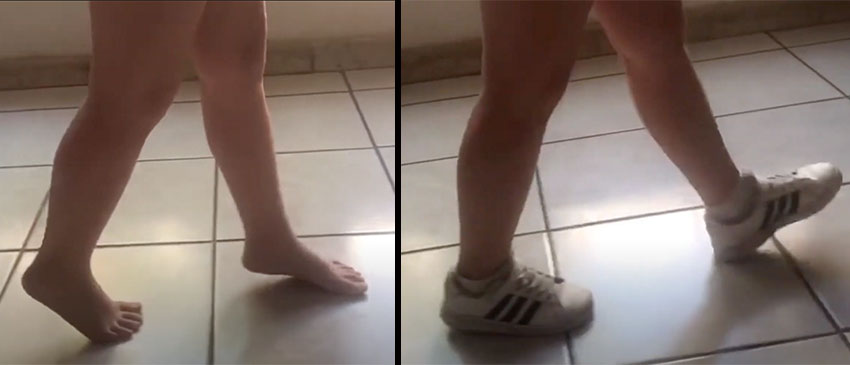
My goal is always to use the minimal intervention that’s actually effective — that’s why I recommend starting with supportive shoes and orthotics, and reserving casting or surgery as a genuine last resort.
Why Do Kids Walk on Their Toes?
Most doctors can’t pinpoint an exact reason children toe walk. Persistent toe walking is often labeled “idiopathic,” meaning the cause is unknown and the child is simply thought to prefer walking that way. I disagree with this — in my experience, there’s almost always a specific, identifiable reason behind it.
Four Common Reasons Kids Walk on Their Toes
1. Flat feet. Children with flat feet often have poor balance and coordination. Rising onto the toes puts the foot in a more stable position, temporarily improving balance — but it’s not a healthy long-term pattern, and it promotes improper muscle development if left unaddressed.
2. Short Achilles tendon. A short Achilles tendon can physically prevent the heels from touching the ground.
3. Sensory sensitivities. Check the surfaces your child walks on — cold tile or textured carpet can trigger or exaggerate toe walking in kids with sensory sensitivities.
4. Vision impairments. A quick vision check for tracking and convergence issues can be worthwhile. Some children benefit from vision therapy, and many vision specialists report seeing toe walking alongside vision issues fairly often.
In my experience, most children who toe walk have flat feet — I’d estimate roughly 80% of the toe-walking children I’ve personally helped fell into this category.
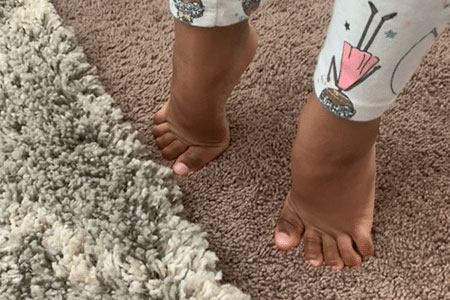
Whatever the underlying reason, it’s worth taking action sooner rather than later. Toe walking is biomechanically incorrect, and that has a lasting effect on your child’s developing muscle structure.
My Two-Step Approach to Correcting Toe Walking
Here’s the simple two-step approach that’s helped prevent toe walking in several of the children I’ve worked with.
Step 1: Try a Pair of Orthotics
Orthotic inserts play a pivotal role in correcting toe walking by providing the support and alignment needed to encourage proper foot placement. By keeping the foot correctly aligned, orthotics help redistribute pressure across the foot and promote a more natural gait cycle.
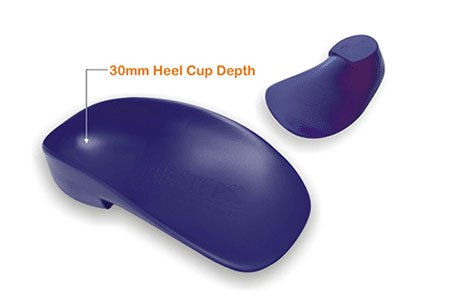
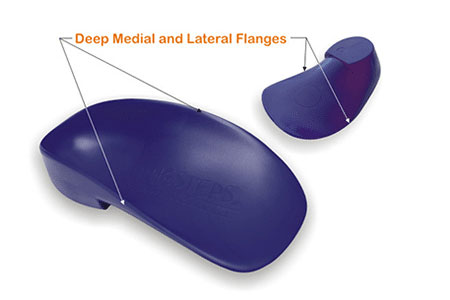
I’ve fitted one specific orthotic that’s consistently proven the most effective for treating and preventing toe walking:
Best Orthotics for Toe Walking
This is the best prefabricated orthotic on the market for treating, preventing, and controlling toe walking. Keep in mind: what works well for one child who toe walks may not work as well for another, so it’s worth staying open to trying different approaches if needed.
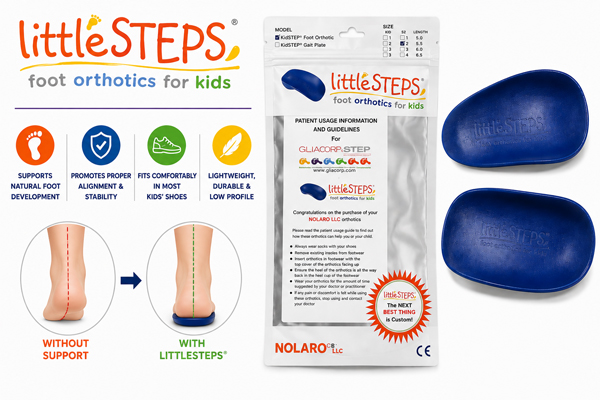
- Order littleSTEPS® Orthotics from their official website. You must submit a Referral Code to complete your order: JVFCS100121
- It’s not necessary to remove the original insoles of the shoes when fitting this orthotic.
- The 3/4 length design makes it easier to fit into various shoe styles.
- Take a look at this chart to figure out what size to order based on your child’s shoe size.
How effective this orthotic is for your child depends on their age and individual foot anatomy.
An Alternative: Carbon Fiber Insole for Toe Walking
A thin, rigid carbon fiber footplate is a genuine alternative to littleSTEPS — it delivers a similar corrective effect through a completely different design, so it’s worth knowing about if littleSTEPS doesn’t end up being the right fit for your child.
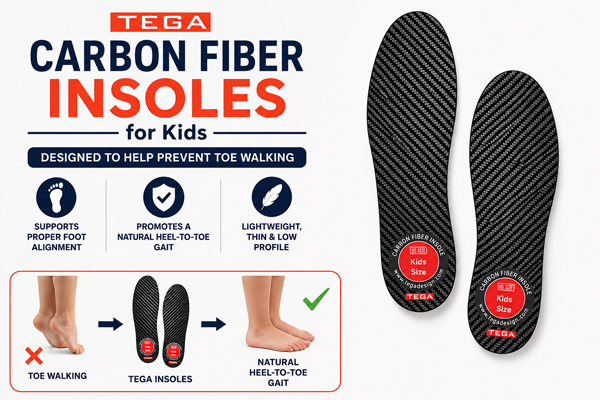
- Order on Amazon
- Slides underneath your child’s original removable insole or orthotic — no need to replace anything, just add it in
- Extremely thin design (about 1mm) that doesn’t add noticeable bulk or weight inside the shoe
- To size it, measure your child’s original shoe insole length, then choose a carbon fiber insole roughly ¼ inch shorter than that measurement
Unlike littleSTEPS, which is a standalone ¾-length orthotic, this carbon fiber insole is designed to work underneath whatever your child is already wearing — including their current orthotic — rather than replacing it. That makes it a reasonable option if your child already has an orthotic that’s working well otherwise, and you’re looking to add extra rigidity specifically to discourage toe walking without starting over from scratch.
Step 2: Try Supportive Shoes
The most effective anti-toe-walking shoes consistently meet three criteria:
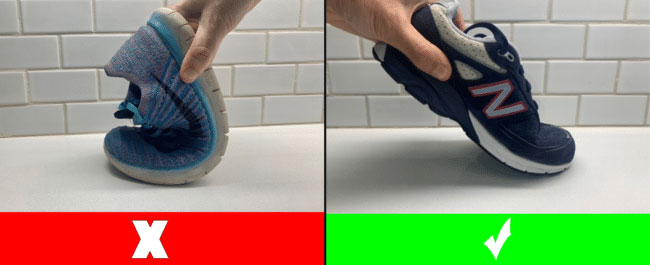
1. Avoid shoes that are too flexible. A shoe that’s too flexible makes it easy for a child to get up on their toes. Your child’s shoes should bend right at the ball of the foot — and no further.
2. Find shoes with a stable base of support. Some children rise onto their toes specifically to compensate for poor balance and coordination. A stable base of support helps put the foot in a more secure position and improves overall balance.
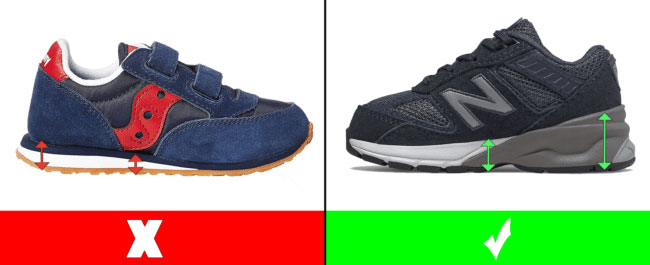
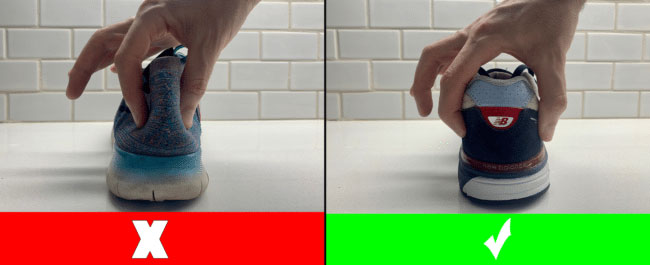
3. Firm heel counters. A firm heel counter stabilizes the foot and supports the orthotic in promoting a proper heel strike — crucial for maintaining alignment and encouraging a natural gait.
Choosing the Right Anti-Toe-Walking Shoes for Kids
Orthotics alone often aren’t enough — the right pair of shoes genuinely enhances how effective the orthotic can be. I’ve put together a dedicated list of anti-toe-walking shoes that offer a stable base of support and stay rigid at the front, to help actively discourage toe walking.
Are littleSTEPS Orthotics Better Than AFOs or SMOs?
They’re definitely less bulky. Several medical professionals have told me these orthotics tend to have a better carryover effect once a child is out of the device, compared to kids who wore an articulated AFO that completely blocked plantar flexion at the ankle joint.
Another real benefit: this orthotic encourages, rather than forces, a normal gait pattern — meaning your child uses their own muscles to walk, rather than relying entirely on a brace.
This matters in practice, too. I’ve had parents specifically ask about switching from AFOs to something less bulky for an older child who felt self-conscious wearing a visible brace — AFOs can also cause real issues of their own beyond bulk, including skin irritation, blisters, and difficulty putting them on and off. For a child dealing with those challenges, a hidden-in-the-shoe option like littleSTEPS or a carbon fiber footplate is worth discussing with your child’s medical team as an alternative.
How to Order the Correct Shoe Size: 2 Simple Steps
Proper shoe sizing is essential for orthotics to work effectively. I offer a free resource to help you determine the correct size when ordering online, so the orthotic fits properly and functions as intended.
Shoes can’t be too big — which means compromising somewhat on growing room. Shoes that are too big make it easier for a child to rise up onto their toes. My virtual shoe fitting service helps you determine your child’s exact shoe size from home.
Final Thoughts on Toe Walking
Toe walking is common up to a certain age, but it’s important to be proactive, since the condition tends to get harder to manage the older your child gets. The correct shoes alone can make a real difference, but pairing the correct shoes with the correct orthotics significantly increases your chances of resolving the toe walking altogether.
Please remember I’m not a medical professional — my experience comes from fitting children’s shoes and orthotics at a specialized children’s shoe store. Seek guidance from a pediatrician, physical therapist, or orthotic specialist to determine the underlying cause of your child’s toe walking and the appropriate course of treatment.
Have you found a specific orthotic or shoe that’s worked well in preventing your child from toe walking? Let me know in the comments — it could genuinely help another family going through the same thing.
Get in Touch for a Personalized Shoe Recommendation
As a shoe fitter, I offer tailored advice based on your child’s unique foot shape and walking pattern. If you have questions or need further assistance, contact me by email and I’ll get back to you as soon as possible.

14 year old toe walker
Hello Thomas,
Thank you for reaching out! If you can share your child’s shoe size, foot shape (narrow, medium, wide, or extra wide), and the country you’re contacting me from, I’ll be able to provide personalized shoe recommendations to help prevent your child from walking on his toes.
Any other information you can share about your child’s feet will be helpful (flat feet, high arches, etc).
Amazing Such an improvement
Hello Melody,
Yes, it’s pretty amazing what a difference the correct pair of shoes and orthotics can make.
Amazing
¡Hola! Me llamo Laura y estoy encantada de saludarte.
Quería escribirte porque me ha parecido interesante comentar contigo la posibilidad de que tu negocio aparezca cada mes en *periódicos digitales como noticia* para posicionar en los primeros lugares de internet, es decir, con artículos reales dentro del periódico que no se marcan como publicidad y que no se borran.
La noticia es publicada por más de sesenta periódicos de gran autoridad para mejorar el *posicionamiento de tu web* y la reputación.
¿Podrías facilitarme un teléfono para ofrecerte *hasta dos meses gratuitos*?
Gracias
Hola Laura,
Para este tipo de consultas por favor contacte este email: customerservice@fittingchildrenshoes.com
Hi, My daughter has a mild case of MD (congenital myopathy//weakness in her hips & legs) and thus has tiptoe walked since she started walking. She is now 12. She is being put in casts right now to slowly stretch and move her to flat foot. When the casts come off, they want to fit her for a AFO. This is the 2nd time we are doing the casting/AFO as she reverted back to tip toe walking after the first time we had this done 1 year ago. The AFO was very uncomfortable for her and as a result, she did not wear it as she should have. We don’t want her to go through this again so I wanted to post here to see if you felt your orthotics could be the solution. They look so much more comfortable than the AFO’s and are hidden in the shoe (which at 12 years old would be much appreciated for my daughter). Do you feel these would work as well as an AFO to keep her flat foot after her casts come off? I appreciate your feedback and thank you in advance.
Hello Becky,
While AFOs can be great devices for treating and supporting different foot problems, they can also provide issues of their own, such as the one you mentioned with shoe-fitting struggles. AFOs can also cause skin irritations (blisters, redness, sores), bulky/uncomfortable feeling, difficulties putting AFOs on and off.
You can definitely try the littleSTEPS orthotics that I recommend or a carbon fiber footplate, which will also be hidden inside the shoes and they are really effective to help treat toe walking. Whichever orthotic you decide to try, make sure that it’s fitted inside the correct pair of shoes so your daughter can get the full benefits that the orthotics have to offer. Feel free to continue this conversation via email: fittingchildrensshoes@gmail.com
Thank you for the information you provided. Although the items did not provide the help I wanted for my son, I appreciate that in my time of need, I found this site
I am sorry to hear that the shoes or orthotics did not work for your son.
Hi I am parent of 15 yrs old child and he had started toe walking around 2byrs and we had done physio which helped but it did not improved much so we had gone for surgery then a physiilo around 6-8 month in which he had become fine but during lock down his height increase drastically and he again started toe walking his issue is with shirt tendon as per his doctor . We have started physio again but doctor mention his left foot it’s almost 15degree up which would be solved only by surgery. We took other opinion and they mentioned as still his height will shoot continue physio for a year along with it have him wear supporting shoes. Can you guide. I am from India
Hello Rakesh,
My area of expertise is how to treat toe walking by fitting the child in supportive shoes and/or orthotics. If I understand correctly, one of your medical professionals suggested to continue doing physiotherapy for a year and fit your son in supportive shoes.
Have you been told by your medical professionals whether your son’s toe walking is due to a neurological or neuromuscular condition? Do you know if your son has flat feet?
I can help you find the correct pair of shoes for your son but first I need to know whether your son has narrow, medium, wide, or extra wide feet. I also need to know if your son is flat footed or not.
I noticed that you also sent me an email so we can continue our conversation there.
Thank you for addressing this issue. We have tried AFOs with no luck so it’s good to know there is an alternative orthotic that might help prevent my child from toe walking. Another parent recommended your website because it was very helpful for her child. Is there an email address I can contact you?
Hello Dozzy,
I am happy to help: fittingchildrensshoes@gmail.com
It does not seem that medical professionals are giving this much attention in the early stages of the problem. I agree with you about taking early action. I keep hearing stories from parents who took their children to their doctor but they are told to wait, but some children end up needing physical therapy or even surgery because when they are older it’s harder to treat. I am sharing your article with a Facebook group of parents of children who toe walk, I hope that’s okay with you.
Sure, I am happy to help!
Thank you for this. I was told that my nephew will outgrow toe walking but it never happened. We wasted valuable time and left the condition untreated and now we are hoping the shoes and orthotics you recommend will work. Thank you for raising awareness and I will keep you updated on his progress.
Sounds good! Make sure the shoes are properly tied at all times and apply this specific shoe lacing technique:
How to Tie Shoes with Orthotics – Stop Heel Slippage
Dear Juan,
I’d like to express my deepest appreciation for the excellent services you have been providing for my son , all for free.
Thank you,
I will keep you updated.
Regards
Lovelyne
It’s my pleasure! You are doing the right thing by being proactive and taking early action. Hopefully we will see your son walking gait improve in the upcoming months.