Best Sandals for Kids with Intoeing – Improve Foot Posture and Gait
Written by Juan Valenzuela, Certified Children’s Shoe Fitter (10+ Years of Experience) · Updated June 2026
If your child’s feet turn inward when they walk — what’s commonly called intoeing or pigeon toe — you’ve probably already started the search for supportive everyday sneakers. It’s just as important not to let that effort lapse once summer arrives. The right sandals can continue guiding your child’s feet toward better alignment, reduce tripping, and protect the investment you’ve already made in supportive footwear and possibly orthotics.
This guide explains what intoeing is, why supportive sandals matter during the warmer months specifically, what features to look for, and which specific styles I recommend.
What Is Intoeing, and What Causes It?
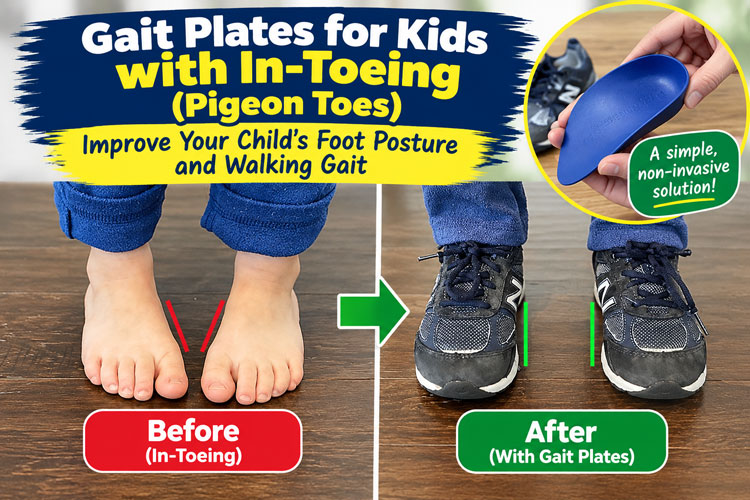
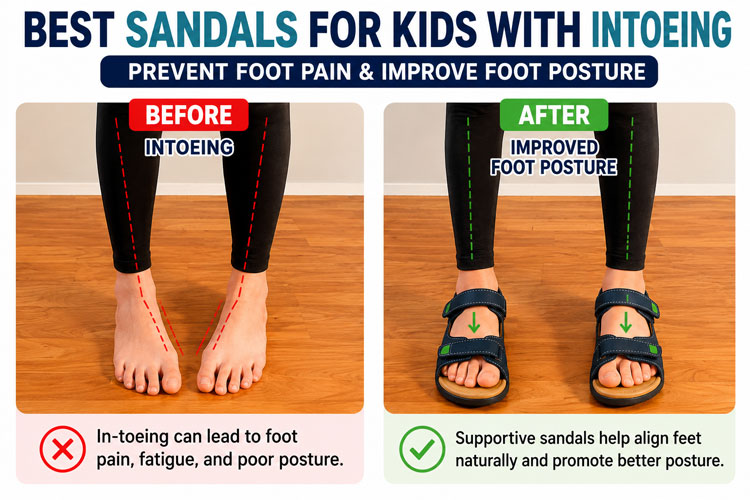
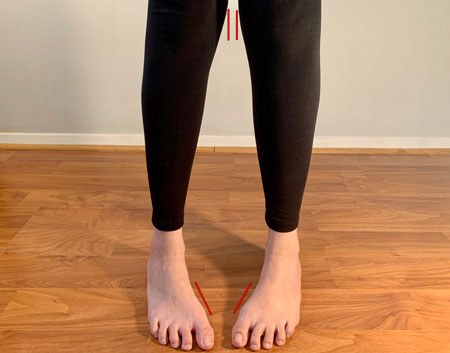
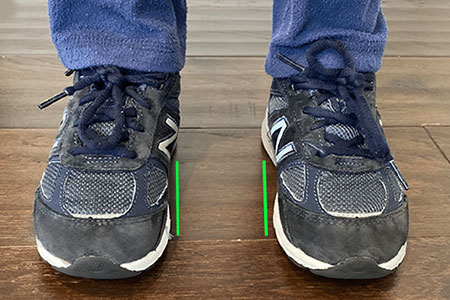
Intoeing describes a walking pattern where one or both feet turn inward rather than pointing straight ahead. It’s most commonly caused by an inward rotation of the thigh bone at the hip (femoral anteversion), though it can also stem from the lower leg bone (tibial torsion) or the shape of the foot itself (metatarsus adductus). Whatever the specific source, the result throws the body slightly out of its natural alignment with every step.
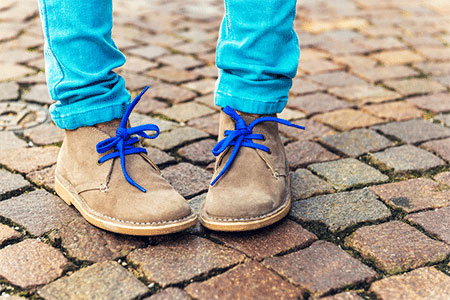
Intoeing is fairly common in young children and, in most cases, improves naturally with age as the bones and rotation patterns mature. In the meantime, though, children with intoeing are more prone to tripping, may walk or run with a visibly different gait than their peers, and some experience genuine foot or leg pain or fatigue.
The condition is generally believed to be hereditary and is sometimes associated with other orthopedic considerations. There’s nothing a parent did to cause it, and in most cases, nothing that needs to be “fixed” through drastic measures — but supportive footwear during these early years can meaningfully support the natural improvement process.
What Are the Treatment Options for Intoeing?
Depending on severity, a physical therapist or orthopedist might discuss casting, bracing, orthopedic shoes, or — in more significant, persistent cases — surgical correction. These approaches can be effective when they’re genuinely needed.
For the majority of children with mild to moderate intoeing, however, fitting them in supportive, well-structured footwear is a far less invasive and more affordable starting point — one that supports the same natural improvement process without the cost or intervention of more aggressive measures.
Can Supportive Sandals Really Help?
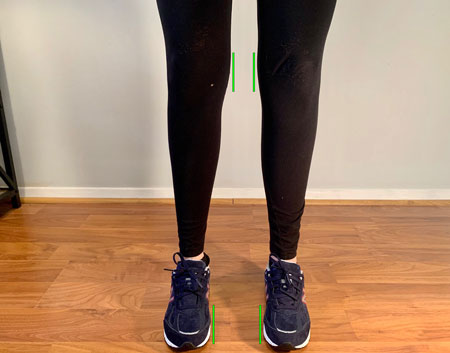
Yes. A sandal with a stable, supportive base helps guide the foot toward better alignment and reduces the inward rolling that often accompanies intoeing. Many parents notice a visible improvement in their child’s walking pattern after switching from a flimsy, unsupportive sandal to a properly structured one — and the underlying mechanics behind that improvement (a firmer base of support reducing compensatory movement) are well understood, not just anecdotal.
What to Look for in a Sandal for Intoeing
Three features matter most:
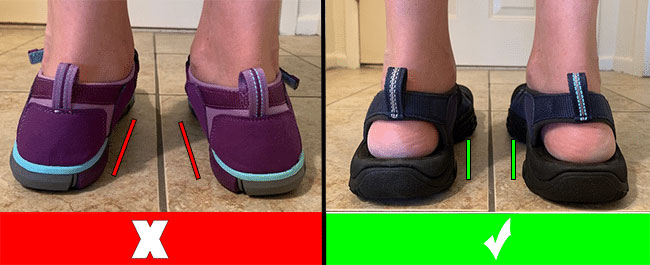
1. Stable Base of Support. A firm, supportive outsole helps maintain balance and resists the excessive inward rolling that intoeing can create — without being so rigid that it restricts your child’s natural movement.
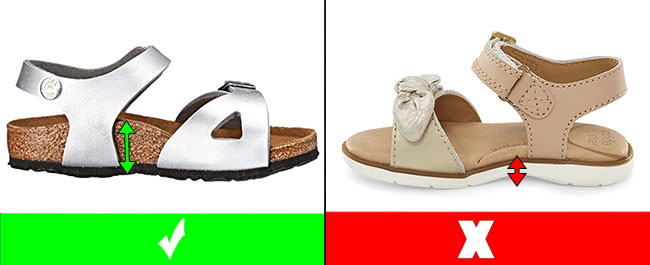
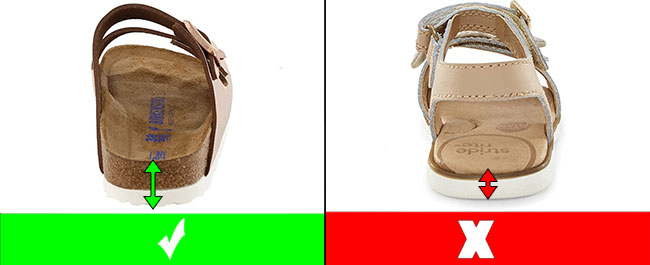
2. Targeted Cushion and Support Below the Heel. Extra structure and cushioning specifically at the heel absorbs shock and reduces stress on the foot, which supports both comfort and better overall posture throughout the day.
3. Adjustable Straps. Multiple adjustment points let you fine-tune the fit around your child’s specific foot width and prevent the foot from sliding inside the sandal — which matters even more for a foot that’s already rotating inward during each step.

A Note on Shoe Brands
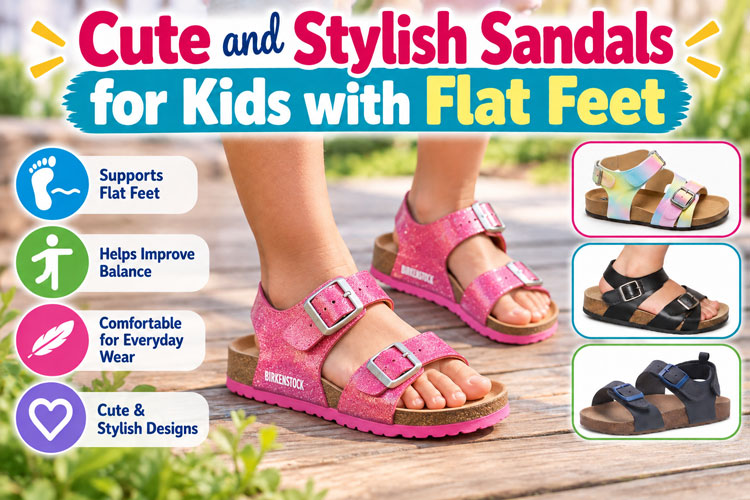
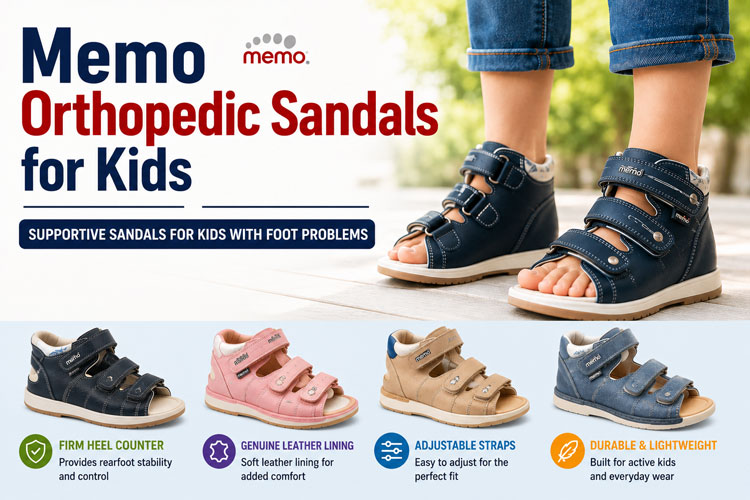
Over the years, I’ve come to rely most often on Keen, Teva, Birkenstock, and Memo for supportive children’s sandals. That said, it’s worth being clear: not every style within these brands offers the same level of support. Choosing a sandal based on brand name alone isn’t a reliable shortcut — the specific style matters more than the logo on the box.
The Best Sandals for Kids with Intoeing
Disclosure: Some links in this article are affiliate links. Any commission earned comes at no extra cost to you and helps keep this resource free.
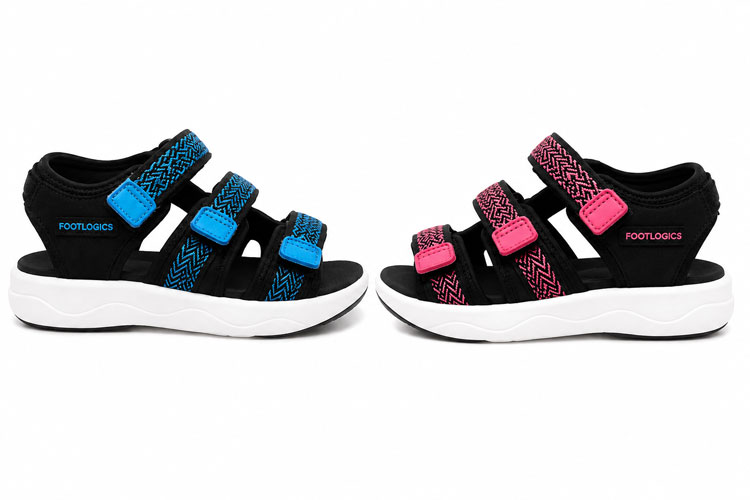
Footlogics Arch-Up Kids Orthotic Sandal
Best for: Moderate to significant in-toeing needing orthopedic-level correction | Medium and wide feet, high insteps
This is an excellent choice for children with intoeing who need extra support during the summer months. The sandal features a built-in biomechanical arch support, deep heel cup, and metatarsal support that help improve foot alignment and provide a more stable foundation for walking. By reducing excessive pronation and supporting a more neutral foot position, the sandal can help improve balance and encourage a more efficient gait.
Key Features
- Order on Amazon
- Fits medium, wide, and extra wide feet (fits high insteps)
- Built-in orthotic footbed with biomechanical arch support
- Deep heel cup and metatarsal support improve stability and foot alignment
- Triple adjustable Velcro straps for a secure and customized fit
- Lightweight cushioned outsole for all-day comfort
- Fitting tip: size a full size up from your child’s current foot length
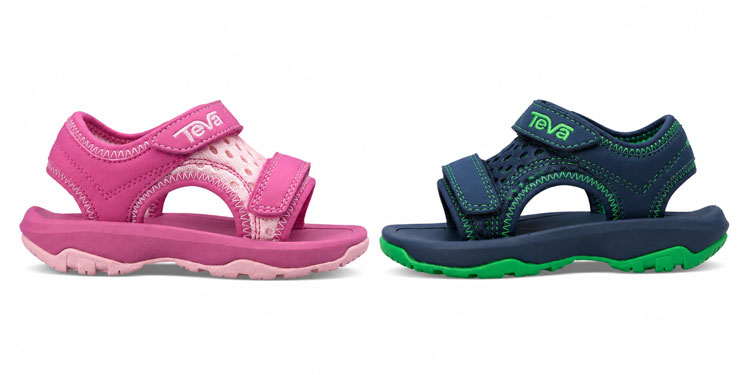
Psyclone by Teva
Best for: Active kids | Medium, wide, and extra wide feet, high insteps
A cushioned footbed paired with fully adjustable straps that help improve foot posture and stability throughout the day.
Key Features
- Order on Amazon
- Fits medium, wide, and extra wide feet (fits high insteps)
- EVA foam footbed cushions and softly supports the foot
- Rubber outsole for great traction
- Fitting tip: size a half size up from your child’s current foot length
Agnes by Memo
Best for: Moderate to significant cases needing orthopedic-level support | Medium and wide feet, high insteps
An orthopedic sandal with an anatomically shaped footbed and firm heel counter, specifically helpful for children with intoeing since it actively works to keep the feet from rotating further inward.
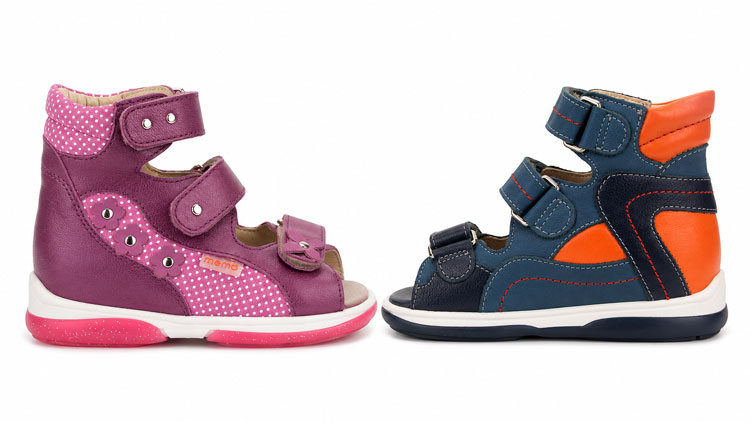
Key Features
- Order on Amazon
- Fits medium and wide feet (fits high insteps)
- 100% leather made
- Ability to adjust the Hook and Loop strap length to the different foot width
- I suggest that you get this sandal a whole size larger than your child’s current foot size
Seaturtle by Kamik
Best for: Active kids on varied terrain | Medium and wide feet, high insteps
An open-toe sandal with a cushioned footbed and adjustable straps. Lightweight and flexible where it should be, with a durable outsole well-suited to active children with intoeing.
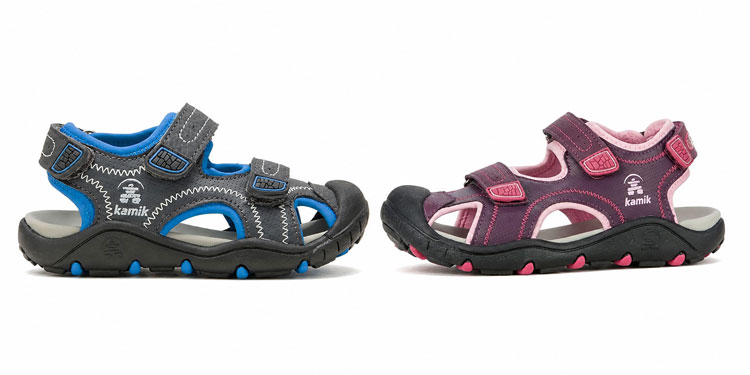
Key Features
- Order on Amazon
- Fits medium, wide, and extra wide feet (fits high insteps)
- Triple Velcro straps for easy on and off
- Quick-drying, moisture-wicking lining Vegan-friendly
- Fitting tip: size a full size up from your child’s current foot length
Mogami by Birkenstock
Best for: Everyday wear and water activities | Regular (medium-to-wide) and narrow widths
Known for its anatomically shaped, contoured footbed, the Mogami provides genuine arch and heel support in a sandal built for everyday rough-and-tumble play. The waterproof Birko-Flor upper and PU footbed make it durable and easy to clean.
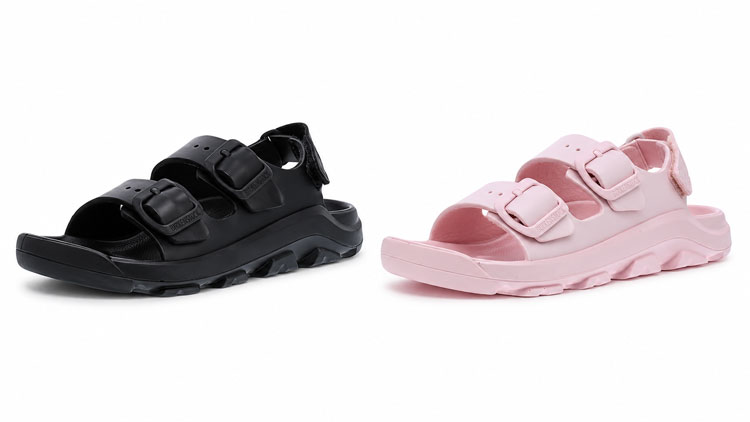
Key Features
- Order on Amazon
- Fits medium and wide feet
- Contoured cork footbed for natural arch support
- Hook-and-loop closure for easy on and off
- Fitting tip: size a full size up from your child’s current foot length
Newport by Keen
Best for: Water and outdoor activities | Medium and wide feet
A genuinely supportive water-friendly sandal with a bungee lace system for a secure, adjustable fit and an anatomically engineered footbed that provides real arch support.
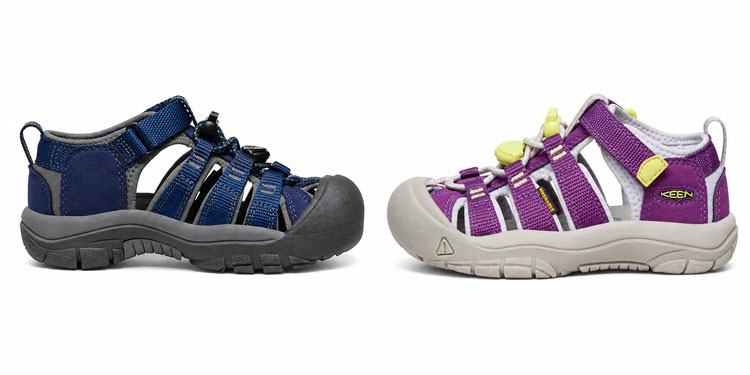
Key Features
- Order on Amazon
- Fits medium and wide feet
- Anatomically engineered internal support for excellent arch support
- Multi-directional lugs with quick water channeling help provide superior grip on slippery and wet terrain
- Washable polyester webbing featuring quick dry lining
- Fitting tip: size a half size up from your child’s current foot length
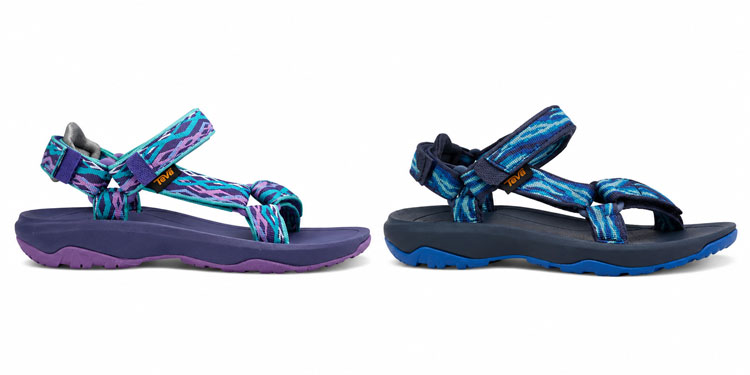
Hurricane by Teva
Best for: Everyday and water-friendly wear | Medium and wide feet
A lightweight, water-friendly sandal with a fully adjustable fit and a contoured footbed that distributes weight evenly across the foot — a comfortable everyday option alongside the more specialized styles on this list.
Key Features
- Order on Amazon
- Fits medium, wide, and extra wide feet (fits high insteps)
- Easy hook-and-loop closure comes on and off quickly and gets the fit just right
- Rubber outsole for durability and traction
- Fitting tip: size a half size up from your child’s current foot length, since the strap pattern runs slightly snug
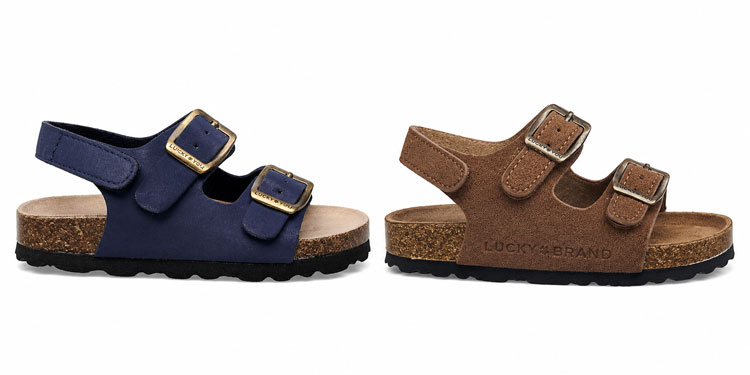
Lucky Brand
Best for: Easy on-and-off | Medium and wide feet, high insteps
A practical option combining style with genuine support — a supportive footbed plus a rear Velcro strap for fast, fuss-free dressing.
Key Features
- Order on Amazon
- Fits medium and wide feet
- Supportive footbed
- Adjustable front buckles with a rear Velcro strap for easy on and off
- Fitting tip: size a half size up from your child’s current foot length
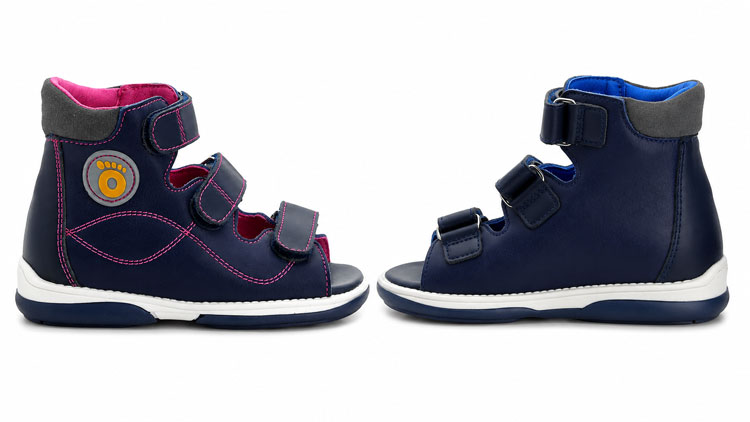
Betti and Pedro by Memo
Best for: Children needing corrective, orthopedic-level support | Medium and wide feet
A robust orthopedic sandal built around a firm, asymmetric thermoplastic heel counter and genuine arch support — designed to actively guide the foot toward a healthier walking pattern. The strongest corrective option on this list for more significant cases of intoeing.
Key Features
- Order on Amazon
- Fits medium and wide feet
- Orthopedic sandal
- Thermoplastic asymmetric stiff heel counter for proper foot protection and support
- Genuine leather lining
- Fitting tip: size a full size up from your child’s current foot length
Contact Me for Specific Shoe Recommendations
Every child is different, and the right shoe often depends on details a list like this can’t capture — get in touch here if you’d like help narrowing it down.
Can Orthotics Be Worn Inside Sandals?
Generally, I don’t recommend fitting orthotics or insoles inside standard open sandals. They tend to shift around more than they would inside a closed shoe, which can undermine the benefit of the orthotic entirely — and some orthotic materials don’t hold up well if they get wet. If your child uses orthotics and you’d like to explore sandal-compatible options, this dedicated guide walks through what’s actually feasible.
What About Everyday Sneakers?
Sandals are ideal for warm weather, but your child needs the same level of support year-round. See Best Shoes for Kids with Intoeing for sneaker recommendations that provide consistent, all-day structure for school, sports, and daily wear.
Getting the Right Size
Finding the right fit can take some trial and error, especially if your child’s feet are an uncommon shape or size — but it’s worth the effort. Shoes that are too small restrict natural growth, reduce circulation, and can cause blisters, ingrown toenails, calluses, and corns. Shoes that are too large compromise your child’s grip and stability on the ground.
Use this guide to measure your child’s foot length and width at home, which will also tell you whether your child has narrow, medium, wide, or extra wide feet, and whether they have a high instep to account for.
Frequently Asked Questions
For most children with mild to moderate intoeing, a well-structured everyday sandal — like the Teva or Keen styles on this list — provides sufficient support. Orthopedic sandals, like the Memo styles, are worth considering for more pronounced cases or if your child is experiencing ongoing foot or leg pain. Your child’s physical therapist or pediatrician can help determine which level of support is appropriate.
This is a common frustration, especially for children with an uncommon size, width, or high instep. Measuring your child’s foot accurately at home first — rather than guessing — meaningfully reduces the number of pairs you’ll need to try before finding the right fit.
In most cases, yes — intoeing commonly improves naturally as children grow, particularly when it’s caused by rotation in the thigh or lower leg bone rather than the shape of the foot itself. Supportive footwear during these years isn’t a guaranteed fix, but it supports the natural improvement process and helps manage the tripping and discomfort that can come with it in the meantime.