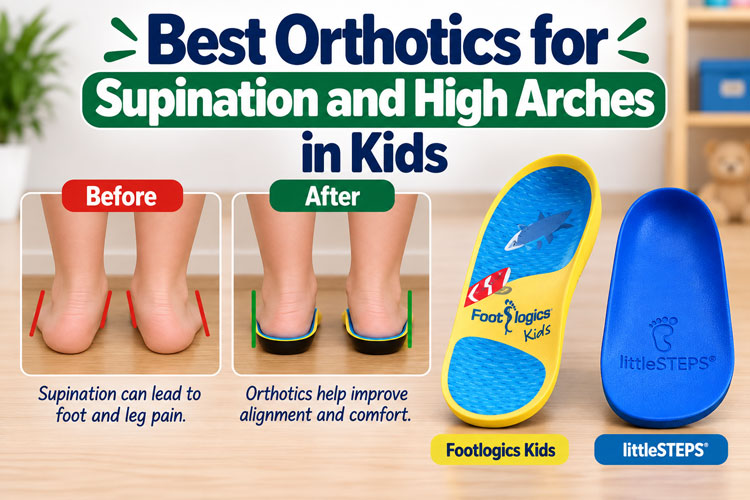
Best Orthotics for Supination and High Arches in Kids
Last updated: September 14, 2026 · Written by Juan Valenzuela, Certified Children’s Shoe Fitter
Has your child been diagnosed with supination, or do they have noticeably high arches? Supination is the opposite of pronation — instead of the foot rolling inward, it rolls outward. Kids with high arches are especially prone to it, since a rigid, high arch doesn’t flatten and absorb shock the way a more typical arch does, which throws off how weight gets distributed across the foot. The right orthotic can meaningfully improve alignment, comfort, and stability.
Are Kids with High Arches More Likely to Supinate?
Yes. A high arch limits how well the foot can flatten and absorb shock, which leads to uneven weight distribution and a tendency for the foot to roll outward. That outward roll is what defines supination — so high arches and supination often show up together, even though they’re technically two different things (one is a foot shape, the other is a gait pattern).


Kids with supination may also experience heel pain from the added stress concentrated on the outer edge of the foot.
My Experience Fitting Kids with Supination
Since 2013, I’ve fit children’s shoes and orthotics, and I’ve seen firsthand how much a properly matched orthotic and shoe combination can improve a child’s comfort and gait. Every child’s foot is different, so the goal is always finding the specific fit that works for that child rather than a one-size-fits-all answer.
How Orthotics Help with Supination
The orthotics I recommend are off-the-shelf, not custom — but they’re specifically designed to provide cushioning, stability, and relief at the pressure points supination tends to create. The key to their effectiveness is pairing them with the right shoe and matching them to your child’s specific foot shape.
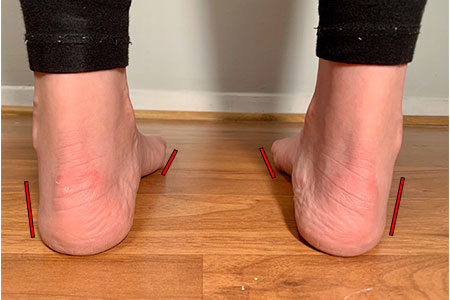
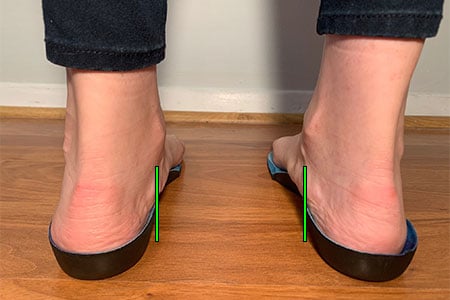
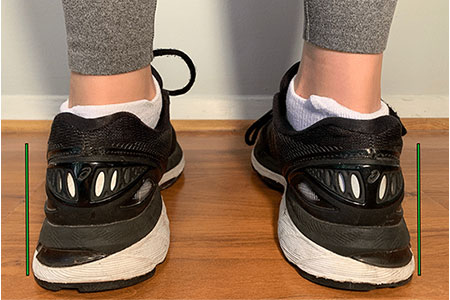
Before and After: What Orthotics Actually Change
What to Look for in a Supination Orthotic
A deep heel cup. This is essential for supination specifically — it stabilizes the heel and helps prevent the excessive outward rolling that defines the condition.
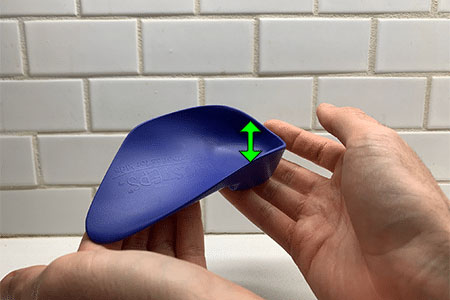
Biomechanical arch support. This distributes weight more evenly across the foot, which reduces strain on the plantar fascia and helps prevent secondary issues like plantar fasciitis from developing.

Best Orthotics for Supination and High Arches
The right choice depends on the severity of your child’s supination — mild, moderate, or strong.
Mild Supination: Footlogics
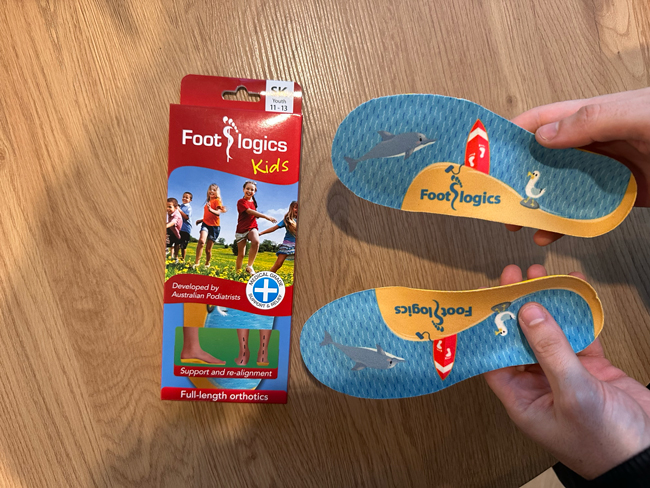
- Order the full-length Footlogics orthotic inserts on Amazon
- Fits toddler shoe size 5 up to big kid shoe size 3
- They can be trimmed to the perfect size using scissors if necessary
- You must remove the original insoles from your child’s shoes before placing the orthotic inside the shoes
- Ideal for mild cases of supination
Moderate to Strong Supination: LittleSteps
LittleSteps provides a deep heel cup that controls heel and lower-leg alignment, plus medial and lateral flanges that help keep the foot properly positioned over the orthotic.
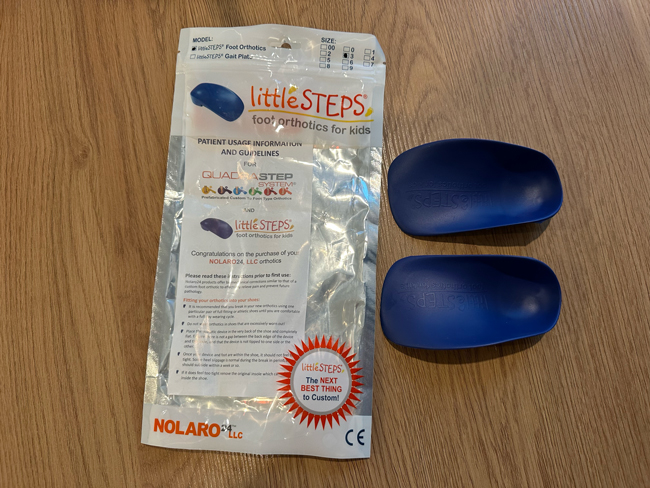
- Order from the official LittleSteps site — referral code JVFCS100121
- It’s not necessary to remove the original insoles of the shoes when fitting this orthotic
- The 3/4 length design makes it easier to fit into various shoe styles
- Take a look at this chart to figure out what size to order based on your child’s shoe size
- Disclosure: some links above are affiliate links — we may earn a small commission at no extra cost to you.
How effective either option is at realigning your child’s feet and improving their gait depends specifically on the severity of their supination.
Don’t Forget the Shoes
Orthotics work best paired with the right shoe. See the full list of supportive shoes for orthotics for options that maximize what the orthotic can do. If high arches are the underlying cause, it’s also worth browsing shoes built specifically for that foot shape: sneakers for high arches and sandals for high arches.
Contact Me for a Specific Recommendation
Every child’s feet are different, and picking the right orthotic and shoe combination isn’t always obvious from a general guide. Reach out directly with your child’s foot shape and degree of supination, and I can help narrow it down.
Don’t Wait for It to Resolve on Its Own
A slight degree of supination is normal as kids grow, and it isn’t automatically cause for concern. Watch for signs it’s becoming excessive: pain, unusual fatigue, clumsiness, or a child avoiding activity they used to enjoy. Supination puts extra stress on the outer edge of the foot with every step, which can make running and playing more tiring — sometimes enough that kids start avoiding sports or active play altogether. If you notice these signs, it’s worth addressing rather than waiting it out.
Frequently Asked Questions
Mild cases usually involve a slight outward roll without much complaint of pain. Moderate to strong cases involve more visible rolling, complaints of foot or heel pain, or noticeable fatigue during activity. When in doubt, starting with Footlogics and moving up to LittleSteps if it’s not enough is a reasonable approach.
Not always, but the two are closely linked. A high arch reduces the foot’s ability to flatten and absorb shock, which often leads to an outward roll — but not every child with high arches will show clear signs of supination. Watching your child’s gait and asking about pain or fatigue is the best way to tell.
It varies by child. Some kids use orthotics through a period of growth or while symptoms are active, and transition to supportive shoes alone once things improve. Others need longer-term support depending on how rigid their arch is.
Yes, it can. The extra stress on the outer edge of the foot can cause fatigue faster than usual, which sometimes shows up as reluctance to run or play as much as before. Properly fitted orthotics and shoes usually help with this.