
High Instep vs High Arch in Kids — What’s the Difference and What Shoes Help
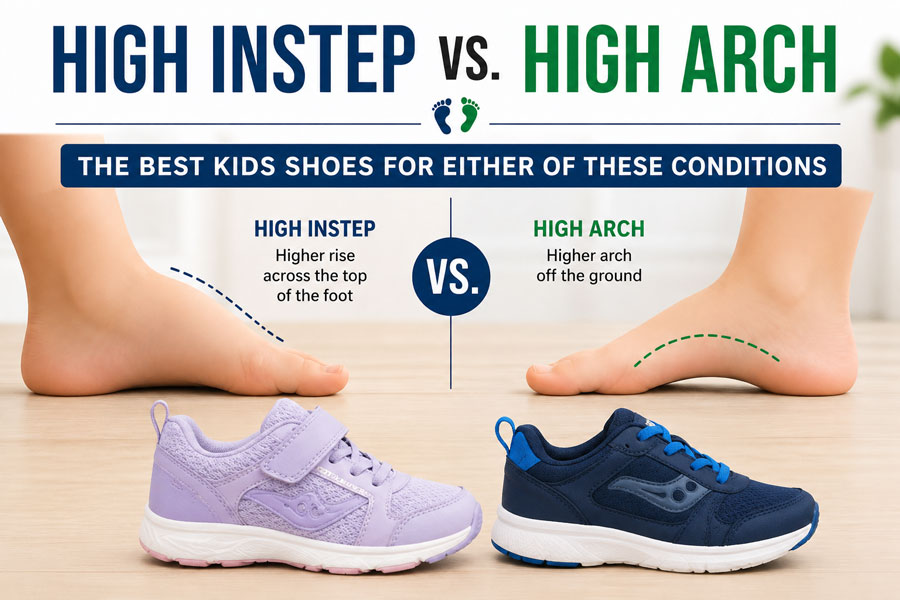
Most parents use the terms “high instep” and “high arch” interchangeably — but they are not the same thing. And the difference matters, because each condition requires a different type of shoe.
Getting this wrong is one of the most common reasons children end up in shoes that do not fit properly, cause discomfort, or fail to provide the support their feet actually need.
This guide will explain what each condition means, how to tell which one your child has, and exactly what to look for in a shoe.
What Is a High Instep?
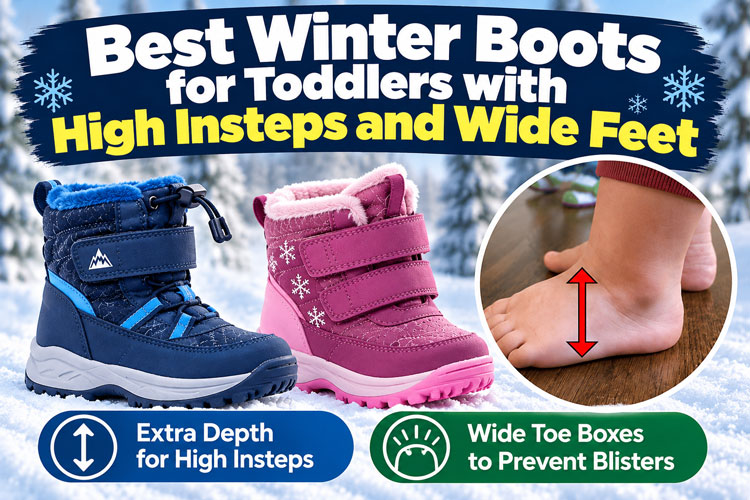
The instep is the top part of the foot — the raised area that sits between the toes and the ankle. A child with a high instep has a foot that is taller than average when measured from the sole to the top of the foot.
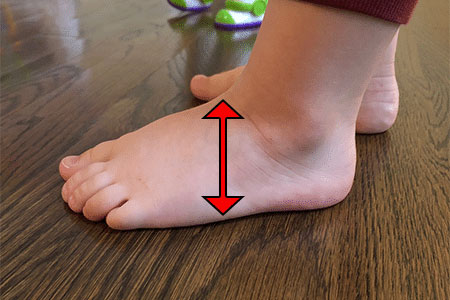
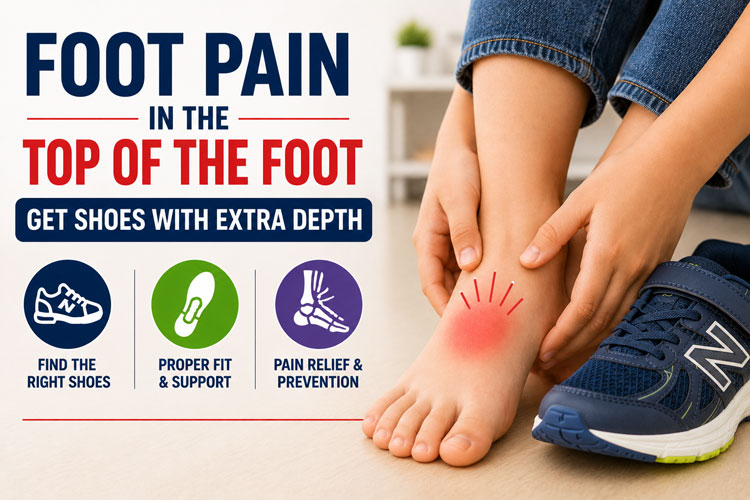
This creates a very specific fitting problem. Most standard shoes are not deep enough to accommodate a high instep, which means the top of the shoe presses down on the foot. This causes pain, marks on the skin, and in some cases, bruising or blisters across the top of the foot.
A high instep does not always come with a high arch. I have fitted children with completely flat feet who also had high insteps — which is why it is so important to understand these as two separate things.
What Is a High Arch?
A high arch — also called cavus foot — is characterized by an exaggerated curve on the bottom of the foot. When a child with high arches stands, most of their body weight is concentrated on the heel and the ball of the foot, rather than being distributed evenly across the entire sole.

This uneven weight distribution creates several problems. The foot is less able to absorb shock, which puts extra stress on the heel, ball of the foot, and ankles. Children with high arches are more prone to heel pain, ball of the foot pain, plantar fasciitis, and ankle instability — especially if they are active in sports.
Most children with high arches also have a high instep, but not always. The arch refers to the bottom of the foot. The instep refers to the top. They are related but distinct.
How to Tell Which One Your Child Has
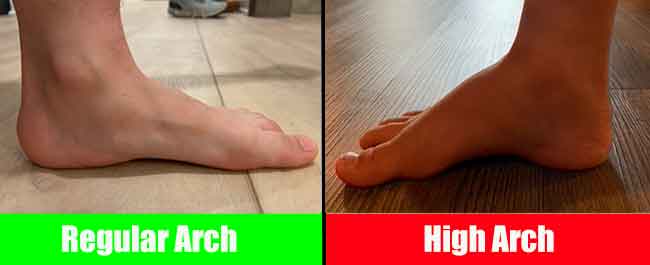
To identify a high arch: Look at the bottom of your child’s foot when they are standing. If you can clearly see a large, raised curve along the inner side of the foot with very little contact between the arch and the ground, your child likely has high arches. You can use this virtual foot assessment to confirm it.
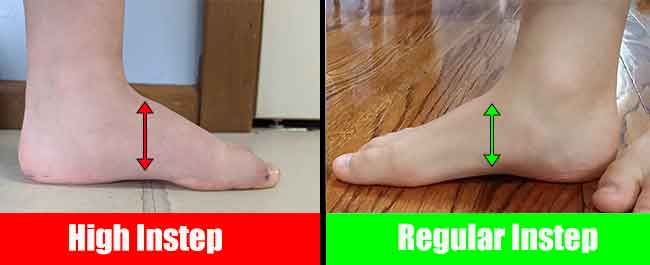
To identify a high instep: Look at the side of your child’s foot from the outside. If the top of the foot rises noticeably high — creating a dome-like shape when viewed from the side — your child likely has a high instep. You can use this virtual resource to confirm it.
A child can have one, both, or neither. Knowing which condition you are dealing with will help you find the right shoe much faster.
Why Getting This Wrong Matters
Many parents respond to both conditions the same way — they buy shoes that are longer or wider to give the foot more room. This is one of the most common mistakes I see, and it does not solve the problem.
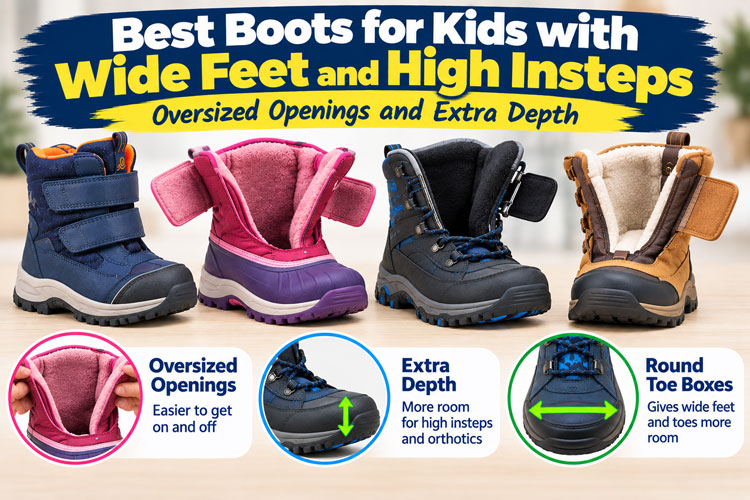
A longer shoe does not give the foot more vertical room. A wider shoe does not either. What both conditions actually require is a shoe with extra depth — meaning the interior of the shoe has more space from the insole to the top of the shoe.
Shoes with extra depth allow the foot to sit lower inside the shoe, which prevents the top of the foot from pressing against the upper. This is the single most important feature to look for when shopping for a child with a high instep or high arch.
What Shoes Work Best
For children with high arches: Look for shoes that provide substantial cushioning in the sole to compensate for the foot’s reduced ability to absorb shock. A well-cushioned midsole helps redistribute pressure away from the heel and ball of the foot. Extra depth is also important to accommodate the instep that typically comes with high arches.
For children with high insteps: Extra depth is the priority. Look for shoes with adjustable closures — laces or wide velcro straps — that can be loosened across the top of the foot to reduce pressure. Avoid slip-on styles or shoes with rigid uppers that cannot flex to accommodate the shape of the foot.
For children with both: You need a shoe that offers extra depth, substantial cushioning, and an adjustable closure system. These children tend to have the most difficulty finding shoes that fit and are often the most limited in their options.

Get Personalized Shoe Recommendations
Every child’s foot is different. I have seen children with normal arches who have high insteps, and flat-footed children who also have high insteps. This is exactly why a one-size-fits-all approach does not work.
If you are not sure which condition your child has, or if you need specific shoe recommendations based on their exact foot shape, feel free to contact me directly at fittingchildrensshoes@gmail.com. I will get back to you as soon as possible with personalized guidance.
Frequently Asked Questions
Yes — and this is actually very common. Most children with high arches also have a high instep because the arch elevation affects the overall shape of the foot. However the two conditions can also exist independently. A child can have flat feet and a high instep at the same time, which is why it is important to assess both the bottom and the top of the foot separately.
Extra depth. This is the single most important feature. Extra depth gives the foot more vertical room inside the shoe, preventing the top of the foot from pressing against the upper. Adjustable closures — wide Velcro straps or laces — are the second most important feature, as they allow you to loosen the shoe across the top of the foot.
High arches tend to be a permanent foot structure — most children do not outgrow them. A high instep is similarly structural. The goal is not to correct these conditions but to find shoes that accommodate the foot shape properly and prevent pain and discomfort during the years of active growth.

Thank-you so much for this information!
I am happy to help.
I grew up with both a high instep and a high arch long before those terms were anywhere near commonplace. It made shoes a pain. My parents bought longer and wider shoes, as you said, to accommodate. It did me no favors, though the balme is not theirs.
The first time I heard the word “instep” was during my undergrad years. A simple definition and I could tell mine was high.
After much weight loss I did go from wide width to medium, but my instep and arch didn’t change. The arch was obviously high by sight though, without the extra fat.
I leave those foot prints like out of bad pictures that only show heel, ball and toes. I now suffer from stress fractures of the third and fourth metatarsals and a lot of foot pain because of these issues.
I do not know if my years of inappropriate footwear added to that or not, but am thankful that both as an adult and as the years progress I have many more options.
I spent many years in heels or sandals that covered only my toes and heels, leaving my instep and arch exposed as a way of dealing. (I hated the winter as a result.) That did no favours either.
I now have an array of shoes, trainers included, but I will be honest, my arch/instep in high enough that after a number of hours even these high priced trainers have to come off for me to find imprints on the top of my foot. Seems I will be forever looking.
Hello Laura,
Thank you so much for sharing your experiences. I am sorry to hear that you have not been able to find a single pair of sneakers/trainers that work well for your foot shape. Are you writing from the UK? I can try to help you look for the correct types of shoes for your feet, I just need to know the country that you are contacting me from to check what shoes you might be able to try.
Hello! My daughter is 9 and has high arches. She is also a toe walker.
She has been having problems with constant pain in her feet and legs due to those issues. We are working with doctors of course, but I am also wanting to find some better supportive shoes for her as well. At the end of the day she is often limping or trying to walk on the outside of her feet because they hurt so bad.
What info do you need from me to get accurate information?
Hello Sarah,
In order for me to recommend specific shoes for your daughter I first need to know whether her feet are narrow, medium, wide, or extra wide. If you are unsure of your daughter’s exact foot shape I suggest that you follow the instructions here:
How to Measure Your Kids’ Foot – 2 Simple Steps to Determine Foot Length and Foot Width
Have you been told by your medical professionals whether your daughter’s toe walking is due to a neurological or neuromuscular condition?
I also need to know from which country you are contacting me to check what specific shoes are available in your area.
Our one year old grandson has just begun to walk. No baby shoes seem to fit him. His instep is about 13/4 ” and length 5 inches. Where can I find soft shoes that would fit him?
Hello Karen,
If you need to retrieve your grandson’s exact foot length and shape you need to follow the instructions here:
How to Measure Your Kids’ Foot – 2 Simple Steps to Determine Foot Length and Foot Width
As far as soft shoes are concerned, is your grandson learning how to walk or already walking confidently?
Thank you for sharing your knowledge with others. My daughter is nearly impossible to fit for supportive, comfortable and non-sneaker shoes. Do you have a recommendation for a shoe that would work for dressier or a work environment? High instep, size 2.5-3.
Thank you.
Hello June,
I am happy to provide you with specific shoe recommendations but first I need to know whether your daughter’s feet are narrow, medium, wide, or extra wide.