
Best Sandals for Kids with Overpronation in 2026 — Improve Posture and Prevent Pain
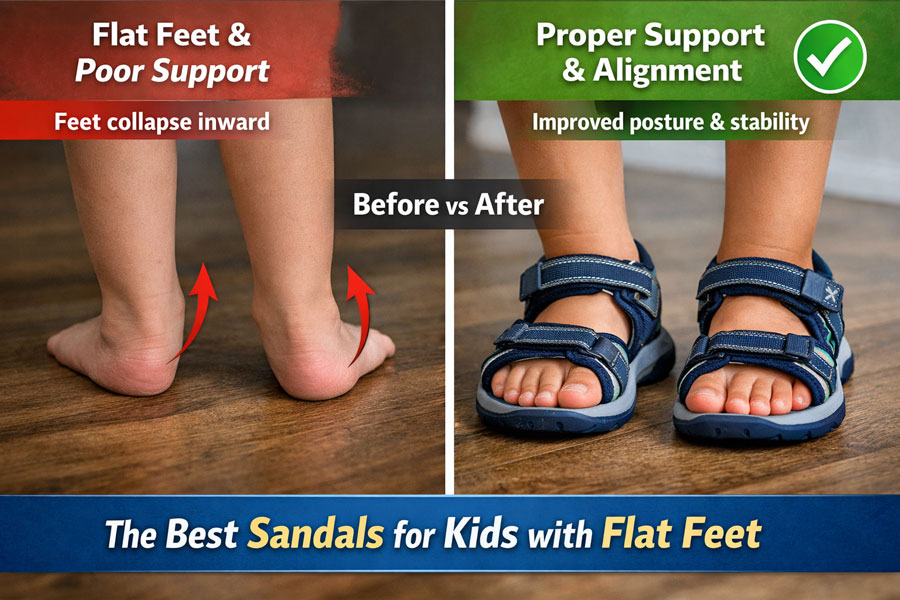
Does your child walk with their ankles rolling inward or their feet turning out?
If so, your child may be overpronating — and the sandals they wear this summer could either help reduce the strain and prevent pain or make things significantly worse.
The good news is that the right sandal can make a visible and immediate difference. In this guide I will explain exactly what overpronation is, how to spot it in your child, and share my top sandal recommendations for 2026 that are specifically chosen to improve foot posture, balance, and stability.
Do Kids’ Sandals Provide Good Support?
Most sandals do not — and that is the honest truth. The majority of children’s sandals are too flimsy to provide the structural support that a child with overpronation needs. They lack the firm outsole, heel cushioning, and stability required to keep an overpronating foot properly aligned.
The key is finding sandals that combine a stable base of support, targeted heel cushioning, and the right amount of flexibility — supportive enough to control excessive pronation but not so rigid that they restrict natural movement.
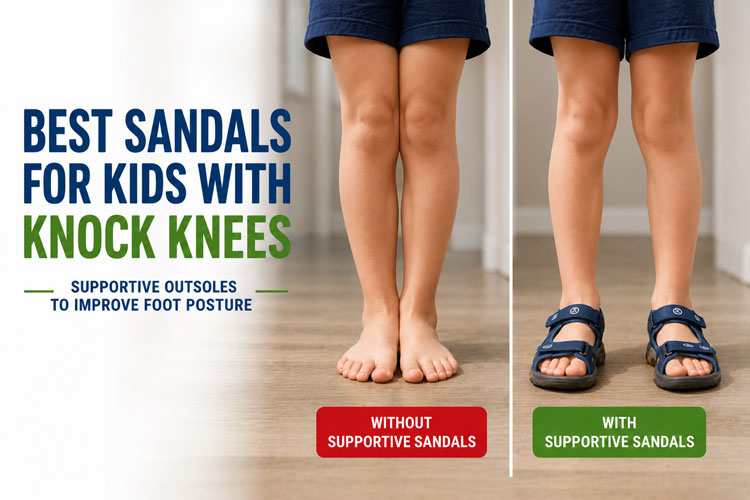
Image of a Child Wearing Unsupportive Sandals
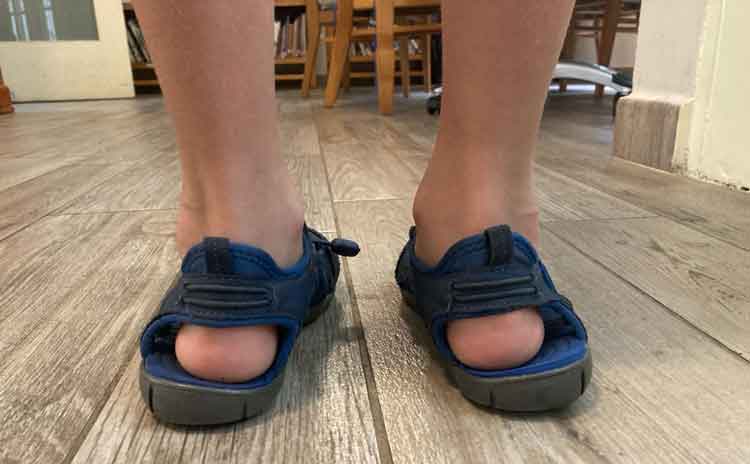
The before and after images on this page show exactly how much of a difference the right sandal can make — and how dramatically the wrong one can allow a child’s feet to collapse.
Before and After — The Impact of Supportive Sandals
The images below show a child with flat feet and overpronation standing barefoot — notice how the arches collapse and the ankles roll inward. Now look at the same child wearing the supportive sandals I recommend — the feet are noticeably straighter and better aligned. Finally compare that to the same child in an unsupportive sandal — the collapse returns immediately.
The right sandal does not just look different. It changes how your child’s entire lower body is positioned with every step.
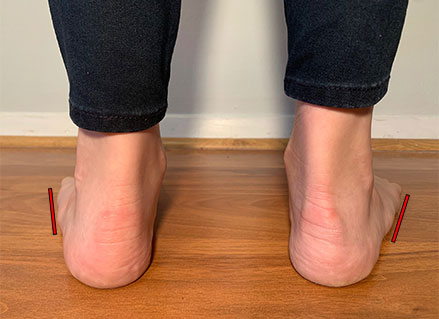
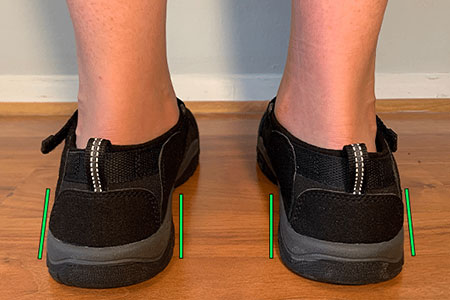
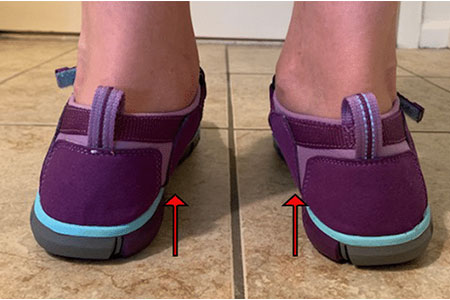
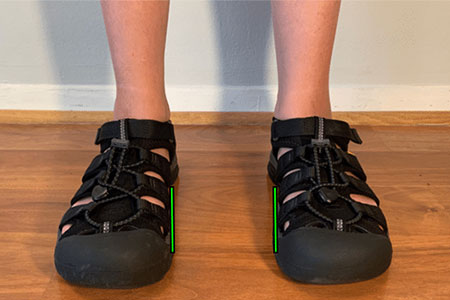
Choosing the right sandals can make a significant difference in your child’s foot health. The right pair can provide the necessary support to prevent overpronation-related discomfort and promote proper foot alignment.
Key Features of Supportive Sandals
When selecting sandals for children with overpronation, I look for three specific features:
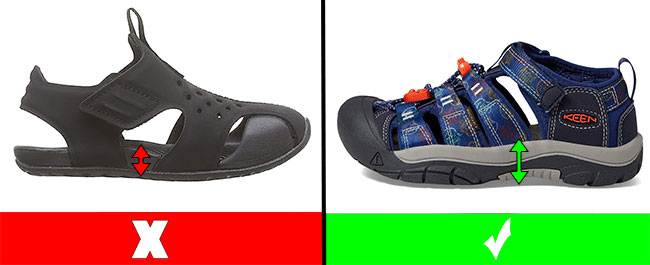
1. A Stable Base of Support
The outsole is the foundation of everything. For children with overpronation, the outsole needs to be firm and substantial enough to prevent the foot from collapsing inward. Look for sandals with a broad, thick outsole that distributes weight evenly and resists the rolling motion that causes pain and misalignment.
2. Targeted Heel Support
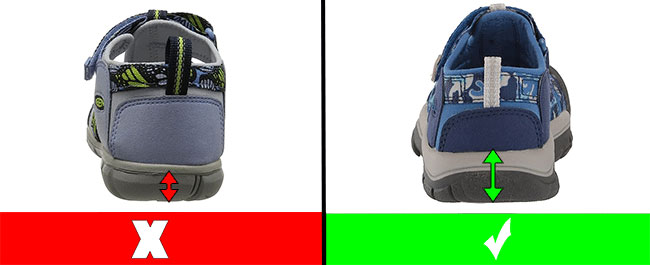
A well-cushioned and contoured heel cup keeps the heel centered and prevents it from rolling inward — which is the primary driver of overpronation. The snugger the heel fit, the more effectively the sandal controls excessive pronation.
3. Lightweight and Flexible — But Not Too Flexible
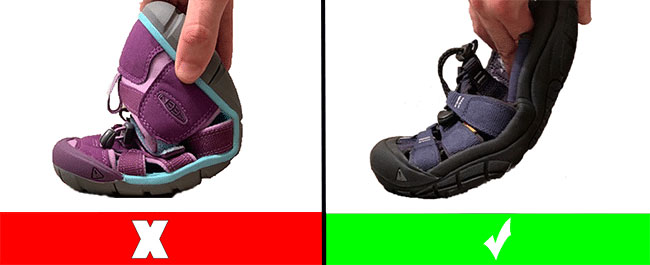
While stability and support are essential, sandals that are too heavy or too rigid will tire your child’s feet and legs quickly and they will refuse to wear them. The sandals I recommend provide the right balance — firm enough to support but light enough to wear comfortably all day. A sandal should bend at the ball of the foot but not fold completely in half — that is a sign it is too flexible to provide meaningful support.
When Should You See a Doctor?
Supportive sandals and sneakers are an excellent first step for managing overpronation — but there are situations where professional guidance is important. I recommend consulting a pediatrician or podiatrist if:
- Your child experiences pain in the feet, ankles, knees, or hips during or after activity
- The overpronation appears severe or is getting noticeably worse over time
- Your child has been falling more frequently than other children their age
- Supportive footwear does not seem to be helping after several weeks of consistent wear
- Your child has been diagnosed with a related condition such as low muscle tone or hypermobility
A professional can assess whether orthotics are needed in addition to supportive footwear — which can significantly enhance the correction provided by the sandals I recommend below.
Best Sandals for Kids with Overpronation in 2026
All of the sandals below provide a stable base of support, targeted heel cushioning, and the right amount of flexibility to help control overpronation during summer wear. They all fit medium and wide feet unless otherwise noted.
Sizing varies by style and is noted in each listing. Disclosure: Some links in this post may be affiliate links and we may receive a small commission at no extra cost to you.
1. Agnes by Memo
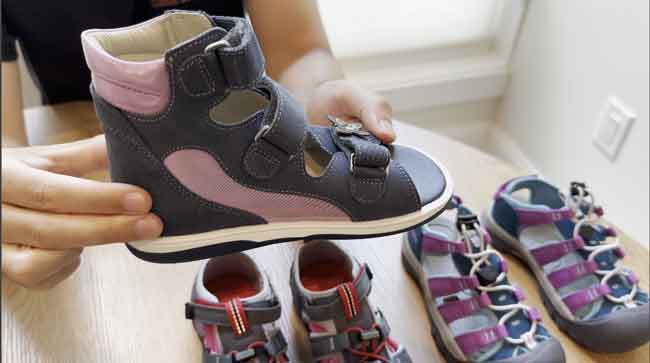
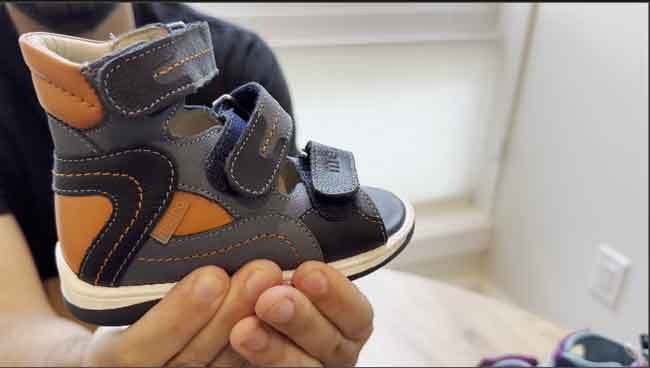
The Agnes is my top recommendation for children with moderate to severe overpronation. It is a true orthopedic sandal with an anatomically shaped footbed and firm heel counter that provides the most clinical level of support on this list. I recommend this one most frequently for children who have been referred by a physical or occupational therapist.
Key Features
- Order the Agnes by Memo on Amazon
- 100% leather construction for durability and breathability
- Adjustable hook and loop strap accommodates different foot widths
- Firm heel counter provides maximum rear foot stability
- Orthopedic — recommended for moderate to severe overpronation and flat feet
- Order a whole size larger than your child’s current foot size
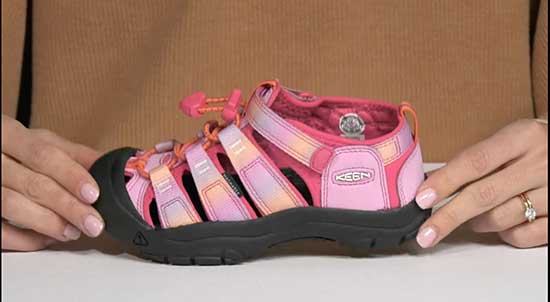
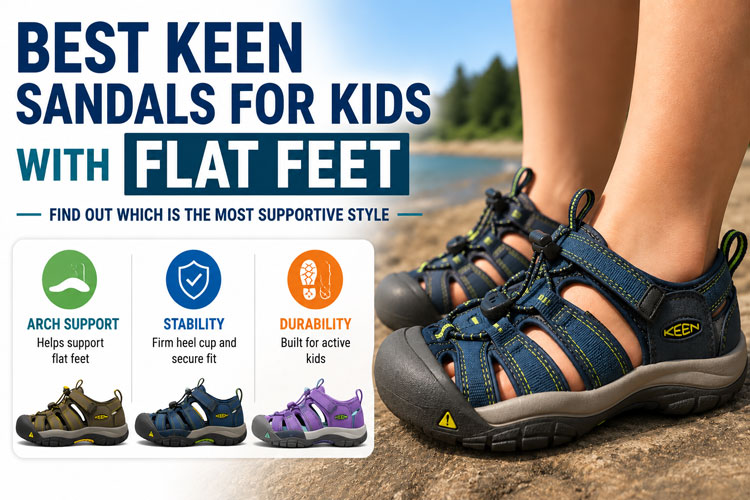
2. Newport by Keen
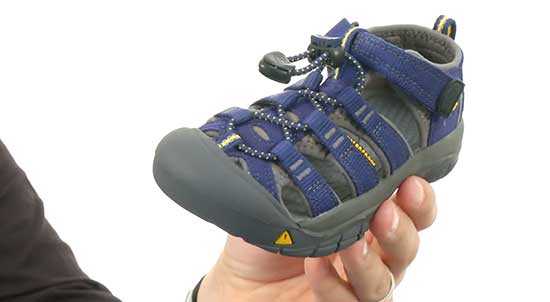
One of my most recommended sandals for children with overpronation. The anatomically engineered footbed provides excellent arch support and the closed-toe design protects little feet during outdoor adventures — making it suitable for everything from hiking trails to beach outings.
Key Features
- Order the Newport H2 by Keen on or Amazon
- Anatomically engineered footbed provides excellent arch support
- Closed-toe design with toe bumper protects feet during active play
- Machine washable for easy care
- Not orthopedic — best for mild to moderate overpronation
- Order a half size larger than your child’s current foot size
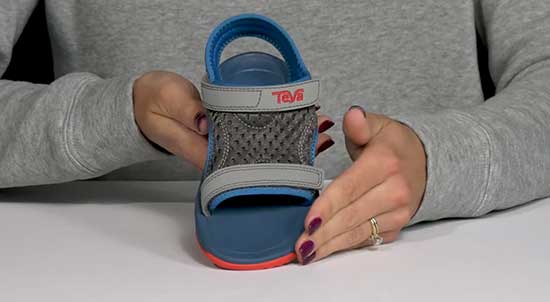
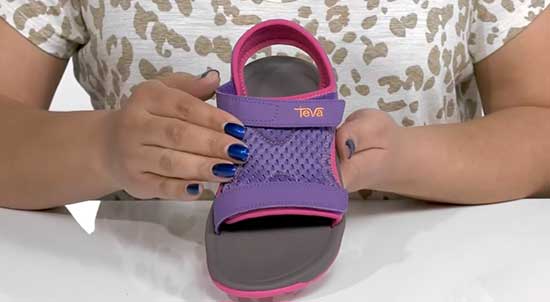
3. Psyclone by Teva
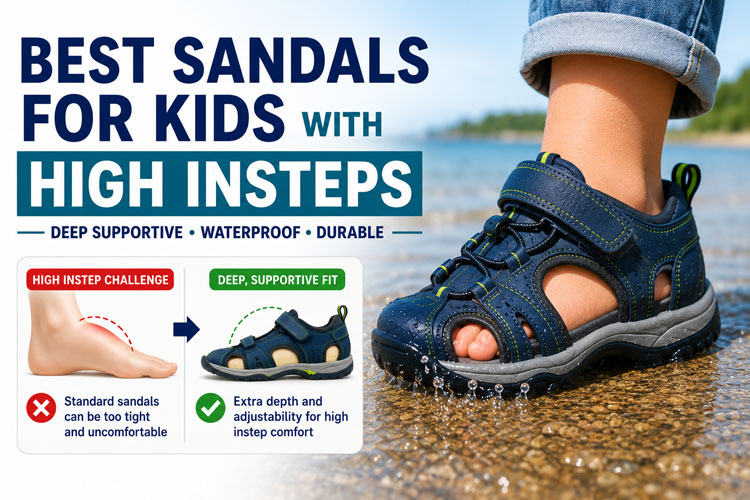
A fantastic everyday sandal for children with mild to moderate overpronation. The soft contoured footbed and adjustable straps provide reliable support during active summer play, and it accommodates a wide range of foot shapes including wider feet and high insteps.
Key Features
- Order the Psyclone XLT1 by Teva on or Amazon
- Fits medium, wide, and extra wide feet — also fits high insteps
- EVA foam footbed cushions and softly supports the arch
- Rubber outsole for reliable traction on varied surfaces
- Not orthopedic — best for mild to moderate overpronation
- Order a half size larger than your child’s current foot size
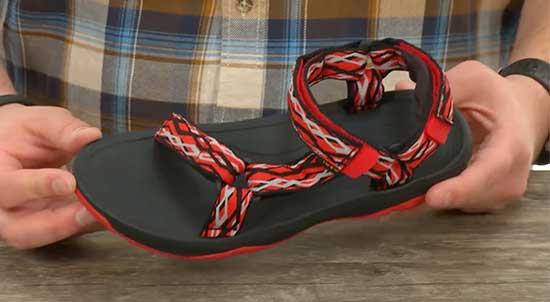
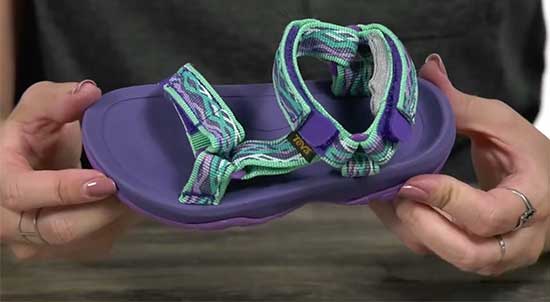
4. Hurricane by Teva
A water-friendly open-toe sandal with a contoured footbed that provides strong arch support. The multiple adjustable straps create a customized secure fit and the lightweight construction makes it ideal for active children who spend a lot of time near the water during summer.
Key Features
- Order the Hurricane by Teva on or Amazon
- Contoured footbed with arch support for improved foot alignment
- Multiple adjustable straps for a customized secure fit
- Lightweight and water friendly — ideal for beach and pool use
- Quick drying materials for all-day summer wear
- Not orthopedic — best for mild to moderate overpronation
- Order a half size larger than your child’s current foot size
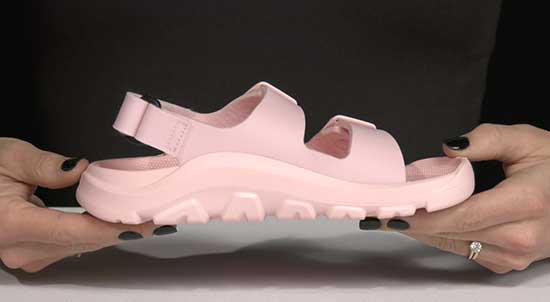
5. Mogami by Birkenstock
Birkenstock is known for exceptional arch support and the Mogami is no exception. The contoured cork footbed provides natural arch support with a deep heel cup that keeps the rear foot stable — making it one of the best everyday supportive sandals for children with mild to moderate overpronation.
Key Features
- Order the Mogami by Birkenstock on Amazon
- Contoured PU footbed with deep heel cup for rear foot stability
- Triple hook-and-loop closure for a customized secure fit
- Non-slip outsole for excellent grip on all surfaces
- Not orthopedic — best for mild to moderate overpronation
- Order a whole size larger than your child’s current foot size
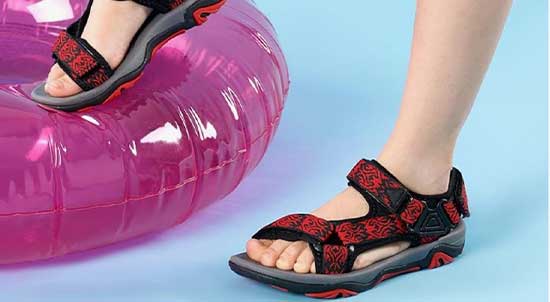
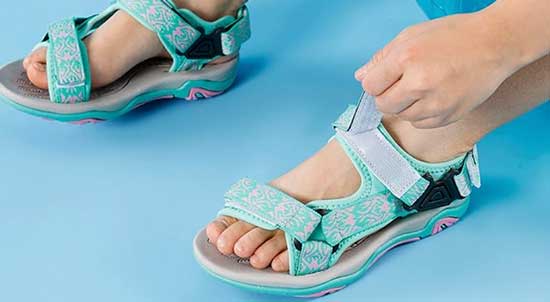
6. Adventurous Light-Weight by Dream Pairs
A practical and affordable option that parents consistently praise for its durability. The three hook-and-loop straps provide a secure adjustable fit and the cushioned MD footbed offers all-day comfort — making it a great entry-level supportive sandal for children with mild overpronation.
Key Features
- Order the Adventurous Light-Weight by Dream Pairs on Amazon
- Three hook-and-loop straps for easy on and off and a secure fit
- Lightweight MD footbed cushioned for all-day comfort
- Durable rubber outsole provides solid traction during play
- Not orthopedic — best for mild overpronation and general support
- Order a whole size larger than your child’s current foot size
7. Seaturtle by Kamik
These open-toe sandals feature a cushioned footbed and a triple strap system that keeps the foot properly positioned throughout the day. Their lightweight flexible design is ideal for active children and the quick-drying moisture-wicking lining makes them a great option for water play.
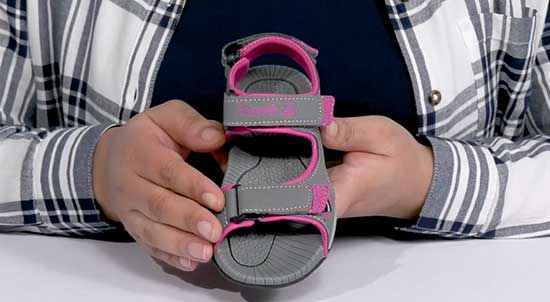
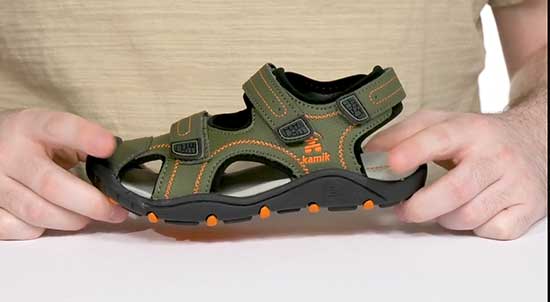
Key Features
- Order the Seaturtle by Kamik on Amazon
- Triple velcro straps for a secure and adjustable fit
- Quick drying moisture wicking lining — great for water play
- Vegan-friendly materials
- Not orthopedic — best for mild overpronation and general support
- Order a whole size larger than your child’s current foot size
8. Lucky Brand
A stylish and functional option for parents who want a supportive sandal their child will actually want to wear. The adjustable closures and supportive footbed make it a reliable everyday choice for children with mild overpronation who need something more versatile.
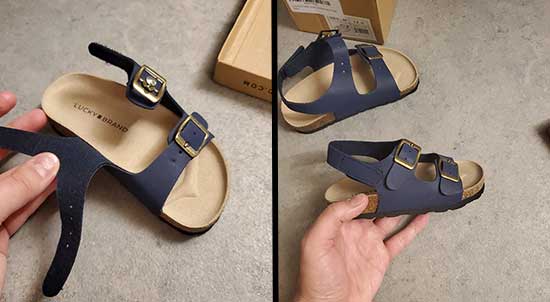
Key Features
- Order the sandal Lucky Brand on Amazon
- Supportive footbed for all-day comfort
- Adjustable buckle at the front and velcro strap at the back for easy on and off
- Not orthopedic — best for mild overpronation and general support
- Order a half size larger than your child’s current foot size
How to Get the Right Sandal Size Online
Most of the sandals I recommend are available in whole sizes only — no half sizes. Here is a simple rule to follow when ordering:
If your child measures a foot size 10 they typically wear a 10.5 in sneakers. Since sandals do not come in half sizes round up to a size 11 for the best fit.
If your child measures a foot size 10.5 order a size 11 sandal as well.
When in doubt — always round up rather than down. A sandal that is slightly roomy is far more comfortable than one that pinches.
If you are unsure of your child’s exact foot length, width, or instep height, I recommend using a virtual shoe fitting service before ordering. Knowing whether your child has narrow, medium, wide, or extra wide feet makes a significant difference in finding the right fit.
What Is Overpronation in Children?
Pronation is the natural inward rolling motion of the foot during walking and running — every child and adult pronates to some degree. It is a normal part of how the foot absorbs impact.
Overpronation occurs when that inward rolling is excessive — when the arch collapses too far and the ankle rolls inward beyond what is healthy. Over time this places strain on the feet, ankles, knees, hips, and even the lower back.
Children with overpronation often develop the condition because of flat feet, low muscle tone, or weak ankles. In some cases it is hereditary. The biggest concern is not just foot discomfort — it is how overpronation can cause the misalignment of the entire lower body, affecting your child’s posture, walking gait, and overall comfort during daily activities.
What Is the Difference Between Overpronation and Flat Feet?
This is one of the most common questions I receive from parents and the answer is that the two conditions are closely related but not the same thing.
Flat feet refers to the absence or collapse of the arch — when the entire sole of the foot makes contact with the ground when standing.
Overpronation refers to what happens when a child walks or runs — the excessive inward rolling of the foot and ankle.
Most children with flat feet will also overpronate, but not all children who overpronate have flat feet. A child can have a visible arch when standing but still overpronate during movement. This is why watching how your child walks is just as important as looking at the shape of their feet while standing still.
Frequently Asked Questions
Supportive sandals cannot fully correct overpronation on their own but they can significantly reduce it during wear by preventing the foot from collapsing inward. Combined with supportive sneakers for everyday wear and orthotics if recommended by a professional, supportive sandals play an important role in managing overpronation throughout the summer months.
Ideally both — but for different purposes. Supportive sneakers provide more structure and are better for school, sports, and extended active wear. Supportive sandals are appropriate for warmer weather, casual outings, and water activities. I recommend limiting sandal wear to 4 to 5 hours per day for children with overpronation and switching to supportive sneakers for longer or more active periods.
A supportive sandal is an everyday sandal with more structure and stability than a standard sandal — but it is not medically classified as orthopedic. An orthopedic sandal like the Agnes by Memo is designed with clinical features such as an anatomically shaped footbed, firm heel counter, and corrective support specifically for children with diagnosed foot conditions. Whether your child needs an orthopedic sandal depends on the severity of their overpronation and whether their doctor or therapist has recommended clinical footwear.
I generally do not recommend placing orthotics inside sandals. Most sandals do not offer a secure enough enclosed fit to keep the orthotic in place during active wear, which reduces their effectiveness. If your child wears orthotics it is best to use them inside supportive sneakers and choose sandals that already offer built-in arch and heel support for summer use.
Bonus Resource — Supportive Sneakers for Kids with Overpronation
While sandals are great for warm weather, supportive sneakers are essential for year-round protection. For school, sports, and everyday active wear, a pair of supportive sneakers ensures your child’s feet stay properly aligned even when sandals are not appropriate. You can find my specific sneaker recommendations for children with overpronation in my dedicated guide to supportive sneakers for kids.
Contact Me for Personalized Recommendations
Every child’s degree of overpronation is different. If you have questions or need specific sandal recommendations tailored to your child’s foot shape, width, or degree of pronation, feel free to contact me directly via email. I am happy to help you find the perfect pair of sandals to keep your child comfortable and properly supported all summer long.

Hi Juan, following your advice on choosing shoes, we purchased Asics shoes (https://outlet.asics.com/gb/en-gb/gt-1000-10-gs/p/1014A189-408.html) that helped our son. We then bought some sandals (Timberland) but he complained of pain the night following. We were wondering if you could help us out in picking one for him:
– https://www.geox.com/en-GB/open_sandals-navy-fluo_orange-strada_boy-J1524A014CEC4324.html
– https://www.geox.com/en-GB/open_sandals-navy-orange-borealis_boy-J350RB01454C0820.html
– https://www.decathlon.co.uk/p/hiking-sandals-mh100-kid-blue-and-yellow-children-jr-size-7-to-12-5/_/R-p-150632?mc=8595700&c=GREEN_YELLOW
In general, do you have any further tips to identify sandals for overpronation?
Hello,
To recommend specific shoes for your son I first need to know his foot shape (narrow, medium, wide, extra wide), and the country that you are contacting me to check what specific shoes you might be able to order.
Hello!
Do you recommend putting orthotics into the sandal during warm weather? What are your thoughts on Geox sandals? Do they provide similar support for overpronation? Tahnk you.
Hello Natasa,
I don’t recommend putting orthotics inside sandals as they won’t do any good. Orthotics work in an enclosed shoes (sneakers, dress shoes, boots), but not sandals.
Most Geox sandals are great as they provide supportive outsoles with a stable base of support. Is there a specific Geox sandal style you had in mind?