
Worst Shoe Brands for Kids Who Wear AFOs: Stay Away from These 4 Brands
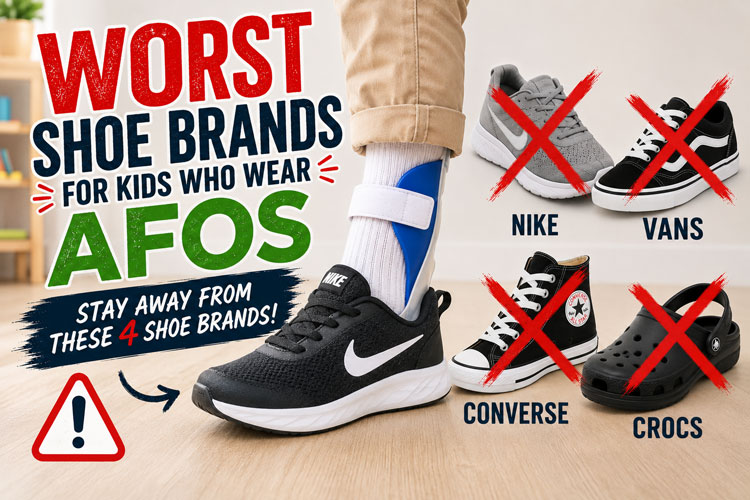
Last Updated: August 2026 | Juan Valenzuela, Certified Children’s Shoe Fitter
I’ve seen countless discussions on forums like Reddit and Quora where parents recommend shoes that actually rank among the worst options for kids who wear AFOs. There’s a lot of confusion around which shoes truly work with braces. As a children’s shoe fitter with over a decade of experience working with orthotics, I can confidently guide you through which brands to avoid — and why. I’ll also point you to a trusted list of shoes that consistently work well with AFOs.
The Importance of Fitting AFOs in the Correct Types of Shoes
Some children start wearing AFOs as early as 3 months old, while others start at an older age. Either way, when AFOs are fitted in the correct pair of shoes, they can greatly improve your child’s walking gait, benefit their mobility, and support weak muscles. Other benefits include improved overall posture, prevention of foot deformity, and a stable base of support to help improve stability.
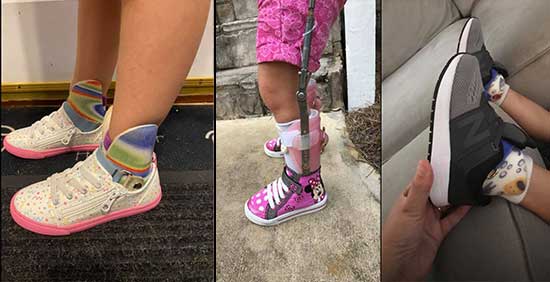
Some parents take their children shoe shopping and try at least half a dozen athletic brands, only to end up empty-handed, since most shoes aren’t wide or deep enough to fit over a brace. I’ve seen a lot of parents recommend Converse, Nike, and Vans for their kids. These shoes might technically accommodate an AFO — but only by going way too big.
The Shoes Need to Provide the Correct Amount of Support
Some parents believe that once their child is wearing AFOs, supportive shoes aren’t necessary — that’s a real misconception. AFOs and shoes have to work together to improve your child’s stability and overall foot health. Without the right shoes, the benefit of the AFO itself is significantly reduced. At minimum, the shoe should provide a firm heel counter and a stable base to help hold the AFO securely in place.
Four Shoe Brands to Avoid for Kids Who Wear AFOs
While some brands excel at making footwear suitable for AFOs, others fall short. Here are four brands worth being cautious of.
1. Converse
Some parents believe Converse works well with AFOs, but that’s often because they don’t realize these shoes run unusually long. It can feel like you’re getting the right size when, in reality, the shoe is simply oversized.
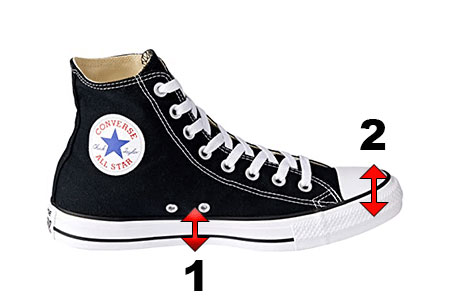
Two things worth noticing in the image above: the outsole is notably flat — AFOs can’t do all the work alone, the shoe needs to provide real support too. And the front of the shoe lacks depth, which means the AFO can’t sit properly inside, causing the top of the foot and toes to rub against the shoe.
2. Nike
Nike is renowned for stylish, athletic footwear, but their shoes often fall short functionally for AFOs. The lightweight construction and minimal support make them less than ideal for kids who need additional stability, and the design typically doesn’t account for the space an AFO needs.
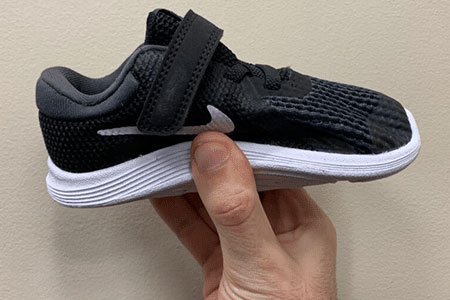
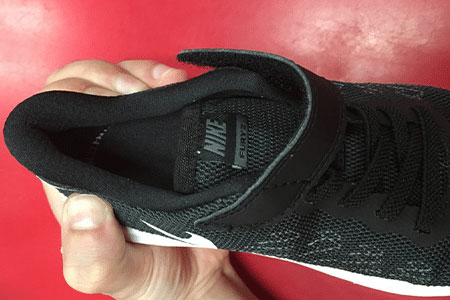
Nike did recently introduce a shoe specifically designed with kids who wear AFOs or orthotics in mind: FlyEase, an adaptive, easy-entry shoe.
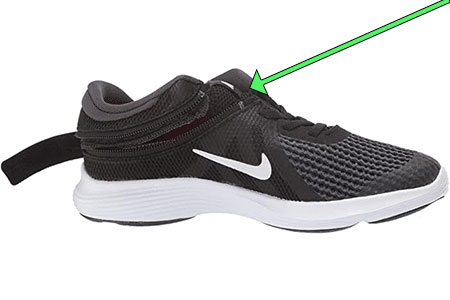
While FlyEase is a genuinely promising step forward, it still falls short in several key areas: it lacks proper support, doesn’t offer extra depth, and isn’t available in wide (W) or extra wide (XW) widths. As a result, many parents end up sizing up by two or more sizes just to make it work, which compromises fit and function.
3. Vans
Vans, much like Converse, isn’t a good match for AFOs. The narrow fit and lack of structure often make them uncomfortable — and even counterproductive — for kids who need orthotic support. Flat soles and minimal arch support can worsen alignment issues rather than help correct them, making Vans more of a fashion choice than a functional one for kids who wear braces.

4. Crocs
I’m often surprised by how many parents recommend Crocs for kids who wear AFOs. Whether worn with or without the brace, they’re not a good option in either case. Crocs are roomy, but they lack the support and structure an AFO needs to work properly — the soft, flexible material doesn’t provide the stability required, which reduces the brace’s effectiveness and can lead to discomfort.
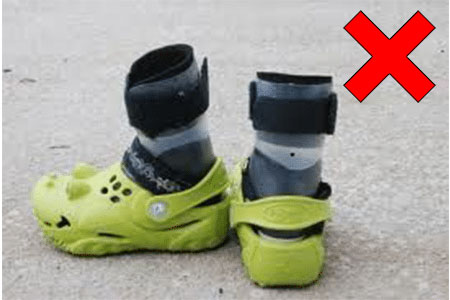
I’ve highlighted these four because they’re the ones I see most commonly — and mistakenly — recommended by well-meaning parents. It’s worth looking past the label and understanding what your child’s feet actually need.
A quick, practical distinction worth making: if your child needs to be barefoot-adjacent for a couple of hours around the house (say, when the AFO comes off for a break), Crocs alone — without the AFO — are fine for that limited window. What I don’t recommend is wearing Crocs with the AFO inside them, since they simply can’t provide the stability the brace relies on. If you want a more supportive option for that in-between time, a substantial sandal (like a Teva Psyclone) works better than Crocs even without the AFO, and if your child specifically needs a shoe that works with the AFO for outdoor time, a Merrell style is a solid choice.
What Are the Best Shoe Brands for Kids Who Wear AFOs?
Rather than repeat my full product list here, see my comprehensive guide to shoes for kids with AFOs for the complete lineup — 990v6 by New Balance, Dean Adapt II by See Kai Run, Holly Mary Jane by Stride Rite, Ikiki, M2P Journey 3.0 Adapt by Stride Rite, Billy Shoes, and Gabi/Alvin by Memo — with full specs, sizing, and links for each. I also have a separate resource covering the top 4 shoe brands that consistently perform best for AFOs, if you’d rather shop by brand.
Stop Getting Bigger Shoes to Accommodate Your Child’s AFOs
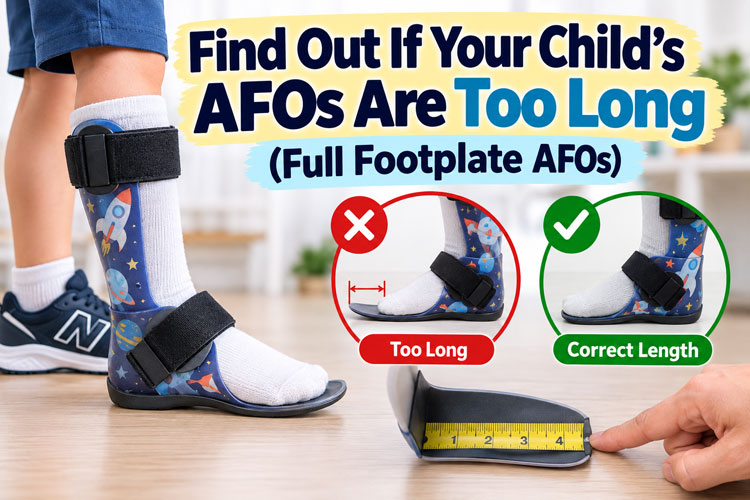
Just because a shoe technically fits over your child’s AFO doesn’t automatically make it a good option. I see families assume that if the brace fits inside the shoe, it must be fine — but that’s not always true. Shoes more than two full sizes too big can throw off your child’s balance and stability, essentially canceling out the benefit the AFO was supposed to provide. If you’re unsure what size to order, I’ve put together a free step-by-step resource to help you get it right.
Have a Brand You Think Should Be on This List?
There’s a lot of confusion online about the right shoes for kids who wear AFOs, and plenty of well-meaning parents recommend brands that don’t actually offer the support these kids need. Have you come across a brand you think belongs on this list — or one you think doesn’t? Let me know in the comments below.
Contact Me for Personalized Recommendations
If you have questions or need help finding the right shoe for your child’s AFOs, reach out by email — I’m happy to help.
Frequently Asked Questions
It depends on your child’s specific needs — FlyEase is a real improvement in ease of entry, and for a child whose AFO doesn’t need much extra structural support from the shoe itself, it can work. For a child who needs real depth and firm support, I’d still steer toward the dedicated AFO-friendly brands instead.
A substantial, structured sandal or shoe with real arch support and a firm sole — something like a Teva Psyclone — is a better choice than Crocs, even for AFO-free time. Save the fully open, unsupportive styles for very short stretches only.
These four come up the most often in my experience, but the underlying test applies to any brand: check for a firm heel counter, real depth, and enough width — regardless of how popular or well-marketed the shoe is.

What do you think about getting Crocs, just for when the child is walking around at home, but can’t walk directly on the AFOs because they’d slip?
Hello Megan,
If you are referring to wearing Crocs with the AFOs, I don’t usually recommend that, as Crocs don’t provide any stability whatsoever. If you are referring to wearing Crocs without the AFOs, that is fine to do it for a couple of hours around the house. With that said, instead of Crocs, I usually recommend a more supportive/substantial sandal that will help provide better support and stability such as this Teva style or to wear with the AFOs this specific model: Merrell