
Best Orthopedic Shoes for Toe Walking Children
Last updated: August 2026 | By Juan Valenzuela, Certified Children’s Shoe Fitter
Has your child been diagnosed with idiopathic toe walking, and has a medical professional recommended orthopedic shoes? Or maybe you were told your child’s toe walking will “resolve on its own,” and you’re the one who wants to be proactive and take early action. This behavior, often overlooked, can have long-term implications if it isn’t addressed promptly.
My Experience Fitting Shoes for Toe Walking Children
As a shoe fitter, I’m here to guide you through this process and offer personalized anti-toe-walking shoe recommendations tailored to your child’s unique needs.
I always remember something a podiatrist told me when I first started fitting children’s shoes: it’s important to be proactive with children and their treatment, since the first seven years of life are the “golden years of treatment opportunity.” During this window, permanent structural changes to the foot and lower extremity can be relatively achievable through treatments like orthotics, supportive shoes, and therapeutic exercises.
Is It Normal for Children to Walk on Their Toes?
Toe walking is completely normal under the age of two. When children are learning to walk, they try out different foot postures, and toe walking often shows up while they’re cruising and holding onto furniture.
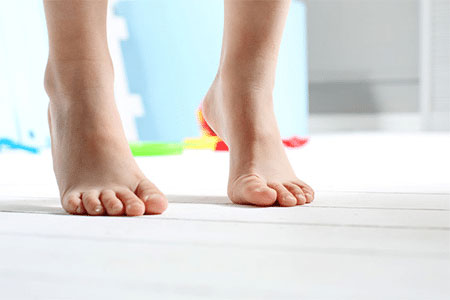
If your child continues to toe walk past age two, I’d suggest seeking medical advice. I don’t mean to alarm you, but when it comes to treating toe walking and other children’s foot conditions, the earlier you take action, the better. Persistent toe walking can lead to muscle tightness and imbalance, affecting a child’s overall posture and gait.
Can Orthopedic Shoes Help Prevent Toe Walking?
That depends on a case-by-case basis. Many families have had real success fitting their children in orthopedic shoes, but it’s not a total guarantee — it ultimately depends on the degree of your child’s underlying condition. That said, I’ve seen orthopedic shoes be particularly beneficial for children who toe walk, since they offer the structure needed to encourage a heel-to-toe walking pattern.
Please keep in mind that how effective orthopedic shoes turn out to be for your child depends directly on the degree of their underlying condition.
Key Features of the Orthopedic Shoes I Recommend
When selecting orthopedic shoes for a child who toe walks, a few specific features make a real difference:
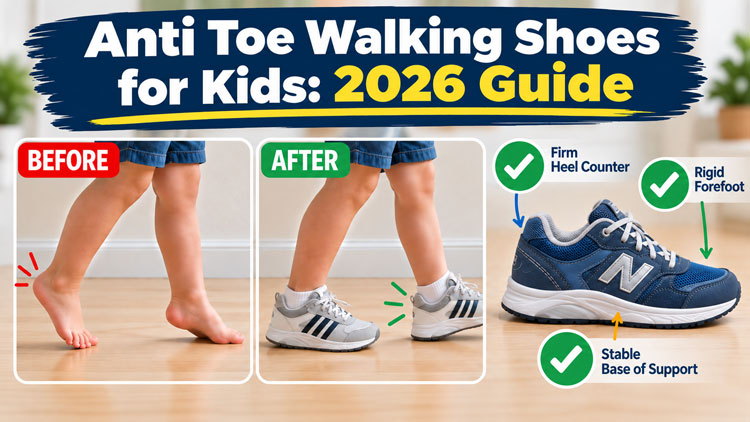
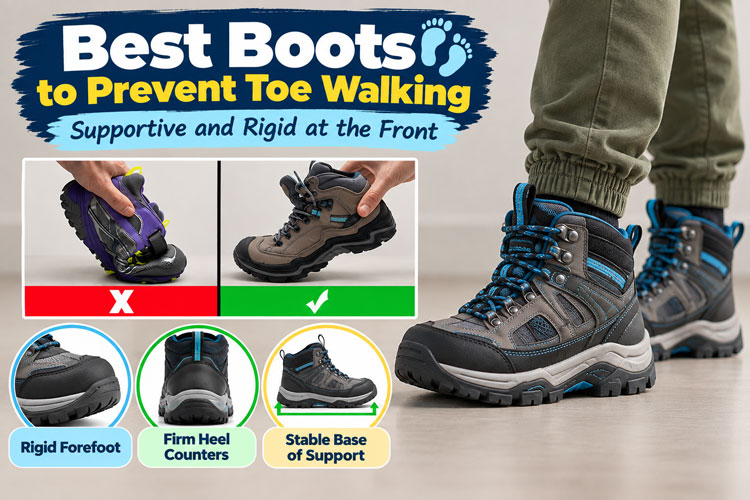
Feature One: Rigid Front. A rigid front prevents the foot from bending excessively at the toe. This encourages a more natural walking pattern by supporting the foot’s arch and promoting heel contact with the ground. By restricting excessive flexion, a rigid front helps guide the foot into a more traditional heel-to-toe motion — which can be genuinely important in correcting toe-walking habits.
Feature Two: Thomas Heel. This design helps prevent the inward rolling of the foot, which can contribute to toe walking. A Thomas heel helps a child maintain proper alignment and can reduce the likelihood of toe walking over time.
Feature Three: Thermoplastic Asymmetric Stiff Heel Counter. This is particularly beneficial for children with weak ankle muscles, offering the reinforcement needed to maintain proper posture and alignment. By stabilizing the ankle, this feature can meaningfully reduce the tendency to toe walk.
Can Orthopedic Shoes Replace SMOs or AFOs?
This is a question your medical professional should ultimately answer. Orthopedic shoes can complement orthotics and offer real additional benefit, but they shouldn’t replace a prescribed orthotic without professional guidance.
In my experience, while orthopedic shoes provide excellent support and are a valuable tool for addressing toe walking, they’re not a direct replacement for specialized orthotics like SMOs or AFOs. Those orthotics are custom-made to address specific medical conditions and offer a level of support orthopedic shoes can’t fully match. That said, many families have turned to orthopedic shoes because their child refuses to wear an SMO or AFO — usually due to discomfort — and have had genuine success with that alternative.
Disclosure: some links in this post may be affiliate links, and I may earn a small commission at no extra cost to you.
My Top Picks for Toe-Walking-Friendly Orthopedic Shoes
As a shoe fitter, I’ve curated a list of orthopedic shoes that have proven effective in managing toe walking in children. Each shoe on this list has been selected based on its design, support features, and feedback from parents and children alike.
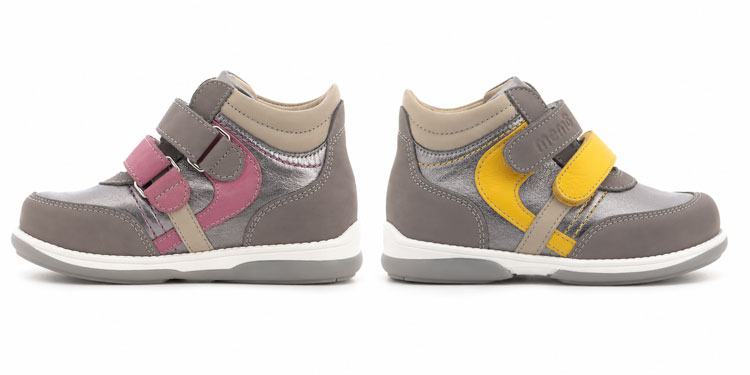
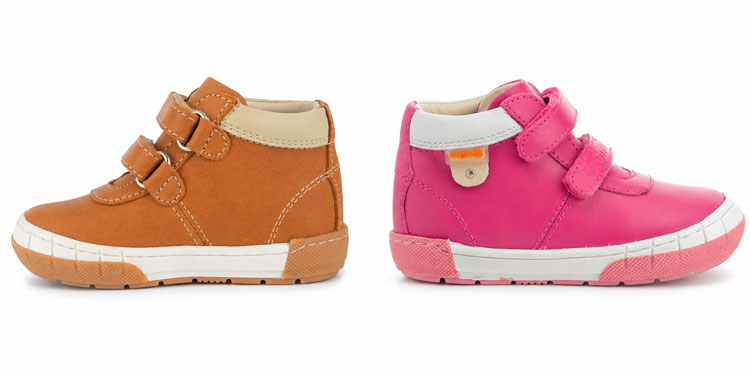
Shoe Style Gabi and Alvin by Memo
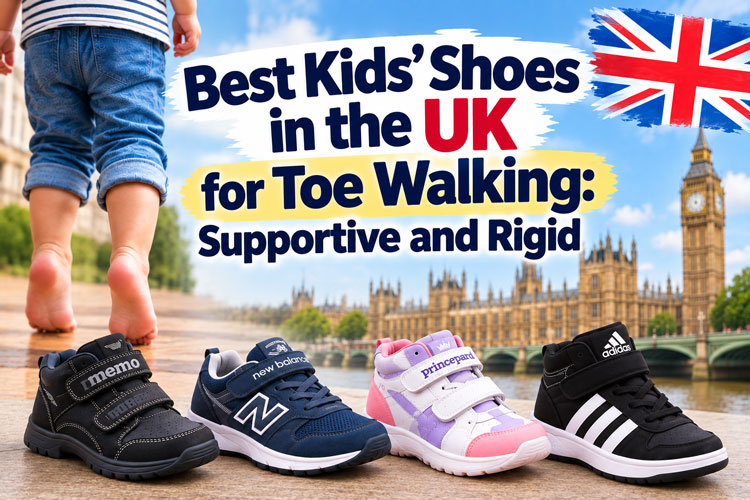
These orthopedic shoes offer a high, supportive heel and a firm outsole that help stabilize the foot and encourage a heel-to-toe gait.
Key Features
- Available for toddlers and little kids
- Order the model Gabi or Alvin on Amazon
- Fits medium and wide feet
- High-top design with stiff heel counters
- Sizing tip: Order a half size larger than your child’s current foot size. Refer to Memo sizing chart
Polo by Memo
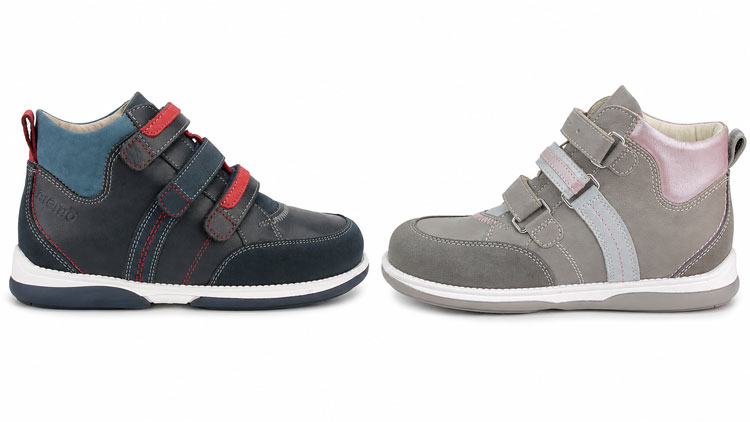
These high-quality orthopedic shoes are designed to support children who struggle with toe walking. A unique structure helps promote a proper gait, encouraging natural heel-to-toe movement.
Key Features
- Available for toddlers and little kids
- Order on Amazon
- Fits medium and wide feet
- Thermoplastic asymmetric stiff heel counter for proper feet protection and stabilization
- Sizing tip: order half a size larger than your child’s current foot size
Princessa and Anna by Memo
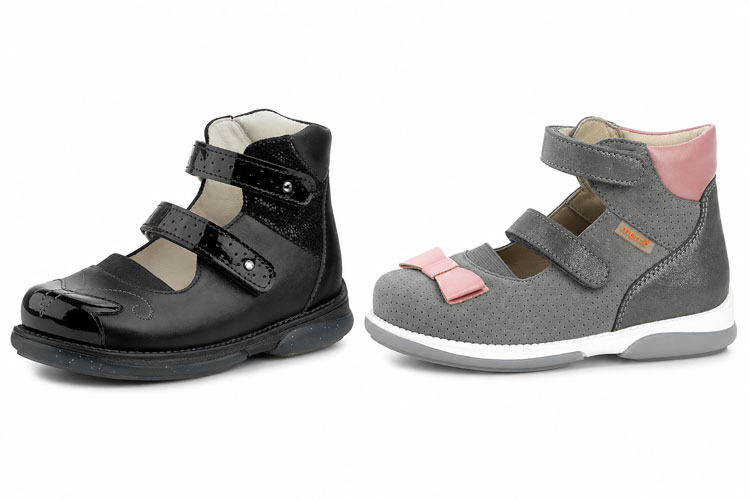
These orthopedic Mary Jane shoes are stylish and comfortable, offering the combination of support and flexibility that helps children develop a more balanced, healthy gait.
Key Features
- Order Princessa and Anna on Amazon
- Fits medium, wide, or extra wide feet
- Extra depth and width for orthotics
- Rigid heel counter
- Removable insoles
- Sizing tip: order half a size larger than your child’s current foot size
Princepard
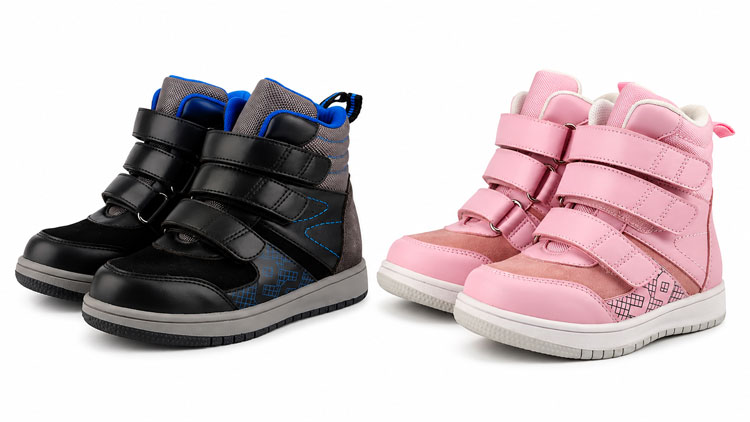
These high-top orthopedic shoes are designed to help children with toe walking by promoting proper foot alignment and encouraging a natural, heel-to-toe gait. The high-top design offers additional ankle support, while the firm heel and structured sole stabilize the foot and help prevent excessive toe walking.
Key Features
- Order on Amazon
- Fits medium and wide feet
- Triple Velcro straps for better support and stability
- Rigid heel counter
- Sizing tip: order half a size larger than your child’s current foot size
Orthopedic shoes typically retail anywhere from $80 to $125, and I’m well aware that not every family can invest in a pair for a fast-growing child. For that reason, I created a separate, lower-cost resource covering anti-toe-walking sneakers that offer many of the same structural benefits without the full orthopedic price tag.
Read This Before Ordering: How to Get the Correct Shoe Size
Most families are tempted to buy shoes a little big so their child can wear them longer. But if a shoe is too big, it actually makes it easier for a child to walk on their toes rather than harder — the extra length gives the foot more room to curl forward.
To order the correct size online, you first need to know your child’s exact foot length and shape. I created a free virtual shoe fitting service to help you get that measurement accurately from home, so you’re not guessing or ordering multiple sizes hoping one fits.
Don’t underestimate how much the correct shoe size matters here — some families notice an immediate difference in their child’s gait as soon as the sizing is corrected, independent of anything else about the shoe.
Success Stories — Families’ Testimonials
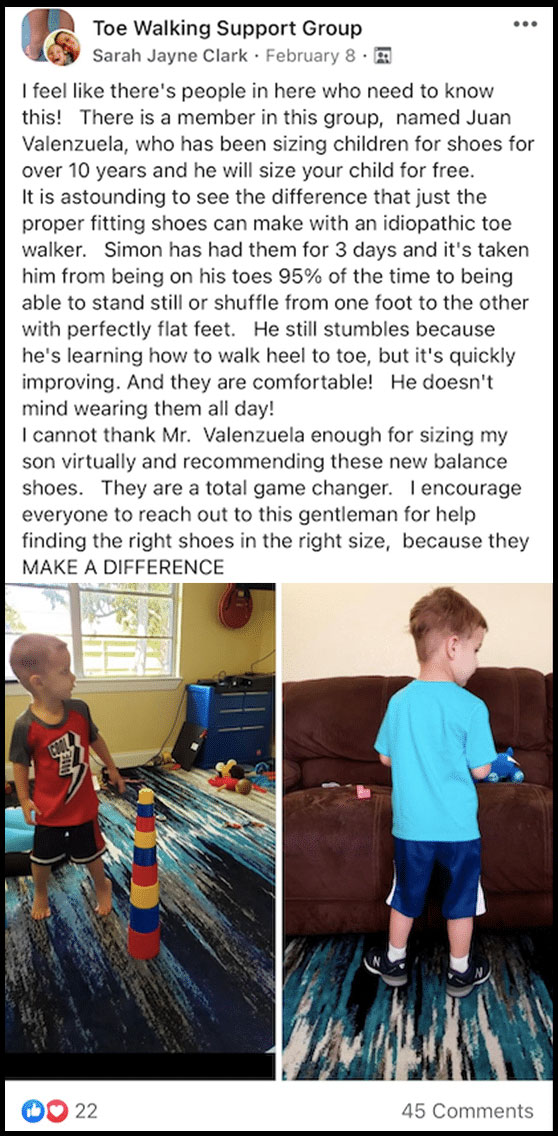
Many families have experienced positive results after using orthopedic shoes to address their child’s toe walking. These testimonials from parents highlight the impact these shoes can have on a child’s walking pattern and overall well-being.
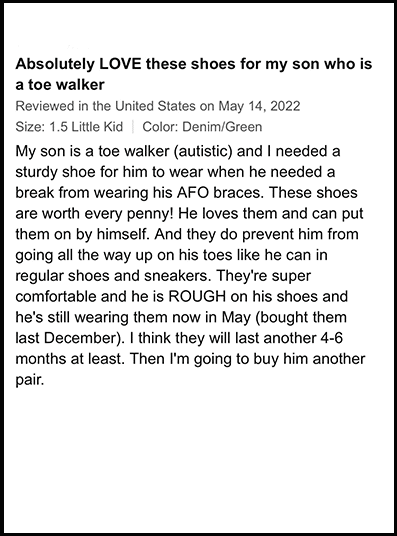
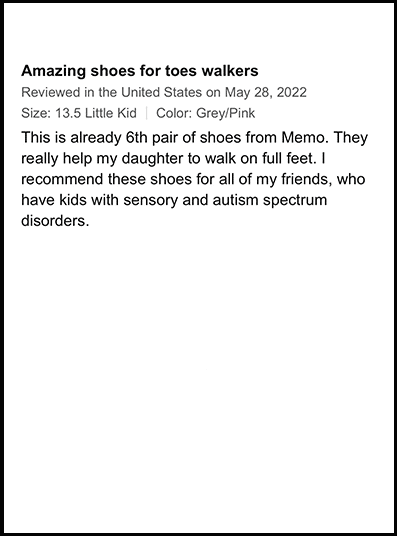
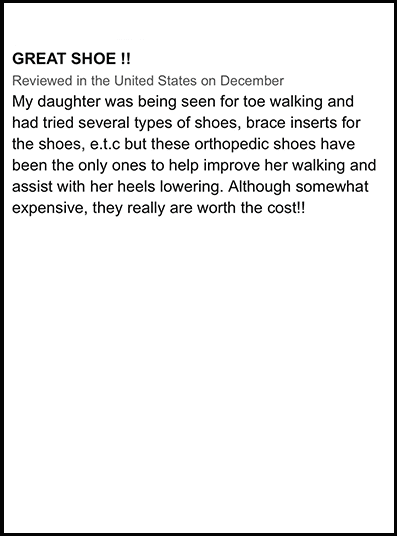
Please remember that how effective orthopedic shoes will be for your child directly depends on the degree of your child’s condition.
Do You Know Why Your Child Toe Walks?
When a child’s medical professional can’t determine the reason behind the toe walking, it’s typically diagnosed as “idiopathic” — meaning the exact cause isn’t known, and the child simply continues the behavior out of preference. Several physical and occupational therapists who refer families to the shoe store I work at have told me the four most common underlying reasons for toe walking:
1. Habitual Toe Walking. Often, toe walking is a learned behavior with no underlying medical cause — it can simply develop out of preference or habit.
2. Shortened Achilles Tendon. In some cases, a shortened Achilles tendon limits the ankle’s range of motion, resulting in a toe-walking gait. Physical therapy or medical intervention may be needed to address this directly.
3. Neurological Conditions. Conditions such as cerebral palsy or muscular dystrophy can contribute to toe walking by affecting muscle tone or coordination, and typically require specialized care.
4. Sensory Processing Differences. Some children, including many with autism, prefer the sensation of walking on their toes, finding it more comfortable or engaging than a typical heel-to-toe motion. Understanding this preference is key to addressing the behavior appropriately, since it isn’t a structural issue in the same way the other three causes are.
Contact Me for Specific Shoe Recommendations
Every child’s foot is unique, and finding the right shoe can make a real difference in their walking pattern and overall comfort. If you’re unsure which orthopedic shoes are best for your child, feel free to contact me by email for personalized recommendations. I’ll factor in your child’s foot shape, walking pattern, and any specific concerns to suggest the best options.
Frequently Asked Questions
This comes up often, and the starting point is the same as with any child: I need to know their exact foot shape (narrow, medium, wide, or extra wide), their current shoe size, and the country you’re contacting me from so I can point you to what’s actually available to order. From there, I factor in both the toe walking and any sensory sensitivities around textures, closures, or how the shoe feels going on — since for many autistic kids, comfort and ease of wear matter just as much as the structural features that address the toe walking itself.
Under age two, toe walking is completely normal and not something to worry about. Past that age, it’s worth bringing up with your pediatrician, especially if it’s persistent rather than occasional. Many children who toe walk are eventually diagnosed as “idiopathic,” meaning no specific medical cause is found — that’s common and doesn’t mean it isn’t worth addressing early.
It depends on the cause. For habitual toe walking, supportive shoes alone sometimes make a real difference. For toe walking linked to a shortened Achilles tendon or a neurological condition, shoes are usually one part of a broader plan that includes physical therapy or other medical treatment. This is exactly why identifying the underlying cause with a professional matters before assuming shoes alone will solve it.
I understand how frustrating that can be to hear when you’re worried and want to take action. My honest advice is not to let that dismiss your concern — get a second or even third opinion if you feel you need one, ideally from someone who takes a more proactive approach. Early intervention during the first seven years tends to produce the best long-term results, so it’s worth pursuing even if one provider isn’t concerned.

I’m looking for sneakers for my son who’s 5 autistic and non verbal. He’s also a toe walker
Hi Rudy,
I am happy to help. To recommend specific shoes for your son, I first need to know:
1. His foot shape (narrow, medium, wide, extra wide)
2. The shoe size he currently wears
3. The country you’re contacting me from, so I can check what shoes might be available for you to order