
Foot Pain in the Bottom of the Foot – Best Shoes for Kids
Last updated: June 2026 | By Juan Valenzuela, Certified Children’s Shoe Fitter
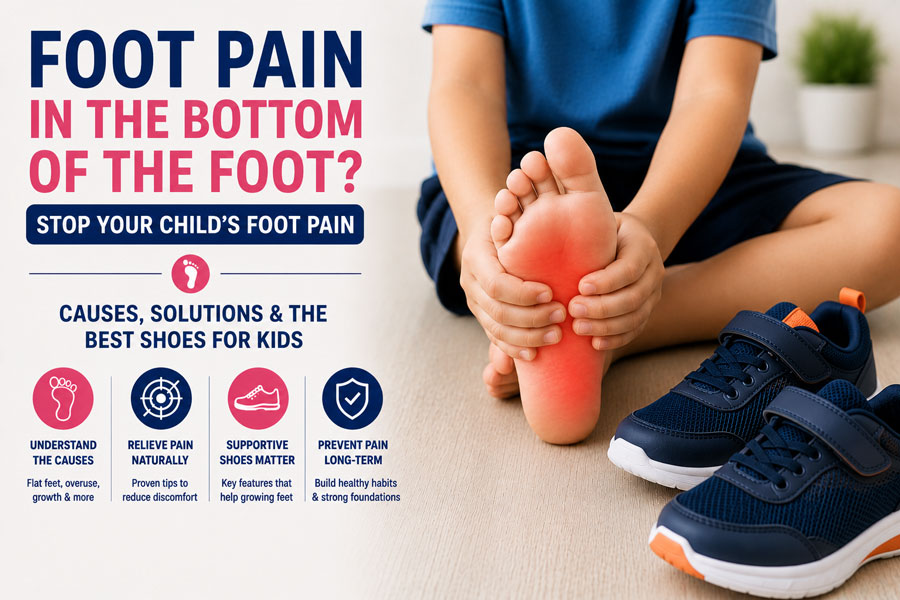
If your child is complaining about pain in the bottom of their foot — especially during or after running, playing sports, or even just walking through a normal school day — it is important to take it seriously. Foot pain in children is not normal and should not be dismissed as growing pains or something they will outgrow on their own.
As a certified children’s shoe fitter with over 10 years of experience, I have seen hundreds of children referred by pediatricians and physical therapists who were in significant foot pain. In the majority of cases, the right pair of supportive shoes made an immediate and measurable difference. In this guide I will explain the most common causes of bottom-of-foot pain in children, which shoe features matter most, and give you my top 9 recommendations.
Why Foot Pain in Children Should Never Be Ignored
The first seven years of a child’s life are considered the golden years of treatment opportunity. During this period, the foot is still forming and the bones, tendons, and ligaments are responsive to external correction. Supportive shoes and orthotics worn consistently during these years can produce lasting structural improvements that become significantly harder to achieve once the foot matures.
Waiting to see if the pain resolves on its own is a common mistake. By the time the foot is fully mature, what was a manageable condition in childhood may require orthotics, physical therapy, or even surgery.
Common Causes of Foot Pain in the Bottom of the Foot
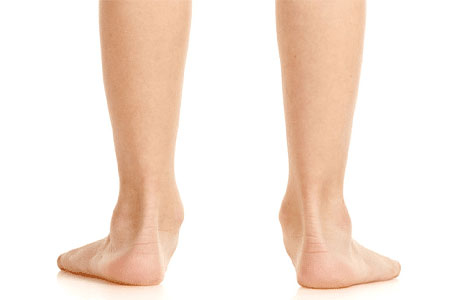
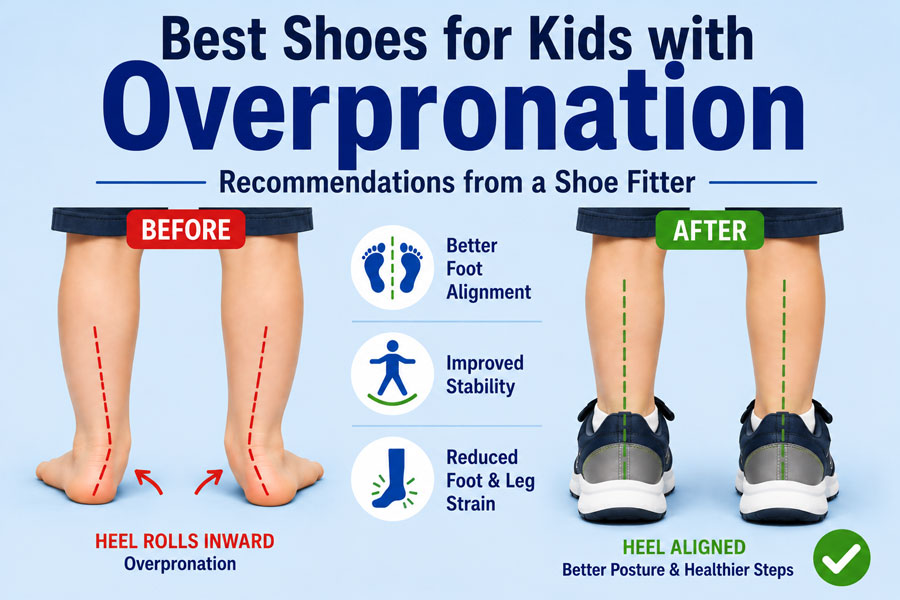
1. Flat Feet and Overpronation The most common cause I see at the store. When a child has flat feet, the arches collapse inward during walking and running — causing the plantar fascia (the thick band of tissue along the bottom of the foot) to stretch and strain with every step. This creates diffuse pain across the bottom of the foot, particularly in the arch and heel areas.
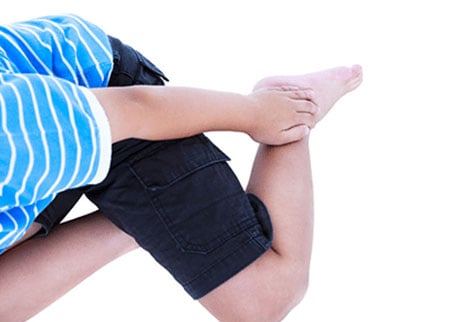
2. Plantar Fasciitis Plantar fasciitis is an inflammation of the plantar fascia — the thick band of connective tissue running from the heel to the front of the foot. While more common in adults, it affects children too — particularly those with flat feet, overpronation, or tight calf muscles. The classic symptom is sharp pain in the heel or arch area with the first steps of the morning.
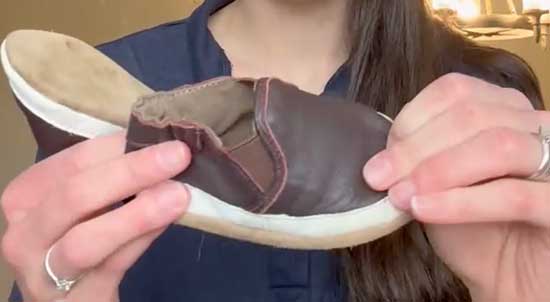
3. Inappropriate Footwear This is the most common and most preventable cause of bottom-of-foot pain I see at the store. Shoes without adequate arch support, thin flat midsoles, and soft floppy outsoles place direct stress on the plantar fascia with every step. I have seen many children referred by pediatricians or physical therapists walk into the store in completely unsupportive shoes — and once fitted with the right pair, their pain improved or disappeared entirely within weeks.
4. Overactivity Without Proper Support High-impact activities like running, jumping, and sports place significant repetitive stress on the plantar fascia and surrounding structures. Children who are active without proper footwear are at significantly higher risk for developing bottom-of-foot pain.
Before and After: The Impact of Supportive Shoes
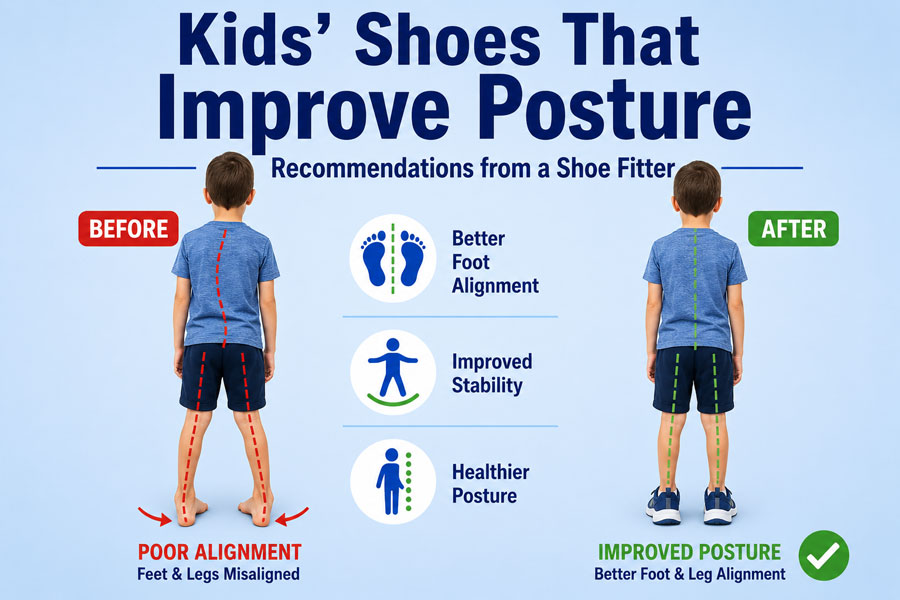
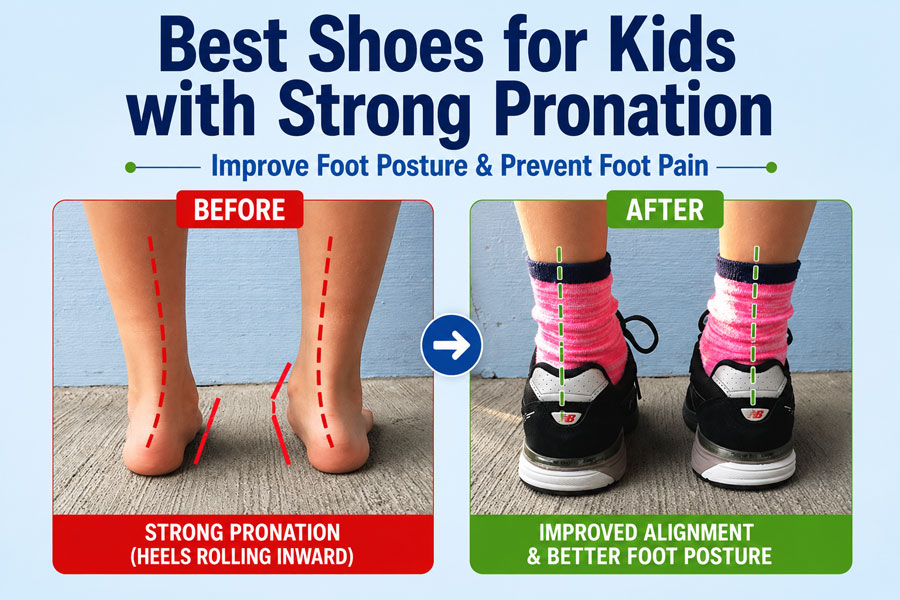
One of the most powerful tools I have is showing parents before and after images. When a child with flat feet stands barefoot, the arches collapse completely and the feet roll inward — placing the full weight of the body directly on the plantar fascia. When the same child wears a pair of supportive shoes with a firm outsole and strong heel support, the feet are noticeably straighter and the arch is partially restored.
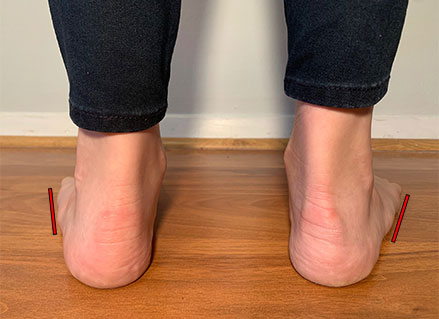
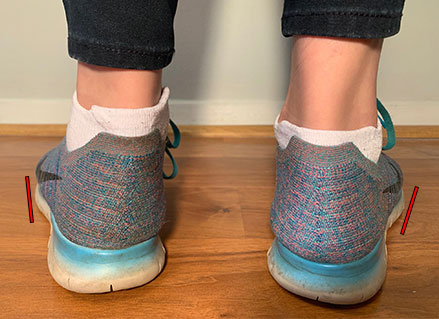
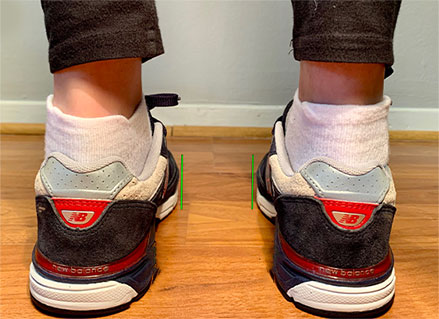
The visual difference is significant — and so is the pain reduction that follows.
Key Features to Look for in Shoes for Bottom-of-Foot Pain
1. Supportive Outsole with Adequate Cushioning The outsole must provide both stability and shock absorption. Press on the midsole from the side — it should feel firm and supportive, not soft and squishy. A stable outsole distributes weight evenly across the foot rather than concentrating it in the arch and heel. A quick flex test: bend the shoe gently — it should flex at the ball of the foot, not fold in the middle.
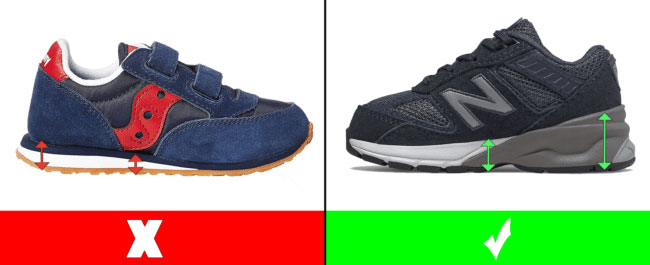
2. Firm Heel Counter Press on the back of the shoe. It should feel rigid and firm. A firm heel counter stabilizes the calcaneus and prevents excessive inward rolling — directly reducing the stretching force on the plantar fascia that causes bottom-of-foot pain.
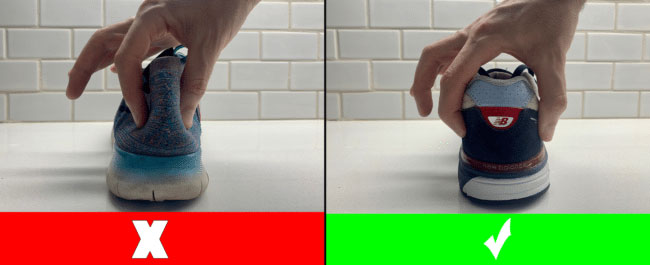
3. Proper Fit in Length and Width A shoe that is too narrow compresses the forefoot and increases plantar pressure. A shoe that is too long allows the foot to slide forward, disrupting the arch mechanics. Both scenarios worsen bottom-of-foot pain. Make sure your child is in the correct length and width before evaluating the shoe’s support features.
The 10 Best Shoes for Kids with Foot Pain in the Bottom of the Foot
All 10 shoes below provide supportive outsoles, firm heel counters, and adequate cushioning that I have personally verified for children with bottom-of-foot pain. Disclosure: This post contains affiliate links. We may earn a small commission at no extra cost to you.
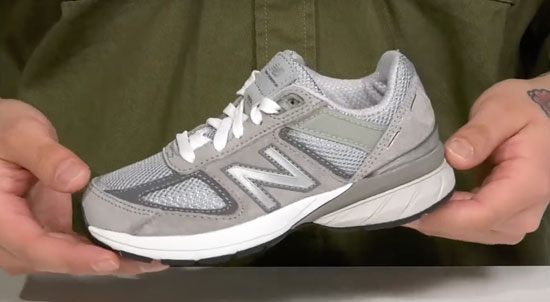
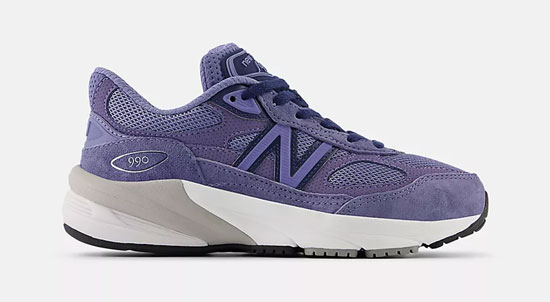
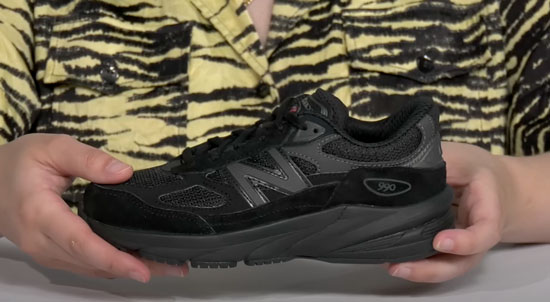
1. Shoe Style 990v6 by New Balance
My top overall recommendation for children with foot pain in the bottom of the foot. The 990v6 has the most robust outsole of any mainstream children’s shoe I have tested — distributing weight evenly across the foot and significantly reducing strain on the plantar fascia. Available in medium, wide, and extra wide widths.
Key Features
- Available for toddlers, little, and big kids
- You can order the 990v6 with laces on the New Balance website or Amazon
- Available in medium, wide, and extra wide widths
- Also available in pink, black, and navy blue
- There is also a Velcro version of these shoes available in navy blue and pink
- I suggest that you get this shoe a half size larger than your child’s current foot size
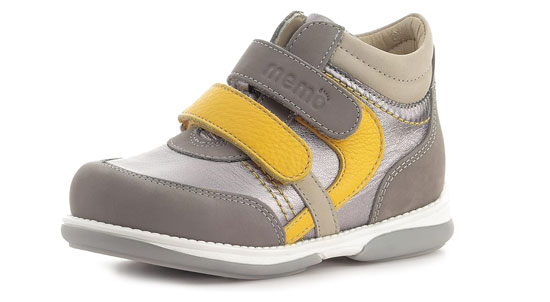
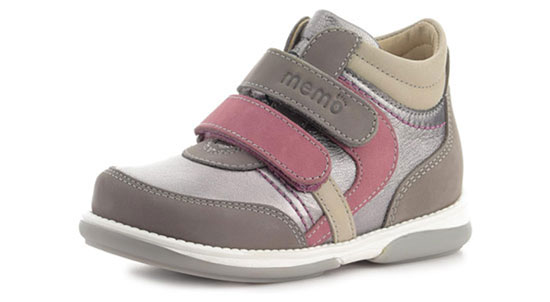
2. Shoe Style Gabi by Memo (Orthopedic Shoe)
A true orthopedic shoe specifically designed to improve foot posture and reduce plantar stress. The Gabi features a rigid heel counter and a wide base of support — my top recommendation for toddlers and little kids with significant flat feet and overpronation. The higher price is often justified by the clinical-grade results.
Key Features
- Available for toddlers and little kids
- You can order the shoe style Gabi by Memo on Amazon
- Fits medium and wide feet
- Also available in a Mary Jane style and a version for older kids called Memo Polo
- I suggest that you get this shoe a half size larger than your child’s current foot size
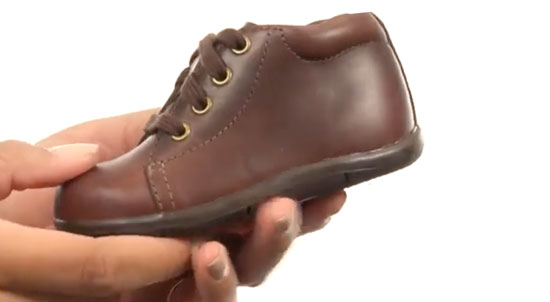
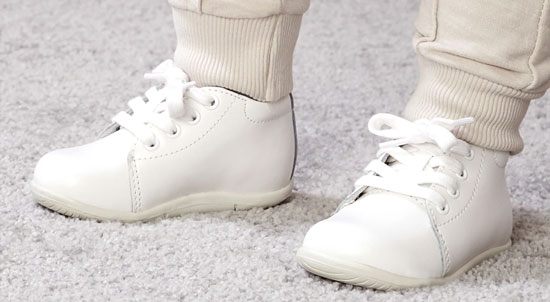
3. Shoe Style Elliott by Stride Rite
A high-top bootie that provides excellent ankle support alongside a supportive outsole — particularly effective for toddlers with bottom-of-foot pain associated with flat feet and overpronation. The high-top design provides additional ankle stability, and the 100% leather construction molds to the foot over time.
Key Features
- Available for toddlers
- You can order the shoe style SRT Elliot by Stride Rite on Amazon
- Available in medium, wide, and extra wide widths
- I suggest that you get this shoe a whole size larger than your child’s current foot size
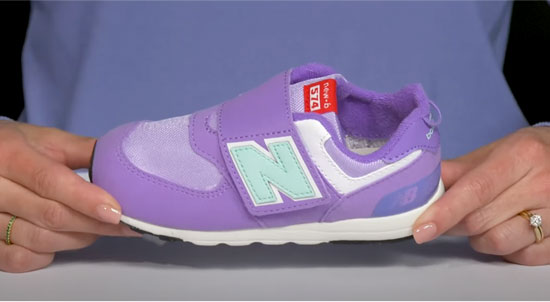
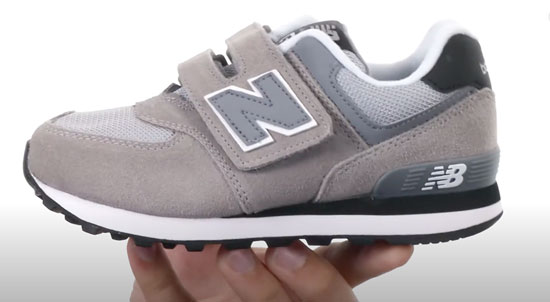
4. Shoe Style 574 by New Balance
A more affordable alternative to the 990v6 that still delivers a firm heel counter, supportive outsole, and excellent width options. One of the most versatile styles I recommend — works for school, everyday wear, and light sports. Available in medium, wide, and extra wide widths with the APMA Seal of Acceptance.
Key Features
- Available for toddlers, little, and big kids
- Order the shoe style 574 New-b V1 by New Balance on Amazon or the New Balance website
- Available in medium, wide, and extra wide widths
- Also available with laces on the New Balance website or Amazon
- I suggest that you get this shoe a half size larger than your toddler’s current foot size
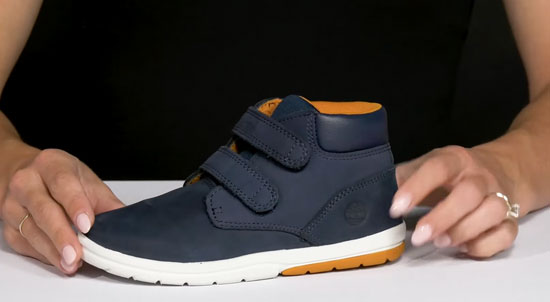
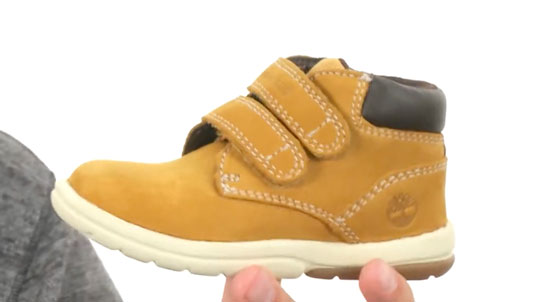
5. Shoe Style Tracks by Timberland
A durable high-top boot with a straight last and sturdy construction — the high-top design provides extra ankle stability that is particularly beneficial for children with foot pain. Slightly heavier than my other recommendations, which is worth noting for children who fatigue easily.
Key Features
- Available for toddlers and little kids
- Order on Amazon
- Fits medium and wide feet
- High-top design for extra ankle support
- Water-friendly construction
- Sizing tip: Order a whole size larger than your child’s current foot size
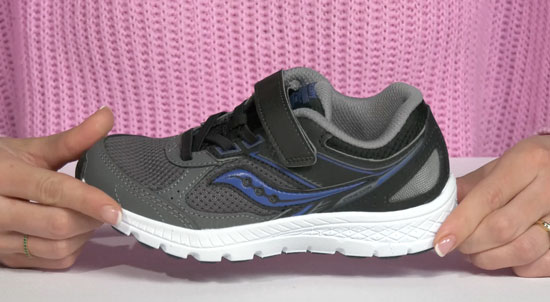
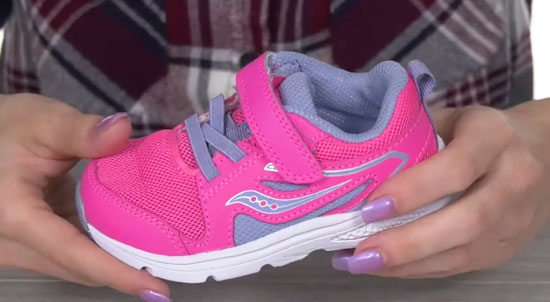
6. Shoe Style Cohesion by Saucony
An affordable option for little and big kids with excellent cushioning and stability. Available in Velcro and lace versions at a very accessible price point — one of my most recommended budget-friendly options for children with bottom-of-foot pain.
Key Features
- Available for little and big kids
- Order the shoe style Cohesion KDZ on or Amazon
- Available in medium and wide widths
- Also available with laces on Amazon
- I suggest that you get this shoe a whole size larger than your child’s current foot size
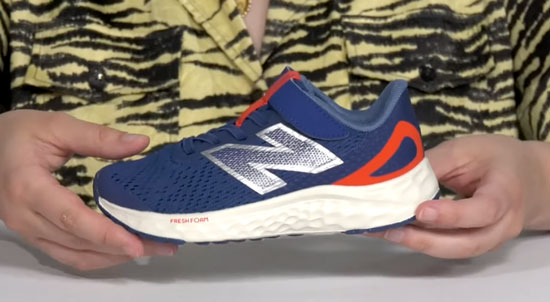
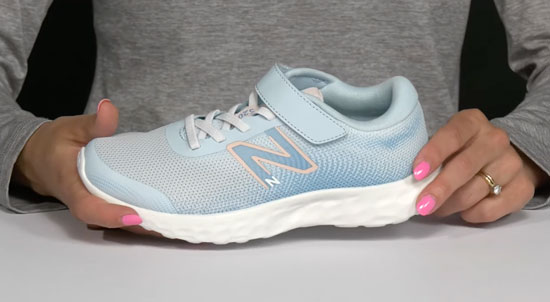
7. Shoe Style Fresh Foam Arishi v4 by New Balance
A lightweight, comfortable everyday sneaker with Fresh Foam cushioning that provides excellent shock absorption — directly reducing the repetitive stress on the plantar fascia. Available in medium, wide, and extra wide widths at a very reasonable price.
Key Features
- Available for toddlers, little, and big kids
- Order the shoe style Fresh Foam 650 by New Balance on the New Balance website or Amazon
- Available in medium, wide, and extra wide widths
- Also available with laces on Amazon
- I suggest that you get this shoe a whole size larger than your child’s current foot size
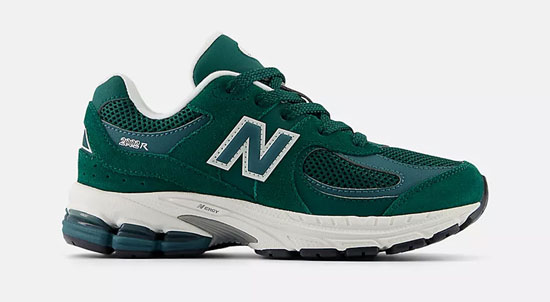
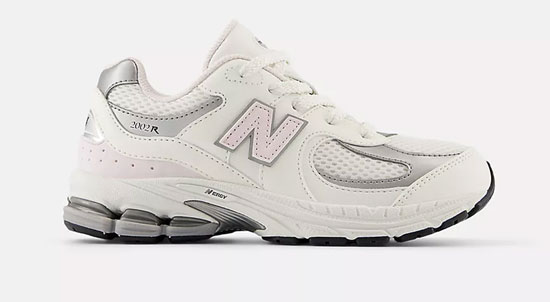
8. Shoe Style 2002 by New Balance
A more affordable alternative to the 990v6 that still provides a supportive outsole and solid structural support. Works well for school and everyday wear for children who need good plantar support at a lower price point.
Key Features
- Available for toddlers, little, and big kids
- Order the shoe style 2002 by New Balance on the New Balance website
- Available in medium and wide widths
- I suggest that you get this shoe a whole size larger than your child’s current foot size
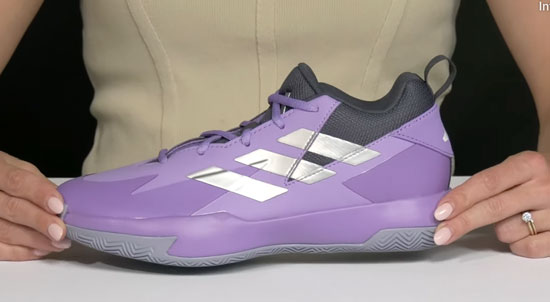
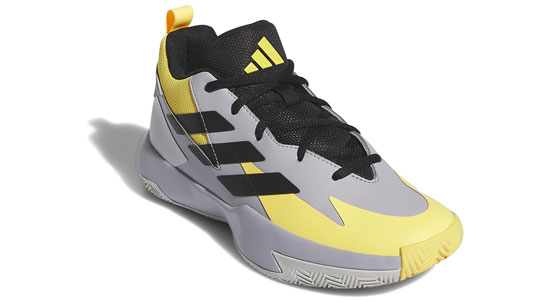
9. Shoe Style Cross Em Up by Adidas
A basketball-inspired high-top shoe that offers excellent support and cushioning. Unlike most Adidas styles, the Cross Em Up has enough structure to work for children with bottom-of-foot pain — particularly for older children who want a sports-appropriate look.
Key Features
- Available for little and big kids
- Order the shoe style Cross Em Up Select by Adidas on or Amazon
- Available in medium and wide widths
- I suggest that you get this shoe a whole size larger than your child’s current foot size
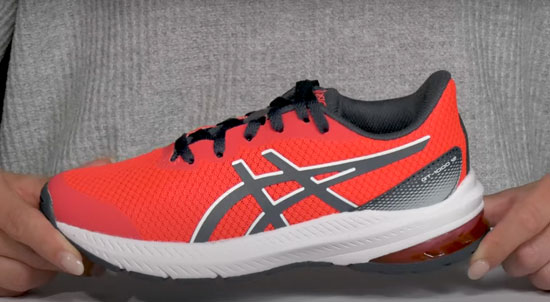
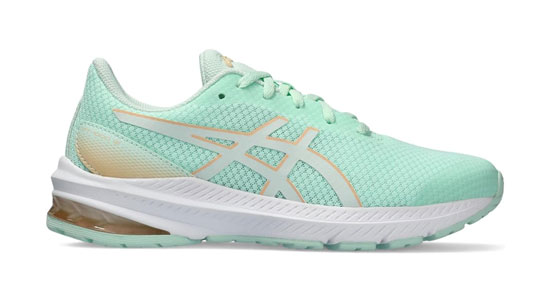
10. Shoe Style GT-1000 by Asics
A straight last running shoe with excellent gel cushioning — particularly well-suited for children with narrow or medium feet. The gel technology absorbs shock at the heel and ball of the foot, directly addressing the two pressure points most affected by bottom-of-foot pain.
Key Features
- Order the shoe style GT-1000 by Asics on or Amazon
- Available for little and big kids
- Fits narrow or medium feet
- I suggest that you get this shoe a whole size larger than your child’s current foot size
If Shoes Are Not Enough — Consider Orthotics
If your child has been wearing the correct supportive shoes consistently for three to five months and the bottom-of-foot pain has not significantly improved, the next step is orthotics. Orthotics provide targeted cushioning, arch support, and plantar fascia relief that goes beyond what a standard shoe insert can offer.
I have dedicated guides for orthotics by age:
- Orthotics for Toddlers 2–3 Years
- Orthotics for Children 4–13 Years
- Best Orthotics for Kids with Flat Feet
How to Find the Right Shoe Size
Getting the correct shoe size is just as important as choosing the correct shoe. An ill-fitting shoe — even a highly supportive one — will not deliver the plantar relief it is designed to provide.
Learn How to Measure Your Child’s Foot Here
Need a Personalized Recommendation?
Every child’s foot pain presents differently. If you are unsure which shoe is right for your child’s specific foot shape, degree of pain, or orthotic needs, reach out to me directly at customerservice@fittingchildrenshoes.com and I will provide a personalized recommendation at no cost.
Frequently Asked Questions
The most common causes are flat feet and overpronation, plantar fasciitis, inappropriate footwear, and overactivity without proper support. In the majority of cases I see at the store, the pain is directly linked to shoes that lack adequate arch support and a firm heel counter.
Most parents report noticeable improvement within two to four weeks of consistent wear with the correct supportive shoes. For significant plantar fasciitis or more pronounced flat feet, allow two to three months before evaluating whether orthotics are needed.
Yes — this is the most common cause I see. When flat feet collapse inward, the plantar fascia stretches and strains with every step, causing pain along the bottom of the foot from the heel to the arch. Supportive shoes that prevent the arch from collapsing directly reduce this pain.
If your child has been wearing the correct supportive shoes consistently for three to five months without significant improvement, orthotics are the recommended next step. They provide targeted support and cushioning that goes beyond what a standard shoe insert can deliver.
Still searching for the right fit? Drop a comment below with your child’s foot shape and I will point you in the right direction — I read and respond to every one.

It’s interesting because I have read articles by other podiatrists about the benefits of minimalist foot wear for all types of foot pain. The premise being that if you provide external support in shoes, the muscles in the feet will atrophy and chronic problems will ensue. If a person goes barefoot or wears “barefoot” or minimalist shoes (no heel drop or toe rise, a wide toe box and flexible sole), their feet can develop strength throughout the feet and legs and prevent foot pain and injury. It makes sense to me, so how do you counter that logic?
Hello Carol,
Thank you for sharing. That statement makes sense to me as well, but I have seen several cases of children with foot and leg pain in which we were able to significantly reduce, and in most cases fully eliminate their pain by wearing supportive shoes. Minimalist shoes don’t help prevent or treat foot pain.
Let’s take a flat footed child as an example. Have you ever seen how the feet of a flat footed child look like? They either tend to collapse inwards or outwards. This affects the child’s overall posture, which usually leads to foot and leg pain. If that child is fitted in a pair of supportive shoes (and in some cases orthotics), you will notice how the child’s feet will look straighter, which will improve the child’s overall posture. I have written several articles about this. I have seen hundreds of children with foot conditions benefit from wearing supportive shoes, yet I have never seen a case where a child with foot issues benefited from wearing minimalist shoes.
I’m obviously not a child. But lately the bottom of my feet have been hurting every now and then. I work security and for my job, we walk about 5 miles during an 8 hour shift…and it’s all on hard concrete floors. I also play soccer 3 days a week and that can get rough since my cleats are old. I currently have Asics GT-1000 5. I’m thinking of getting gel insoles or maybe newer shoes..but i dont know what brand or type o should get. Which would you recommend
Nick,
The Asics that you are wearing now are great supportive shoes. If you are having foot or leg pain, I would recommend a type of inserts I wear which is great for someone who is on his feet most of the day like you. You can find them in this post: Insoles For Flat Feet- Say Goodbye To Foot Pain
Try them! You will love the results!
Hey!
You know since I was a child I have always complained about my feet hurting. Especially my right one more then the left foot. I have always ignored in and even as an adult never considered something could be wrong or it could be the shoes causing the problem. Honestly in the summer I am known to wear cheap flip flops with no arch. I can see I have a small arch in both feet but maybe It’s not a normal arch? I may have to google some images and compare my arch to normal arches. I’m a Hair stylist and need to find me some good shoes to stand in all day. What shoes would you recommend for standing? Maybe some that could work in the gym too?
Britni,
Maybe you have a low arch, and all you need is a pair of good supportive shoes. Even if you don’t have a low arch,If you are having foot or leg pin, that is not normal and you should find a solution to this problem. For someone like you that is on her feet all day, you must wear good supportive shoes. Did you get a chance to read my women/kids’ shoe size conversion post?
You will find a selection of some of the most supportive, durable shoes for kids’ that you might be able to wear. If you are a women shoe size 8 1/2 or less, you will be able to wear kids’ sneakers, which means you will pay half of the price you will pay for a women sneaker, and you will get the same support and structure out of the shoe. The post is called: Women And Kids Shoe Size Conversion Chart – Save Big Buying Kids Shoes!
I have witnessed foot pain myself and I am amazed about what a difference a good fitting pair of supportive shoes can make.I always choose the New Balance brand for my kids since they have really wide feet. I know how a good pair of shoes will help with the foot pain! Do you have a list of the best shoes for kids’?
Savytek,
Yes, you will find a description of the best children’s shoes in terms of support and structure in this post: The Best Kids Sneakers – Learn About The Best Shoes For Children Ages 3 Through 10
Wearing the right type of shoe will keep our kids’ feet healthy and allow them to run around and play without feeling any foot or leg pain!
This is a very informative article, I had no idea that when a child has foot pain at the bottom of their foot that it can be attributed to them being flat footed. I had no idea that a built-in arch support would fix the problem, this is good to know. So if a child is experiencing foot pain as a result of being flat footed and then they get a pair of well fitting shoes with arch support, how long will it take for the pain to go away?
You will first try a pair of good supportive shoes for your child. If the pain doesn’t go away in two weeks, you should consider buying a pair of orthotics to put in your child’s shoes.
In certain cases, all the child needs is a pair of good supportive shoes. If you want to learn about the best shoes for children with arch support, you can find the information here: The Best Shoes With Arch Support – Stop Leg And Foot Pain!
Sorry, it’s me again commenting in your website. I just can’t get enough of your posts!
Just like you said many adult said “how lucky they would have been if their parents provided them with good supportive shoes while growing up!” So true, I am one of these people who wished to have better shoes while growing up. I had an issue about my child complaining about his feet hurting.
My child has been complaining about foot pain for a month now! I noticed how the shoes he was wearing were very soft. I ordered the New Balance pair you recommend with shoe laces, and he stopped complaining about the pain! I love it, I really appreciate your information and your passion for what you do.
I am glad the pain stopped. Keep an eye on him though, keep providing him with good, supportive shoes. Never underestimate the importance of well, fitting shoes. They make a huge difference!