How to Lace Shoes for Kids with High Insteps – Relieve Mid-Foot Pressure
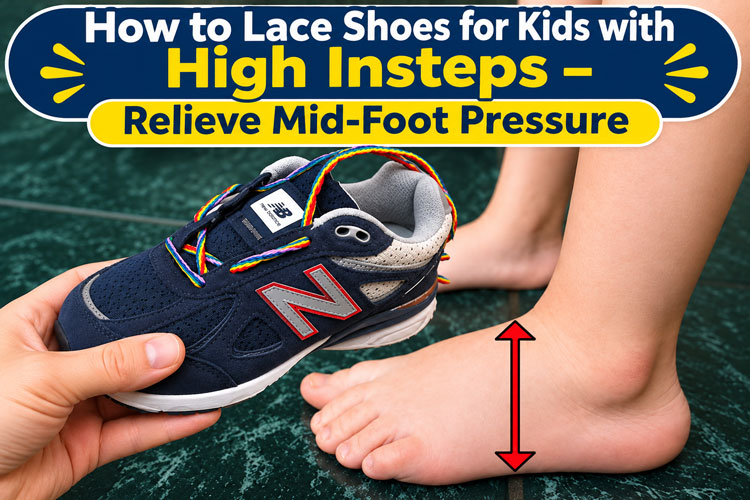
Does your child complain that their shoes hurt on top of the foot, even though the length is right? They may have a high instep. With regular lacing, the laces press down right over the tallest part of the foot. As a certified children’s shoe fitter, I fix this all the time with a simple lacing trick that takes the pressure off in three steps.
What Is a High Instep?
The instep is the top of the foot, between the toes and the ankle. A high instep is a tall, curved top of the foot, and it often goes with a high arch. Most shoes are made for an average foot height, so on a high instep, the laces and tongue press down on the top of the foot.

Signs your child has a high instep:
- It’s hard to get their foot into shoes, even when you loosen the laces
- Red marks or soreness on the top of the foot after taking shoes off
- They complain the shoes are tight on top, or feel tingling or numbness in their toes
- The laces look stretched, with the eyelets pulled far apart
How to Lace Shoes for High Insteps in 3 Steps
This technique is often called window lacing. It leaves an open space with no laces crossing over the highest part of the foot.
First, find the pressure spot. Have your child put the shoe on, and gently press on the top of the foot through the tongue. The spot where it feels highest, or where your child says it hurts, is where you’ll leave the window.
Step 1: Lace Normally Up to the Pressure Spot
Start at the eyelets nearest the toes and lace with a regular criss-cross. Stop when you reach the eyelets just below the pressure spot.

Step 2: Skip the Cross Over the Instep
Instead of crossing the laces, run each lace straight up on the same side to the next eyelet. This leaves an open “window” with no laces pressing on the top of the foot. For a very high instep, run the laces straight up two eyelets instead of one.

Step 3: Criss-Cross to the Top and Tie
Above the window, go back to a regular criss-cross for the rest of the eyelets, then tie the shoes. The top eyelets hold the heel securely, so the shoe still fits snugly.

The laces should feel snug enough to hold the foot in place, without pressing on the top of the foot. If your child still feels pressure, move the window up or down one eyelet, or make it bigger.
Extra Tip: Keep the Tongue from Sliding
With looser lacing, the tongue can slide to the side, which rubs and creates new pressure points. Many kids’ shoes have a small loop in the middle of the tongue. Thread the lace through that loop as you go, and the tongue stays centered.

What About Velcro Shoes?
You can’t change the lacing on Velcro shoes, but you can loosen the straps over the instep and tighten the others. If the straps are too short to close over a high instep, a Velcro extender adds the extra length.
Good Shoelaces for Kids
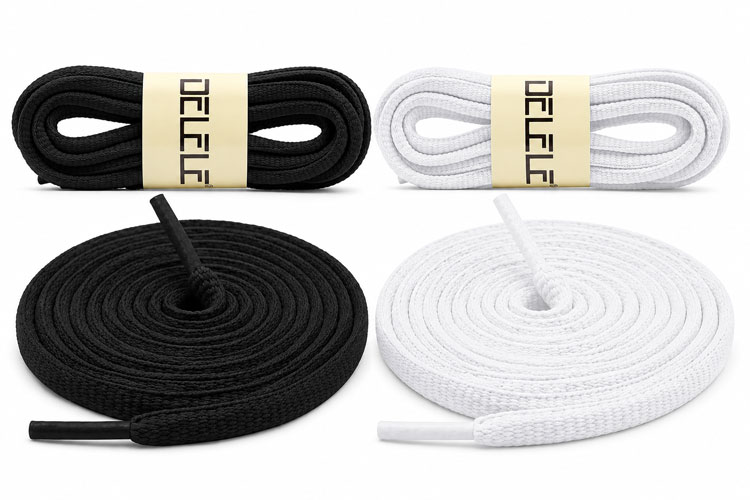
The laces I recommend are oval laces with textured bumps that grip each other, so they stay tied longer, even when the shoes are laced loosely over the instep.
- Order GREATLACES oval laces on Amazon
- 1/4″ oval (half-round) profile, polyester construction
- Sold in packs of 2 pairs (4 individual laces)
- Available in 40+ colors and multiple lengths
- Count your child’s eyelets to order the correct length
- Disclosure: this post contains affiliate links
What Shoelace Length Should You Order?
Count the eyelets (lace holes) on one side of your child’s shoe. Shoes with 4 eyelets on each side usually need 27-inch laces, and shoes with 5 eyelets on each side usually need 36-inch laces.
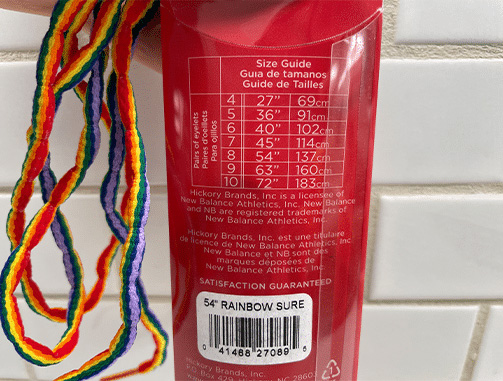
For high insteps, go one length longer. Laces that go around a tall foot and are tied more loosely use up more lace. A longer lace still leaves enough to double-knot.
When Lacing Isn’t Enough: Shoes for High Insteps
Lacing relieves pressure, but it can’t add height to a shoe that’s too shallow. If your child still has red marks or pain on top of the foot after relacing, look for shoes with:
- Extra depth, so there’s room for a tall foot
- A wide opening that makes it easy to get the foot in
- A padded tongue that cushions the top of the foot
- Laces or adjustable straps so you can control the fit over the instep
My guide to the best shoes for high insteps covers the styles I recommend.
If your child still has pain, tingling, or numbness after you’ve changed the lacing and the shoes, check with your pediatrician or a podiatrist.
Need a Specific Recommendation?
If you’re not sure whether your child’s shoes are deep enough, or you need help finding a pair that fits, email me, and I’ll suggest the styles most likely to work.