
Kids’ Shoes Certified by the American Podiatric Medical Association (APMA)
Last updated: May 2026 | By Juan Valenzuela, Certified Children’s Shoe Fitter
If you are looking for kids’ shoes certified by the American Podiatric Medical Association, you are making one of the smartest decisions you can for your child’s foot health. The APMA Seal of Acceptance is only granted to shoes that have been reviewed and evaluated by podiatrists — doctors who specialize in the diagnosis and treatment of foot and ankle conditions — and found to promote good foot health.
As a certified children’s shoe fitter with over 10 years of experience, I work with APMA-certified shoes every day at the specialized children’s shoe store where I work. In this guide I will explain exactly what the APMA seal means, which brands carry it, and give you a curated list of the best APMA-certified shoes for babies, toddlers, and kids that I personally recommend.
What Does the APMA Seal of Acceptance Mean?
The American Podiatric Medical Association evaluates footwear products for quality, safety, and overall wearability. When a shoe earns the APMA Seal of Acceptance, it means a panel of podiatrists has reviewed the shoe and determined that it promotes good foot health.
Here is what the APMA looks for when evaluating children’s shoes:
Safe construction. The shoe must be free of materials or design elements that could cause harm to the foot, including sharp interior seams, toxic materials, or excessively stiff components.
Appropriate cushioning. The midsole and insole must provide enough cushioning to protect growing feet during daily activity without being so thick that it reduces ground feel and proprioception.
Healthy toe box design. The toe box must be wide enough and deep enough to allow toes to splay naturally without compression.
Flexibility in the right place. The shoe must flex at the ball of the foot, not in the middle of the arch.
It is important to note that the APMA Seal of Acceptance is not the same as a medical prescription or clinical recommendation. It is an indication that the shoe has been reviewed by foot health professionals and found to meet a standard of quality. For children with specific foot conditions, I always recommend confirming shoe choices with your child’s physical therapist or podiatrist as well.
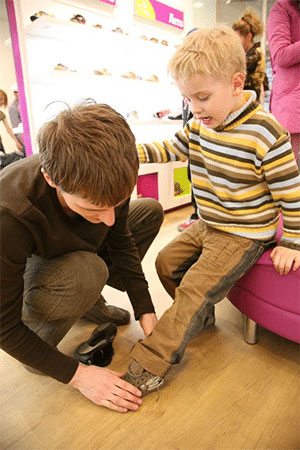
Having worked in a specialized children’s shoe store for over a decade, I’ve encountered numerous foot shapes and conditions. Each child’s foot is unique, and it’s important to find shoes that cater to their specific needs.
Is the APMA Seal of Acceptance the Same as the Seal of Approval?
Not exactly. The APMA awards two distinct seals:
APMA Seal of Acceptance — awarded to products found to promote good foot health when used as directed.
APMA Seal of Approval — awarded to products that have been found to be beneficial in the care and treatment of certain foot conditions.
For everyday children’s footwear, the Seal of Acceptance is the most commonly seen certification. Both are meaningful indicators of quality.
Which Shoe Brands Make APMA-Certified Kids’ Shoes?
The following brands consistently earn the APMA Seal of Acceptance across their children’s lines:
- See Kai Run
- Stride Rite
- Pediped
- Saucony
- Livie & Luca
- Sperry
- Hush Puppies
- Chaco
- New Balance (select styles)
- Ten Little
Keep in mind that not every shoe from these brands carries the seal — it is awarded on a style-by-style basis. Always check the product listing or the APMA website to confirm a specific shoe has been certified.
APMA-Certified Shoes for Babies and Toddlers
The following shoes have been evaluated and awarded the APMA Seal of Acceptance. Each listing includes notes on which foot shapes the style can accommodate. Disclosure: Some links in this post are affiliate links. We may earn a small commission at no extra cost to you.
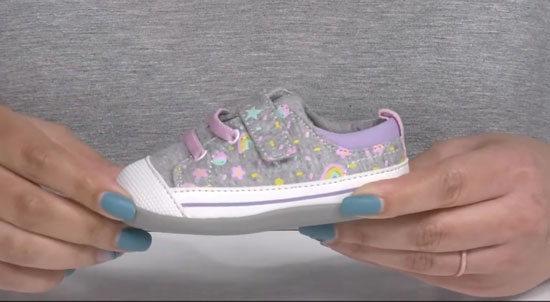
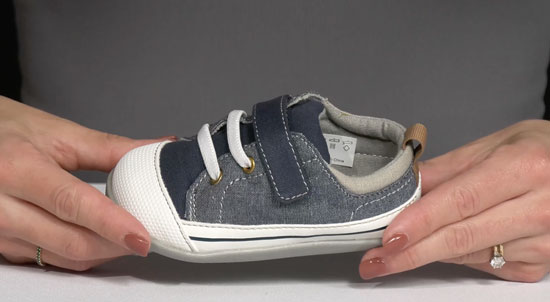
1. Shoe Style Stevie II by See Kai Run
The Stevie II is one of my go-to recommendations for babies and toddlers who are just learning to walk. It features a wide toe box, flexible sole, and adjustable straps that make it easy to get on and off. The shoe fits naturally wide despite not being labeled as a wide or extra wide style, making it a great option for toddlers with wider feet.
Key Features
- Order on Amazon
- Not available in wide or extra wide widths but fits naturally wide
- APMA Seal of Acceptance
- Durable cotton drill upper, leather insole, and recycled mesh lining
- Breathable textile lining and cushioned insole
- Sizing tip: Order a whole size larger than your child’s current foot size
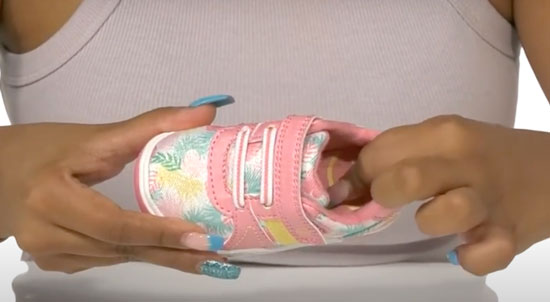
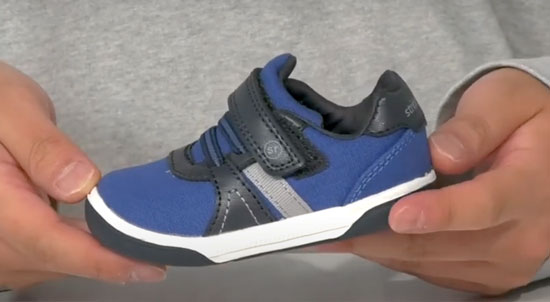
2. Shoe Style Thompson by Stride Rite
The Thompson by Stride Rite is a classic first walking shoe with a flexible sole and rounded toe design that supports natural foot movement. It is a favorite among parents and podiatrists for its wide toe box and durable construction.
Key Features
- Order on Amazon
- Available in wide widths
- APMA Seal of Acceptance
- Flexible outsole designed for early walkers
- Soft, breathable lining
- Sizing tip: Order a whole size larger than your child’s current foot size
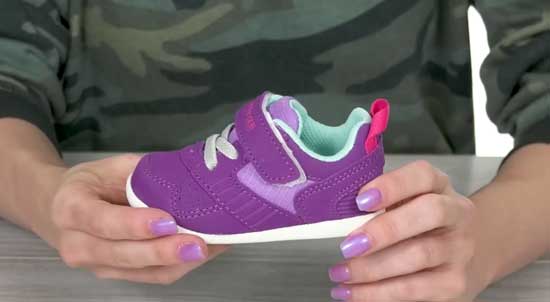
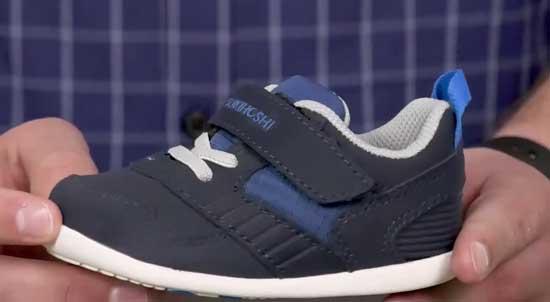
3. Shoe Style Racer by Tsukihoshi
The Racer by Tsukihoshi is a lightweight, supportive option for babies and toddlers with wider feet. All Tsukihoshi shoes run wider than standard medium-width shoes and feature seamless interiors that are especially well-suited for toddlers with sensory sensitivities. The rounded edges help decrease stumbles and falls during the early walking stage.
Key Features
- Order on Amazon
- APMA Seal of Acceptance
- Rounded edges to decrease stumbles and falls
- Seamless interior ideal for toddlers with sensory sensitivities
- Sizing tip: The shoe fits long, so order your child’s actual foot size instead of sizing up for growing room
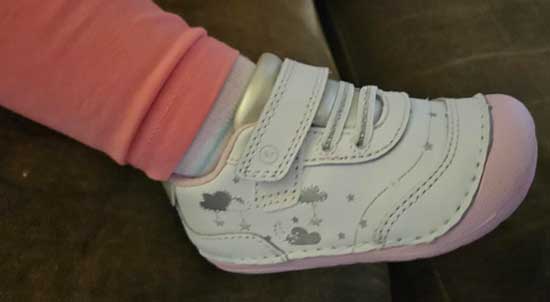
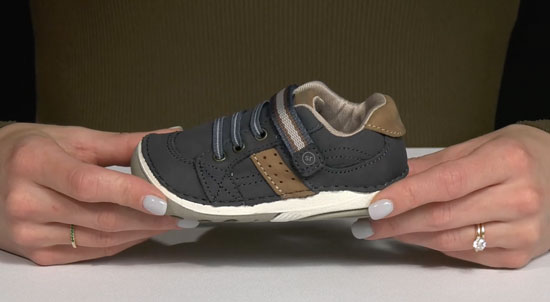
4. Shoe Style Artie and Adalyn by Stride Rite
The Artie (boys) and Adalyn (girls) styles from Stride Rite provide excellent width options and a comfortable fit. Their design includes flexible outsoles and cushioned insoles which are essential for active toddlers. The rounded edges help reduce stumbles and falls during the learning-to-walk stage.
Key Features
- Order on Amazon
- Available in wide and extra wide widths
- APMA Seal of Acceptance
- Rounded edges to decrease stumbles and falls
- Sizing tip: Order a whole size larger than your child’s current foot size
5. Shoe Style Elliott by Stride Rite
The Elliott is a high-top bootie that provides excellent ankle support and a comfortable fit, making it a top choice for toddlers with flat feet and overpronation. Despite the limited color choices, this shoe is celebrated for its supportive qualities, 100% leather construction, and affordable price point.

Key Features
- Available for toddlers
- Order on Amazon
- Accommodates medium, wide, or extra wide feet
- Ideal for mild to moderate cases of pronation
- 100% leather construction
- High-top design provides extra ankle support
- APMA Seal of Acceptance
- Sizing tip: Order a whole size larger than your child’s current foot size
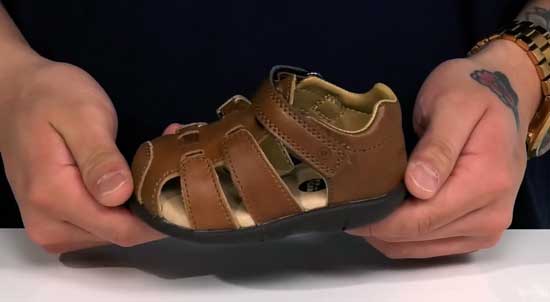
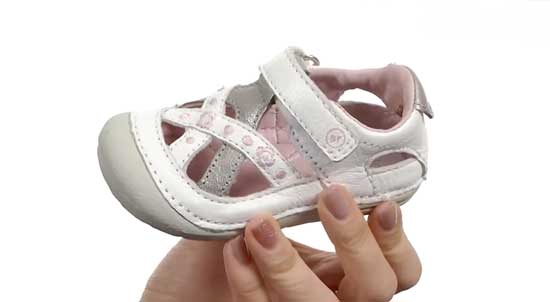
6. Shoe Style Archie and Kiki by Stride Rite
The Archie (boys) and Kiki (girls) sandals are crafted to provide maximum comfort for toddlers with wide feet. With their breathable materials, secure fit, and foam padding around the ankle collar, they offer the support and flexibility needed for a growing child during warmer months.
Key Features
- Order on Amazon
- Available in wide and extra wide widths
- APMA Seal of Acceptance
- Leather upper
- Foam padding around the ankle collar and under the tongue for comfort
- Sizing tip: Order a half size larger than your child’s current foot size
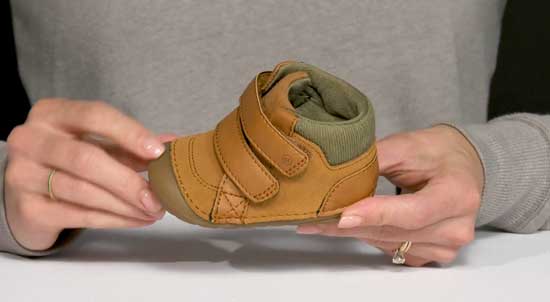
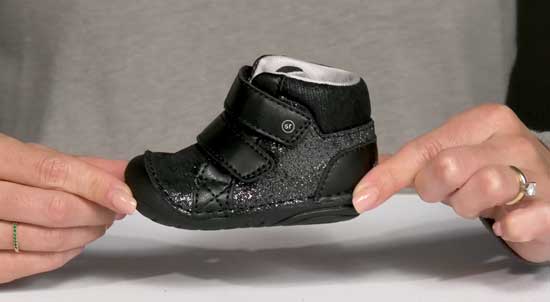
7. Shoe Style Martin by Stride Rite
The Martin bootie features a wide toe box and plush cushioning, making it perfect for everyday wear. Parents consistently highlight this shoe’s ability to maintain its shape and support even after prolonged use — a strong sign of durability for an active toddler.
Key Features
- Order on
- Available in wide and extra wide widths
- APMA Seal of Acceptance
- Wide toe box and plush cushioning for everyday comfort
- Sizing tip: Order a whole size larger than your child’s current foot size
8. Shoe Style Casey by See Kai Run
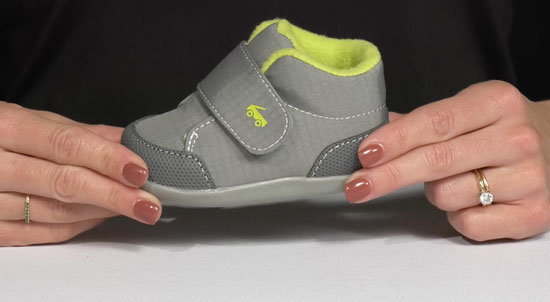
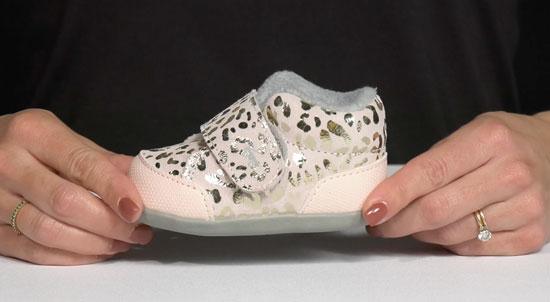
The Casey bootie by See Kai Run provides extra depth, a rounded toe box, and opens up nice and wide for easy on and off — one of the most practical features for parents of toddlers. The fleece lining adds warmth, making it a great option for cooler months.
Key Features
- Order on Amazon
- Not available in wide or extra wide widths but fits naturally wide
- APMA Seal of Acceptance
- Extra depth and rounded toe box
- Fleece lining for extra warmth
- Sizing tip: Order a whole size larger than your child’s current foot size
9. Shoe Style Lucia by See Kai Run
The Lucia by See Kai Run is a Mary Jane style that combines a polished look with the practical features parents need — a wide toe box, flexible outsole, and easy-to-use strap closure. It is a great option for toddler girls who need a dressier shoe without sacrificing comfort or fit.
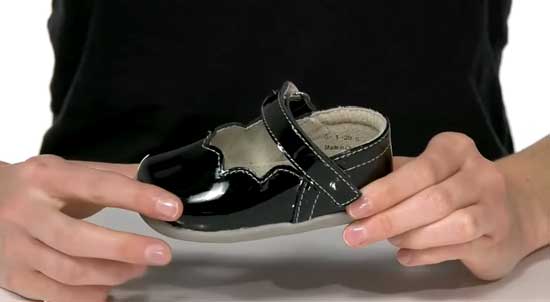
Key Features
- Order on Amazon
- Not available in wide or extra wide widths but fits naturally wide
- APMA Seal of Acceptance
- Wide toe box and flexible outsole
- Easy strap closure for quick on and off
- Sizing tip: Order a whole size larger than your child’s current foot size
10. Merrell Kids’ Bare Steps Sneaker
The Bare Steps sneaker is designed with a wide toe box and a barefoot feel, encouraging natural foot development. Its minimalist design allows for greater sensory feedback, which can enhance your child’s proprioception and coordination. It is also made from eco-friendly materials, aligning with Merrell’s commitment to sustainability.
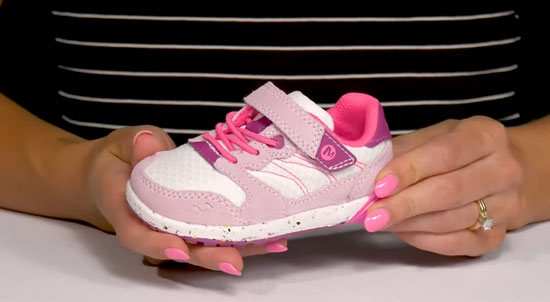
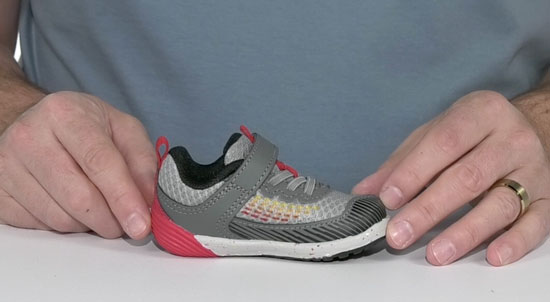
Key Features
- Order on Amazon
- Available in wide widths
- APMA Seal of Acceptance
- Wide toe box for natural toe splay
- Eco-friendly materials
- Padded tongue and collar for added comfort
- Sizing tip: Order a whole size larger than your child’s current foot size
Does APMA Certification Guarantee the Right Fit for My Child?
This is one of the most important things I want parents to understand: APMA certification is about construction quality, not fit.
A shoe can have the APMA Seal of Acceptance and still be the wrong shoe for your child if it does not match their foot shape. A child with extra wide feet wearing an APMA-certified narrow shoe will still experience discomfort, blisters, and poor support.
For a shoe to truly work for your child, it needs to:
- Be the correct length (thumb’s width of space at the front)
- Match your child’s foot width (narrow, medium, wide, or extra wide)
- Accommodate your child’s instep height if they have a high instep
- Be appropriate for any orthotics, AFOs, or SMOs your child wears
Not sure what your child’s foot shape is? I put together a free guide to help you determine this in two simple steps: How to Tell If Your Child Has Narrow, Medium, Wide, or Extra Wide Feet
Does My Child Need APMA-Certified Shoes?
Not necessarily — but the APMA seal gives you the peace of mind that the shoes have been reviewed by podiatrists and are well made. This matters more than many parents realize. Some shoes sold at big box retailers like Walmart and Target have been found to contain cardboard insoles or other low-quality materials that offer little to no support for a child’s developing feet.
APMA-certified shoes are a smart choice for any child, regardless of whether they have a foot condition or not. If you want to make sure the shoes you are buying meet a recognized standard of quality and construction, the APMA seal is one of the easiest ways to do that.
Need a Personalized Recommendation?
Every child’s foot is different. If you are unsure which APMA-certified shoe will work best for your child’s specific foot shape or condition, reach out to me directly at customerservice@fittingchildrenshoes.com and I will provide a personalized recommendation at no cost.
Frequently Asked Questions
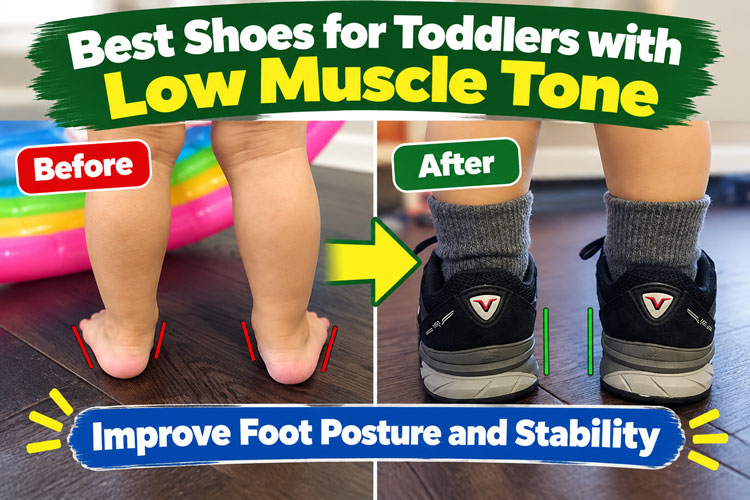
They are a good starting point, but not a requirement. I have personally tested many shoes that do not carry the APMA seal and found them to be excellent at improving foot posture, gait, and stability. What matters most is that the shoe has the right construction features — a firm heel counter, proper flexibility, the correct width, and enough depth — regardless of whether it carries the APMA seal. That said, APMA-certified shoes give you the peace of mind that the shoe has been reviewed by podiatrists, which is always a plus.
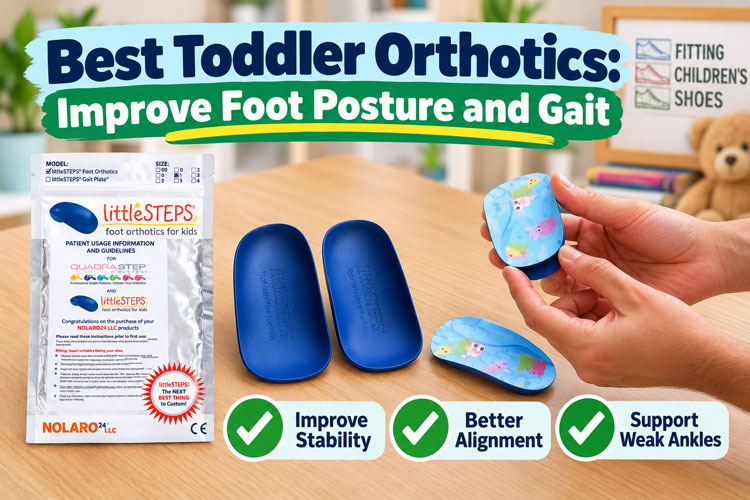
Some APMA-certified shoes are compatible with orthotics and some are not. The key is finding a shoe with a removable insole and enough depth to accommodate your child’s device without needing to size up.
No. The APMA Seal is awarded on a style-by-style basis, not to entire brand lines (with the exception of Pediped’s Flex line). Always check the individual product listing or the APMA website to confirm a specific shoe has been certified.
Check the shoe’s product listing on the brand’s website or on Amazon and Zappos. APMA-certified shoes typically display the seal prominently in their product descriptions.
If your child has a specific foot condition, I also recommend reading my Pediatric Shoe Guide — a practical reference I wrote for both parents and clinicians on how to choose supportive shoes for children with foot and gait conditions.

Hello! Do you have any recommendations for big kids shoes, girls and boys, specifically big kids dress shoes?
Hello Sam,
I’d be happy to help! To recommend the best dress shoes, I’ll first need a bit more information about your child:
• Exact shoe size
• Foot shape (narrow, medium, wide, extra wide)
• The country you’re writing from, so I can check availability
Once I have those details, I can guide you toward the best-fitting, most comfortable options.