Best School Shoes That Fit Orthotics: Deep, Firm, and Dress Code Ready
School Shoes · Written by Juan Valenzuela, Certified Children’s Shoe Fitter · Updated June 2026
Finding school shoes that fit orthotics is one of the hardest fitting challenges families bring to me every back-to-school season. The problem isn’t just finding a shoe deep enough — it’s finding one that’s deep enough, firm enough, dress-code compliant, and actually comfortable for a child wearing an orthotic insert for six to eight hours a day.
I’ve been fitting children’s shoes at a specialized store for over a decade, and I’ve fitted hundreds of children who wear orthotics to school. The styles below are the ones I return to most often — each one confirmed in the store to work with orthotic inserts without pushing the foot too high, compromising the straps, or failing the uniform policy.
Why Most School Shoes Fail With Orthotics
Most parents assume the problem is width — and it often is. But the more common issue I see is depth. Here’s what actually happens when a school shoe isn’t deep enough for an orthotic:
The orthotic raises the foot inside the shoe, which means the top of the foot presses against the inside of the upper. Straps and laces that closed comfortably on a bare foot suddenly feel tight. The child loosens them to relieve the pressure — and now the orthotic isn’t doing its job because the foot isn’t held securely in place.
The second issue is heel counter firmness. An orthotic works by controlling the position of the heel and arch relative to the ground. A soft, collapsible heel counter allows the heel to roll inward or outward regardless of what the orthotic is doing underneath — undermining the insert’s entire function. This is why a firm heel counter isn’t optional for a school shoe being used with orthotics.
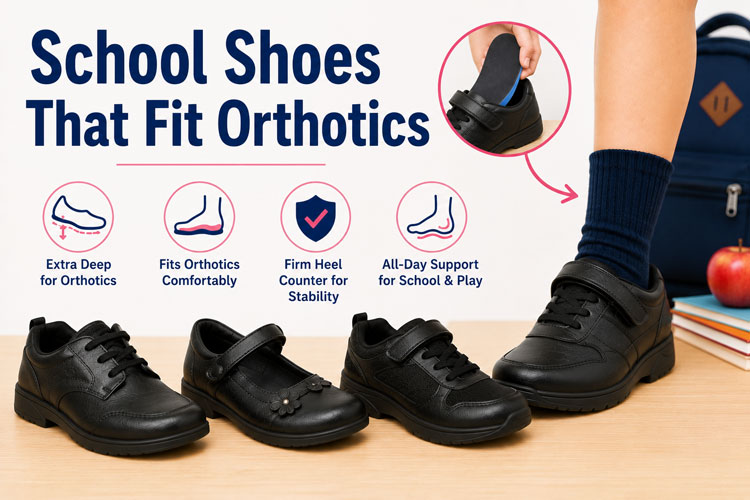
The Five Non-Negotiables for School Shoes With Orthotics
Before looking at any specific shoe, here are the five things I check — in order of importance:
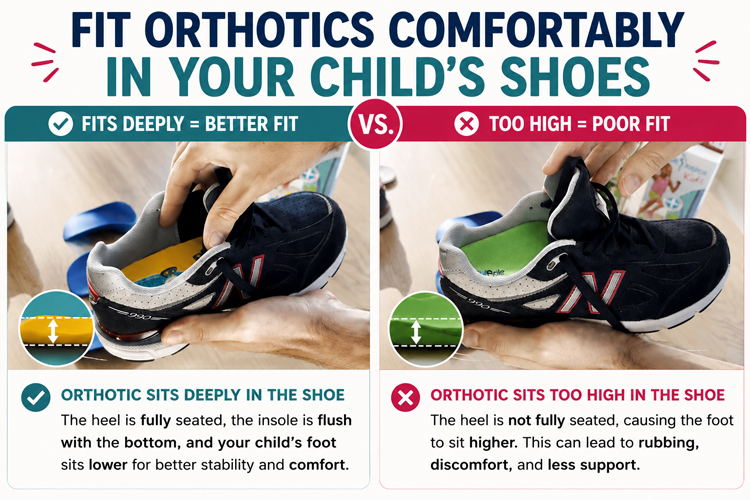
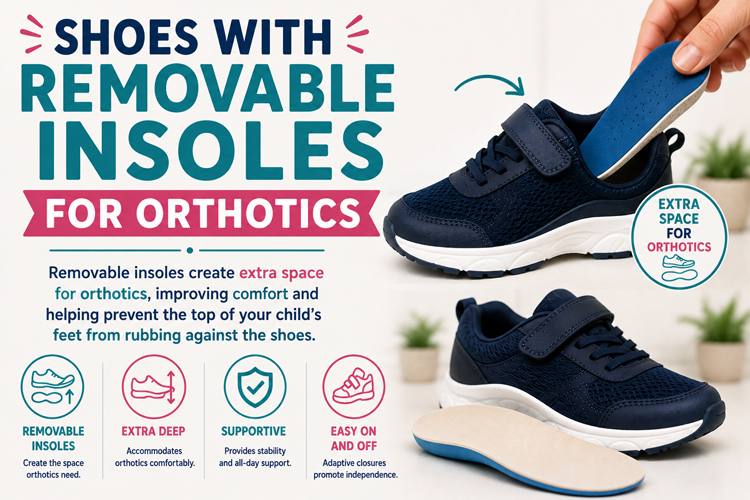
1. Removable insole. This is the most important feature. Removing the factory insole creates the depth the orthotic needs to sit correctly inside the shoe. Without it, the orthotic stacks on top of the insole and raises the foot too high. Always remove the factory insole before inserting the orthotic.
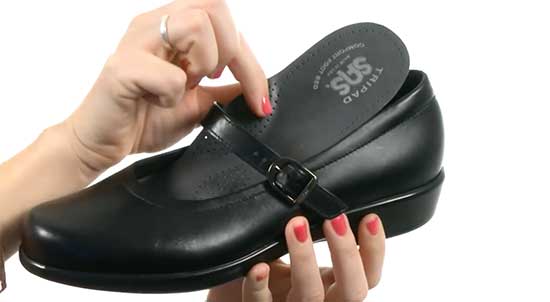
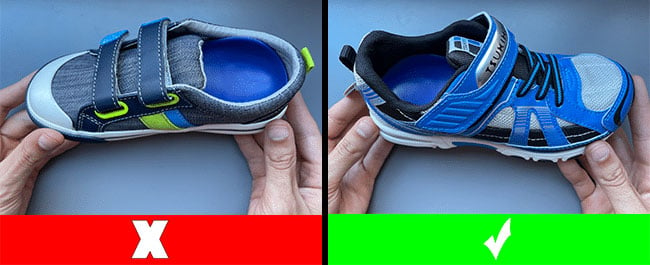
2. Extra depth above the footbed. Even after removing the insole, the shoe needs enough internal depth so the foot doesn’t sit too high. I look for shoes with a noticeably deeper construction — visible when you look inside and compare side by side with a standard shoe.
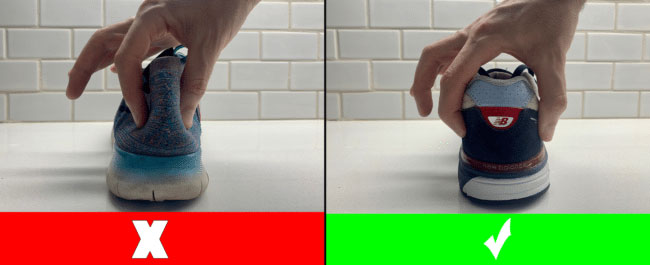
3. Firm heel counter. Press on the back of the shoe with your thumb. It should resist compression and spring back into shape. If it collapses inward easily, the shoe won’t work with an orthotic regardless of how good the insert is.
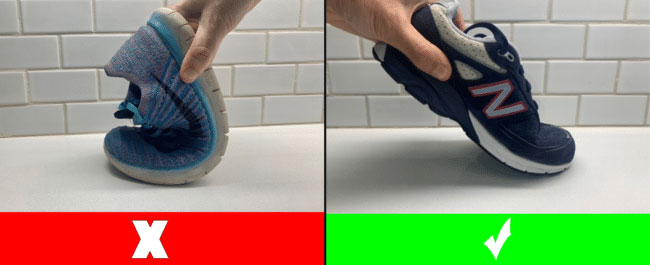
4. Stable, semi-rigid outsole. The outsole should bend at the ball of the foot — not through the arch or heel. A floppy outsole that bends anywhere undermines the orthotic’s control of foot position. I bend every shoe I fit before recommending it.
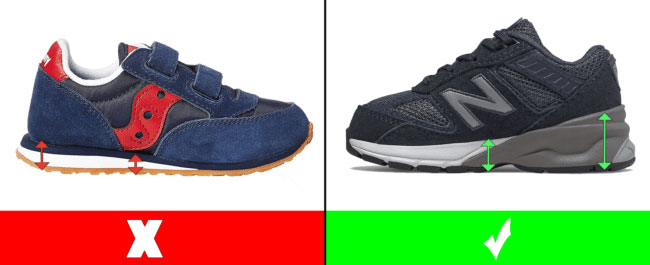
5. Supportive but Lightweight and Flexible. Supportive shoes don’t have to be heavy. In fact, lightweight and flexible shoes are often preferred for children as they allow for natural movement while still providing the necessary support.
How to Size School Shoes for Orthotics
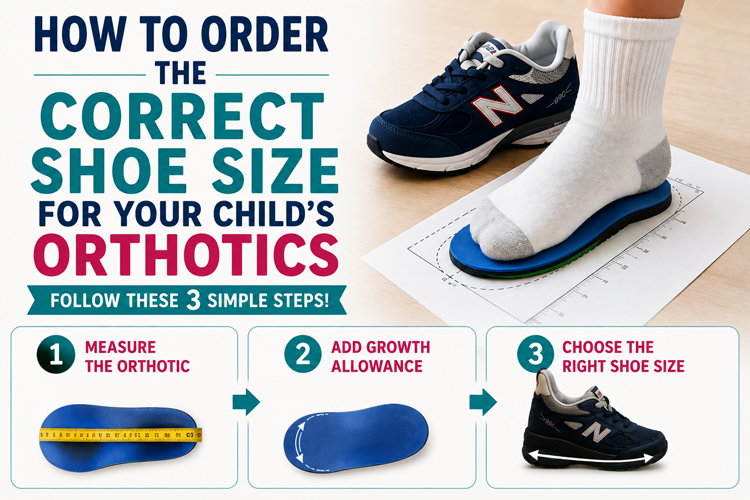
Sizing works differently when an orthotic is involved. The insert adds volume to the foot, which means you typically need to order larger than you would for a bare foot. Here is my general rule: order one full size up from your child’s bare foot measurement, then remove the factory insole before inserting the orthotic. This keeps the foot at the correct height inside the shoe.
My guide to sizing shoes for orthotics walks through this in more detail if you want the full step-by-step process.
Best School Shoes That Fit Orthotics in 2026
The shoes below all have removable insoles, firm heel counters, and enough internal depth to work with standard full-length and 3/4 orthotics. I’ve noted width availability and color options under each listing since many schools require specific colors.
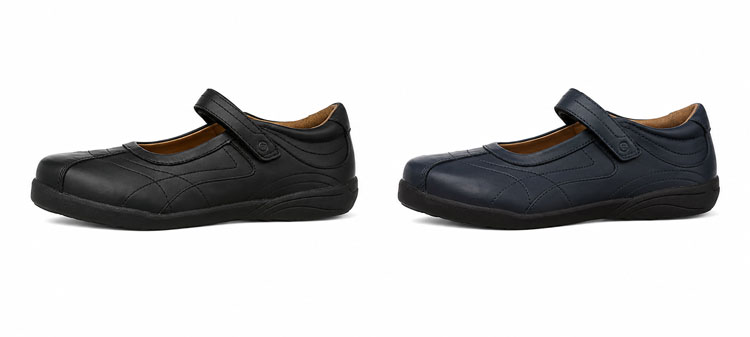
1. Claire by Stride Rite
These Mary Jane school shoes are available in wide and extra wide widths, offering a comfortable fit and durable construction to keep your child’s feet supported and comfortable.
Key Features
- Order on Amazon
- Also available in brown and navy colors
- Available in medium, wide, and extra wide widths
- 100% leather
- Padded collar for comfort
- Memory foam insole for enhanced comfort
- I suggest that you get this shoe a half size larger than your child’s current foot size
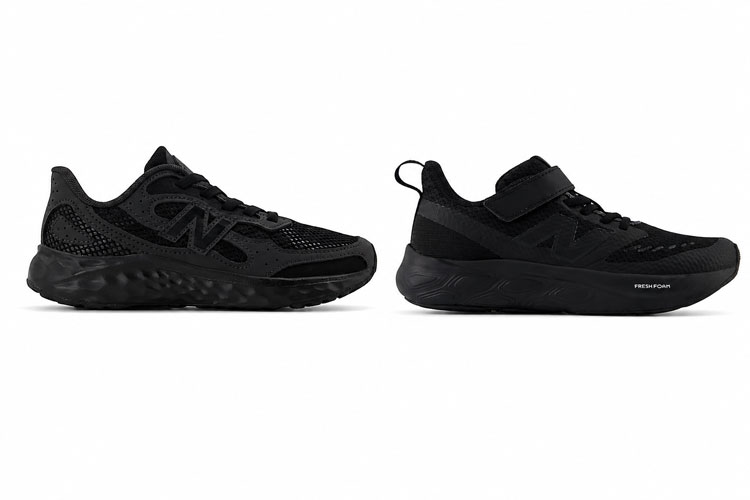
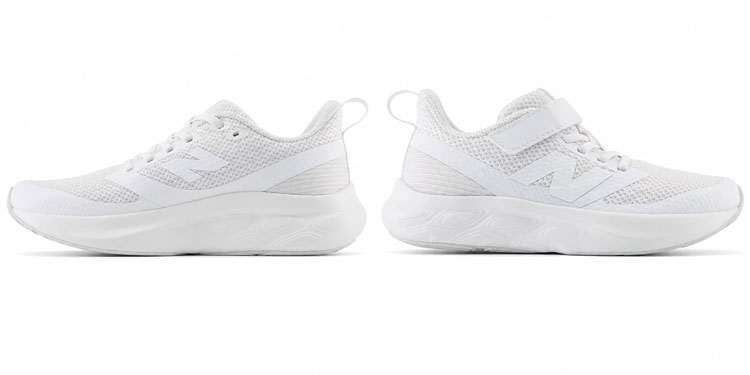
2. Fresh Foam 650v1 by New Balance
These New Balance shoes are top-rated school shoes for kids who wear orthotics. With their cushioned Fresh Foam midsoles, removable insoles, and availability in wide and extra wide widths, they offer the depth, support, and comfort orthotics need.
Key Features
- Order on the New Balance website or Amazon
- Available in medium, wide, and extra wide widths
- The ABZORB midsole absorbs impact through a combination of cushioning and compression resistance
- Padded collar for comfort
- Available with lace-up or hook-and-loop (Velcro) closure
- I suggest that you get this shoe a whole size larger than your child’s current foot size
3. Dirty Buck by Footmates
This shoe is perfect for kids who need more rugged, durable school shoes. Ideal for school uniforms, it’s a great option for kids who need both comfort and sophistication in an orthotic-friendly shoe.
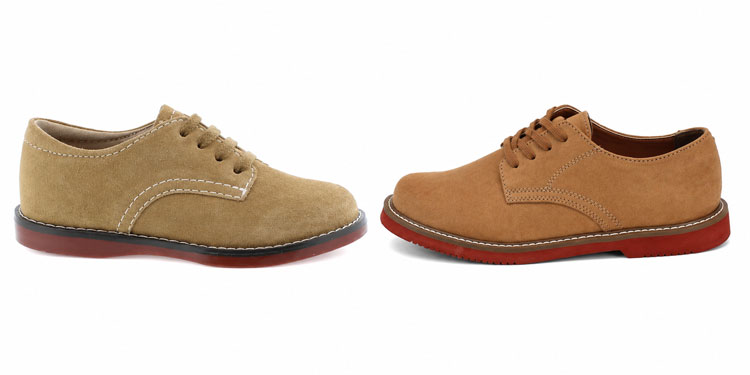
Key Features
- Order on Amazon
- Available in medium and wide widths
- Removable, dual insoles in medium and wide are provided to allow customized fitting
- Breathable leather lining and cushioned leather-lined footbed cradles children’s feet
- Suitable for school, church, and formal occasions
- Lace-up design
- I suggest that you get this shoe a whole size larger than your child’s current foot size
4. Shoe Style 1906 by New Balance
These New Balance shoes deliver premium comfort and support, making them a standout choice for school-aged kids who wear orthotics.
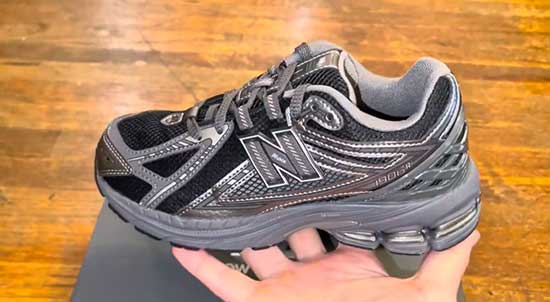
Key Features
- Order on the New Balance website
- Available in medium and wide widths
- ABZORB midsole absorbs impact through a combination of cushioning and compression
- Padded collar and tongue
- I suggest that you get this shoe a half size larger than your child’s current foot size
Two Mistakes to Avoid When Buying School Shoes for Orthotics
Assuming a labeled wide shoe is automatically deep enough. Width and depth are different dimensions. A wide school shoe can still be too shallow for an orthotic — you need both. Every shoe above has been confirmed to provide both when the factory insole is removed.
Sizing up too much. I recommend one full size up for orthotic users, not two. Oversized shoes cause the foot to slide forward inside the shoe, which creates blisters at the toes and heel instability that increases fall risk. One size up with the factory insole removed is the correct approach.
Measure Your Child’s Foot Before Ordering
If you’re unsure of your child’s foot length, width, or instep height — all of which affect which school shoe will work best with their orthotic — my virtual shoe fitting guide walks you through measuring both at home in two steps.
Need a Personalized Recommendation?
Every orthotic is different — thickness, footplate length, and heel cup depth all affect which school shoe will work. If you’re unsure which style on this list is right for your child’s specific orthotic and school’s dress code, feel free to email me with your child’s orthotic type and measurements and I’ll give you a direct recommendation.
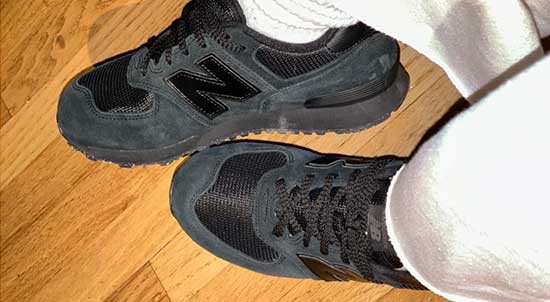
Related Resource: Everyday Sneakers for Kids Who Wear Orthotics
For gym class, after-school activities, and everyday wear outside of dress code requirements, my guide to sneakers for kids who wear orthotics covers the widest range of orthotic-compatible styles — with the same depth-first approach used in this article.
Frequently Asked Questions
Yes, always. Keeping the factory insole in place while adding an orthotic raises the foot too high inside the shoe, creates pressure on the instep, and makes straps and laces impossible to close comfortably. Remove the factory insole first, then insert the orthotic.
Some can, but the options are limited as most other dress shoes are too shallow even after the insole is removed.
Laces are generally better — they allow precise tightening at each section of the foot to compensate for the orthotic’s added volume. Velcro works well for younger children who dress independently. Slip-on styles don’t work with orthotics.