
Toddler Sandals with Arch Support – Improve Balance, Posture, and Gait
Last updated: June 2026 | By Juan Valenzuela, Certified Children’s Shoe Fitter
If your toddler has been diagnosed with flat feet or overpronation and your doctor or physical therapist has recommended supportive footwear, finding the right sandal can feel like searching for a needle in a haystack. Most toddler sandals on the market are flat, flimsy, and provide almost no meaningful support — and as a certified children’s shoe fitter with over 10 years of experience, I have seen the difference that the right sandal can make.
In this guide I will explain exactly what to look for in a supportive toddler sandal, break down which conditions each style is best suited for, and give you my top recommendations — including a brand-new sandal from Footlogics that I am very excited about.
Is It Normal for Toddlers to Have Flat Feet?
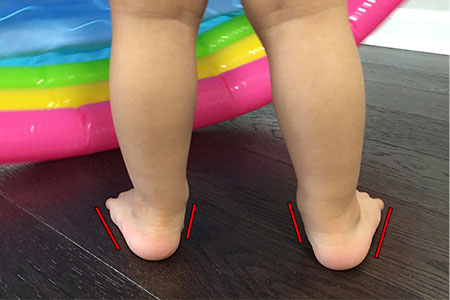
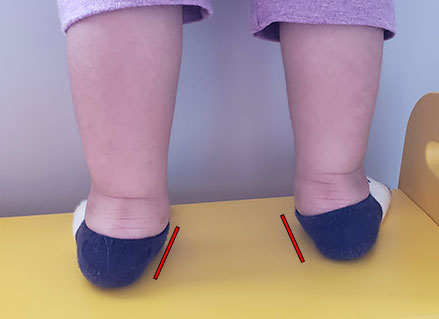
Yes — babies are born with flat feet, and this is completely normal. Most toddlers begin developing an arch between ages two and three, though I have seen many children who do not develop a visible arch until age five.
What is important to understand is that not all flat feet are the same. Your child’s physical therapist or podiatrist may have identified concerns about your toddler’s balance, coordination, posture, or strength — not just the flatness of the arch itself. The degree of pronation (how much the foot rolls inward) varies significantly from child to child, and the right sandal should address your child’s specific degree of pronation, not just flat feet in general.

Why Most Toddler Sandals Are Not Supportive Enough
The majority of toddler sandals sold at mainstream retailers have flat insoles with no arch support, soft floppy outsoles that bend in the middle, and no heel containment. These sandals may be fine for a toddler with healthy foot posture — but for a toddler with flat feet, overpronation, or any other foot or gait condition, they can actually make things worse over time.
Here is what I look for in every supportive toddler sandal I recommend:
1. Supportive Footbed with Arch Support The footbed is the foundation of the sandal. A well-designed footbed cradles the arch, distributes weight evenly across the foot, and reduces pressure on the forefoot and heel. Without proper arch support, a flat-footed toddler will continue to overpronate with every step.
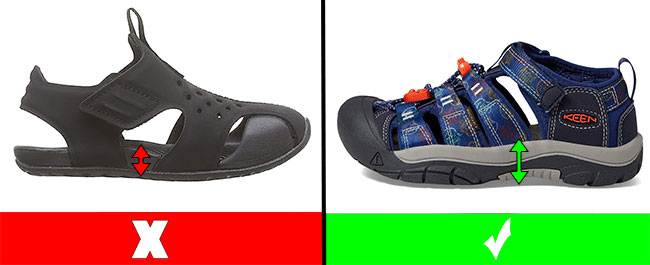
2. Deep Heel Cup for Rearfoot Stability A deep heel cup stabilizes the calcaneus (heel bone) and prevents the heel from rolling inward. This is one of the most important features for correcting overpronation and is often absent in standard toddler sandals.
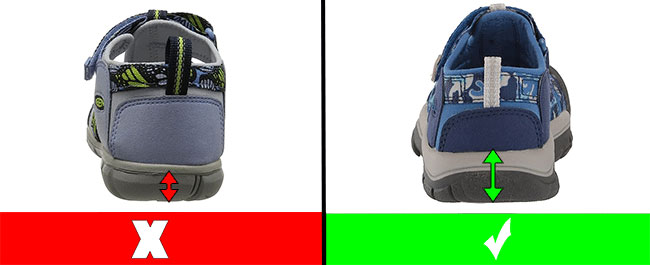
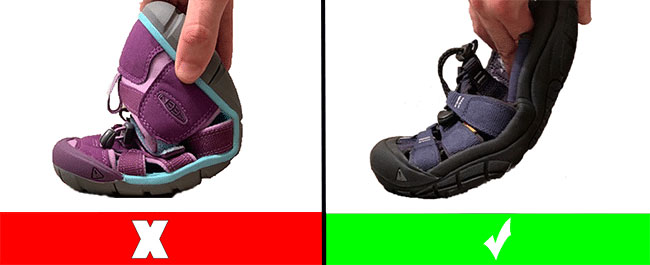
3. Firm but Not Rigid Outsole The sandal should flex at the ball of the foot — not in the middle of the arch. A quick test: gently bend the sandal. If it folds in half, it is too flexible and will not provide meaningful support. If it barely bends at all, it is too stiff for active toddler wear.
4. Secure Closure Multiple adjustable straps — ideally Velcro — allow you to customize the fit across different foot widths and instep heights. A sandal that shifts on the foot will cause blisters and reduce the effectiveness of the support features.
Coming Soon — Arch-Up Sandal by Footlogics
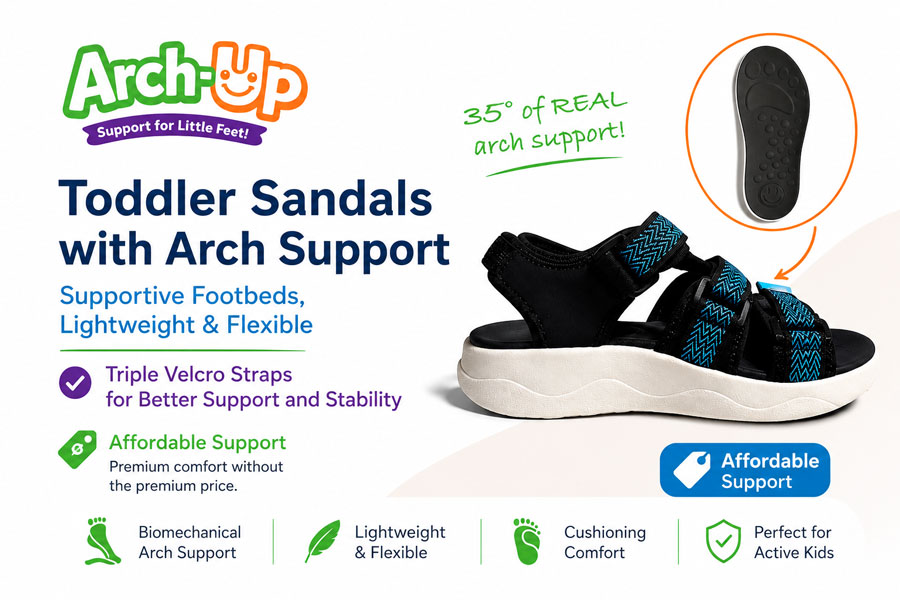
I am very excited to introduce a brand-new sandal that will be available within the next month: the Arch-Up by Footlogics. This is one of the most clinically thoughtful toddler sandals I have come across, and it addresses every feature I look for in a supportive sandal in a single lightweight design.
Here is what makes the Arch-Up stand out:
Cushioning Footbed with Proprioceptive Bubble Pattern The footbed features a proprioceptive bubble pattern — small textured nodules that stimulate sensory feedback from the ground. This is the same principle as sensory pods in first walking shoes: it helps your toddler feel the surface beneath them, improving balance, coordination, and confidence with every step.
Metatarsal Raise The Arch-Up includes a metatarsal raise that supports the forefoot — a feature rarely seen in children’s sandals. This helps distribute pressure evenly across the ball of the foot and reduces metatarsal pain and fatigue during active wear.
Biomechanical Arch Support A true biomechanical arch support — not just a cushioned bump — that guides the foot toward a more neutral position and reduces excessive pronation.
Deep Heel Cup for Rearfoot Stability The deep heel cup provides firm rearfoot containment, preventing the heel from collapsing inward and stabilizing the ankle during movement.
35 Degrees of Real Arch Support The Arch-Up provides 35 degrees of genuine arch correction — a meaningful, measurable amount of support rather than the token arch padding found in most children’s sandals.
3 Velcro Straps Three fully adjustable Velcro straps allow for a precise, customizable fit across a wide range of foot shapes and instep heights.
Anti-Slip Rubber Pads Strategically placed anti-slip rubber pads on the outsole provide reliable traction on a variety of surfaces — indoor floors, outdoor paths, and playground equipment.
Lightweight Midsole Despite all these support features, the Arch-Up remains lightweight — an essential quality for active toddlers who are on their feet all day.
Available in 3 Colors
The Arch-Up by Footlogics is not yet available but will be launching within the next month. I will update this article with the purchase link as soon as it becomes available. If you would like to be notified when it launches, reach out to me at customerservice@fittingchildrenshoes.com.
My Top Toddler Sandals with Arch Support
While you wait for the Arch-Up to launch, here are the best supportive toddler sandals currently available. I have noted which degree of pronation each style is best suited for — mild, moderate, or strong — so you can match the sandal to your toddler’s specific needs. Disclosure: This post contains affiliate links. We may earn a small commission at no extra cost to you.
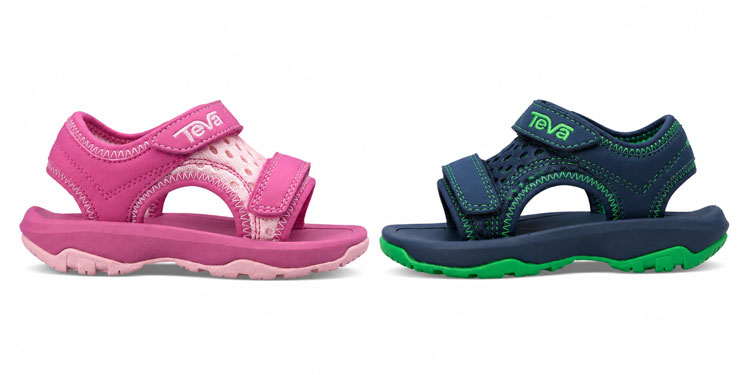
1. Psyclone by Teva
A practical, everyday supportive sandal that provides a stable base of support with adjustable straps for easy on and off. The Teva Psyclone is one of my go-to recommendations for toddlers with mild to moderate pronation who need a sandal that can keep up with an active lifestyle.
Key Features
- Order on Amazon
- Fits medium, wide, and extra wide feet (fits high insteps)
- EVA foam footbed cushions and softly supports the foot
- Rubber outsole for great traction
- Fitting tip: size a half size up from your child’s current foot length
2. Newport by Keen
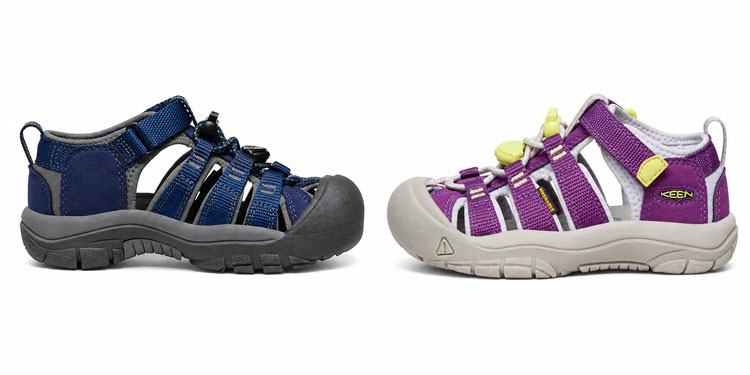
One of the most popular and trusted supportive sandals I recommend. The Keen Newport H2 has an anatomically engineered internal support mechanism that provides excellent arch support, combined with a closed toe box that protects little toes during active outdoor play. It is also machine washable — a practical bonus for parents.
Key Features
- Order on Amazon
- Fits medium and wide feet
- Anatomically engineered internal support for excellent arch support
- Multi-directional lugs with quick water channeling help provide superior grip on slippery and wet terrain
- Washable polyester webbing featuring quick dry lining
- Fitting tip: size a half size up from your child’s current foot length
3. Betti and Pedro by Memo (Orthopedic)
For toddlers who need the highest level of support available in a sandal, the Betti (girls) and Pedro (boys) by Memo are my top recommendation. These are true orthopedic sandals — not just supportive sandals — with a thermoplastic asymmetric stiff heel counter, genuine leather lining, and a design specifically engineered to guide the foot toward a healthier walking pattern.
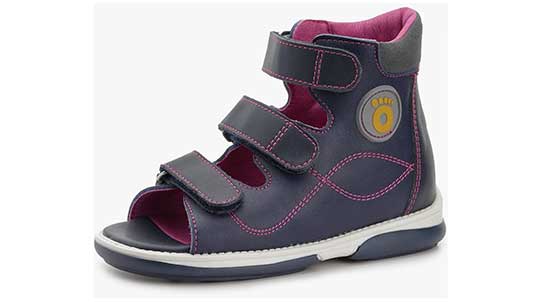
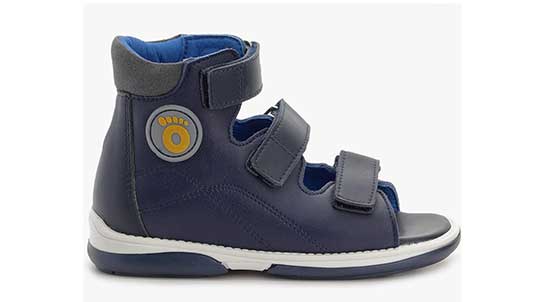
Key Features
- Order on Amazon
- Fits medium and wide feet
- Ideal for toddlers with moderate to strong pronation
- True orthopedic sandal
- Thermoplastic asymmetric stiff heel counter for proper foot protection and support
- Genuine leather lining
- Sizing tip: Order a whole size larger than your toddler’s current foot size
4. Lucky Brand
A practical everyday sandal with multiple points of adjustability for easy on and off. The Lucky Brand sandal features a supportive footbed and adjustable buckles at the front plus a Velcro strap at the back — making it one of the easiest sandals for parents to put on and remove quickly.
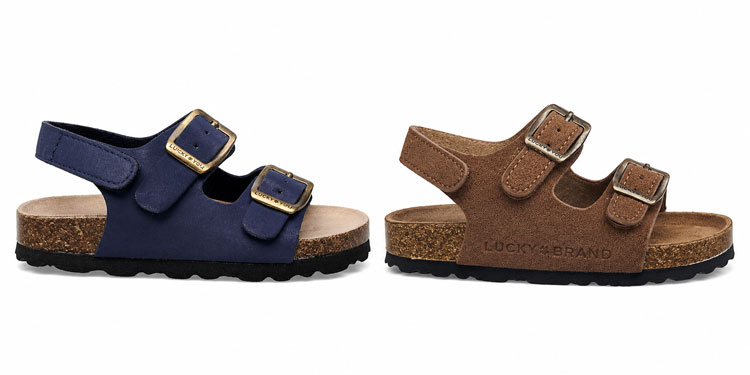
Key Features
- Order on Amazon
- Fits medium and wide feet
- Supportive footbed
- Adjustable front buckles with a rear Velcro strap for easy on and off
- Fitting tip: size a half size up from your child’s current foot length
5. Apakowa Sandal
An affordable supportive option with cushioned insoles and adjustable straps for a secure fit. The Apakowa is a good entry-level supportive sandal for toddlers with mild pronation whose parents are looking for a more budget-friendly option.
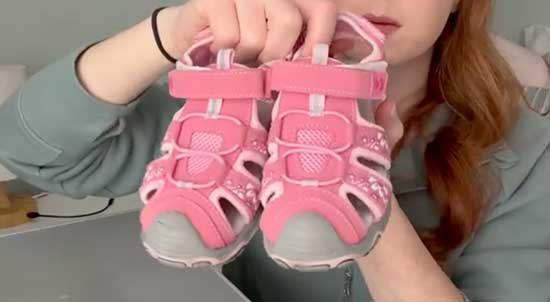
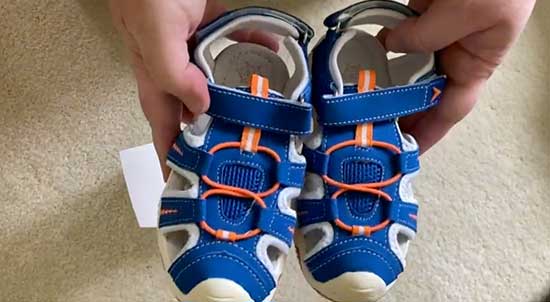
Key Features
- Order on Amazon
- Fits medium and wide feet
- Ideal for toddlers with mild pronation
- Leather insole with arch support
- Two points of adjustability
- Sizing tip: Order a whole size larger than your toddler’s current foot size
6. Agnes by Memo (Orthopedic)
Another excellent orthopedic option from Memo, the Agnes features an anatomically shaped footbed, 100% leather construction, and an adjustable hook-and-loop strap that can accommodate different foot widths and instep heights. A strong choice for toddlers who need orthopedic-level support in a sandal format.
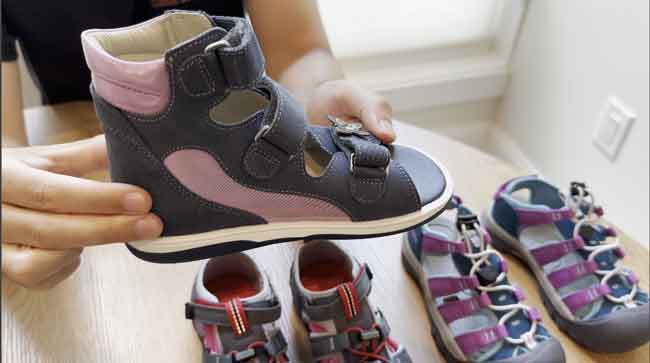
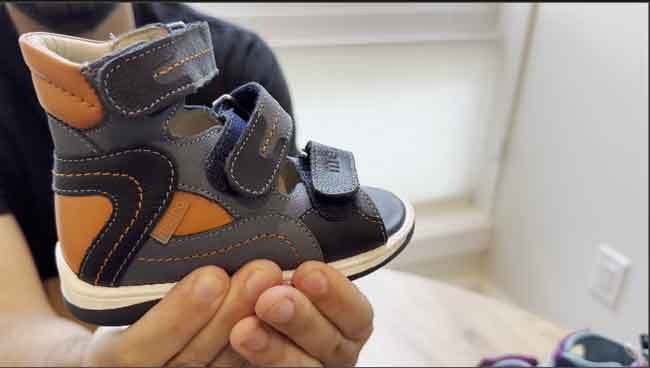
Key Features
- Order on Amazon
- Fits medium and wide feet — accommodates high insteps
- Ideal for toddlers with moderate to strong pronation
- 100% leather construction
- Adjustable hook-and-loop strap for different foot widths
- Sizing tip: Order a whole size larger than your toddler’s current foot size
Which Sandal Is Right for My Toddler’s Degree of Pronation?
Here is a quick reference to help you match the sandal to your toddler’s specific needs:
Mild pronation: Teva Psyclone, Newport H2 by Keen, Lucky Brand, Apakowa
Moderate pronation: Teva Psyclone, Newport H2 by Keen, Betti/Pedro by Memo, Arch-Up by Footlogics (coming soon)
Strong pronation: Betti/Pedro by Memo, Agnes by Memo, Arch-Up by Footlogics (coming soon)
Need a Personalized Recommendation?
Every toddler’s foot is different. If you are unsure which sandal is right for your child’s specific foot shape, degree of pronation, or foot condition, reach out to me directly at customerservice@fittingchildrenshoes.com and I will provide a personalized recommendation at no cost.
Why Toddlers Need Supportive Footwear — Not Just Supportive Sandals
It is important to remember that sandals are typically worn for a few hours at a time rather than as the primary footwear throughout the day. For toddlers with more significant flat feet or pronation, I also recommend ensuring their everyday sneakers provide equivalent support. I have a dedicated guide on the best toddler sneakers with arch support here: Toddler Shoes with Arch Support
How to Find the Right Size
Getting the correct size is just as important as choosing the right style. I offer a free virtual shoe fitting service that helps you determine your toddler’s exact foot length and width from home — so you can order online with confidence.
Learn How to Measure Your Toddler’s Foot Here
Frequently Asked Questions
Four features matter most: a supportive footbed with genuine arch support, a deep heel cup for rearfoot stability, a firm outsole that flexes at the ball of the foot rather than in the middle, and secure adjustable straps that keep the foot positioned correctly inside the sandal.
Not all toddlers with flat feet need intervention — flat feet are normal up to around age five. However, if your child’s doctor or physical therapist has identified concerns about balance, coordination, posture, or strength, or if your child has moderate to strong pronation, supportive sandals can make a meaningful difference.
A supportive sandal provides arch support and heel stability that goes beyond a standard flat sandal. An orthopedic sandal — like the Memo styles on this list — is specifically engineered with clinical-grade correction features such as thermoplastic heel counters, deep anatomical footbeds, and structured arch support designed to treat specific foot conditions.
I do not recommend flip flops or Crocs for toddlers with flat feet or pronation. Both styles provide no meaningful arch support or heel containment, and flip flops in particular cause toddlers to grip with their toes to keep the shoe on — which creates abnormal muscle tension and can worsen gait issues.
Have a question about toddler sandals or your child’s foot shape? Leave a comment below — I read and respond to every one.

Looking for sandals for a 8 yr old girl with very narrow feet
Hello,
I am happy to send you specific shoe recommendations if you tell me what shoe size your girl wears. Is your daughter flat footed?