
Do Shoe Stretchers Work for Kids’ Wide Feet?
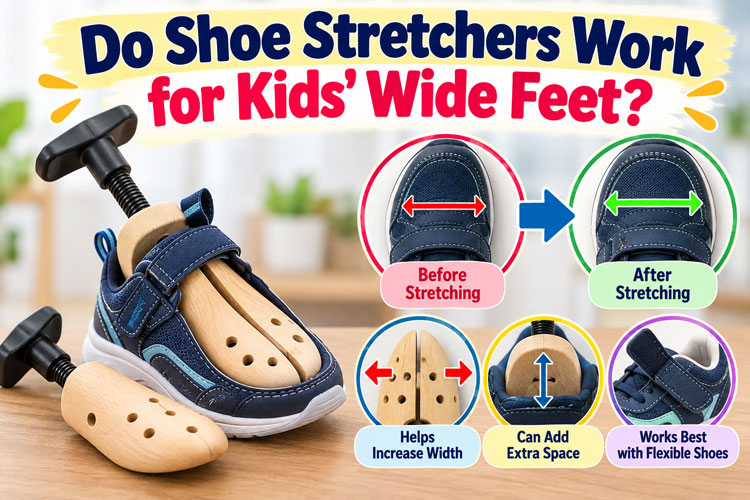
Have you bought extra wide shoes, and your child still says they’re too tight? Before you give up on a pair that almost fits, try a shoe stretcher. Yes, they work, but only in the right situation. As a certified children’s shoe fitter with over 10 years of experience, I’ve used shoe stretcher spray countless times in the store. Here’s when it helps, when it doesn’t, and how to use it without ruining the shoes.
When a Shoe Stretcher Helps
A shoe stretcher works best when the shoe is almost right. I use one when I’ve fit a child in a shoe that’s already wide or extra wide, but it’s still a little snug in one spot. Common examples:
- The shoe is the right length, but it pinches across the widest part of the foot.
- One spot rubs, like the pinky toe or the side of the big toe.
- A leather dress shoe or boot feels stiff and tight when it’s brand new.
In those cases, a stretcher can add just enough room for your child to wear shoes they actually like, instead of settling for whatever fits.

When a Shoe Stretcher Won’t Help
A stretcher adds a little width. It won’t fix a shoe that’s the wrong size. Skip it if:
- The shoe is too short. Stretching doesn’t add length. If your child’s toes touch the end, they need a bigger size. Here’s how to tell if your child has outgrown their shoes.
- The shoe is a medium width and your child has wide or extra wide feet. Start with the right width first. Here’s how to find out your child’s foot shape.
- The shoe is mostly mesh, rubber, or plastic. These materials barely stretch.
- The shoe is too shallow for a high instep. Stretching adds much more width than depth. For a high instep, choose a deeper shoe.
- The shoe is leaving deep marks on swollen skin. For kids with swelling, a deeper shoe is safer than stretching. See my guide to shoes for elephantiasis.
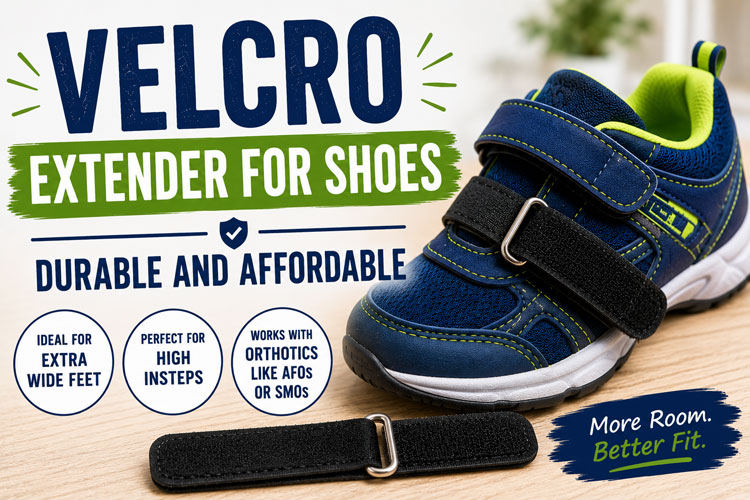
If Velcro straps are the problem, a Velcro extender is often a better fix than stretching.
Types of Shoe Stretchers
- Stretch spray: a liquid that softens the material so it stretches as your child wears the shoe. It’s the easiest for kids’ shoes, since it works on small sizes and on one spot at a time.
- Two-way stretchers: a wooden or plastic form you put inside the shoe and crank wider. Most are made for adult sizes, so they often don’t fit in toddler or little kid shoes.
- Professional stretching: a shoe repair shop can stretch leather shoes on a machine. It’s worth it for expensive dress shoes or boots.
For kids, I recommend the spray.
Do Shoe Stretchers Work on All Shoes?
Natural materials stretch best: leather, suede, nubuck, canvas, and linen. Synthetic leather, patent leather, and mesh stretch much less, even though some sprays say they work on them. Expect a small difference on those materials, not a big one.
Best Shoe Stretcher Spray for Kids’ Shoes
Shoe Stretch Spray by FootMatters
This is the spray I’ve used most in the children’s shoe store. It works on sneakers, dress shoes, and boots, and I’ve seen it help many kids get a little more room in shoes that were already close.

- Check price on Amazon
- Softens and stretches tight-fitting shoes
- Goes on clear
- The maker says it works on leather, suede, canvas, synthetics, linen, nubuck, and patent leather
- Disclosure: The link above is an affiliate link, meaning I may earn a small commission (at no extra cost to you) if you click and make a purchase.
How to Use Shoe Stretcher Spray on Kids’ Shoes
- Test a hidden spot first. Spray a small area inside the shoe or near the heel and let it dry, to make sure it doesn’t change the color.
- Spray only where it’s tight. Target the spot that pinches, on the inside, the outside, or both.
- Have your child wear the shoes while they’re damp. Thick socks help stretch them a little more. Have them walk around the house until the shoes dry.
- Ask how they feel, and stop as soon as the tightness is gone. If they’re still snug, repeat the process. It’s better to do two or three light rounds than to overstretch, since you can’t un-stretch a shoe.
Apply the spray yourself, and keep the bottle away from young children. Follow the directions on the label.
Need Help Choosing?
If your child’s shoes always feel tight, the problem may be the shoe and not the size. Email me with your child’s age, size, and the shoes they’re wearing now, and I’ll help you find a better fit.
More Guides for Wide Feet
- Best sneakers for kids with wide feet
- Best shoes for kids with extra wide feet
- Velcro extender for kids’ shoes

Yes, it works. I have been using it for my kids’ school shoes 2-3 times.
Thanks for sharing!
I ordered the shoe stretcher you recommended and it works wonders! My son who has the widest feet ALWAYS said that the shoes were too tight! Life saver! Thank you
I am glad it worked out!
I had not heard of these devices before. Wish I had of!! My son has big feet and wide and I have spent many hours going from shop to shop to find shoes that fit. Because he wears a size 14/15 it makes it difficult to find shoes at all.I am getting one of this shoe stretcher to have for the whole family.
Shoe stretchers come handy when you have children with really wide feet. You will really get some good use out of it!
Hello Juan,
My niece has wide feet and she always has some trouble in finding a comfortable pair of shoes. We never used any kind of shoe stretchers so far thinking that it might not help.
After reading your post i realized that the shoe stretches do help kids with wider feet. Also, the “Professional Boot and Shoe Leather Stretch” seems to be a wonderful product and easy to use (just spray it). I’m getting this product for my niece! Thank you!
Hello,
You should probably read this post since it describes the best shoes for wide feet: Extra Wide Shoes for Girls – The Best Shoe Style for Girls with Extra Wide Feet! I use shoe stretchers when I fit a child in a shoe that is already wide, but still not wide enough for the child’s foot.
My family has thrown many kids shoes away due to their children having wide feet and complaining about the shoes feeling too tight. I didn’t know that kids shoes could be stretched. I still remember my niece shoes being thrown away after wearing for 1 month as she complained about them feeling too tight on her feet.
I think this article will save tons of money for our family in the future. The last part of the article answered all my questions. Thanks for the info here.
Maxx,
Remember that shoes come in wide, and extra wide widths. It might be possible that your family is not getting the right shoe width to start with. However, if you are getting an extra wide width shoe and it still feels tight, a shoe stretcher will definitely help!
My son has the widest feet, and even when I get him wide shoes he complains of them feeling too tight. I am definitely getting a pair of this! I never knew something like a shoe stretcher even existed until now. I like how you included the types on shoes it will work best on also. Gives a good idea to your readers on the expectations of using this on certain types of shoes.
Props to the person that invented a shoe stretching spray!
Nate,Let me know how it works out! What type of shoes are you getting for your child? I wrote a post about the widest shoes for kids that you might want to give it a read: Extra Wide Shoes for Kids
I had never heard of shoe stretching spray before, or a shoe stretcher either for that matter. Interesting. I know this article is about kid’s shoes, but I have always had a problem with shoes being too narrow. Now I know what to do!
I appreciated you going over some frequently asked questions at the end. That cleared up a few questions I had.
Elisa,
I started learning everything I know about shoes when I started working at a children shoe store 6 years ago. I write about kids’ shoes, and parents find the information to be extremely valuable. I wrote a post you can definitely benefit from depending on what women shoe size you wear and it’s called: Women and Kids Shoe Size Conversion Chart – Save Big Buying Kids’ Shoes!