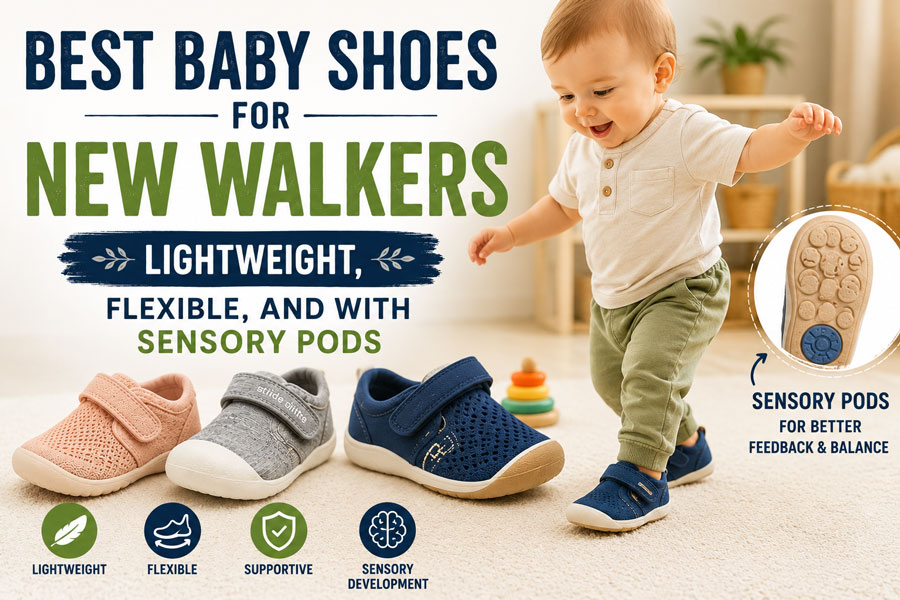
Best Baby Shoes for New Walkers – Lightweight, Flexible, and with Sensory Pods
Last updated: May 2026 | By Juan Valenzuela, Certified Children’s Shoe Fitter
When babies start walking, their feet are still growing and developing rapidly. Choosing the right first walking shoes is one of the most important decisions you can make for your baby’s foot health, balance, and confidence. With over 10 years of experience fitting baby shoes, I have helped countless families find the perfect pair — and I am here to help yours too.
In this guide you will find the best baby shoes for new walkers, carefully selected to support healthy foot development, balance, and comfort. If your baby is starting to cruise along furniture or take those first independent steps, you are in the right place.
Should Babies Wear Shoes or Go Barefoot at Home?
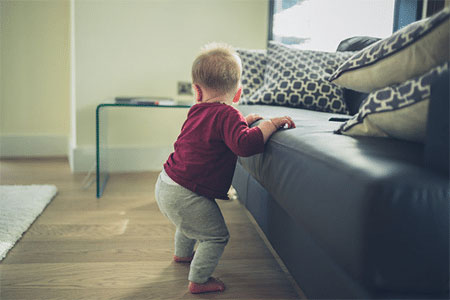
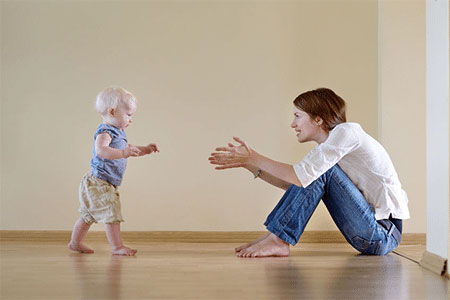
This is one of the most common questions I get from new parents — and the answer might surprise you. The best thing you can do for a baby who is learning how to walk is to allow barefoot walking at home. Going barefoot helps strengthen the muscles in your baby’s feet, improves balance, and allows the foot to develop naturally without restriction.
Shoes become necessary when your baby is walking outdoors — to protect their feet from rough surfaces, sharp objects, uneven terrain, and temperature extremes. If you choose shoes for home use, make sure they are lightweight, flexible, and mimic the barefoot experience as closely as possible.
Will Shoes Help My Baby Walk Faster?
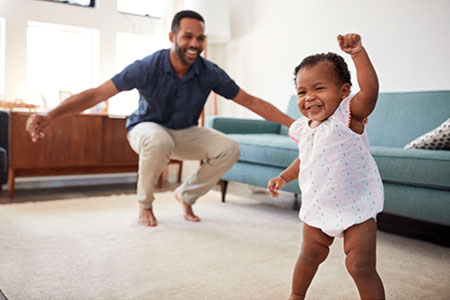
No — and this is an important misconception to clear up. Shoes will not help babies learn to walk faster. Babies develop at their own pace, and the best thing you can do is let them practice barefoot at home as much as possible. Shoes are meant to protect their feet and provide comfort when they venture outdoors — not to accelerate the walking process.
When Should I Get My Baby Their First Pair of Walking Shoes?
Generally, it is best to introduce shoes when your baby starts taking their first steps outdoors. Every baby is different, but most babies are ready for their first walking shoes somewhere between 9 and 12 months. The key is to wait until your baby is actually walking — not just standing or cruising — before putting them in shoes regularly.
Key Features to Look for in Baby Walking Shoes
Not all baby shoes are created equal. Here are the three features I look for in every first walking shoe I recommend:
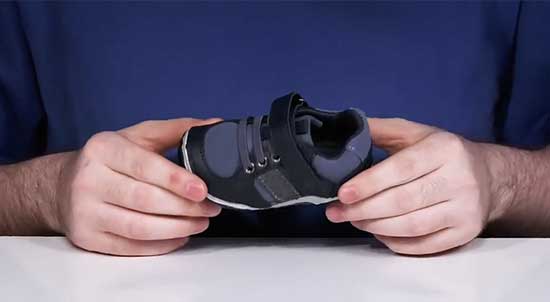
1. Round Toe Box A rounded toe box gives your baby’s toes room to splay naturally inside the shoe without cramping or compression. This is critical for healthy foot development. Avoid any shoe with a tapered or pointed toe box — these are designed for aesthetics, not for growing feet.
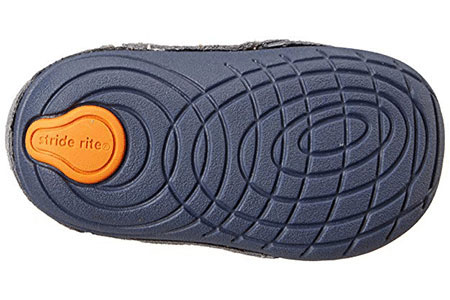
2. Sensory Pods Sensory pods are one of the most important features in a first walking shoe, and one that many parents overlook. These are small textured nodules on the outsole that help your baby feel the ground beneath them. This sensory feedback boosts stability, builds confidence with every step, and supports natural balance. Sensory pods also improve traction and reduce the risk of slips and falls — making early walking safer and more comfortable.
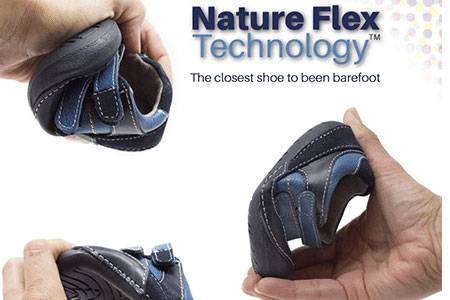
3. Lightweight and Flexible Soles The sole of a first walking shoe should be lightweight and flexible enough to allow natural foot movement. A quick test: gently bend the shoe — it should flex about 50 degrees with ease. If the sole is stiff and rigid, it will hinder your baby’s natural gait and make walking more difficult. Stiff soles are one of the most common mistakes I see in baby shoes purchased at big box retailers.
My Favorite Brands for First Walking Shoes
My go-to shoe brands for babies who are learning how to walk are:
- Stride Rite — my top overall recommendation. Stride Rite consistently produces APMA-approved first walking shoes with excellent width options including wide and extra wide.
- See Kai Run — a close second, with naturally wide fits, APMA approval, and practical oversized openings that make getting shoes on and off much easier.
- Merrell — a good barefoot-feel option for babies whose parents prefer a minimalist approach to first walking shoes.
- Tsukihoshi — excellent for babies with wide feet, high insteps, or sensory sensitivities. All Tsukihoshi shoes feature seamless interiors.
Why Robeez Did Not Make My List
Robeez is one of the most well-known shoe brands for babies, and their shoes are made from soft leathers that are both flexible and durable. However, Robeez function more as a leather covering for babies’ feet than as a true walking shoe — they do not provide enough protection or traction for babies who are walking outdoors. For indoor use they are fine, but for first walking shoes I recommend other options.
The Best Baby Shoes for New Walkers
The shoes below are all personally recommended by me based on years of fitting experience. Check the description below each shoe to see whether it fits medium, wide, or extra wide baby feet. Disclosure: This post contains affiliate links. We may earn a small commission at no extra cost to you.
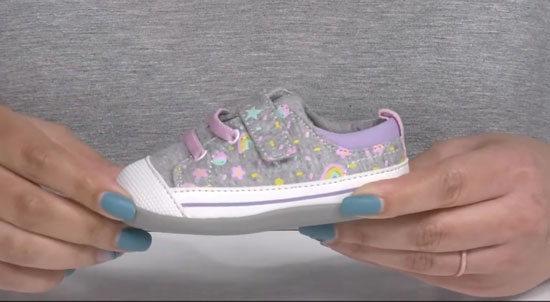
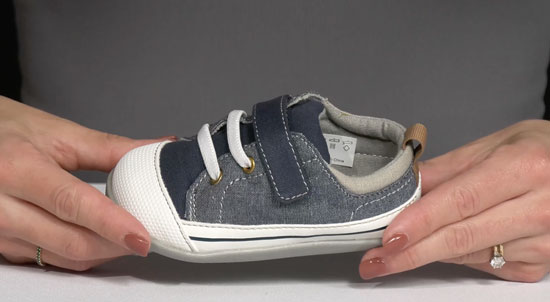
1. Shoe Style Stevie II by See Kai Run
The Stevie II is one of my most recommended first walking shoes. It features a wide toe box, adjustable straps, and a flexible outsole that supports natural foot movement. Despite not being labeled as a wide or extra wide style, it fits naturally wide — making it a great option for babies with wider feet.
Key Features
- Order on Amazon
- Not available in wide or extra wide widths but fits naturally wide
- APMA Seal of Acceptance
- Durable cotton drill upper, leather insole, and recycled mesh lining
- Breathable textile lining and cushioned insole
- Sizing tip: Order a whole size larger than your baby’s current foot size
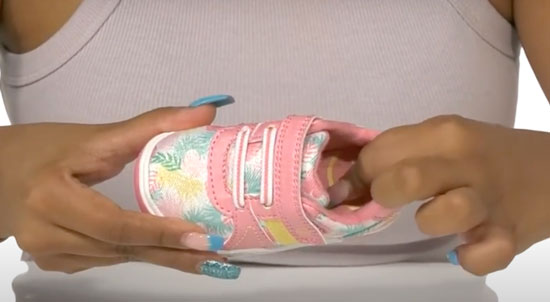
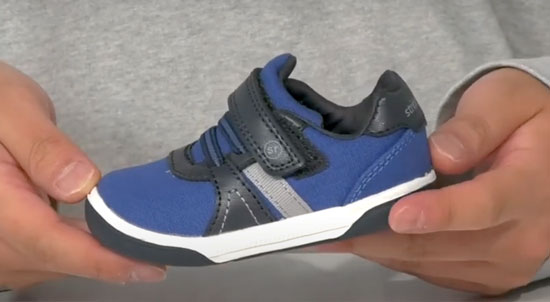
2. Shoe Style Thompson by Stride Rite
The Thompson is a classic first walking shoe with a flexible sole and rounded toe design that supports natural movement. It is a favorite among parents and podiatrists for its wide toe box, durable construction, and APMA approval.
Key Features
- Order on Amazon
- Available in wide widths
- APMA Seal of Acceptance
- Padded tongue and collar for added comfort
- Breathable textile lining and cushioned insole
- Sizing tip: Order a whole size larger than your baby’s current foot size
3. Shoe Style Racer by Tsukihoshi
The Racer by Tsukihoshi is a lightweight, supportive first walking shoe that works especially well for babies with wide feet and high insteps. All Tsukihoshi shoes feature seamless interiors — a particularly important feature for babies with sensory sensitivities. The rounded edges help decrease stumbles and falls during the early walking stage.
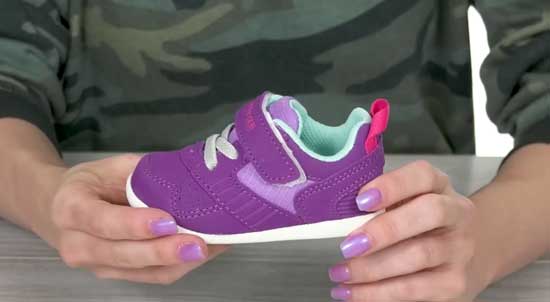
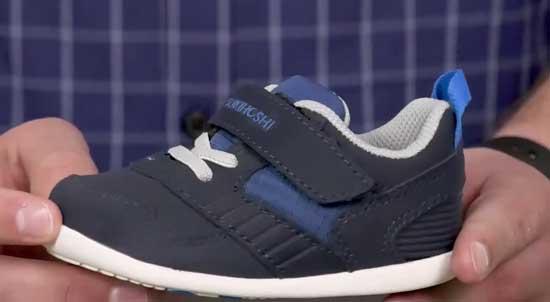
Key Features
- Order on Amazon
- Not available in wide or extra wide widths but fits naturally wide
- Fits high insteps
- Seamless interior ideal for babies with sensory sensitivities
- Rounded edges to decrease stumbles and falls
- Sizing tip: Order your baby’s actual foot size — this shoe fits long
4. Shoe Style Artie and Adalyn by Stride Rite
The Artie (boys) and Adalyn (girls) by Stride Rite provide excellent width options and a comfortable, supportive fit. Their design includes flexible outsoles and cushioned insoles, which are essential for active early walkers. The rounded edges help reduce stumbles and falls during the learning-to-walk stage.
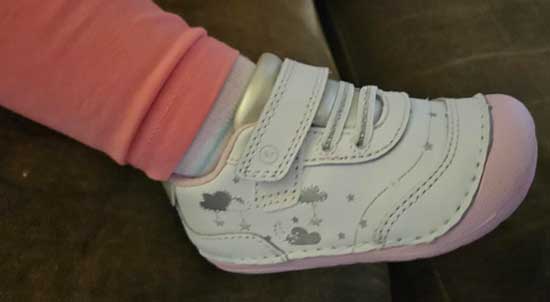
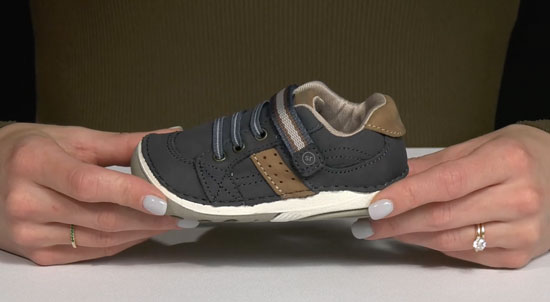
Key Features
- Order on Amazon
- Available in wide and extra wide widths
- APMA Seal of Acceptance
- Rounded edges to decrease stumbles and falls
- Sizing tip: Order a whole size larger than your baby’s current foot size
5. Shoe Style Elliott by Stride Rite
The Elliott is a high-top bootie that provides excellent ankle support and a comfortable fit — making it a top choice for babies with flat feet or low muscle tone who need extra stability during the early walking stage. The 100% leather construction is durable and molds to the shape of your baby’s foot over time.

Key Features
- Order on Amazon
- Accommodates medium, wide, or extra wide feet
- Ideal for mild to moderate cases of pronation
- 100% leather construction
- High-top design provides extra ankle support
- APMA Seal of Acceptance
- Sizing tip: Order a whole size larger than your toddler’s current foot size
6. Shoe Style Archie and Kiki by Stride Rite
The Archie (boys) and Kiki (girls) sandals are crafted to provide maximum comfort for babies with wide feet. With their breathable materials, secure fit, and foam padding around the ankle collar, they offer the support and flexibility needed for a growing baby during warmer months.
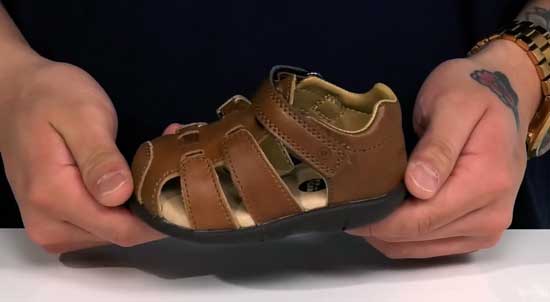
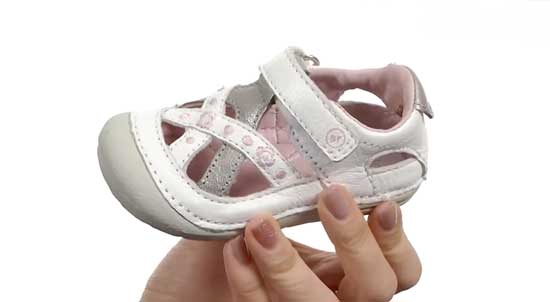
Key Features
- Order on Amazon
- Available in wide and extra wide widths
- APMA Seal of Acceptance
- Leather upper
- Foam padding around the ankle collar and under the tongue for comfort
- Sizing tip: Order a half size larger than your baby’s current foot size
7. Shoe Style Martin by Stride Rite
The Martin bootie features a wide toe box and plush cushioning, making it a great everyday option for babies who need extra room. Parents consistently highlight this shoe’s ability to maintain its shape and support even after prolonged use — a strong sign of durability for an active new walker.
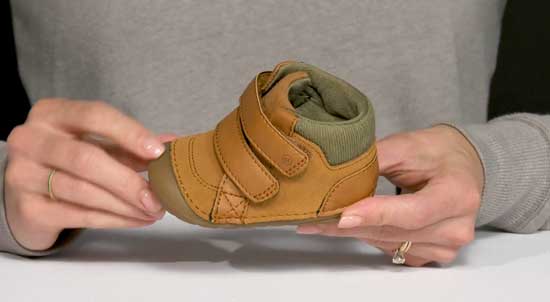
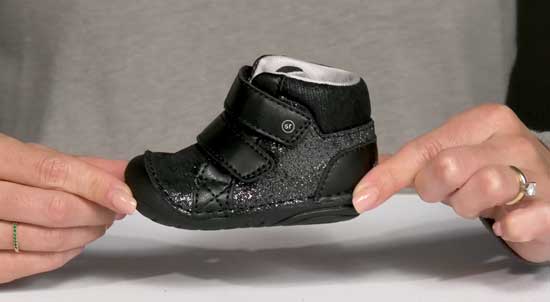
Key Features
- Order on
- Available in wide and extra wide widths
- APMA Seal of Acceptance
- Wide toe box and plush cushioning for everyday comfort
- Sizing tip: Order a whole size larger than your baby’s current foot size
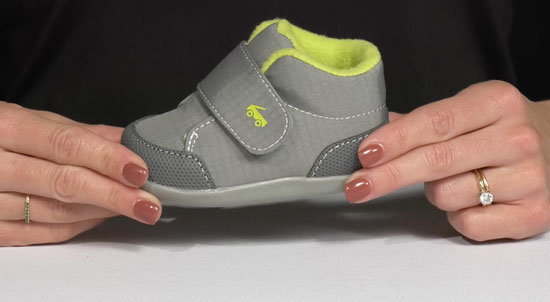
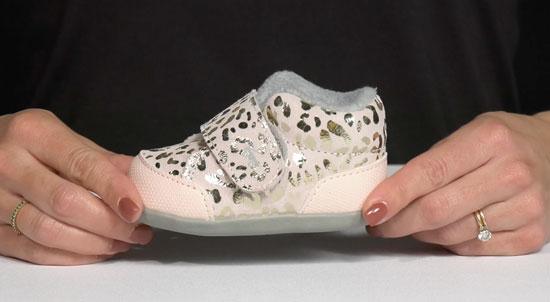
8. Shoe Style Casey by See Kai Run
The Casey bootie by See Kai Run provides extra depth, a rounded toe box, and opens up nice and wide for easy on and off — one of the most practical features for parents of new walkers. The fleece lining adds warmth, making it an excellent option for cooler months.
Key Features
- Order on Amazon
- Not available in wide or extra wide widths but fits naturally wide
- APMA Seal of Acceptance
- Extra depth and rounded toe box
- Fleece lining for extra warmth
- Sizing tip: Order a whole size larger than your baby’s current foot size
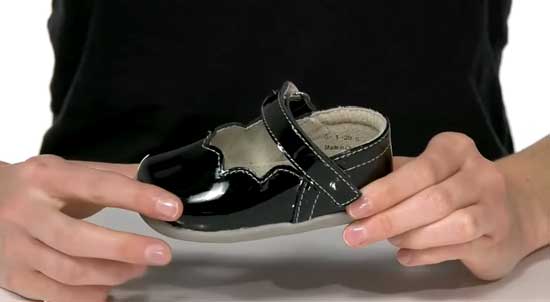
9. Shoe Style Lucia by See Kai Run
The Lucia by See Kai Run is a Mary Jane style that combines a polished look with the practical features parents need — a wide toe box, flexible outsole, and easy strap closure. It is a great option for baby girls who need a dressier shoe without sacrificing comfort or fit.
Key Features
- Order on Amazon
- Not available in wide or extra wide widths but fits naturally wide
- APMA Seal of Acceptance
- Wide toe box and flexible outsole
- Easy strap closure for quick on and off
- Sizing tip: Order a whole size larger than your baby’s current foot size
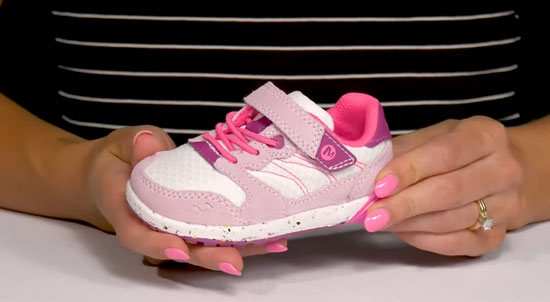
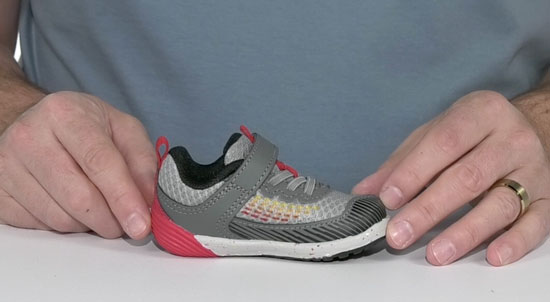
10. Merrell Kids’ Bare Steps Sneaker
The Bare Steps sneaker is designed with a wide toe box and a barefoot feel, encouraging natural foot development. Its minimalist design allows for greater sensory feedback, which can enhance your baby’s proprioception and coordination during the early walking stage.
Key Features
- Order on Amazon
- Available in wide widths
- APMA Seal of Acceptance
- Wide toe box for natural toe splay
- Padded tongue and collar for added comfort
- Sizing tip: Order a whole size larger than your baby’s current foot size
11. Shoe style Gaia by Stride Rite
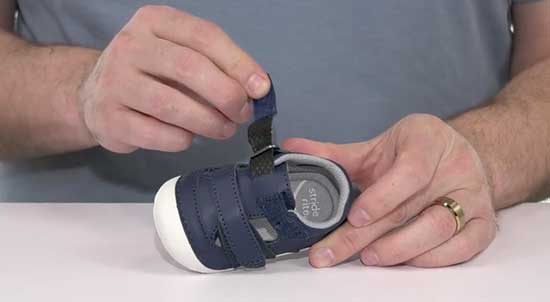
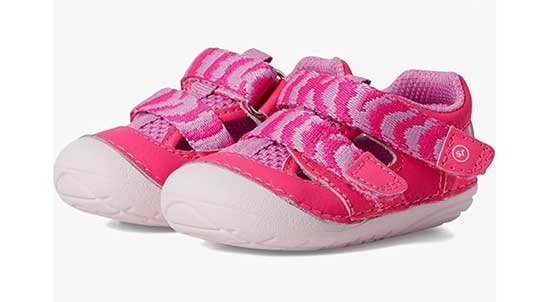
The Gaia is one of Stride Rite’s newer first walking styles and quickly became one of my favorites. It features double Velcro straps for a secure, fuss-free fit, a round toe design, and fits children with higher insteps — a combination that is hard to find in a baby shoe.
Key Features
- Order on Amazon
- Available in medium and wide widths — fits high insteps
- APMA approved
- Double Velcro straps for secure, easy on and off
- Round toe design
- Sizing tip: Order a whole size larger than your baby’s current foot size
Are These Shoes Easy to Get On and Off?
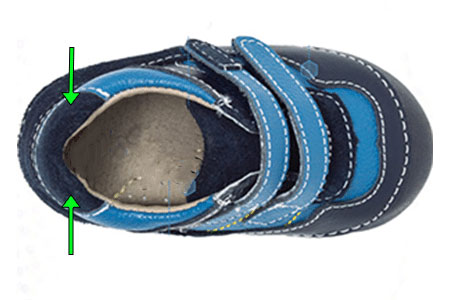
Yes — every shoe I recommended above features an oversized opening, making it quick and easy for parents to slip them on without a daily struggle. Velcro and adjustable strap closures are far more practical for new walkers than laces, and all of the shoes above use one or the other.
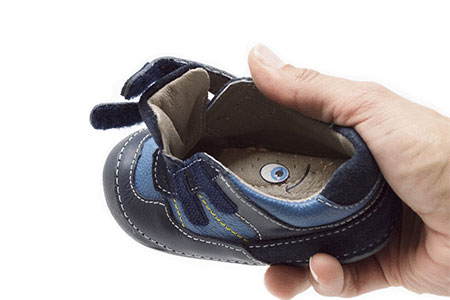
Another great feature of the baby shoes I recommend is the thoughtful padding—around the heel, ankles, and underfoot—for all-around comfort. This soft cushioning helps prevent rubbing and blisters.
How to Find the Right Shoe Size for Your Baby
Getting the right size is just as important as choosing the right shoe. Babies’ feet grow quickly — often up to two or three sizes in a year — which means a shoe that fit in January may be too small by April.
Here is a simple rule: there should always be about a thumb’s width of space between your baby’s longest toe and the front of the shoe. If you can’t fit a thumb, the shoe is too small. If you can fit two fingers, the shoe is too big.
I offer a free virtual shoe fitting service that helps you determine your baby’s exact foot length and width from home: Learn How to Measure Your Baby’s Foot Here
Need a Personalized Recommendation?
Every baby’s foot is different. If you are unsure which shoe is right for your baby’s specific foot shape or if your baby has a foot condition, reach out to me directly at customerservice@fittingchildrenshoes.com and I will provide a personalized recommendation at no cost.
Frequently Asked Questions
Introduce shoes when your baby starts walking outdoors — typically between 9 and 12 months. Before that, barefoot walking at home is best for healthy foot development.
A flexible sole and a rounded toe box are the two most important features. The sole should bend easily at the ball of the foot, and the toe box should be wide enough for your baby’s toes to splay naturally.
Sensory pods are small textured nodules on the outsole of a baby shoe that help your baby feel the ground beneath them. This sensory feedback improves balance, builds confidence, and reduces the risk of slips and falls during early walking.
Most babies actually have wide or extra wide feet — this is completely normal, as babies still carry fat in their feet at this stage of development. The problem is that most mainstream baby shoes are designed for medium-width feet, which means many babies end up in shoes that are too narrow without their parents realizing it. If your baby has wide or extra wide feet, make sure to look for shoes that offer extra width and depth to avoid compression and discomfort. Stride Rite and Tsukihoshi are my top recommendations for wide and extra wide baby feet.
They are a good starting point. APMA-certified shoes have been reviewed by podiatrists and found to promote good foot health. However, certification alone does not guarantee the right fit — always make sure the shoe matches your baby’s foot shape and width.
Have a question about your baby’s foot shape or a specific shoe? Leave a comment below — I read and respond to every one.