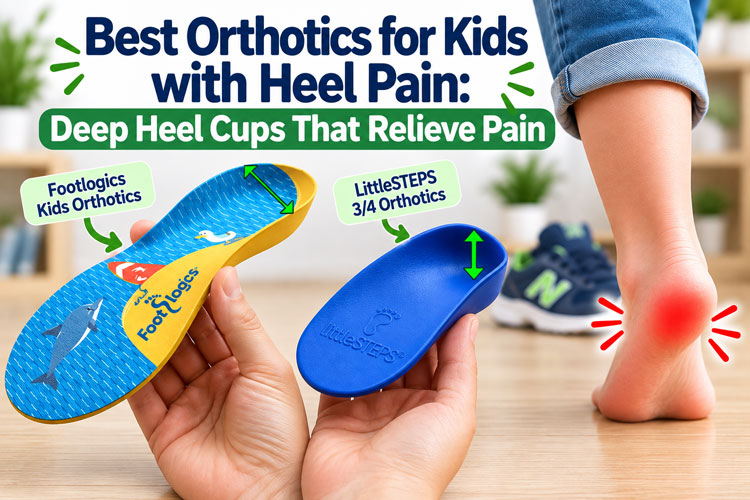
Best Orthotics for Kids with Heel Pain – Deep Heel Cups with Extra Heel Support
Last updated: September 14, 2026 · Written by Juan Valenzuela, Certified Children’s Shoe Fitter
Heel pain in children can stem from a few different causes — Sever’s disease, plantar fasciitis, or simply ill-fitting shoes. I’d steer away from a “wait and see” approach here: heel pain that’s left alone tends to get worse, not better, on its own. Below are the two orthotics I recommend, chosen by severity, both built around a deep heel cup that redistributes pressure and supports healing.
Be Proactive
Kids shouldn’t push through foot pain during sports or daily activity. Left untreated, heel pain can progress to the point where walking becomes difficult and treatment gets more complicated. If your child has started complaining, there’s no need to panic — but it’s worth acting on rather than waiting for it to resolve on its own.
How I Approach Heel Pain in the Shoe Store
After more than a decade fitting kids’ shoes, my usual approach is to start with a pair of supportive shoes and see whether that alone meaningfully reduces the pain. If shoes aren’t enough on their own, an orthotic is the next step.
Can Orthotics Actually Reduce Heel Pain?
Yes — the right orthotic can make a real difference. The two I recommend both provide a deep heel cup that controls heel alignment and a supportive layer that absorbs shock and returns impact energy, rather than letting it concentrate directly under a sore heel.
Will Orthotics Make My Child’s Feet Weaker?
This is one of the most common concerns I hear, and the answer is no. A properly fitted orthotic provides structural support — it doesn’t take away from muscle development. Kids’ foot and leg muscles continue developing normally while the orthotic handles the alignment and shock-absorption work the foot may not be doing well on its own yet.
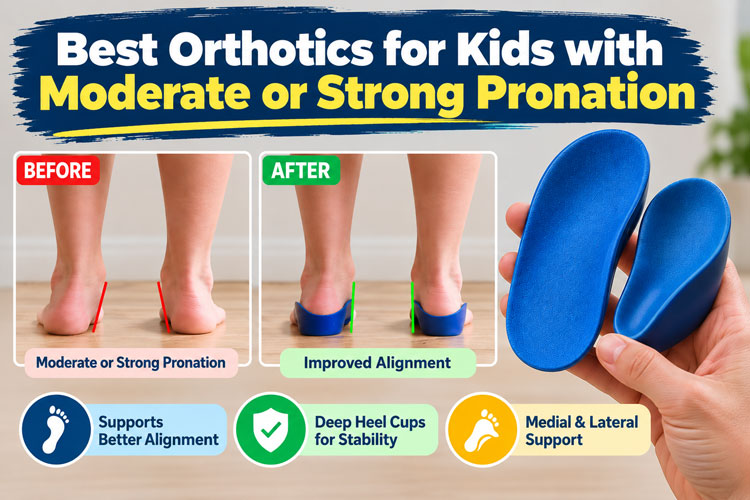
Before and After: The Impact of Supportive Orthotics
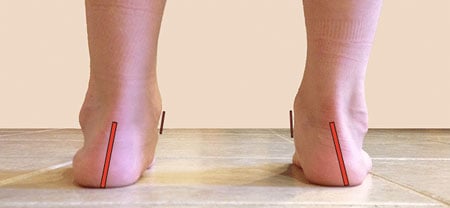
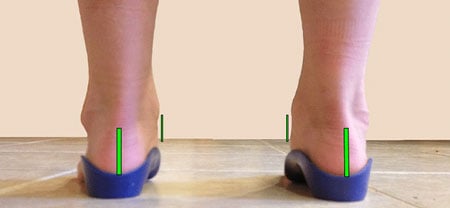
To illustrate the effectiveness of orthotics, consider the difference between a child standing barefoot and standing on supportive orthotics.
What to Look for in a Heel Pain Orthotic
A deep heel cup. Both orthotics I recommend below cushion and protect the heel directly, which is the core of what makes them effective for heel pain specifically (as opposed to a general comfort insole).
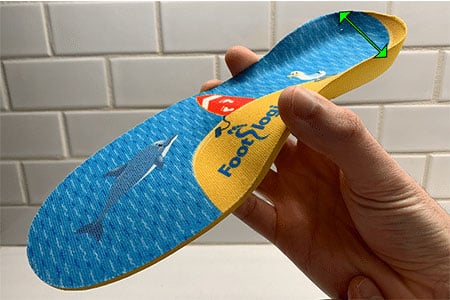
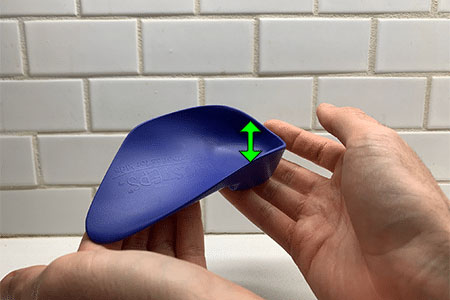
Arch support. This distributes pressure more evenly across the whole foot rather than concentrating it under the heel, which helps with both pain relief and overall alignment

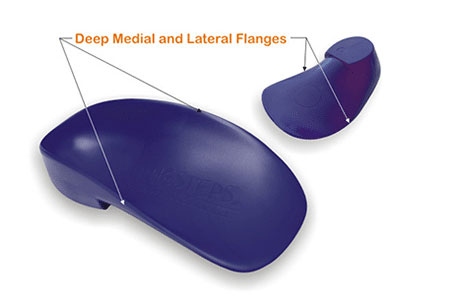
Best Orthotics for Kids with Heel Pain: How to Choose Between the Two
Start by gauging how severe your child’s heel pain is — mild, moderate, or strong. That’s the main thing that determines which of the two orthotics below is the better fit.
Mild Heel Pain: Footlogics
Footlogics offers a balanced mix of cushioning and structural support — a good fit for kids who don’t need the more intensive correction of a full orthotic system.
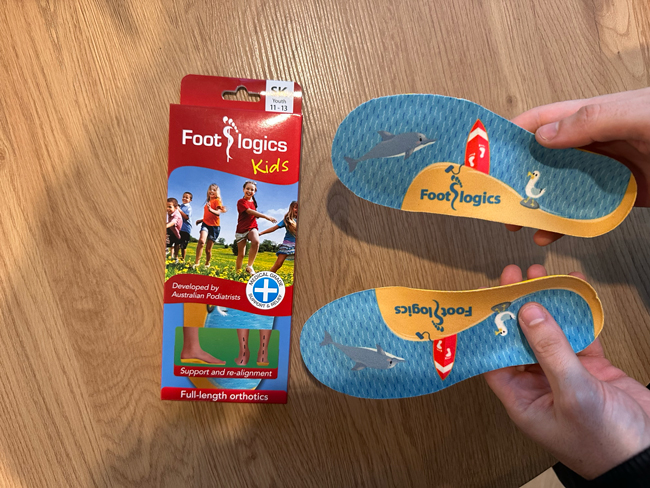
- Order the full-length Footlogics orthotic inserts on Amazon
- Fits toddler shoe size 5 up to big kid shoe size 3. For shoe sizes 3 1/2 or larger, I recommend this Footlogics model, available on Amazon
- Ideal for mild cases of heel pain
- They can be trimmed to the perfect size using scissors if necessary
- You must remove the original insoles from your child’s shoes before placing the orthotic inside
Moderate to Strong Heel Pain: LittleSteps
LittleSteps provides more robust support and correction — a better fit for kids who need more significant intervention to correct foot posture and relieve pain.
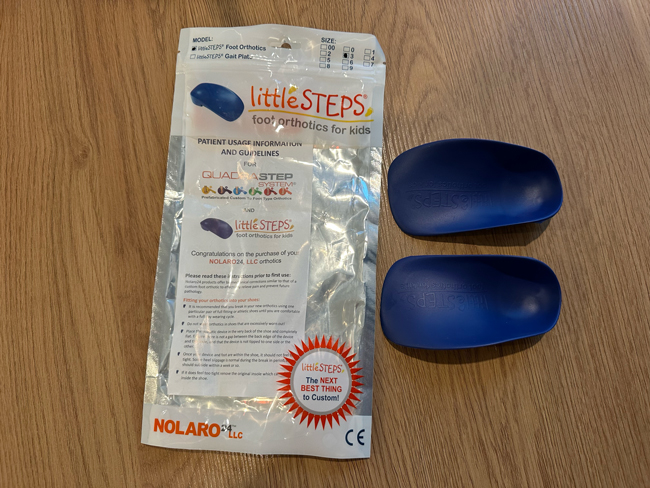
- Order from the official LittleSteps site — referral code JVFCS100121
- Ideal for moderate to strong cases of heel pain
- It’s not necessary to remove the original insoles of the shoes when fitting this orthotic
- The 3/4 length design makes it easier to fit into various shoe styles
- Take a look at this chart to figure out what size to order based on your child’s shoe size
- Disclosure: some links above are affiliate links — we may earn a small commission at no extra cost to you.
Contact Me for a Specific Recommendation
Still not sure which one fits your child? Reach out directly — I’m happy to help you figure out the right option.
Don’t Forget the Shoes
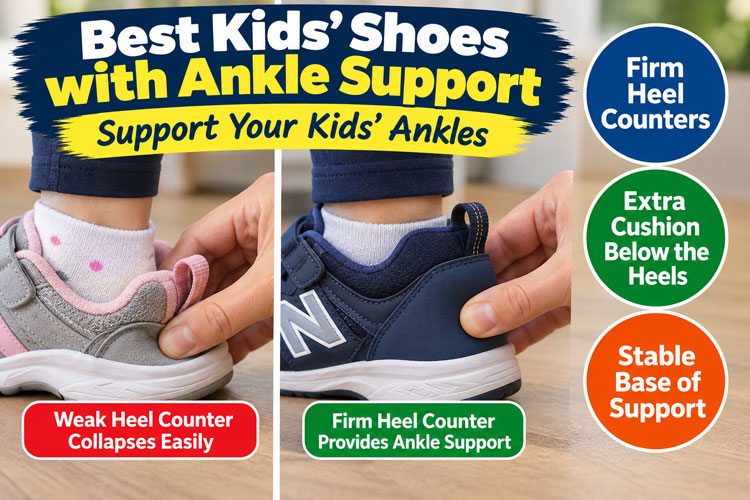
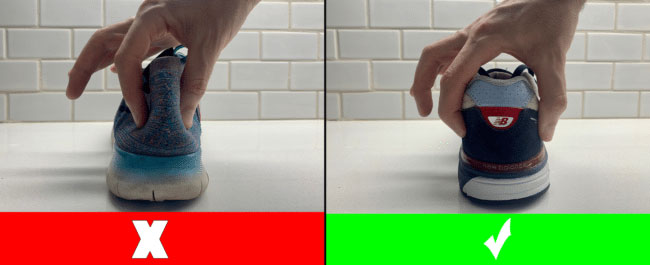
Orthotics work best paired with the right shoe. Look for a firm heel counter and targeted cushioning right below the heel.

I’ve put together a full list of supportive shoes for heel pain if you need shoe recommendations to go with the orthotic, and a broader plantar fasciitis and heel pain shoe guide that covers both conditions in more depth.
Lace Shoes the Right Way
If your child’s shoes have laces, this lacing technique secures the foot against the back of the shoe, which both maximizes the shoe’s own support and helps keep the orthotic correctly positioned inside.
Can My Child Still Play Sports?
It depends on severity, but resting the heel as much as possible is the general recommendation. When that’s not realistic, make sure your child is wearing soccer cleats or basketball shoes built to protect the heel, and wear the orthotic inside the sports shoe too.
Final Thoughts
Heel pain is a signal worth paying attention to, not something to push through. Active kids under heavy stress on the heel’s growth plate are especially prone to developing it, and untreated pain can lead to a more sedentary lifestyle along with compensatory gait issues. Rest, stretching, and the right combination of orthotic and shoe can make a real difference — often faster than parents expect.
Frequently Asked Questions
Mild cases usually involve occasional discomfort that doesn’t significantly limit activity. Moderate to strong cases involve more persistent pain, visible changes in gait, or pain that affects how much your child wants to walk, run, or play. When in doubt, starting with Footlogics and moving up to LittleSteps if it’s not enough is a reasonable approach.
Yes. Kids often unconsciously change how they walk to avoid heel pressure, which over time can strain the knees, hips, and lower back. Heel pain can also make a child more sedentary, which brings its own downstream effects.
It varies, but many parents notice a reduction in pain within a few weeks of consistent use, especially when paired with supportive shoes and some rest.