
Best Shoes for Kids with Pigeon Toe (In-Toeing) – Improve Gait and Foot Posture
By Juan Valenzuela | Certified Children’s Shoe Fitter with 10+ Years of Experience | Last updated: June 2026
If your child walks with their feet turned inward — what most parents call “pigeon toe” and doctors call in-toeing — the right shoes are one of the most effective, non-invasive treatments available. I’ve personally fitted shoes and orthotics for hundreds of children with pigeon toe over the years, and I’ve seen firsthand how dramatically the correct footwear can change a child’s gait and posture — often from the very first wearing.
This guide explains what pigeon toe is, why it happens, what can go wrong if it’s left unaddressed, what shoe features matter most, and which specific styles work best for children at different ages and foot widths.
What Is Pigeon Toe (In-Toeing)?
Pigeon toe — or in-toeing — describes a walking pattern where one or both feet point inward rather than straight ahead. The degree varies: some children’s feet turn in slightly, others quite dramatically. In all cases, the inward rotation disrupts the natural mechanics of walking and places abnormal stress on the feet, ankles, knees, and hips.
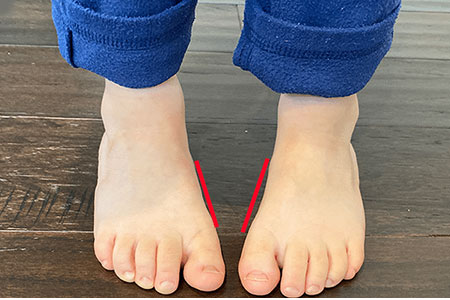
In-toeing can originate from different points in the lower body, and the source matters because it affects the prognosis and how well footwear can help:
Metatarsus adductus. The most foot-based cause — the front half of the foot curves inward. This is the cause most directly addressed by supportive shoes with straight lasts. It’s typically present from birth and responds best to early intervention. For a detailed guide on this specific condition, see Best Shoes for Kids with Metatarsus Adductus.
Internal tibial torsion. An inward twist of the tibia (the lower leg bone) causes the foot to point inward even when the foot itself is structurally normal. This is the most common cause of in-toeing in toddlers and young children. It often improves naturally as the leg straightens with growth, but the rate and degree of improvement vary significantly.
Femoral anteversion. An inward rotation of the femur (thigh bone) at the hip joint causes the entire leg — and the foot with it — to point inward. This is more common in children between four and six years old and often produces a characteristic gait where the knees also point inward. As Lucy noted in the comments, this is the cause where the femur itself is twisting — and it can be the most persistent type.
Flat feet and overpronation. When the arch collapses inward, the foot compensates by rotating inward to maintain balance. This is one of the most common and most directly addressable causes — and it’s where supportive shoes have their greatest corrective impact.
How to Tell If Your Child Is Pigeon-Toed
You don’t need a specialist appointment to spot the early signs. Two simple checks any parent can do:
Watch them walk. Have your child walk away from you on a flat surface. Watch whether the feet point straight ahead or turn inward. Even a mild inward turn that’s consistent on every step is worth noting.
Check the side and shoe soles. Pick up a pair of your child’s everyday shoes and examine the wear patterns. Pigeon-toed children typically show heavier wear on the outer edges of the sole — particularly at the toe area — because the foot is striking the ground at an inward angle.
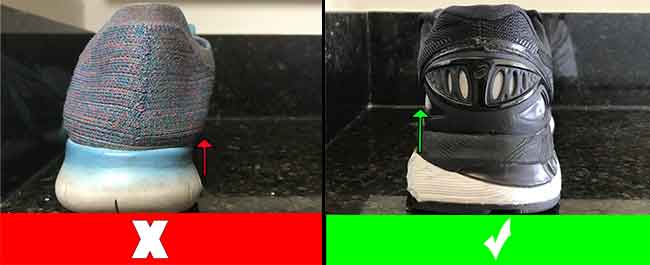
If you notice either of these signs consistently, having your child evaluated by a pediatrician or physical therapist is worthwhile — particularly if they are also frequently tripping, complaining of leg fatigue, or showing any pain during activity.
What Pigeon Toe Can Cause If Left Unaddressed
In-toeing is one of the most common conditions pediatricians advise parents to “wait and see” on. For very young toddlers with internal tibial torsion, that advice can be reasonable — the condition does sometimes improve spontaneously with growth. But for children past age three with persistent in-toeing, and particularly for those whose in-toeing is associated with flat feet or metatarsus adductus, waiting is rarely the optimal approach.
Several parents in our community have shared exactly this experience — being told to wait, continuing to wait, and watching the condition worsen or fail to improve through age nine, ten, eleven, and beyond.
Left unaddressed, persistent in-toeing can lead to:
- Frequent tripping and falling, particularly during running — the inward foot catches on the swing phase
- Chronic leg fatigue and foot pain from the inefficient gait pattern
- Knee pain from the inward torque created at the knee joint as the foot pushes off at an angle
- Hip pain, particularly where femoral anteversion is the cause
- Calluses on the outer edge of the foot from abnormal weight distribution
- Reduced athletic performance and coordination
- In severe cases that go untreated into late childhood: surgical correction may become the only remaining option
The first seven years of a child’s life are the most responsive window for intervention. Acting during this period — with consistent supportive footwear and orthotics where needed — produces better outcomes than waiting.
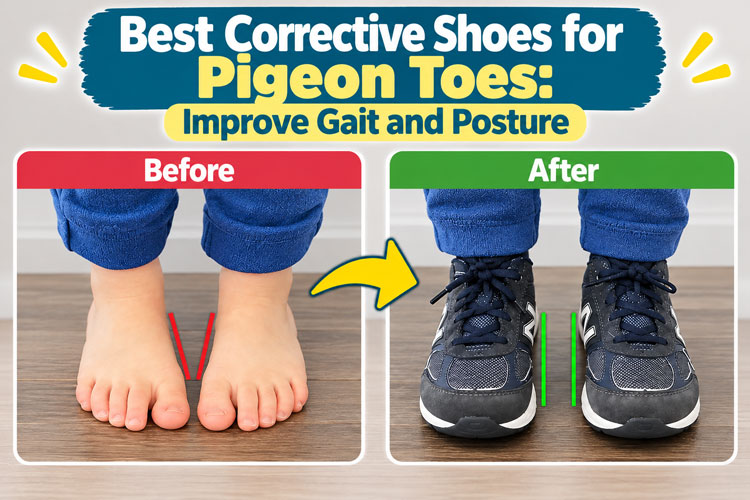
Before and After: What the Right Shoe Does
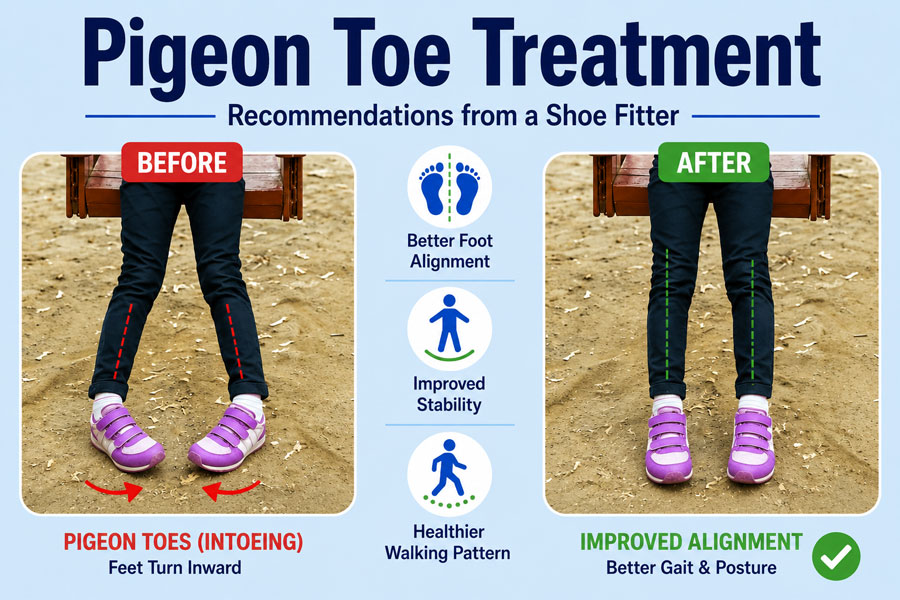
The most convincing evidence I can show parents is the before-and-after difference when a pigeon-toed child is fitted in the right shoes. It’s visible immediately.
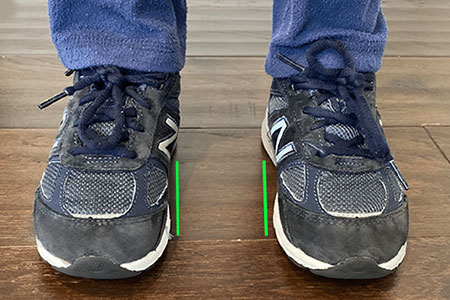
These are not orthopedic shoes. They are everyday supportive sneakers with the right structural features. The right shoe, worn consistently starting early, is often all that’s needed — particularly for children with metatarsus adductus or flat-foot-related in-toeing.
What to Look for in a Shoe for Pigeon Toe
Three structural features are essential:
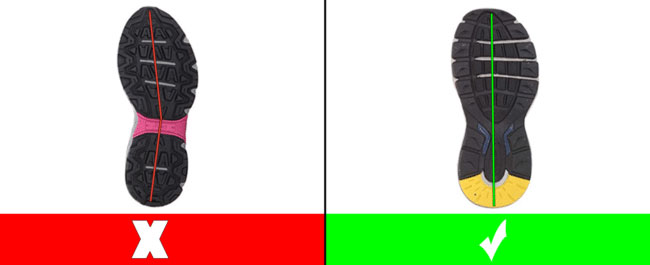
1. Straight Last. The last is the foot-shaped form around which the shoe is built. A straight last runs in a nearly straight line from heel to toe — there’s minimal inward curve. When a child with pigeon toe wears a straight-last shoe, the shape of the shoe gently guides the foot toward a more forward-pointing position with every step.
This is the most important feature specifically for in-toeing. A curved last — common in fashion sneakers and many mainstream athletic shoes — mirrors the inward curve of the foot and provides no corrective guidance whatsoever.
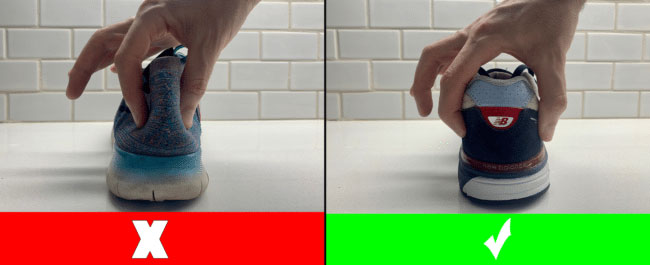
2. Firm Heel Counter. The heel counter is the rigid cup at the back of the shoe that wraps around and holds the heel. For pigeon toe related to flat feet or overpronation, the heel counter is critical — it prevents the inward rolling of the ankle that drives the foot into further inward rotation.
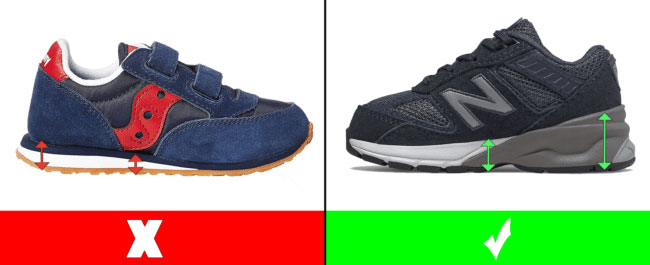
3. Stable Base of Support. A wide, dense outsole and supportive midsole provide the stable platform that distributes weight evenly across the foot and resists the torsional forces associated with in-toeing. Thin, flat outsoles allow the foot to roll freely in any direction and can worsen the inward rotation pattern over time.
The Best Shoes for Pigeon Toe Treatment
Every shoe below has been selected based on hands-on fitting experience with children who in-toe. The criteria for inclusion are a straight last, firm heel counter, and stable base of support — verified through physical testing. Disclosure: Some links in this article are affiliate links. Any commission earned comes at no extra cost to you and helps keep this resource free.
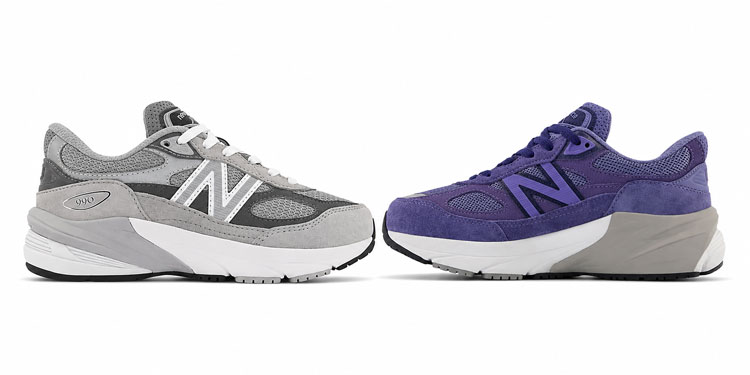
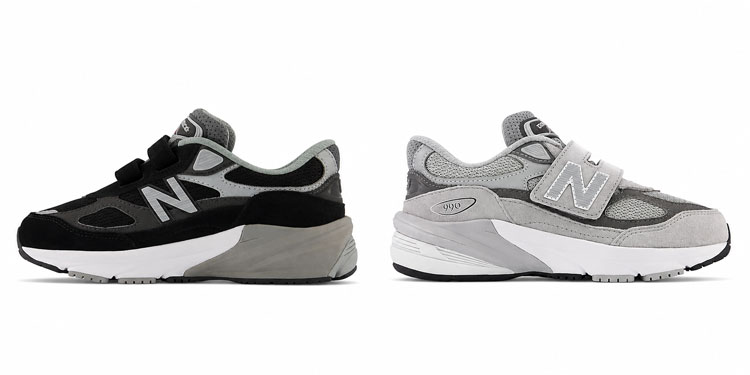
1. Shoe Style 990v6 by New Balance
The 990v6 is my top recommendation for children with pigeon toe. The straight last, dense midsole, and exceptionally firm heel counter combine to provide the most effective corrective environment available in a mainstream children’s athletic shoe. The outsole is wide, resistant to inward compression, and durable enough to handle the demands of active children. It’s the shoe most consistently recommended by the pediatric physical therapists and orthopedists I work with.
The price is the most common objection — and it’s a fair one. But for a child during the critical developmental window, this is the shoe worth investing in.
Key Features
- Available for toddlers, little, and big kids
- Order with laces on the New Balance website or Amazon
- Velcro version also available on the New Balance website or Amazon
- Accommodates medium, wide, or extra wide feet
- Firm heel counters, stable base of support, and semi-straight lasts
- Ideal for moderate to strong cases of pronation
- Removable insoles
- Sizing tip: Order a half size larger than your child’s current foot size
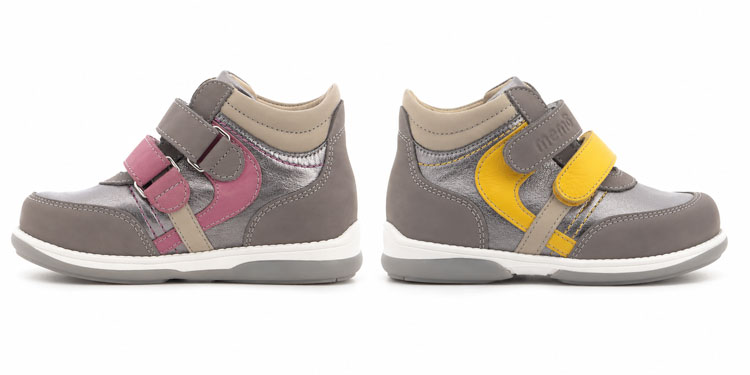
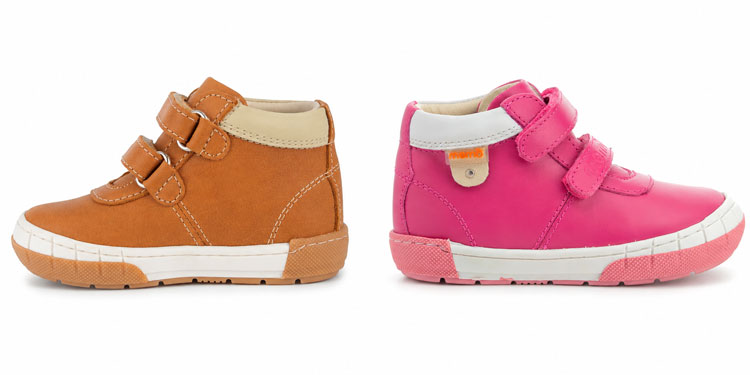
2. Shoe Style Gabi and Alvin by Memo (Orthopedic Shoe)
The Memo Gabi is a purpose-built orthopedic shoe for children whose pigeon toe requires more structural correction than a standard athletic shoe provides. The reinforced heel counter, rigid outsole, and double velcro strap system hold the foot in correct alignment more aggressively than any mainstream sneaker. This is the shoe to consider when supportive athletic footwear hasn’t produced adequate improvement, or when a physical therapist or orthopedist has specifically recommended orthopedic footwear.
Key Features
- Available for toddlers and little kids
- Order the model Gabi or Alvin on Amazon
- Also available in a Mary Jane style and a version for older kids called Memo Polo
- Accommodates medium and wide feet
- Ideal for moderate to strong cases of pronation
- High-top design with stiff heel counters
- Sizing tip: Order a half size larger than your child’s current foot size. Refer to Memo sizing chart
3. Shoe Style Elliott by Stride Rite
For toddlers, the high-top bootie design of the Elliott provides ankle coverage that reinforces the heel counter’s corrective effect. The straight last guides the forefoot toward a more neutral position, and the firm base provides the stability young walkers need. It’s affordable, easy to put on and take off, and significantly more supportive than a typical toddler sneaker.

Key Features
- Available for toddlers
- Order on Amazon
- Accommodates medium, wide, or extra wide feet
- Ideal for mild to moderate cases of pronation
- 100% leather construction
- High-top design provides extra ankle support
- APMA Seal of Acceptance
- Sizing tip: Order a whole size larger than your child’s current foot size
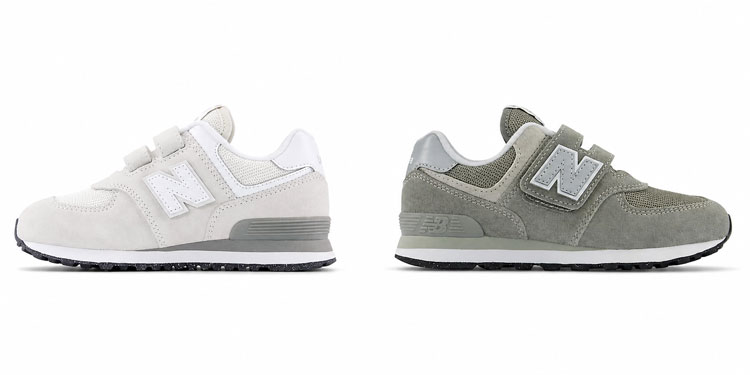
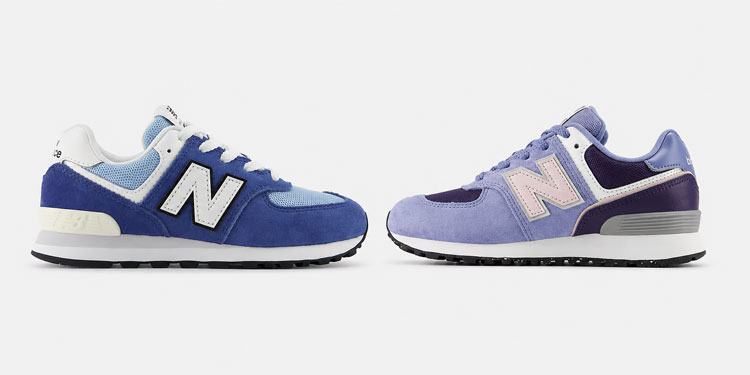
4. Shoe style 574 by New Balance
The 574 delivers reliable straight-last construction, a firm heel counter, and a stable midsole at a significantly lower price than the 990v6. The wide width range makes it practical for children with broader feet. For families who need a capable everyday shoe without the premium investment, this is the first alternative I recommend.
Key Features
- Available for toddlers, little, and big kids
- Order on Amazon or the New Balance website
- Also available with laces on the New Balance website or Amazon
- Accommodates medium, wide, or extra wide feet
- Ideal for mild to moderate cases of pronation
- Firm heel counters
- APMA Seal of Acceptance
- Sizing tip: Order a half size larger than your child’s current foot size
5. Shoe Style Tracks by Timberland
The Tracks is built for rugged outdoor use — water-friendly, high-topped, and structurally robust. The high-top design adds ankle stability that reinforces the corrective effect of the straight last on uneven terrain. A strong choice for active children who spend time outdoors or in wet conditions.
The trade-off is weight — the heaviest shoe on this list, which may be a factor for younger walkers.

Key Features
- Available for toddlers and little kids
- Order on Amazon
- Accommodates medium or wide feet
- Ideal for mild to moderate cases of pronation
- High-top design for extra ankle support
- Water-friendly construction
- Sizing tip: Order a whole size larger than your child’s current foot size
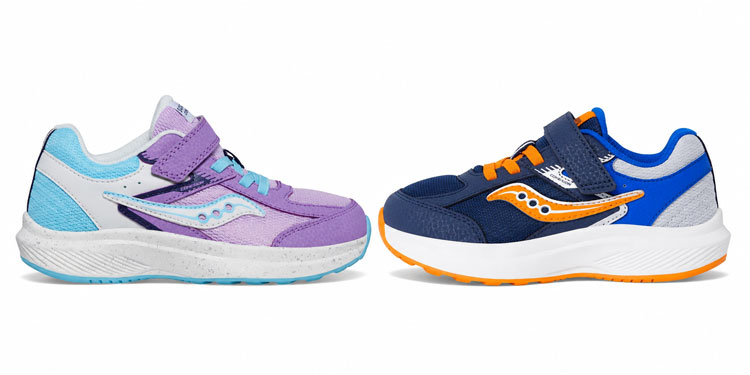
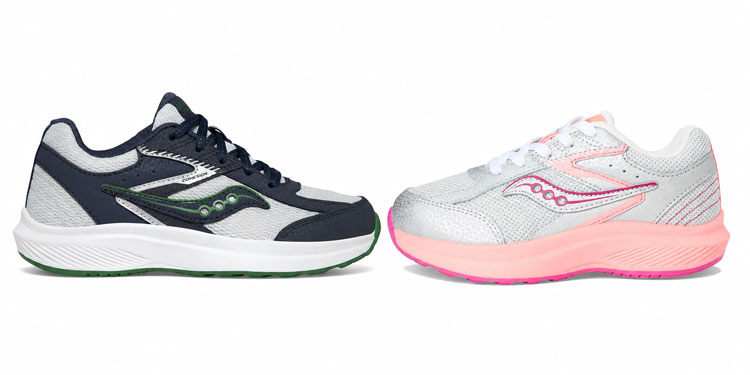
6. Shoe Style Cohesion by Saucony
The Cohesion delivers a firm heel counter, stable outsole, and solid cushioning at the most accessible price on this list. For families managing tighter budgets or looking for a reliable school pair, this is the strongest value option available.
Key Features
- Available for little and big kids
- Order on Amazon
- Also available with laces on Amazon
- Accommodates medium or wide feet
- Ideal for mild to moderate cases of pronation
- Firm heel counters and stable base of support
- Sizing tip: Order a whole size larger than your child’s current foot size
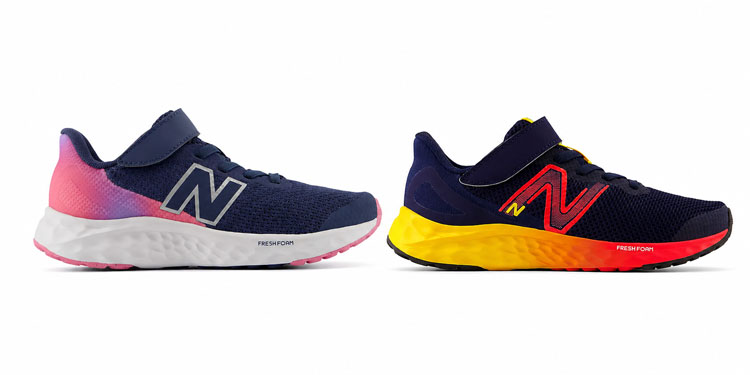
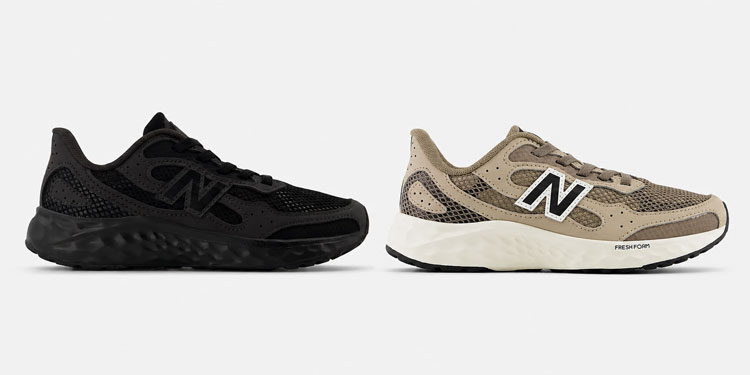
7. Shoe Style Fresh Foam Arishi v4 by New Balance
Children with sensory sensitivities — or simply those who resist firmer shoes — often do better in the Arishi v4. The Fresh Foam platform provides a noticeably softer ride while still maintaining the straight last and heel counter that pigeon toe requires. As I tell every parent: a shoe worn consistently every day outperforms a technically better shoe that the child won’t wear.
Key Features
- Available for toddlers, little, and big kids
- Order on the New Balance website or Amazon
- Also available with laces on Amazon or the New Balance website
- Accommodates medium, wide, or extra wide feet
- Ideal for mild to moderate cases of pronation
- Semi-firm heel counters
- Sizing tip: Order a whole size larger than your child’s current foot size
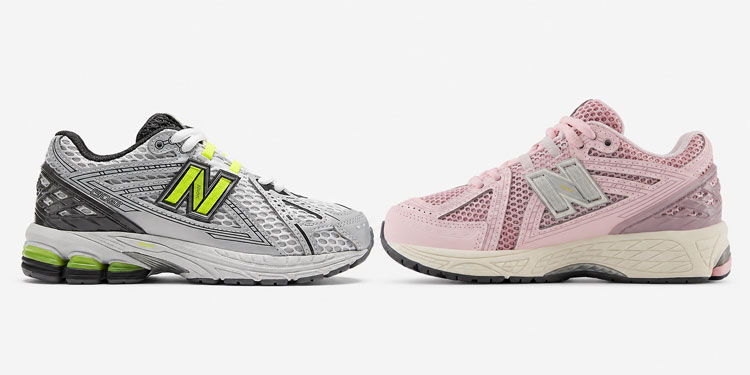
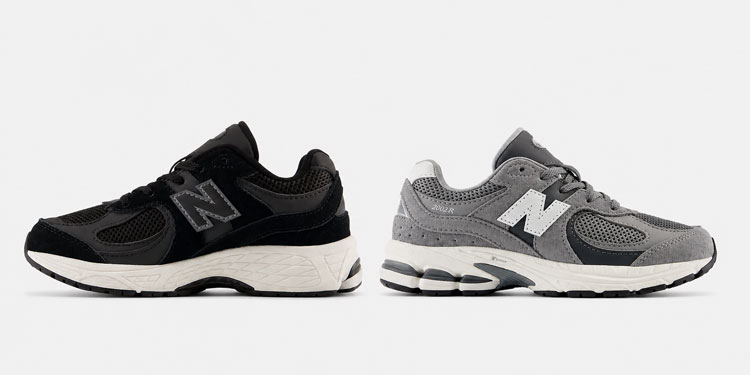
8. Shoe Style 2002/1906 by New Balance
The 2002 sits between the Arishi and the 990v6 in both price and structural support. A dependable all-round pick for families who want New Balance quality without the 990v6 price tag.
Key Features
- Available for toddlers, little, and big kids
- Order the 2002 or 1906 on the New Balance website
- Accommodates medium or wide feet
- Ideal for moderate to strong cases of pronation
- Firm heel counters, stable base of support, and semi-straight lasts
- Sizing tip: Order a whole size larger than your child’s current foot size
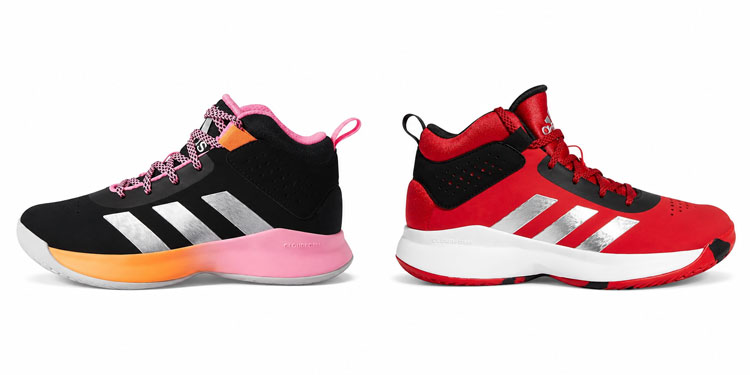
9. Shoe Style Cross Em Up by Adidas
The basketball-inspired high-top delivers excellent ankle support and lateral stability — both relevant for active children with in-toeing who participate in sports. The high-top height reinforces the ankle against inward rotation during dynamic movement, and the midsole handles court sports and active play well.
Key Features
- Available for little and big kids
- Order on Amazon
- Accommodates medium or wide feet
- Ideal for mild to moderate cases of pronation
- High-top design for additional ankle support
- Versatile — suitable for sports and everyday wear
- Sizing tip: Order a whole size larger than your child’s current foot size
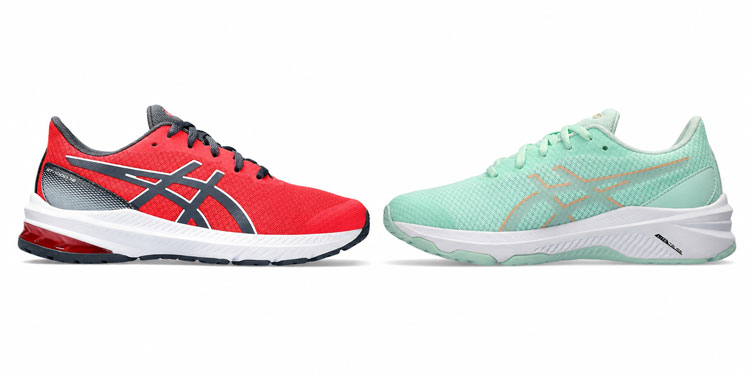
10. Shoe Style GT-1000 by Asics
Most supportive children’s shoes run wide — a significant problem for narrow-footed children. The GT-1000 fits a narrower profile naturally while still delivering straight-last construction, a firm heel counter, and a stable outsole. If your child has slim feet and pigeon toe, start here.
Key Features
- Available for little and big kids
- Order on Amazon
- Accommodates narrow or medium feet
- Ideal for mild to moderate cases of pronation
- Firm heel counters, stable base of support, and semi-straight lasts
- Sizing tip: Order a whole size larger than your child’s current foot size
A Note on Laces vs. Velcro
Laced shoes are meaningfully more effective than Velcro for children with pigeon toe. The ability to tighten the lacing precisely across the midfoot and ankle holds the foot more securely against the straight last — maximizing the corrective contact between the shoe and the foot with every step.
Velcro shoes are a practical necessity for young children who can’t yet manage laces. But as soon as your child is able to use laces, making the switch is worth doing. When your child does wear Velcro shoes, ensure both straps are fastened snugly — loose Velcro allows the foot to shift inside the shoe and reduces the corrective effect significantly.
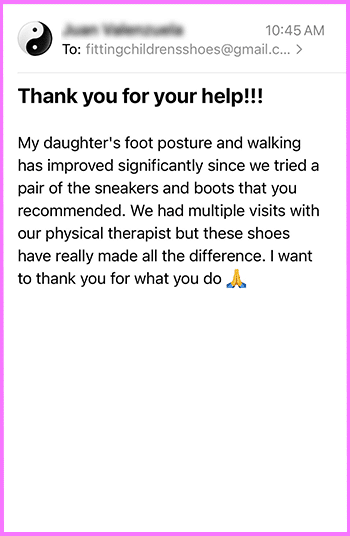
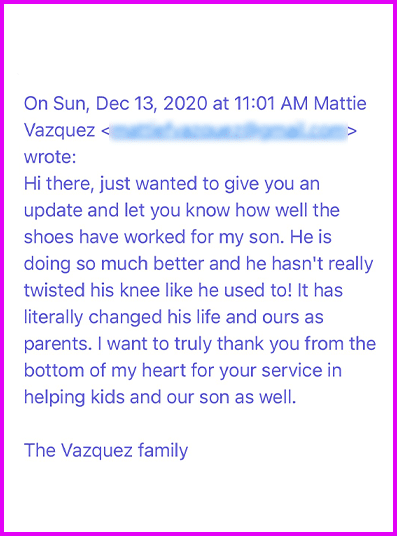
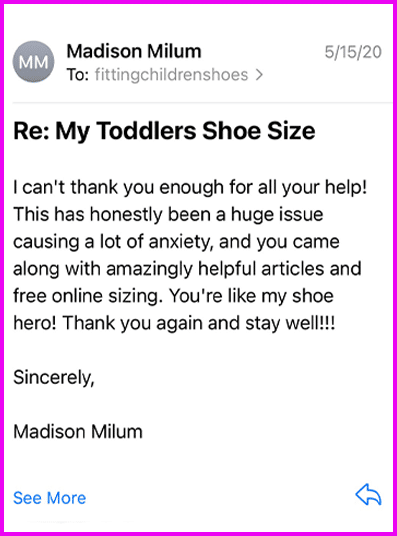
What Parents Are Saying
Does Pigeon Toe Go Away on Its Own?
It depends on the cause and the child’s age.
Internal tibial torsion — the most common cause in toddlers — does often improve spontaneously as the leg bones straighten with normal growth, typically between ages two and four. If your toddler’s in-toeing is mild and their doctor is confident the cause is tibial torsion, careful monitoring is reasonable.
But for in-toeing caused by metatarsus adductus, femoral anteversion, or flat feet, spontaneous full correction is much less common. These conditions respond to early treatment but tend not to self-correct reliably. The pattern I see most frequently — and the pattern reflected clearly in the comments from parents like Katie, Oscar, and Lucy — is a child who was told to wait at age two, and who is still waiting at age nine, ten, or eleven with a condition that has worsened rather than improved.
In-toeing that persists past age eight or nine becomes progressively harder to address conservatively. For severe cases that go untreated into adolescence, surgical correction can become the only remaining option. That is an outcome that early footwear intervention frequently prevents.
Should My Child Also Wear Orthotics?
Start with supportive shoes and give them two to three months. Many children with pigeon toe — particularly those whose in-toeing is driven by flat feet or mild metatarsus adductus — see significant improvement with footwear alone.
If your child is still showing significant in-toeing or experiencing pain after consistent wear of a supportive shoe, orthotics are the logical next step. They provide targeted arch support and biomechanical correction that works in combination with the shoe’s structural features. For a dedicated guide, see Best Orthotics for Kids with In-Toeing.
Getting the Right Fit
Even the best shoe provides no corrective benefit if it doesn’t fit correctly. A shoe that’s too short compresses the toes and causes blisters; too long and the foot slides forward — pulling the heel away from the heel counter and reducing the contact with the straight last that drives the corrective effect.
Measure both feet and size for the larger one. Learn how to measure your child’s foot accurately at home here.
Frequently Asked Questions
Yes — “pigeon toe” is the everyday term for in-toeing. Both describe the same condition: one or both feet pointing inward rather than straight ahead during walking and standing. The clinical term used by doctors is in-toeing or internal foot progression angle.
For toddlers under two with mild internal tibial torsion, monitoring is often reasonable. For children past age three with persistent moderate to significant in-toeing — especially if associated with flat feet, metatarsus adductus, or femoral anteversion — the “wait and see” approach carries real risk. The developmental window is finite. Starting with supportive footwear is low-cost, non-invasive, and has no downside if the condition does self-correct anyway.
As consistently as possible throughout the day — every hour in a supportive shoe is an hour of positive corrective guidance. A short period of barefoot time at home is fine. School hours, outdoor play, and sports should always be in a supportive shoe. The more consistently they’re worn, the better the outcomes.
For personalized guidance based on your child’s specific foot shape and degree of in-toeing, reach out at customerservice@fittingchildrenshoes.com.

Hello
My daughter is nearly 11 and pigeon toed. Seems to be her femur that twists in as she walks. Hope it would correct itself but it hasn’t.
She is approx size UK3 and has a narrow foot. She complains sometimes of pain at the back of her heel (achilles area) and occasionally she says her hip/thigh area but nothing severe.
I am going to take her to the gp to see if we can get any advice/help.
Do you have any advice on what school shoes to buy for her please? Do I need to buy an insole too? Also what trainers or other shoes should I get her and what to avoid?
Thank you so much in advance.
Hello Lucy,
I suggest fitting your daughter in shoes that provide a stable base of support, firm heel counters, and straight lasts. The shoes should also provide narrow heel counters and narrow platforms to accommodate the shape of her narrow feet.
I am happy to help, but I need further information. Does the school require the shoes to be made of a specific color? I suggest that you email me as your daughter’s situation requires a more complex evaluation: fittingchildrensshoes@gmail.com
Hi , my son is 12 and is still pigeon toed . His doctors always said he should grow out of it but he has not. He has no trouble walking, running, or playing sports. Should I be doing something? I don’t know if it is too late.
Hello Katie,
There are certain shoes that can help improve your son’s foot posture and walking gait. If your son doesn’t have stability issues and is not complaining of any foot or leg pain, then just make sure he wears supportive shoes that are the correct size.
Hi Juan,
Should pigeon toe kids wear shoes at home too? wondering if this helps them more than no shoes at home?
Hello Stephanie,
Yes, the more the child wears the shoes, the better. With that said, this doesn’t mean that your child can’t go barefoot at home for a couple of hours.
My daughter is 11 and wears size six I’m big girls with medium width and it’s pretty severe that the side of her foot bone is protruding out under her skin. She says it doesn’t hurt and there’s no way she will agree to surgery. She is autistic so she hates anyone touching her, let alone a doctor. Are there braces or specific shoes exactly pidgeon toes kids. She says it doesn’t hurt but she runs sideways I need specific shoes for pidgeon toe
Hello Stephanie,
I am happy to help. There are orthopedic shoes that you can try, but I always suggest to start by trying a pair of supportive sneakers first. What are your daughter’s current shoes? Is your daughter already wearing an orthotic? Please email me your daughter’s information: fittingchildrensshoes@gmail.com
Hi Juan Pablo:
Great article. My son is now 9 and we have taken him to several Specialists for his intoeing since he was 2 but all of them said he will outgrow it and have done nothing about it. He is now 9 and it is actually getting worst to the point that he is now falling more often when playing soccer and running. He has been playing soccer since 4. He does not complain of any type of pain though. We have made sure his shoes are the right size for him and he wears Sauconys. His foot is wide. Any advise?
Thanks
Hi Oscar,
Thank you for your positive feedback.
Having flat feet can create a foot imbalance and compromise the chid’s stability. Your child might also be falling from wearing shoes that are too big or too small. In order for me to provide you with better advice I need you to follow the instructions in the article below:
How to Measure Your Kids Foot – 2 Simple Steps to Determine Foot Length and Foot Width
I know you mentioned that you are positive your son is wearing the correct size but the images requested in that article will also help me determine the degree of your son’s flat feet. In addition, we will know for sure whether your son’s feet are wide or extra wide, and whether your son has a high instep or not.
Hiya
I am struggling to find new balance infant size 3.5 with laces they seem to all be Velcro due to the size. Would they still be ok? Thank you
Hi Keisha,
It depends. Shoelaces make a big difference when it comes to providing better stability and support. I suggest that you try this shoe style which is available in wide widths and provides good support and stability: Stride Rite Bootie
If you have any other questions or concerns you can email me: fittingchildrensshoes@gmail.com
My daughter 13months has feet that turn in I pushed for the referral as I noticed she was tripping a lot over her own feet. She’s a 3.5 wide fitting. I am going to order the new balance. This post has been the most helpful and informative thing I have been able to find. Much more help than the podiatrist. I have been to every shoe shop, looked at every shoe and after reading this I really had no idea what type of shoe I should have been getting. This has been so helpful I can’t thank you enough.
Hi Keisha,
I am glad that you found the article informative. If your daughter has been tripping a lot over her feet I suggest that you also make sure that you are providing her with the correct shoe size. Shoes that are too short or too long can be a contributing cause of why she is falling so much. If you are unsure of your daughter’s exact foot size and shape I suggest that you take a look at the article below:
How to Measure Your Kids Foot – 2 Simple Steps to Determine Foot Length and Foot Width
Thank you 🙂 I had her measured at a shoe store she was tripping over bare foot because of how much her foot was turning in
I hope the shoes allow your daughter to walk and run straighter. Keep me posted!
Hello! my girl is 2 years old and has a pigeon toes which kind of shoes should I get for correction?
Hi Yande,
Before I can recommend specific shoes for your daughter I need to know whether your daughter has narrow, medium, wide, or extra wide feet. I also will need to know if your daughter has a high instep or not. If you don’t know your daughter’s exact foot shape start by taking a look at this article:
How to Measure Your Kids Foot – 2 Simple Steps to Determine Foot Length and Foot Width
Hello,
I am looking for soccer cleats for my pigeon toed child . She is a 7Wide. Any recommendations?
H Sally,
Is your daughter experiencing foot or leg pain during soccer practice or soccer games? Reason I ask is that if she is experiencing pain then we might have to consider fitting an extra insole inside the cleats for extra support.
I also would like to know if your daughter is a big kid shoe size 7 or if she is a shoe size 7 in women’s sizes. If you are unsure about this please refer to this article:
How to Measure Your Kids Foot – 2 Simple Steps to Determine Foot Length and Foot Width
Hi! do you have a store in Canada?
Hi Abdul,
No, I am located in the United States. Are you looking for a specific pair of shoes for your child?
My son started showing pigeon toes with tibia torsion only after he turned 8. Now he’s 11 and it’s only gotten worse. My 3.5 year old is also showing signs lately. Could you please provide links for appropriate shoes for both their ages. Thank you!
Hi Subha,
I hope you are well.
Are your children experiencing foot or leg pain? Do you know if your children have narrow, medium, wide, or extra wide feet? This will help me determine what type of shoes to recommend.
Hi Juan Pablo,
Your article has been most informative. My two and a half year old son has had in toeing (his right foot more severe than his left) since birth. The pediatrician has been saying all along not to worry about it – eventually he would outgrow it. When I bought his first pair of shoes I was told that the best shoes for babies are soft shoes. He was wearing them until very recently and his feet have not improved.
I took him to the pediatric orthopedist who said that I should just get him rigid shoes. He was not very specific. He gave me the name of a place that fits orthopedic shoes, but told me that it was really not necessary. It was sufficient to just get him regular rigid shoes. My son wears a size
7 – 7 1/2 depending on the company. Shopping online doesn’t give me the option to see how rigid the shoes are.
I see that you have recommended the New Balance shoe as well as the Stride Rite (it does not come larger than a 7). Is there a good supportive shoe that has a dressier look?
Hi Jeannine,
I am sorry for my late reply but for some reason your message was in the spam folder.
Were you able to find a pair of sneakers for your son? As far as dress shoes concerns, we are looking for the same features than in a sneaker, a toe-box that doesn’t bend easily.
Do you know if your son has narrow, medium, wide, or extra wide feet?
Hi, my daughter is 6. We went to a Podiatrist last year and turned out she has pigeon toes & flat foot. She can literally have her foot turned around the opposite way & not know that she’s doing that. I always try to remind her to put her foot straight, in a nice way though. She was given a pair of orthotics – I’m not sure what brand but it’s a thin, blue, plastic kind.
She has never complained about foot & leg pain til recently. I plan on getting her a new pair of more supportive shoes like the New Balances you recommended in your article, hoping that will help. She would be wearing the sneakers daily, all day at school & playing. Is there anything else I should be doing? I feel like I’m wasting time cus she’s already 6 years old – Wish I caught it sooner. Hope to hear from you; great article!
Hi Lekkna,
You are doing the right thing and you already got her orthotics. I am curious to know which kind they are, since I have tested several different ones and some of them are more supportive than others. Feel free to email me a picture of the orthotics to: fittingchildrensshoes@gmail.com Also keep in mind that the orthotics will be effective as long as you fit them in the correct pair of shoes.
Now your daughter needs to wear her sneakers with the orthotics as often as possible, and please make sure that the shoes are always tied properly. If the shoes are not tied properly, your daughter won’t get the full benefits from the shoes or the orthotics.
The next step is to take a look at your daughter’s feet from behind while wearing her shoes and orthotics, and check if her feet are straighter or not.
My 6 year old daughter has the same issue as yours. Do you mind sharing what kind of orthodontics you are using? Also i noticed this is an old post I am curious did the new balance and ortho shoes work out for her??
Hi Paloma,
The shoe recommendations are up-to-date as I constantly update them to make sure sizes are available. Hopefully Lekkna can respond to your comment soon.
My son is 2 years old and his toeing-in has developed rather rapidly. What is the best shoe for him? I would prefer velcro closure if possible. Are there any Nike shoes that fit the bill (I work there and he goes to daycare there, so would prefer to stay brand loyal if possible. I KNOW some of their shoes are not supportive for toddlers though, so his health and function is most important.)
Hello Sara,
Shoelaces actually are far way more effective than Velcro closure when it comes to trying to “ground” children and prevent them from toe walking. Unfortunately, I am not aware of any Nike shoe style that provides good support, specially for a child who is toe walking.
Here are my recommendations:
Shoe for Toddler Who Toe Walks: Option 1
Shoe for Toddler Who Toe Walks: Option 2
I hope this helps!
My son has intoeing and will be starting school in the Fall. The school’s shoe requirement is the Hush puppies Gavin model. Are you familiar with it and is it one that would be recommended for intoeing?
Hello Jessica,
Yes, I have fitted that shoe style before. The issue with most school shoes is that they don’t provide nearly the same amount of support that sneakers do. Depending on the degree of your child’s in-toeing, you might have to fit an insert/orthotic inside the shoes for extra support.
Please answer the following questions in order for me to be able to assess if your child needs an insert/orthotic inside the shoes:
Is your child complaining about foot or leg pain?
Does your child has rolled ankles?
Is your child flat footed?
How many hours will your child wear this shoes?
He has never complained of pain. He does not have rolled ankles. I have never been told he’s flat footed but I would be inclinded to say possibly. He’ll be wearing it close to 8 hours a day.
Hello Jessica,
I recommend that he wears the shoes without an additional insole/orthotic but keep a close eye. If he starts complaining about pain please let me know and we will fit him for a pair of orthotics.
Hi I read your article very helpful. My grandson is starting to take steps, he’s 13months and has one foot turned in. His Pedo doesn’t seem concerned or offered any advise. His mom had turned in foot and she wore “straight laced shoes” which helped. Where can I find these. Do not like him wearing sneakers all the time.
Hi Lydia,
I am not sure if there is a children’s shoe company that still manufactures straight laced shoe. There is a particular shoe style I recommend for toddlers with foot conditions, and you can find it here:
Supportive Shoe Style for Toddler
I hope this helps.
Hi!
I found this article to be super informative and so helpful. Thank you very much. I just took my 2.5 year old son to the pediatric orthopedic because he is pigeon toed and bow legged. The doctor said that this should self correct but I’d like to be a bit more proactive.
His feet are 16 cm long and 7 cm wide. I would really appreciate any recommendations you can make. Thank you!
Hello Hajer,
How long did your doctor say you should wait?
I would recommend starting with a substantial supportive pair of shoes that come with a firm heel counter and a substantial sole. I am not talking about orthopedic shoes or orthotics, just a good supportive pair of sneakers to see if it helps your son walk straighter.
I recommend trying this shoe style for a period of 3 to 4 months and if his walking pattern doesn’t improve, then I can recommend an orthotic to be fitted inside the shoes.
This particular shoe style has proven to be very effective with helping children walk straighter. Here is my recommendation:
Stride Rite Elliott Shoe for Pigeon Toed
Some parents are hesitant to provide children with shoes that come with shoelaces, but your son can benefit from them since shoelaces provide more support and more stability.
Please follow up with me on how your son is doing.
Thank you very much!
You are welcome. Please let me know if you have any other questions.
Hi,
My son is 2 and has in-toeing and his knees are lightly bent outwards. Sometimes he stands and his feet are straight, and then sometimes it is bent again. When he walks his hips looks slightly turned as well. I took him to a specialist who recommended orthotic shoes which are very expensive. However I have been doing research online and most people are saying that it corrects itself over time. I don’t want to leave it to chance. Can you say what you think and possibly recommend a site to get a good supportive shoe for him. I would like to try this first.
Hello Stephanie,
I don’t believe that these type of issues correct themselves. I believe that if the issue is treated at an early age, you will have more chances of avoiding bigger issues in the future such as foot, leg, and back pain. I recommend that you start by trying a pair go goof supportive shoes and see if your child’s posture improves. If it doesn’t, then I can recommend a pair of orthotics. There are definitely certain shoe styles that I can recommend for your child, but I need his exact shoe length and shoe width.
Hi, this is a great article! can you please provide me more shoe choices/samples that are best for pigeon-toed toddlers please? And do you have a children’s shoe store here in Australia? Please let me know. Thanks!
Hello Zed,
I can definitely provide you with more choices but I need your child’s gender, his/her shoe size (length and width), and wether you want a pair of velcro closure or shoelaces for your child.
Unfortunately I am located in the United States.
Once you get back at me with that information, I will provide you with more choices.
Thank you Juan. I have ordered a pair of the ASICS – the only one on your list with availability in his size!
I appreciate the orthotics recommendation and will look into suppliers here in Singapore.
You’ve been a wonderful help. Many thanks!
Hello Nikki,
I hope they work! Do not hesitate to tell me when you can’t find a shoe in a particular size since I will help you find it. Please get back at me telling me if they work for your son or not.
Thanks for your informative reply Juan.
Sadly the very expensive custom made orthotics were lost when the shoes were left behind somewhere. So no, he’s not still using them because I chose not to reinvest given the lack of improvement.
My son has a “narrow” foot fitting. His last pair were ASICS but he’s grown out of them and I’m struggling to find his large shoe size in Singapore. The ASICS seemed to give him good support, but I noticed the sole was not as wide as some sports shoes. The pediatrist indicated shoes with soles that were wider at the heal would give greater stability.
Grateful for your advice.
Nikki,
I am going to provide you with some of the most supportive Asics shoes but if his walking doesn’t improve you should look into over the counter orthotics (they are cheaper than custom and sometimes even work better) such as Casacade Dafo orthotics. I have use those before and they make a huge difference in terms of the way they walk.
First Choice: Supportive Asics Shoes for Boys
Second Choice: Supportive Asics Shoes for Boys
Third Choice: Supportive Asics Shoes for Boys
I hope this helps! Please follow up with me and let me know if they work out or not.
Great article, thank you. My son is 12 and takes size 46 mens shoes (yes, he’s a very large 12yo). He has struggled with pigeon toes all his life and as a toddler had permanent bruises on his forehead from frequent face plants. He’s had orthotics for some time and they didn’t make much difference. We’ve also tried physio since he has extreme flexibility and very little core strength – quite wobbly and floppy. It would appear that his pronating is caused not by twisting in thighs, bones or feet, but the mechanics of his stride. He swings his legs around instead of raising his knees and stepping forward because of his poor muscle and ligament structure. This is causing problems for his hips, knees and feet. I’m struggling to find mens sports shoes for him, with the right structure and support. Can you please recommend?
Hello Nikki,
I have found Asics shoes to be the most supportive when it comes to arch and ankle support. I have fitted several children who were in men sizes so I have a pretty good idea which shoe styles will work better. In your message you don’t tell me your child’s shoe width, which has the same importance as getting the correct shoe length.
First of all, what type of orthotics have you tried? The ones I fitted at the store where from a manufacturer called Cascade and they made a huge difference. Is he still wearing his orthotics?
I need to know his shoe width and whether you will be fitting an orthotic inside the shoes in order to provide you with the best shoe options.
Hi! Are the best shoe examples current? You mention New Balance and Asics in your blog post but I only see links for Sauconys.
Hello Paola,
The shoes in the first row are made by Saucony and the shoes displayed in the second row are made by New Balance. Are you able to see them? Let me know otherwise I can send them to you.
I was in desperate need in finding good shoes for my child that is pigeon toe. Before taking him to the pediatrcian I read your post, and she agreed with everything you had to say! She recommended good supportive sneakers and keeping an eye on how the child reacts to them. We don’t have a local kids’ shoe shop so your website came very handy. We ordered a pair from your recommendations! Thank you!
Sherri Hatton
I hope that a pair of good supportive shoes is all your child needs! The shoes I describe in the post are the most supportive ones for children with flat feet or rolled ankles. If they don’t work, your child will definitely need an orthotic.I will leave this post for you that might come in handy if your child needs extra support in his shoes: The Best Kids’ Shoes for Orthotics – Supportive and Comfortable Shoes
Your article about pigeon toe is very interesting to read. My son has been walking funny lately and I have no idea what might be causing it. I love that you provide a selection of good supportive shoes for children. How can I make sure my child is wearing the correct shoe size? Can shoes that are too tight cause this issue as well? Please clarify.
Nicole,
You need to take your child to your children’s local shoe store to have his feet properly measured. If you don’t have a local children’s shoe store in your area, read this post that explains how to make sure your child is wearing the correct shoe size. The post is called: How Can I Make Sure My Kids’ Shoes Fit? – Learn The Secret Here!
Shoes that are too tight will not cause your child to pigeon toe, but they will cause several other foot issues such as blisters, corns, and calluses.
I was looking for some good articles online on how to prevent pigeon toes for kids and I found your website. I love how you have described the solution to this problem.I bought one of the shoes you recommend for my child, since we don’t have a kids’ shoe store in my area where we can take him. I will let you know how they work out for him!
Thevin,
Keep a close eye on his feet. Hopefully all your child needs is a good pair of supportive shoes. Most children that are pigeon toe are wearing the wrong type of shoes. Un-supportive and not the correct size. Make sure you get your child the correct shoe size by reading this post: How Can I Make Sure My Kids’ Shoes Fit? – Learn The Secret Here!
I was pigeon-toed as a child – many years ago. The treatment was similar then…I had to wear special shoes for many years. However, back then there was really only one style of shoe available and they were very expensive and very ugly! My child is algo pigeon toe, I also believe this is genetics.
I love that there are many more choices now that don’t draw attention to the special shoes. I ordered a pair from you recommendations since we have been looking for good supportive shoes for a long time now!
Trina,The shoes I describe provide the best ankle and arch support. If fitted properly, they will provide relief to your child’s foot pain and help him walk straighter. If the pain persists, consider getting him an orthotic to provide more support for him. I wrote a post where I describe the best orthotics for children. You can find the post here: The Best Kids’ Shoes for Orthotics – Supportive and Comfortable Shoes
Juan Pablo:
I can’t thank you enough for this article.
My daughter is turning three in two months and I have “ignoring” how she walks thinking it’s just a phase. The inner parts of her knees are always touching each other. She doesn’t trip when she walks or runs but indeed, it looks different than normal.
She started walking at 10 months old barefoot. And we are always most of the time barefoot at home. Does it have a direct relation?
I don’t believe it’s genetics since neither I or my husband have pigeon toes. I know now that her velcroed shoes are the main culprit as you pointed out so I will have to get rid all of them and start to let her using shoe-laced shoes. I ordered a pair of your shoe lace up recommendations and she is walking much straighter now! Thank you so much!
Pitin,
It seems that all your daughter needed was a pair of good, supportive shoes. The shoes I recommend have arch support so I think the arch in the shoes are helping her feet not to collapse. Keep an eye on her and make sure she is not having any foot or leg pain.
Hi Juan pablo my son is 5 years old while running he runs straight but while walking he walks like pigeon toe while we correct him he walks straight I am afraid while he walks like that,can u recommend shoes in india for me to get them easily.It’ll be a great help for me I’d u recommend shoes for my son.Thankyou for writing this article as it gives me hope.
Hello Ammu,
I am not really sure what shoes are offered in India but check if you can order the following styles:
Look for the New Balance styles 990v5, 888V2, or 680V6 if your son has medium, wide or extra wide feet.
If your son has narrow or medium feet look for Asics running shoes or Saucony cohesion.