How to Tell If Your Child’s Shoes Are Supportive: 4 Key Checks
Last updated: September 28, 2026 · By Juan Valenzuela, Certified Children’s Shoe Fitter
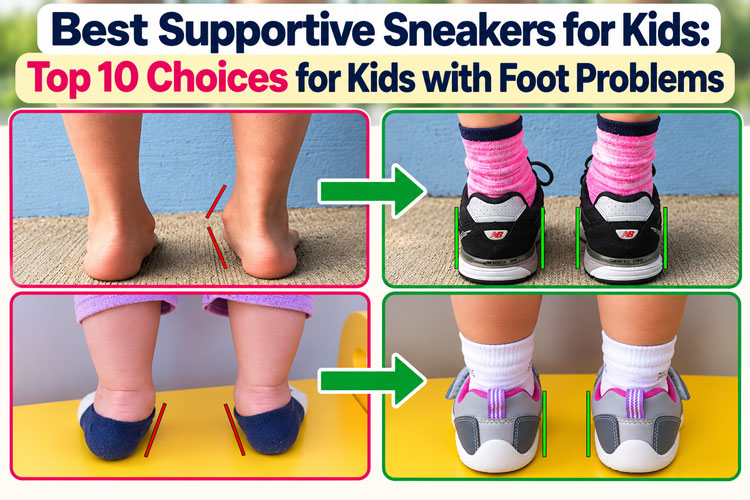
If your child has flat feet, weak ankles, low muscle tone, or overpronation, supportive shoes make a real difference. But the difference between a supportive and an unsupportive shoe isn’t always obvious, and the wrong pair can affect comfort, balance, and foot development.
As a certified children’s shoe fitter, I’ll show you four quick checks you can do in the store or at home when the shoes arrive. It’s not about the brand name: some models are much more supportive than others, even within the same brand. For a shoe to be truly supportive, it needs to pass all four checks.
Check 1: The Heel Counter (the Back of the Shoe)
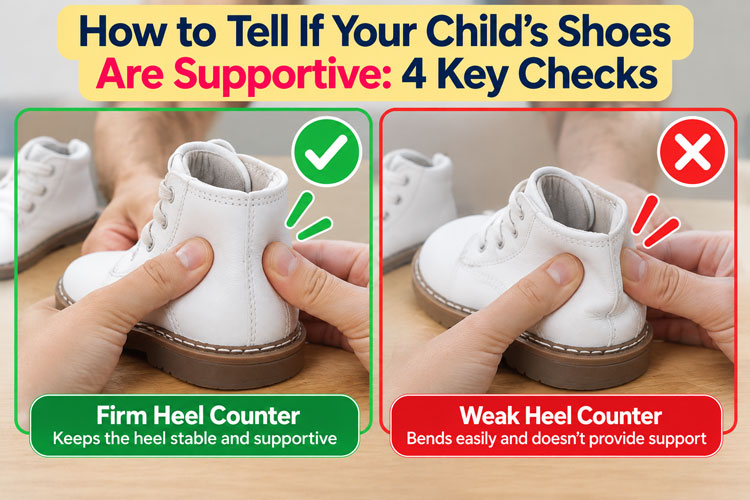
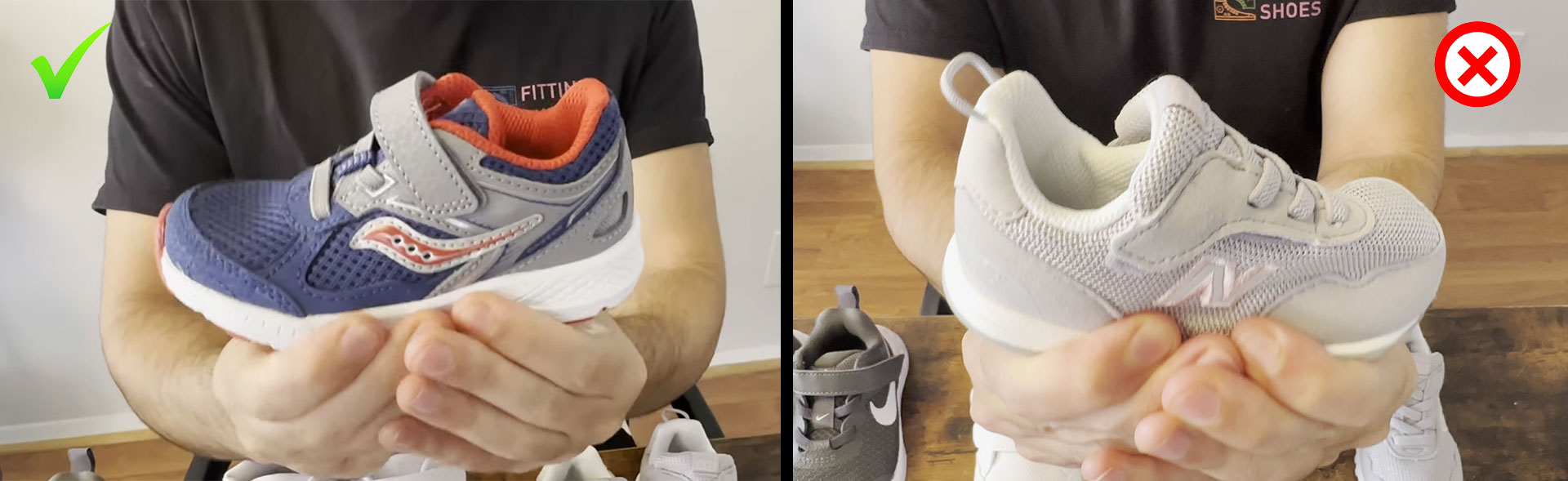
The heel counter is the back of the shoe that wraps around your child’s heel. It keeps the heel and ankle stable, and the firmer it is, the more support it gives.
How to check it: Squeeze the back of the shoe between your thumb and fingers. It should feel firm and hold its shape, not fold or collapse.
Watch my YouTube video on checking the heel counter to see the test in action.
Check 2: The Base (the Middle of the Shoe)
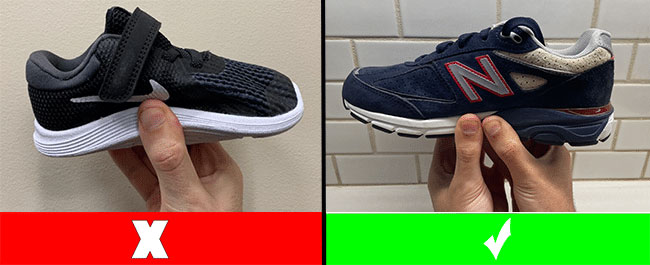
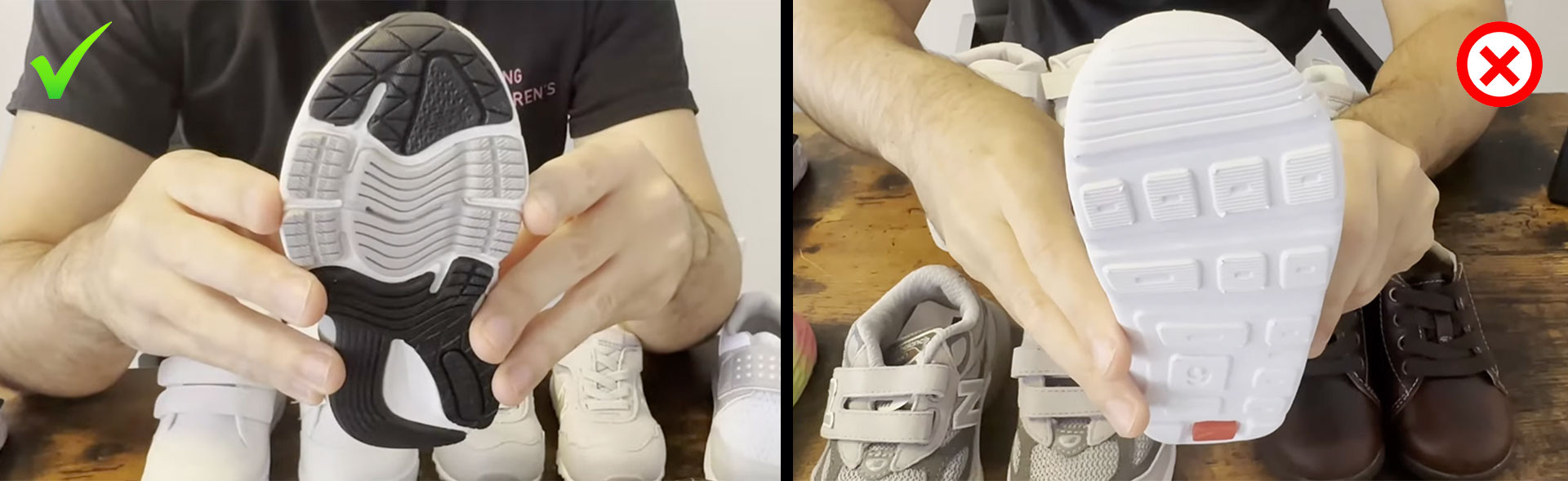
A stable base keeps your child’s foot supported during walking and play, which reduces ankle rolls and falls. It also encourages better foot alignment, which can improve posture.
How to check it: Turn the shoe over and look at the sole. A stable base stays wide through the middle of the shoe, under the arch. If the sole narrows sharply in the middle, the shoe won’t give your child a steady platform.
Watch my video guide on checking the base for a simple test you can do in seconds.
Check 3: Flexibility (Bend, Don’t Twist)
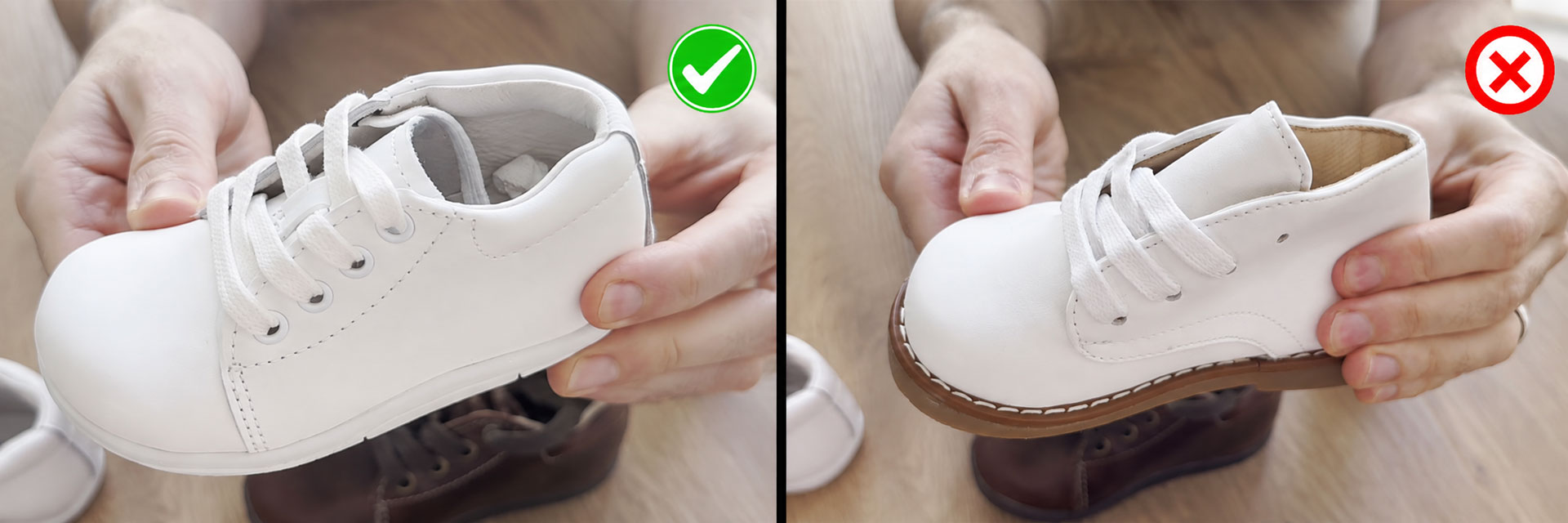
Supportive kids’ shoes should be flexible in the right place. They should bend where the toes bend, so your child can walk naturally, but they should never twist like a spiral. Too much twisting means the shoe isn’t giving enough support, which can affect balance and foot alignment.
How to check it:
- Bend: Hold the heel and push the toe up. The shoe should bend near the toes, not in the middle.
- Twist: Hold both ends and twist in opposite directions. A supportive shoe resists twisting.
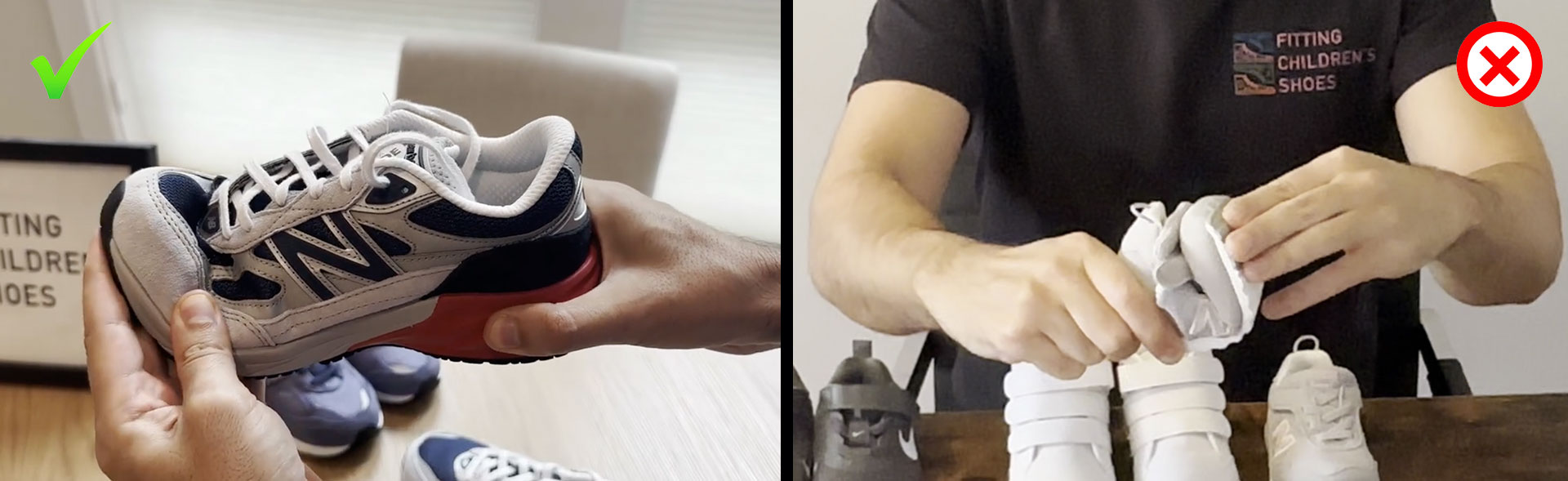
Watch my video on testing shoe flexibility to see how to do both tests.
Check 4: The Shape (Straight Lasts Matter)
The last is the shape of the shoe’s sole. Shoes with a straight last help keep the foot aligned and improve posture, which is especially helpful for kids with flat feet or overpronation. Shoes with a curved last bend inward at the front and give less support.
How to check it: Turn the shoe over and imagine a line from the center of the heel to the tip of the toe. On a straight-last shoe, the inside edge of the sole stays fairly straight. On a curved-last shoe, the front of the sole curves noticeably inward.
Supportive Shoes Still Need to Fit Well
Even the most supportive shoe won’t help if it’s the wrong size. Shoes that are too big let the heel slip, and your child loses the support the shoe is designed to give. Use my guide on how to measure your kid’s feet to find the right size.
Find Supportive Shoes That Pass All 4 Checks
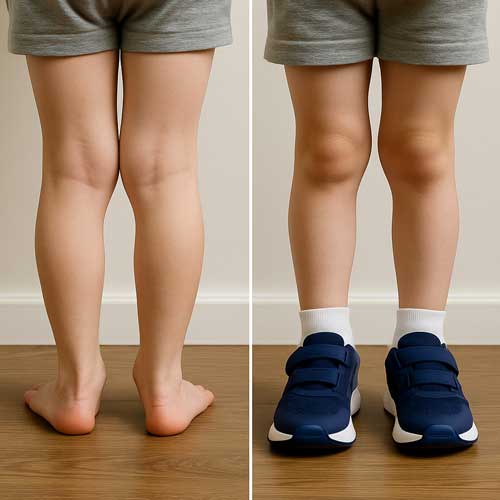
Want to skip the guesswork? See my list of the 10 most supportive sneakers for kids. I’ve tested every pair, and they help improve foot posture and stability for flat feet, weak ankles, overpronation, low muscle tone, and more.
Have Questions?
Still not sure whether your child’s shoes are supportive? Email me, and I’ll help you figure it out.