
Best Kids’ Shoes That Improve Posture – Straighten Feet and Legs
By Juan Valenzuela | Certified Children’s Shoe Fitter with 10+ Years of Experience | Last updated: June 2026
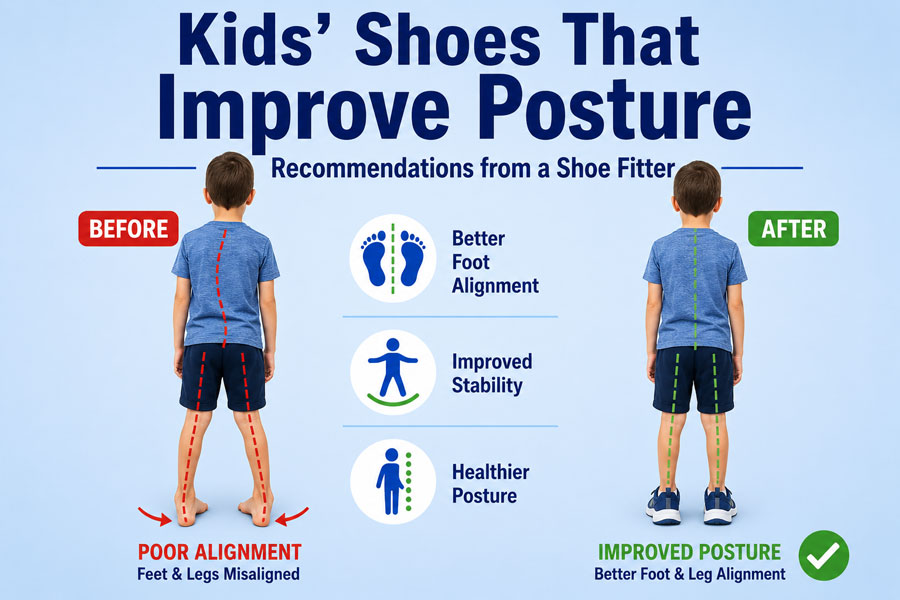
If you’ve noticed your child walking with poor alignment — feet rolling inward, ankles collapsing, knees turning in, or a generally slouched posture — the right shoes can make a more significant difference than most parents expect. Good posture in children starts at the ground. When the feet are properly supported and aligned, the entire chain above them — ankles, knees, hips, spine — follows.
This guide explains how footwear affects posture, which conditions most commonly cause poor alignment, what features to look for in a posture-improving shoe, and which specific styles I recommend based on years of hands-on fitting experience.
How Shoes Affect Your Child’s Posture
The foot is the body’s foundation. Every step your child takes sends force upward through the ankle, knee, hip, and spine. When the foot is properly aligned — heel centered, arch supported, weight distributed evenly — that force travels through a correctly stacked chain and dissipates efficiently.
When the foot is misaligned — arch collapsed, heel tilting, ankle rolling inward — the force travels through a crooked chain. The ankle compensates, the knee rotates inward, the hip tilts, and the spine curves to maintain balance. Over time, this compensatory pattern becomes habitual and increasingly difficult to correct.
This is why I consistently tell parents: posture problems in children rarely start at the shoulders or the spine. They start at the feet. And the most effective, least invasive way to address them — particularly during the developmental years — is with the right footwear.
Which Foot Conditions Cause Poor Posture?
Several common conditions in children directly cause the alignment problems that lead to poor posture:
Flat feet and overpronation. The most common cause. When the arch collapses, the ankle rolls inward, the knee follows, and the entire lower body falls out of alignment. Children with flat feet often appear to walk with their knees turned in and their feet pointed outward — both consequences of the collapsed arch rather than separate issues. For a dedicated guide, see Best Shoes for Kids with Flat Feet.
Misaligned heels (heel eversion). When the heel tilts inward, it drives the same compensatory chain as overpronation — inward ankle roll, inward knee rotation, hip tilt. Children with visibly tilted ankles are often the most dramatic before-and-after cases when fitted in the right shoe. See Best Shoes for Kids with Misaligned Heels.
In-toeing (pigeon toe). When the feet point inward rather than straight ahead, the gait mechanics become inefficient and the hip and lower back are forced to compensate. See Pigeon Toe Treatment for Kids.
Out-toeing (duck feet). When the feet point outward, the arch is under constant inward stress and the knee and hip mechanics are similarly disrupted. See Best Shoes for Kids with Duck Feet.
Low muscle tone. Children with low muscle tone have reduced ability to actively stabilize their joints. Their feet collapse more readily, and the supportive work that muscles normally provide must be compensated for by footwear and orthotics. See Best Shoes for Kids with Low Muscle Tone.
Knock knees. Knees that bow inward are often driven by flat feet and overpronation at the foot level. Correcting the foot alignment frequently improves knock knees without any other intervention. See Best Shoes for Kids with Knock Knees.
Before and After: What Supportive Shoes Actually Do
The three images below are the single most powerful thing I show parents in a fitting. They tell the whole story without any explanation needed.
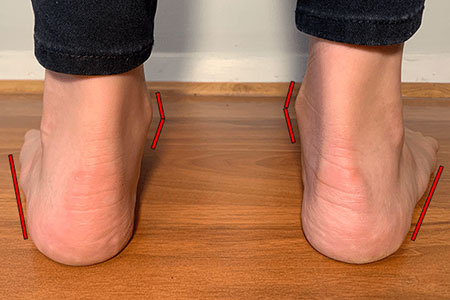
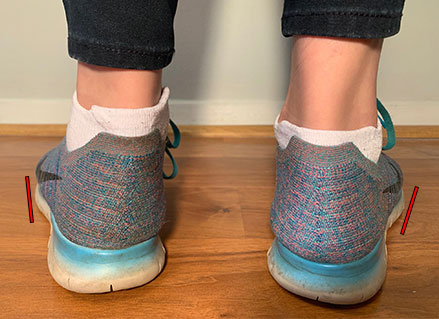
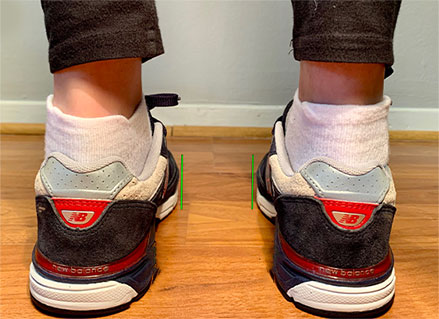
The middle image is the one most parents find surprising. A shoe that looks like a normal sneaker — but lacks the structural features described below — provides no corrective benefit at all. The right shoe isn’t just any shoe. It’s a shoe with the right construction.
What to Look for in a Shoe That Improves Posture
Three features drive the improvement:
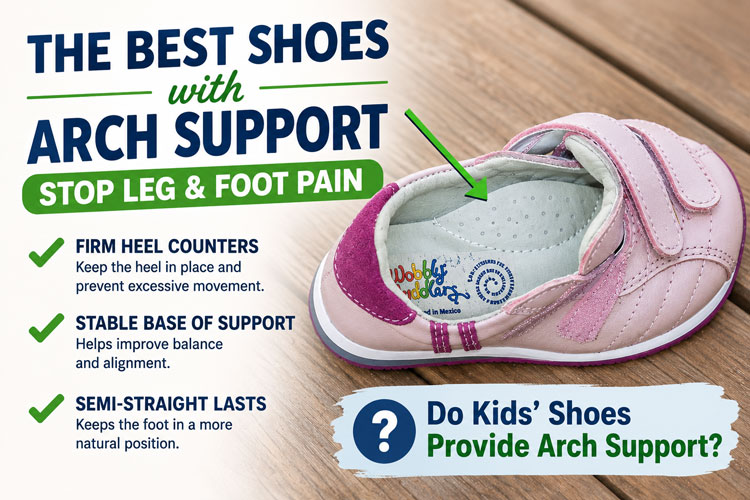
1. Firm Heel Counter. The heel counter is the rigid cup at the back of the shoe that wraps around the heel. This is the single most important structural element for posture correction. A firm heel counter holds the heel bone in a vertical, centered position — preventing the inward tilting that starts the chain of misalignment.
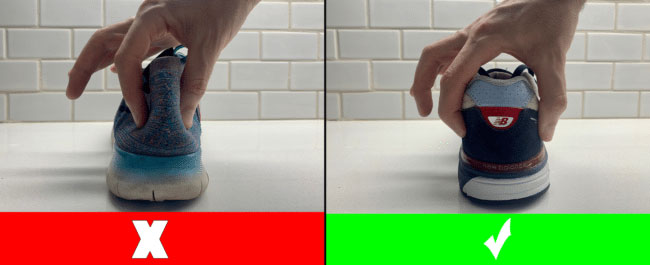
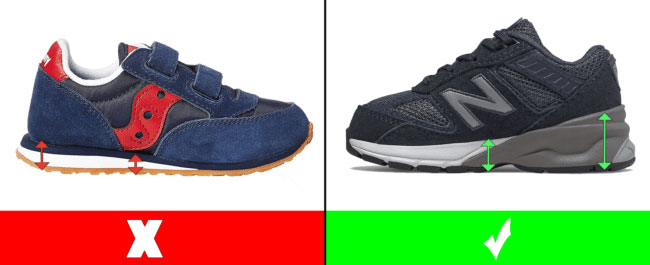
2. Stable Base of Support. A wide, dense outsole and midsole create a stable platform that distributes weight evenly across the foot rather than allowing it to roll inward. This base also provides torsional rigidity — resisting the rotational forces that misaligned feet create with every step.
Thin, soft outsoles — found in most fashion sneakers, casual shoes, and many school shoes — offer no torsional resistance and actively allow the foot to collapse in any direction.
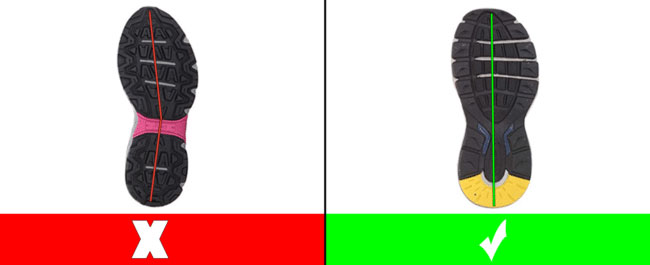
3. Straight Last. The last is the form around which the shoe is built. A straight last runs in a nearly straight line from heel to toe, guiding the foot toward a more neutral position during walking. This is particularly important for children who in-toe or whose flat feet cause the forefoot to rotate inward.
A curved last — found in many mainstream athletic shoes — mirrors or encourages inward rotation and provides no corrective guidance.
The Best Kids’ Shoes That Improve Posture
Every shoe below passes the structural tests described above and has been selected based on hands-on fitting experience with children who have alignment and posture issues. All accommodate different foot widths — check the notes under each style.
Disclosure: Some links in this article are affiliate links. Any commission earned comes at no extra cost to you and helps keep this resource free.
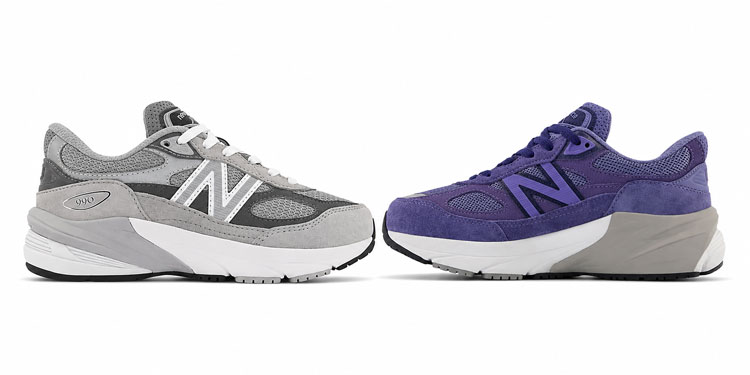
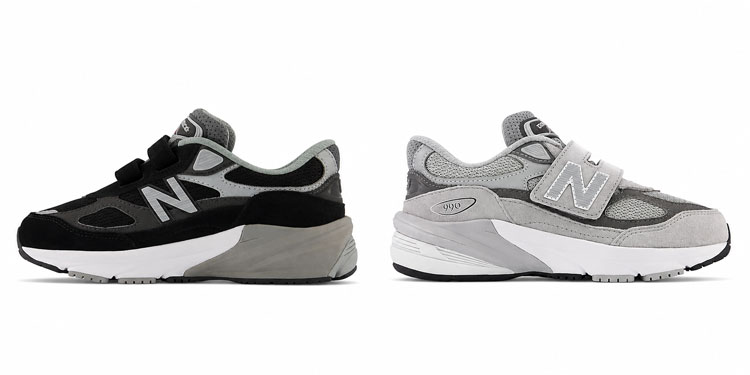
1. Shoe Style 990v6 by New Balance
The 990v6 is my top recommendation for children with posture issues driven by foot alignment problems. The straight last, dense midsole, and exceptionally firm heel counter work together to realign the foot from the ground up — and the effect on overall posture is often immediately visible. It’s the shoe most consistently recommended by the pediatric physical therapists, orthopedists, and occupational therapists I work alongside.
The price is the most common objection from parents. But for a child during the developmental window — when the difference between acting and waiting is greatest — this is the shoe worth investing in.
Key Features
- Available for toddlers, little, and big kids
- Order with laces on the New Balance website or Amazon
- Velcro version also available on the New Balance website or Amazon
- Accommodates medium, wide, or extra wide feet
- Firm heel counters, stable base of support, and semi-straight lasts
- Ideal for moderate to strong cases of pronation
- Removable insoles
- Sizing tip: Order a half size larger than your child’s current foot size
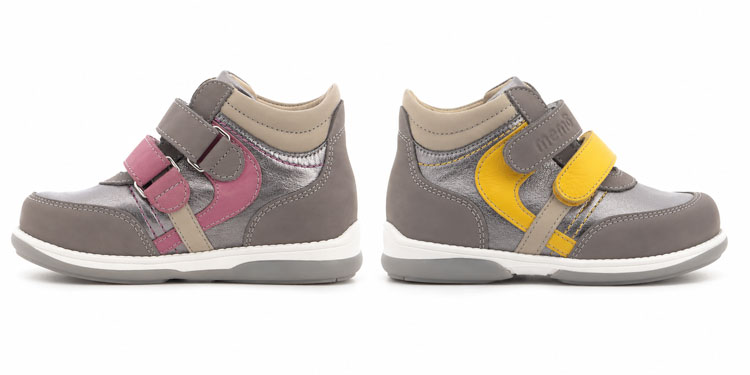
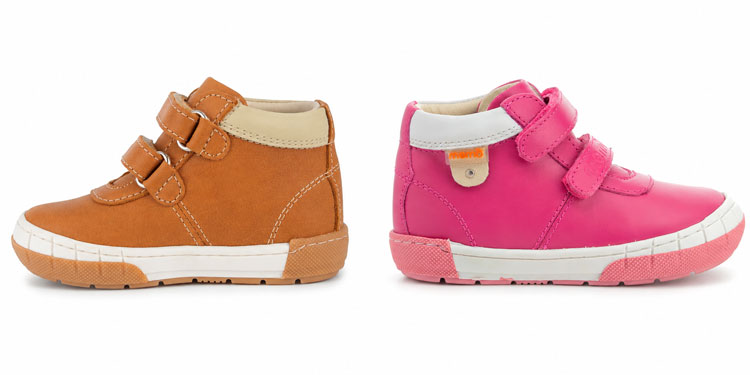
2. Shoe Style Gabi and Alvin by Memo (Orthopedic Shoe)
The Memo Gabi is a purpose-built orthopedic shoe for children whose posture and alignment issues haven’t responded adequately to standard supportive footwear. The reinforced heel counter, rigid outsole, and double velcro strap system provide a level of structural correction that mainstream sneakers can’t match. This is the shoe to consider when standard supportive shoes haven’t been sufficient, or when a physical therapist or orthopedist has specifically recommended orthopedic footwear.
Key Features
- Available for toddlers and little kids
- Order the model Gabi or Alvin on Amazon
- Also available in a Mary Jane style and a version for older kids called Memo Polo
- Accommodates medium and wide feet
- Ideal for moderate to strong cases of pronation
- High-top design with stiff heel counters
- Sizing tip: Order a half size larger than your child’s current foot size. Refer to Memo sizing chart
3. Shoe Style Elliott by Stride Rite
For toddlers, ankle coverage is as important as foot support — young children’s ankles are still developing and particularly susceptible to the inward rolling that compromises posture. The Elliott’s high-top bootie design wraps the ankle, reinforces the heel counter’s corrective effect, and provides a firm, straight base. It’s the most effective toddler option on this list and is priced accessibly.

Key Features
- Available for toddlers
- Order on Amazon
- Accommodates medium, wide, or extra wide feet
- Ideal for mild to moderate cases of pronation
- 100% leather construction
- High-top design provides extra ankle support
- APMA Seal of Acceptance
- Sizing tip: Order a whole size larger than your child’s current foot size
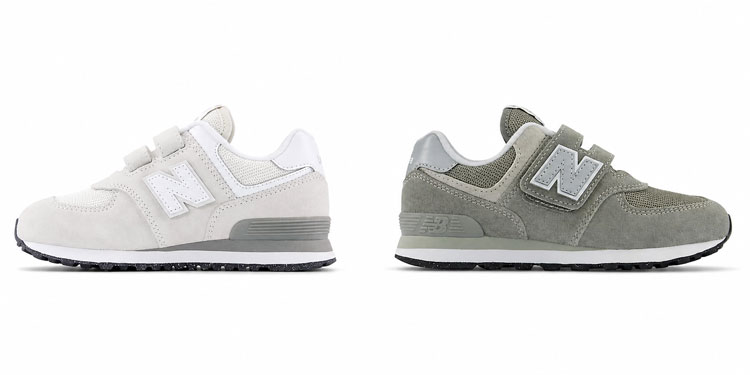
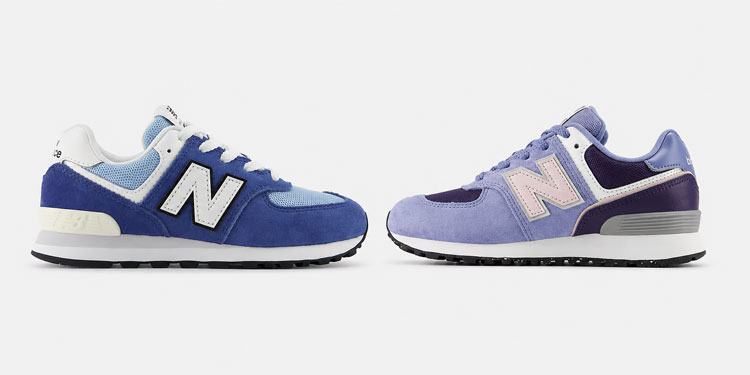
4. Shoe style 574 by New Balance
The 574 delivers reliable structural support — firm heel counter, stable midsole, straight last — at a significantly lower price than the 990v6. The wide width range makes it particularly practical for children with broader feet. For families who need a capable everyday shoe without the premium investment, this is my first alternative recommendation.
Key Features
- Available for toddlers, little, and big kids
- Order on Amazon or the New Balance website
- Also available with laces on the New Balance website or Amazon
- Accommodates medium, wide, or extra wide feet
- Ideal for mild to moderate cases of pronation
- Firm heel counters
- APMA Seal of Acceptance
- Sizing tip: Order a half size larger than your child’s current foot size
5. Shoe Style Tracks by Timberland
The Tracks is built for rugged outdoor use — water-friendly, high-topped, and structurally robust. The high-top design adds meaningful ankle support, and the dense outsole handles uneven terrain without allowing the foot to roll inward. A strong choice for active children who spend time outdoors or in wet conditions.
The trade-off is weight — the heaviest shoe on this list, which may be a factor for younger walkers.

Key Features
- Available for toddlers and little kids
- Order on Amazon
- Accommodates medium or wide feet
- Ideal for mild to moderate cases of pronation
- High-top design for extra ankle support
- Water-friendly construction
- Sizing tip: Order a whole size larger than your child’s current foot size
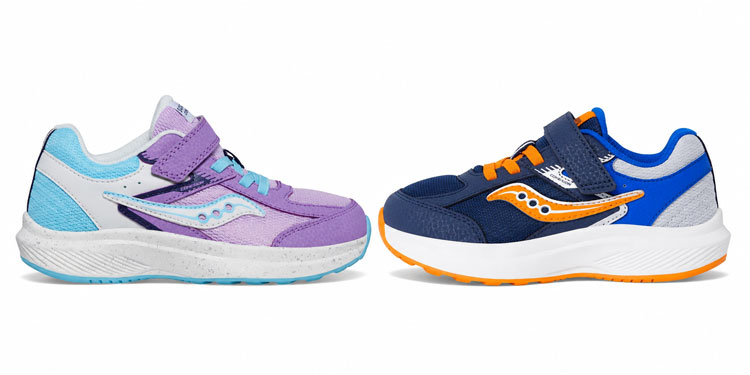
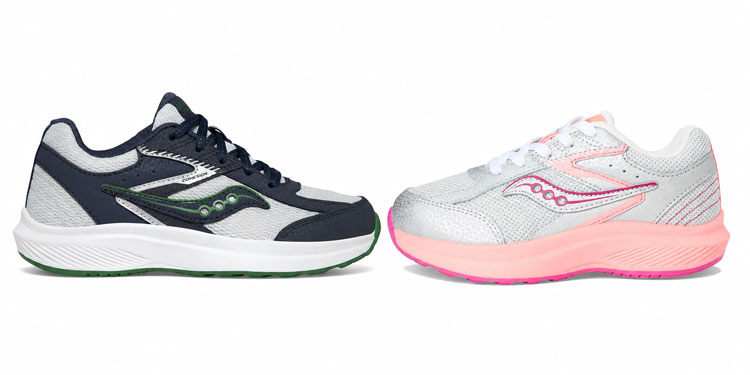
6. Shoe Style Cohesion by Saucony
The Cohesion delivers a firm heel counter, stable outsole, and solid cushioning at the most accessible price on this list. For families managing tighter budgets or looking for a reliable second pair for school, this is the strongest value option available.
Key Features
- Available for little and big kids
- Order on Amazon
- Also available with laces on Amazon
- Accommodates medium or wide feet
- Ideal for mild to moderate cases of pronation
- Firm heel counters and stable base of support
- Sizing tip: Order a whole size larger than your child’s current foot size
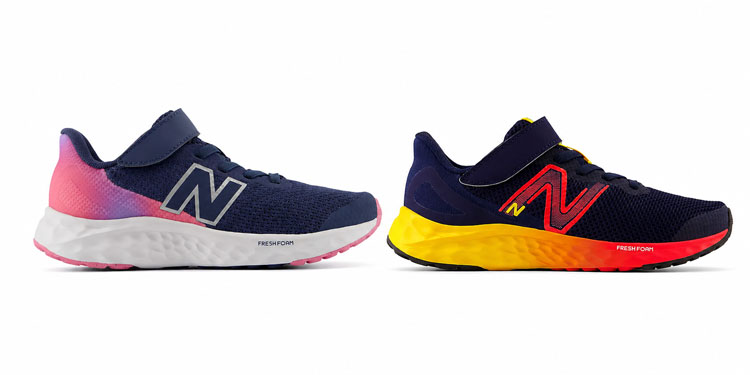
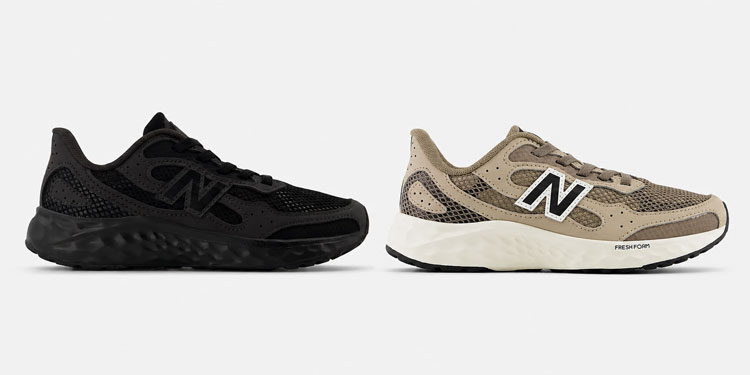
7. Shoe Style Fresh Foam Arishi v4 by New Balance
Some children — particularly those with sensory sensitivities — resist the firmer feel of structural shoes. The Arishi v4 delivers a noticeably softer ride through New Balance’s Fresh Foam platform while still maintaining the heel counter firmness and outsole stability that posture correction requires. A shoe worn consistently beats a technically better shoe that the child won’t put on.
Key Features
- Available for toddlers, little, and big kids
- Order on the New Balance website or Amazon
- Also available with laces on Amazon or the New Balance website
- Accommodates medium, wide, or extra wide feet
- Ideal for mild to moderate cases of pronation
- Semi-firm heel counters
- Sizing tip: Order a whole size larger than your child’s current foot size
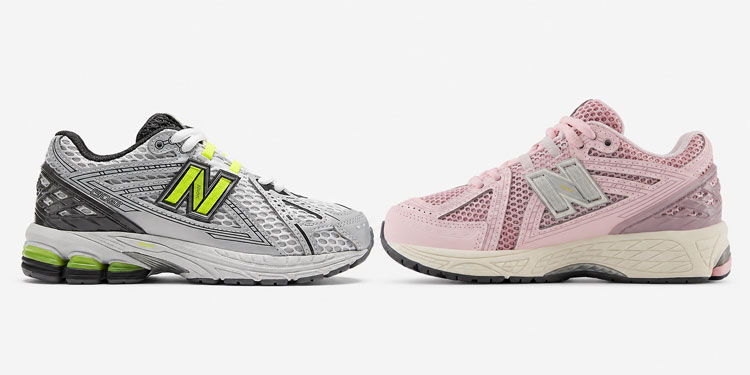
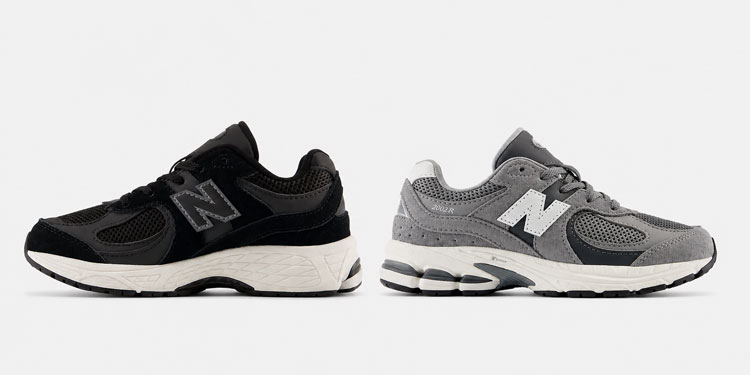
8. Shoe Style 2002/1906 by New Balance
The 2002 sits between the Arishi and the 990v6 in both price and structural support. A dependable all-round pick for families who want New Balance quality without the 990v6 price tag.
Key Features
- Available for toddlers, little, and big kids
- Order the 2002 or 1906 on the New Balance website
- Accommodates medium or wide feet
- Ideal for moderate to strong cases of pronation
- Firm heel counters, stable base of support, and semi-straight lasts
- Sizing tip: Order a whole size larger than your child’s current foot size
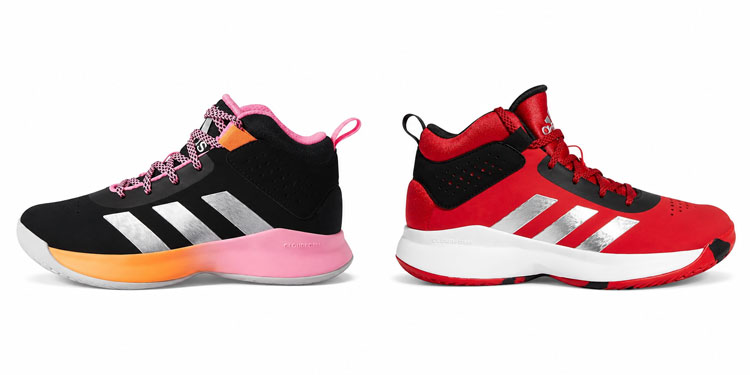
9. Shoe Style Cross Em Up by Adidas
The basketball-inspired high-top delivers excellent ankle support and lateral stability — both directly relevant for children whose posture issues manifest during active play and sports. The high-top height reinforces the ankle against inward rolling during dynamic movement, and the midsole handles impact well.
Key Features
- Available for little and big kids
- Order on Amazon
- Accommodates medium or wide feet
- Ideal for mild to moderate cases of pronation
- High-top design for additional ankle support
- Versatile — suitable for sports and everyday wear
- Sizing tip: Order a whole size larger than your child’s current foot size
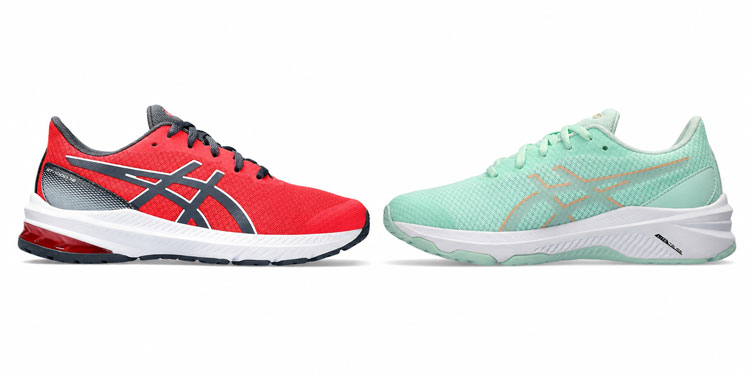
10. Shoe Style GT-1000 by Asics
Most supportive children’s shoes run wide — a problem for narrow-footed children who need posture support. The GT-1000 fits a narrower profile naturally while still delivering a straight last, firm heel counter, and stable outsole. If your child has slim feet and posture concerns, start here.
Key Features
- Available for little and big kids
- Order on Amazon
- Accommodates narrow or medium feet
- Ideal for mild to moderate cases of pronation
- Firm heel counters, stable base of support, and semi-straight lasts
- Sizing tip: Order a whole size larger than your child’s current foot size
Orthotics for Mild Cases of Pronation
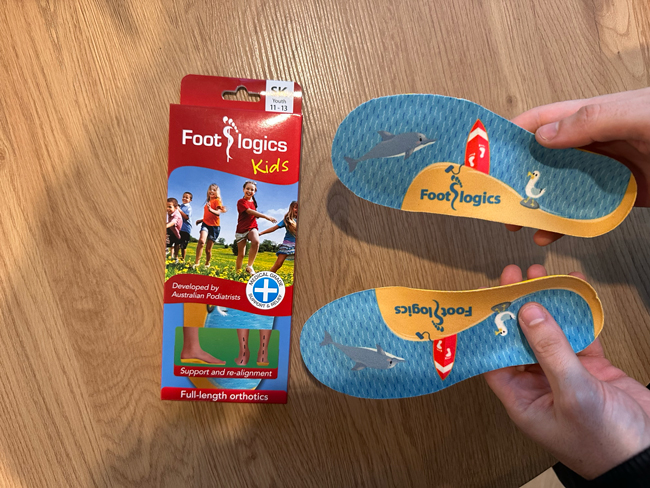
Footlogics are some of the best orthotic inserts for pronation (mild degree), providing arch support and correcting overpronation. Ideal for children with flat feet, they easily fit into most shoes, redistributing pressure to reduce pain and improve posture.
- Order the full-length Footlogics orthotic inserts on Amazon
- Fits toddler shoe size 5 up to big kid shoe size 3
- They can be trimmed to the perfect size using scissors if necessary
- You must remove the original insoles from your child’s shoes before placing the orthotic inside
Orthotics for Moderate or Strong Cases of Pronation
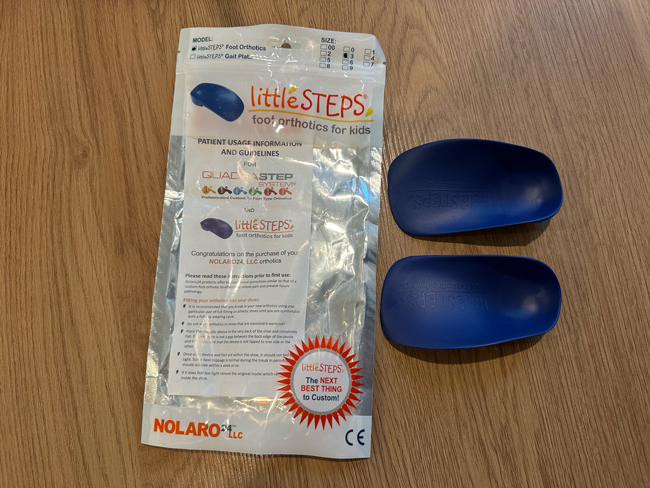
LittleSteps orthotics are perfect for kids with moderate to strong pronation. They help guide the foot into a more natural position, reducing strain and improving function, while supporting healthy foot development and easing discomfort.
- Order littleSTEPS® Orthotics from their official website. You must submit a Referral Code to complete your order: JVFCS100121
- It’s not necessary to remove the original insoles of the shoes when fitting this orthotic.
- The 3/4 length design makes it easier to fit into various shoe styles.
- Take a look at this chart to figure out what size to order based on your child’s shoe size.
A Note on Shoe Fit and Orthotics Together
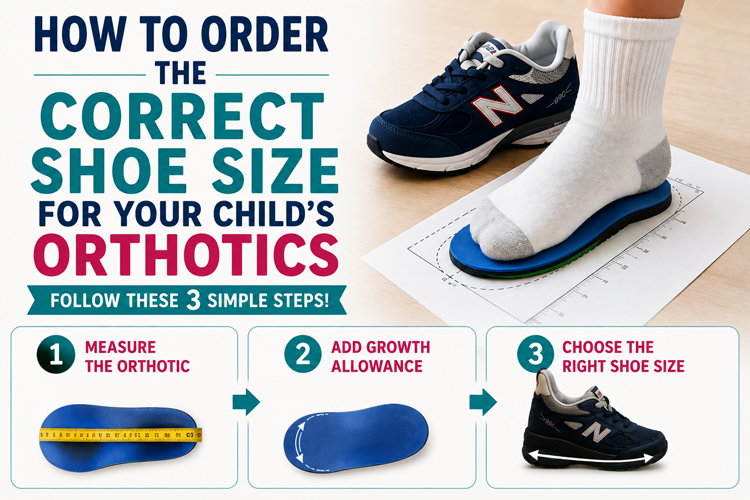
One question that comes up repeatedly — and that Becky and Jennifer both raised in the comments — is how shoe size changes when orthotics are added. The answer: it depends on the orthotic.
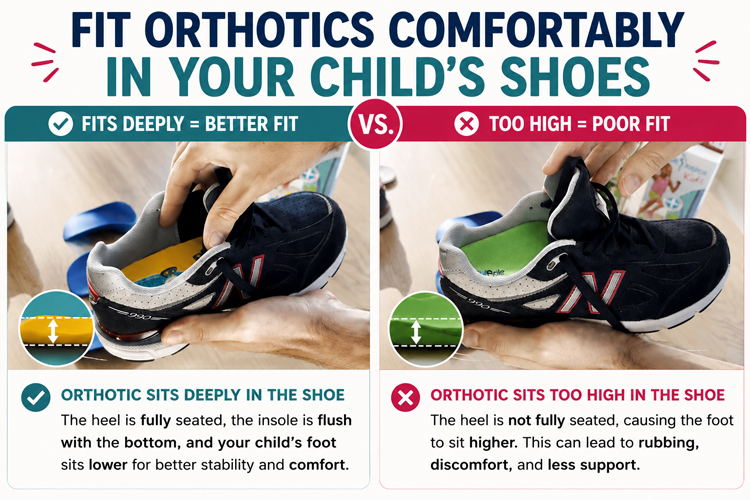
A full-length orthotic takes up meaningful volume inside the shoe. If you’ve already been fitting your child in a shoe that fits snugly, you’ll likely need to go half a size longer and possibly a width wider to accommodate it. The rule I follow: get the orthotic first, then fit the shoe around it — not the other way around.
A shoe that’s too wide to accommodate the orthotic will let the foot slide around inside, negating the corrective effect. A shoe that’s too narrow will pinch the foot. The fit needs to be snug but not tight, with the heel sitting firmly in the heel counter.
Getting the Right Fit
Even the best posture-improving shoe won’t work in the wrong size. A shoe that’s too short compresses the toes and causes blisters; too long and the foot slides forward, pulling the heel away from the heel counter — which defeats the corrective purpose entirely.
Measure both of your child’s feet and size for the larger one. Learn how to measure your child’s foot accurately at home here.
For personalized guidance based on your child’s specific foot shape and posture concerns, reach out at customerservice@fittingchildrenshoes.com.
Frequently Asked Questions
It’s not an exaggeration — but the improvement is specific. Supportive shoes improve posture by correcting foot alignment, which reduces the compensatory patterns that cause poor posture throughout the body. The before-and-after difference is often visible immediately when a child is fitted in the right shoe. What shoes can’t do is correct posture issues caused by muscle weakness, spinal conditions, or neurological factors — those require separate assessment and intervention.
Yes. Posture problems in children are often painless for years — the young body is remarkably adaptable and compensates well. But the compensatory patterns that develop during the painless years become increasingly entrenched and harder to correct. Pain often arrives later, in the knees, hips, or lower back, by which point the underlying cause has been present for a long time. Acting before pain appears is always preferable.
Improvement in ankle alignment and foot position is often visible immediately when the right shoe is put on. Improvement in overall posture — the way the knees, hips, and spine align — tends to develop over weeks to months of consistent wear as the body adjusts to the new foot position. Pain relief typically follows within two to four weeks of consistent wear.

Hi, thank you for all the info on your website! It’s been very helpful, but my son’s feet present multiple challenges and I was wondering if you might have some ideas. He has pretty dramatic pronation (ankle rolls inward), so a physical therapist recommended Chipmunk orthotics for him. In addition, he needs a wide toe box to accomodate his 2nd-3rd toes overlapping.
We tried the orthotics today with his Stride Rite shoes, and he feet really fill up the shoe now–previously they had seemed almost “baggy”. (He barely measures as “wide”, but we’ve had him in 12.5 extra wide shoes so that they didn’t leave red marks across the top of his foot, the way that other shoes had.) He said they felt good, but the shoes don’t look deep enough for the orthotics.
I see that you recommend lace up shoes, but he is only 3.5 year old and can’t handle laces yet, so I am really hoping to find velcro shoes. Looking at the New Balance and Saucony shoes you have posted, I am concerned that the toe boxes may not be wide enough. We recently ordered Plae shoes for him because of the wide toe box, but it looks like they won’t work with the Chipmunks. So I am at a loss here…please help. 🙂
I’d appreciate any thoughts you might have! Thank you so much!
Hello Becky,
I have fitted the Chipmunks before and they are great for children with overpronation and rolled ankles. However, I don’t recommend fitting orthotics in Stride Rite shoes, specially a Chipmunk that takes so much space. Some Stride Rite shoes are supportive and come in wide and extra wide widths, but they are not deep like certain New Balance shoe styles.
Orthotics take some room inside the shoes, but we don’t want the shoes to be too wide since that will end up causing your child’s feet to move too much inside the shoes, and that constant friction can lead to blisters, calluses, or corns. In addition, your child won’t get any of the benefits that the orthotics have to offer.
I like PLAE shoes and they tend to fit orthotics well, but I don’t tend to fit them in orthotics because I am not entirely happy with the structure and support that they provide.
Since you are not ready to provide your child with shoelaces yet, I will provide you with a selection of Velcro shoes that will support the Chipmunk and are also deep and come with a round toe-box. I will recommend that you provide your child with a wide “W”, instead of an extra wide “XW” and see how the shoe fits.
Here are my recommendations based on his shoe size (12.5):
New Balance-Supportive and Deep: Option 1
New Balance-Supportive and Deep: Option 2
I hope this helps!
Juan,
Your site is amazing and I have really appreciated all the advice you provide! My son is 8 years old and has ankle that pronate. He has been wearing mostly Nike which haven’t been very supportive. At this time I have decided on 2 New Balance options per their recommendation and yours, the New Balance 990v4 or the 860v8. If I were to buy a shoe without the insert option he wears a 1.5. My son has an appointment with a podiatrist in a week to see if we need to do additional support. I am wondering if my son would need a different size shoe if we have to get an insert?
Hello Jennifer,
Thank you!
First of all, if he has been wearing unsupportive shoes I will recommend that you see how he reacts to a good supportive shoe first before trying an orthotic. If he still pronates in a good supportive shoe, then you should definitely try an orthotic.
In terms of what shoe size he needs if he needs an orthotic, It really depends on what type of orthotic it is and how much space it will take inside the shoes.
If it is a full length insert, then it’s highly likely that you will either need a wider and a slighter longer shoe. I will recommend that you get the insert first and then the shoes, since the insert needs to be fitted inside the shoes and not the other way around.
I hope this clarifies!
Very helpful information but many kids (including mine) that are age 8 and over have outgrown these “kid” sizes. Can you recommend specific shoes for kids who are wearing adult running shoes.
Hello KRAM,
I am glad that you find the article informative! Next time please provide me with your child’s shoe size (length and width), so I can recommend specific shoes for your child. In the meantime, you can find below a selection of some of the most supportive adult shoes that I have fitted before and will improve your child’s posture:
Boys in Men’s Shoe Sizes – The Best Shoes for Your Child with Large Feet!
Girls in Women’s Shoe Sizes – The Best Shoes for Girls with Large Feet!
I hope this helps!
I have a 15 year old daughter, who has Down syndrome. She has been wearing “hot dog” inserts in her sneakers since she was young, Her former therapist didn’t like the idea of restricting her ankles, so these don’t provide a huge amount of support; they just slightly elevate her arch. We’ve since moved to another state and no longer have a PT to look to for advice. Our daughter is VERY flat footed (to the point where her ankles will roll completely inward unless she wears sneakers with her supports). She is now walking pigeon-toed, and her entire gait is off (hips back, torso leading, etc.). While I recognize that some of these issues are directly related to her having DS, we would welcome a shoe and/or insert recommendation based on her physical presentation. To further complicate things, we have another issue – her shoe size. She is approximately 4’11” and weighs 104 lbs. but wears only a 3W (little kid/big kid, depending on the brand) shoe. She’s a teenager and gets frustrated always having to wear a sneaker (as opposed to dressier flats or boots or whatever). Can you make any suggestions or recommendations??
Thanks!
ATV
Hello ATV,
I have fitted the “Hot Dogs” before and like you said, they provide a good amount of arch support and only a small amount of ankle support. I have always used the “Chipmunks” (for some reason the manufacturer CASCADE likes to give the orthotics funny names) for children whose ankles roll inwards. The “Chipmunks” provide excellent arch and ankle support, and they will make a huge difference in helping the child walk and run straighter. They are also extremely effective in reducing or fully eliminating foot and leg pain.
When it comes to a supportive shoe, I would first like to know whether your child wears shoes with Velcro or shoelaces. I always recommend shoelaces because they provide more support and stability than Velcro closure.
If she is ready to wear a shoe with shoelaces, this is the shoe I recommend for her:
Supportive Shoe for Orthotics: Option 1 (This is the most supportive shoe style)
Supportive Shoe for Orthotics: Option 2 (Less Supportive than first option but still more supportive than other shoe styles)
This shoe style is deep, meaning that the orthotic will sit deeply inside the shoe and won’t raise your daughter’s feet up (giving her the impression that her feet are coming out of the shoe). The shoe also provides good structure (to hold the orthotic in place) and arch support, and it also comes with a very firm heel counter to provide ankle support.
This shoe style is also available in different widths such as wide and extra wide, and since the orthotics do take a lot of space inside the shoes, you will might have to provide her this shoe in an extra wide width.
If you don’t think you can deal with a shoe that comes with shoelaces, you can always provide her with the same shoe style but with Velcro.
Do you also need recommendations for dressier shoes or boots?
I hope this helps!
Thank you! Yes, she uses shoelaces (no velcro). I would very much welcome recommendations for supportive shoes (flats) and boots as well. The main issue here is her relatively small shoe size (3 kids), compared to her age (15). She wants to dress age-appropriate, but that’s proven difficult under the circumstances…
Hello ATV,
There is no such thing as a supportive flat. There are supportive Mary Jane shoes but not flats. If your daughter wants to wear a flat, I would recommend that you limit her to 4 to 5 hours a day (or the length of that particular occasion or event)
There are some flats that will fit a child with wide feet:
Flats For Kids: Option 1
Flats For Kids: Option 2
Just remember that they are not supportive and should not be worn for more than 4 to 5 hours.
When it comes to boots, they do provide more support and you might be even be able to insert an orthotic inside of them. I would like to know what type of boot you are looking for your child. Are you looking for a winter boot, a fashion boot, or a hiking boot?
I guess both a fashion boot and a winter boot. Thanks again!
Hello ATV,
Here are my recommendations based on her shoe size:
Fashion Boot: Option 1 (Available in wide widths)
Fashion Boot: Option 2
Winter Boot: Option 1 (Supportive)
Winter Boot: Option 2 (Supportive and in wide widths)
I hope this helps!