Lace Band for Soccer Cleats: How to Keep Your Child’s Cleats Tied
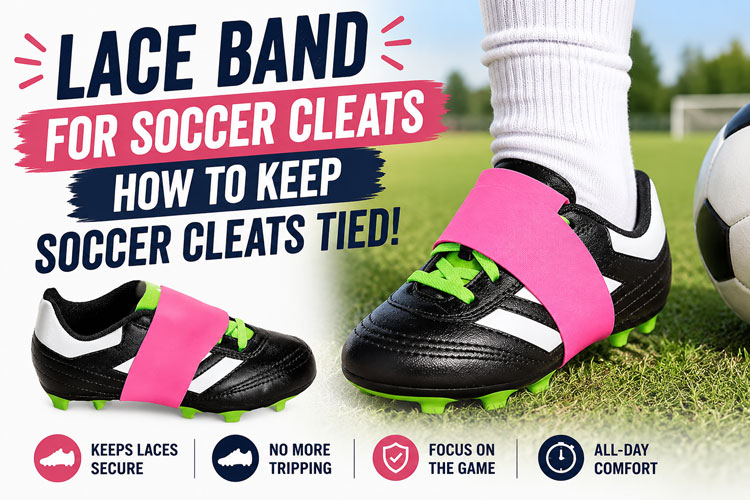
Are your child’s soccer cleats constantly coming untied during games or practice? As a certified children’s shoe fitter, I hear this constantly from parents. A lace band might be the simple fix you’ve been looking for — it locks laces securely in place so young players can focus on the game instead of stopping mid-play to retie their shoes. It also smooths out the strike zone across the laces, which can help with ball control.
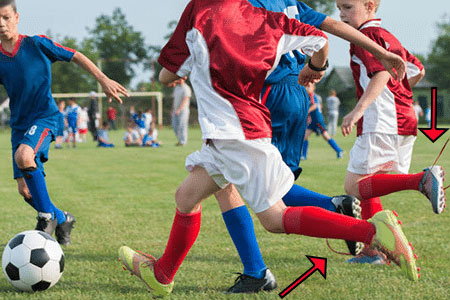
For any parent who’s watched their child play soccer, untied laces flopping around mid-sprint is a familiar (and frustrating) sight — it’s a distraction, and a real tripping and injury risk.
Why Laces Come Undone in the First Place
Running and kicking create constant movement and friction, which loosens both the lace material and the knot itself over time — especially if the laces aren’t double-knotted, which a lot of kids forget or struggle to do properly. Wet conditions make things worse, since damp laces get slipperier and untie more easily.
Even a solid double knot can work its way loose over a long game, and sometimes the laces themselves are simply too short to tie securely in the first place. That’s where lace bands come in — they cover and lock the tied laces in place so they can’t work loose mid-game.
Most Durable Lace Bands for Soccer Cleats
Lace bands are an easy, effective fix for the age-old untied-laces problem — built to hold up through every sprint, kick, and jump.
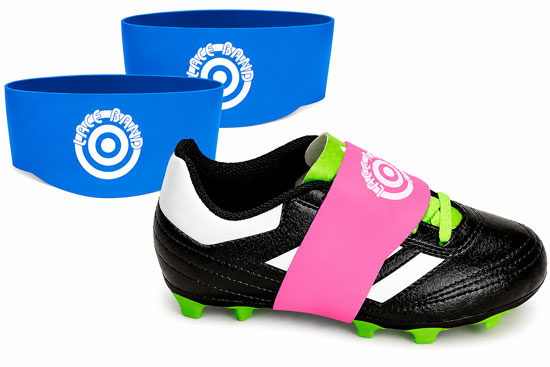
- Order on Amazon (blue and black colorway also available — see listing)
- Easy to apply and remove
- Can be used with any soccer cleat
- Disclosure: Some links in this post may be affiliate links
How to Use a Lace Band
Step 1: Tie the laces. Tie the cleats’ laces as you normally would — snug, but comfortable.
Step 2: Apply the band. Stretch the lace band over the tied laces, centering it directly over the knot.
Step 3: Secure it in place. Adjust the band so it holds the laces firmly without being so tight it’s uncomfortable.
Plenty of parents and young athletes have found lace bands to be a genuine game-changer — and coaches have noted that teams using them see fewer play stoppages for re-tying, which keeps the game moving.
The Downside of Lace Bands
The main drawback is durability. Because they’re made of elastic material, lace bands stretch out over time and lose their grip. Regular exposure to dirt and moisture on the field speeds this up, which can mean replacing them more often than you’d like — and a bit of ongoing cost.
Alternatives to Lace Bands
If you’d rather not rely on a lace band alone, a couple of other approaches work well too.
Oval Laces
Oval laces blend the best of flat and round laces — secure like a flat lace, but as easy to tighten as a round one — which makes them meaningfully less likely to come undone during intense play. Some styles add a textured or bubbled surface along their length specifically to help the knot grip and hold.
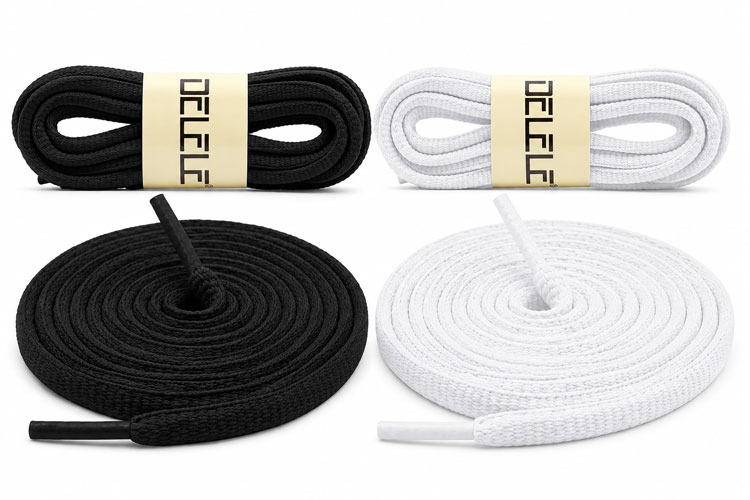
- Order on Amazon
- 1/4″ oval (half-round) profile, polyester construction
- Sold in packs of 2 pairs (4 individual laces)
- Available in 40+ colors and multiple lengths
- Count your child’s eyelets to order the correct length
Double Knot
The classic double knot is simple but effective — tying that extra knot meaningfully cuts the odds of laces working loose, no matter how much running, jumping, or kicking your child does during a game. I cover the most effective way to tie kids’ sport shoes, step by step, in my dedicated lacing guide.
Reach Out With Any Questions
If you have questions about soccer cleat laces or need help picking the right lace band or lace type for your child, reach out — I’m happy to help.
Frequently Asked Questions
Yes — lace bands sit over the laces themselves rather than the collar of the shoe, so they work with low, mid, or high-cut cleats as long as the laces are accessible.
It varies with how often your child plays and field conditions, but expect to replace one every season or two as the elastic naturally stretches out — sooner if it’s regularly exposed to heavy mud or wet grass.
It’s a good stopgap, but I’d still recommend having your child learn to tie a secure double knot — a lace band is a nice backup, not a replacement for a properly tied shoe, especially since bands do wear out and can be misplaced.