
Best Toddler Shoes with Arch Support – Improve Posture, Gait, and Stability
By Juan Valenzuela | Certified Children’s Shoe Fitter with 10+ Years of Experience | Last updated: June 2026
If you’ve been searching for toddler shoes with built-in arch support and coming up empty, you’re not alone — and you’re not missing something. Most toddler shoes don’t have a dedicated arch insert, and for good reason: most toddlers’ feet are still developing and not yet ready for the kind of rigid arch support that adult orthotics provide.
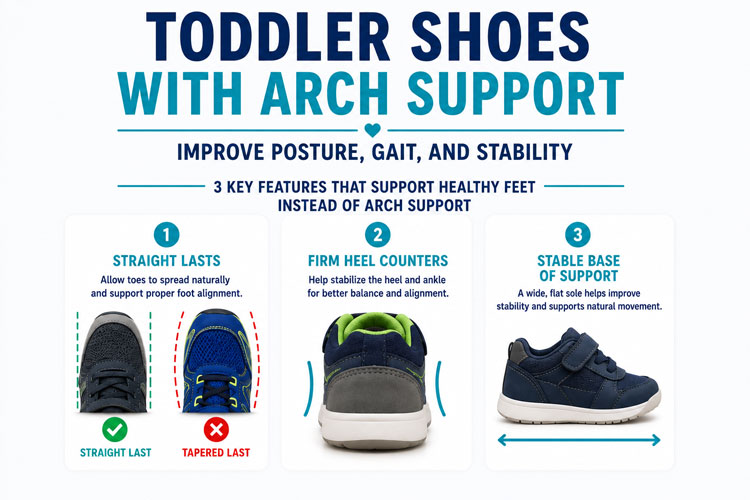
But “no built-in arch” doesn’t mean “no support.” The right toddler shoes provide something more important: a stable structure that keeps the foot properly aligned, reduces inward rolling, and supports healthy development during the years when it matters most. This guide explains exactly what those features are, why they work, and which specific shoe styles deliver them.
Why Most Toddler Shoes Don’t Have Arch Support — And What to Look for Instead
If you feel inside most toddler shoes, you’ll notice a flat insole with little to no arch curve. This is by design — toddlers’ feet are naturally flat because the arch hasn’t fully developed yet, and prematurely forcing a rigid arch shape onto a developing foot can actually interfere with natural development.

What well-made supportive toddler shoes provide instead is a combination of three structural features that functionally achieve the same goal: keeping the foot aligned, preventing inward collapse, and supporting healthy gait development without over-correcting.
The Three Features That Replace Arch Support in Toddler Shoes
1. Stable Base of Support. A wide, dense outsole creates a strong foundation that distributes body weight evenly across the foot and provides torsional rigidity — resistance to the rotational forces that cause flat-footed toddlers’ feet to roll inward. A thin, soft outsole allows the foot to collapse in any direction and offers no corrective benefit.
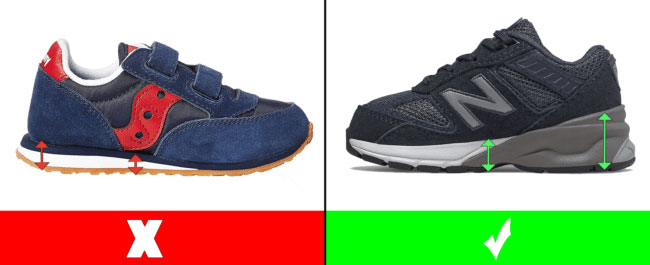
This is the feature most parents overlook. When two shoes look similar but one costs significantly more, the difference is usually in the outsole and midsole density. You can test it by pressing the front of the shoe sole against a hard surface — a supportive shoe resists; an unsupportive one collapses.
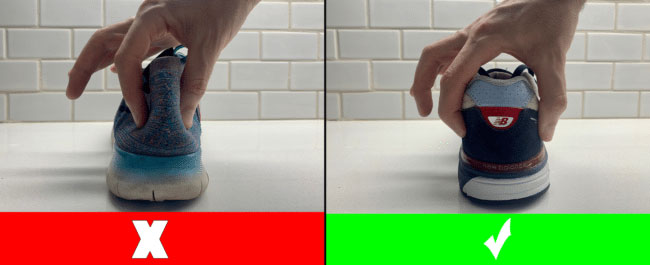
2. Firm Heel Counter. The heel counter is the rigid cup at the back of the shoe that wraps around and holds the heel. This is the single most important structural element for a toddler with flat feet or rolling ankles. A firm heel counter holds the heel bone in a vertical position, preventing the inward tilt that drives the arch to collapse.
3. Straight Last. The last is the form around which the shoe is built. A straight last runs in a nearly straight line from heel to toe, helping guide the foot toward a more neutral position during walking. Shoes with a curved last — common in fashion sneakers — actually encourage the inward rolling that flat-footed toddlers are already prone to.
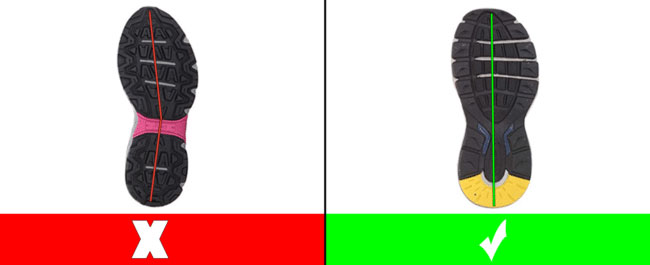
A straight last is particularly important for toddlers who in-toe or whose flat feet cause the forefoot to rotate inward. It’s a passive corrective force with every step.
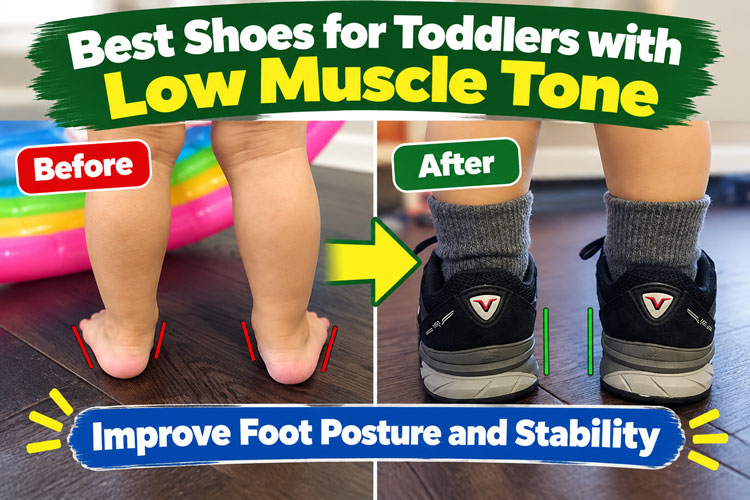
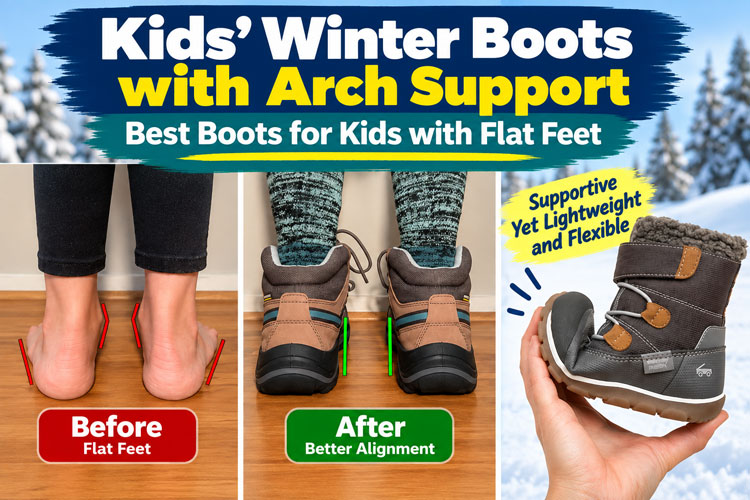
Before and After: What Supportive Shoes Do
The before-and-after difference when a toddler is fitted in a shoe with all three features is one of the most consistent things I show parents — and it happens immediately.
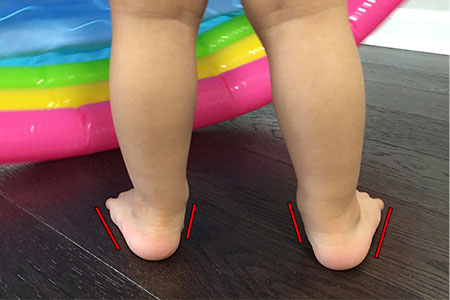
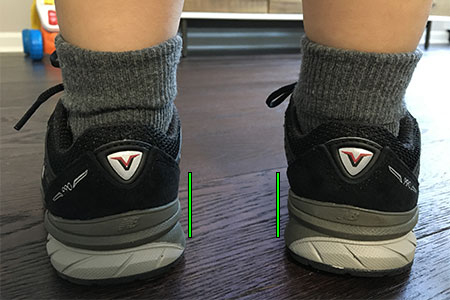
These are not custom orthotics or specialized braces. They are everyday supportive sneakers with the right construction. The improvement comes entirely from the three structural features above.
The Best Toddler Shoes with Arch Support
Every shoe below has all three structural features: a stable outsole, a firm heel counter, and a straight last. They have been selected based on hands-on fitting experience and cover a range of price points, foot widths, and use cases. All can accommodate orthotics if additional support is needed.
Disclosure: Some links in this article are affiliate links. Any commission earned comes at no extra cost to you and helps keep this resource free.
Width note: Most toddlers have wider feet than average — particularly those with flat feet, where the collapsed arch spreads the foot laterally. Always check width options and err toward wide or extra wide if your toddler has ever had red marks from shoes or their foot appears to spill over the footbed.
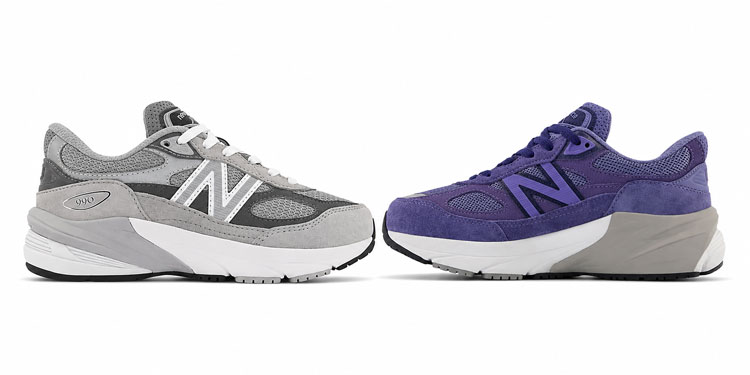
1. Shoe Style 990v6 by New Balance
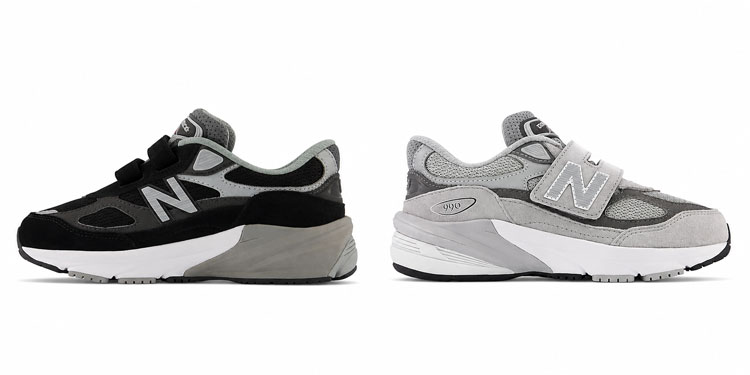
The 990v6 is the strongest supportive toddler shoe available in a mainstream brand. The ENCAP midsole provides exceptional density and resilience, the heel counter is among the firmest you’ll find in any children’s shoe, and the straight last delivers consistent corrective guidance with every step. It’s the shoe physical therapists recommend most frequently, and the results I see in fittings consistently back that up.
The price is the main objection — and it’s fair. But for a toddler during the developmental window, when the foot is most responsive to structural guidance, this is the shoe worth investing in first.
Key Features
- Order with laces on the New Balance website or Amazon
- Velcro version also available on the New Balance website or Amazon
- Accommodates medium, wide, or extra wide feet
- Firm heel counters, stable base of support, and semi-straight lasts
- Ideal for moderate to strong cases of pronation
- Removable insoles
- Sizing tip: Order a half size larger than your toddler’s current foot size
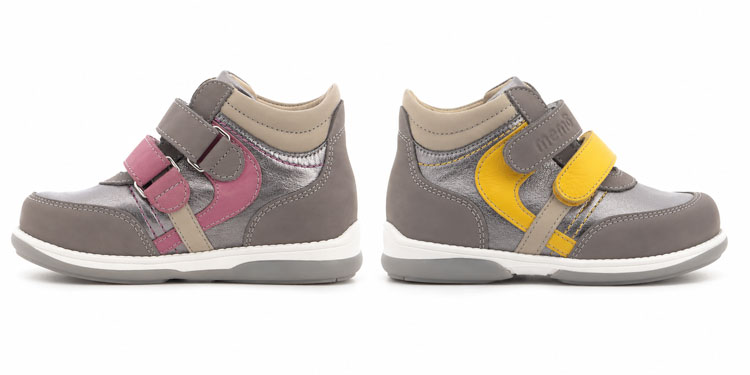
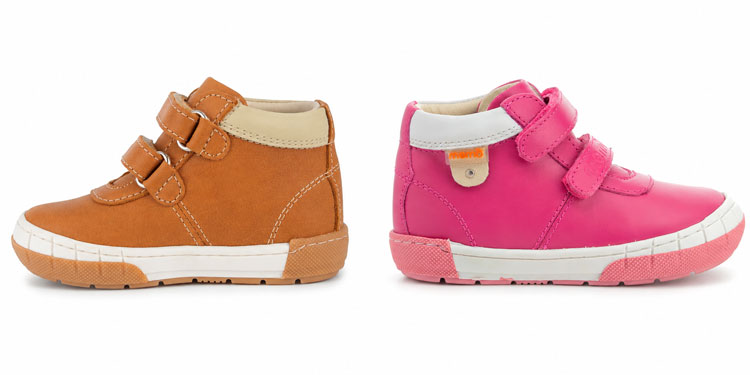
2. Shoe Style Gabi and Alvin by Memo (Orthopedic Shoe)
The Memo Gabi is a purpose-built orthopedic shoe for toddlers whose foot conditions require more than a mainstream athletic shoe can provide. The rigid outsole, reinforced heel counter, and double velcro strap closure deliver structural correction that standard sneakers can’t match. Reach for this when a physical therapist or pediatrician has specifically recommended orthopedic footwear, or when you’ve tried supportive sneakers without adequate improvement.
Key Features
- Order the model Gabi or Alvin on Amazon
- Also available in a Mary Jane style
- Accommodates medium and wide feet
- Ideal for moderate to strong cases of pronation
- High-top design with stiff heel counters
- Sizing tip: Order a half size larger than your toddler’s current foot size. Refer to Memo sizing chart
3. Shoe Style Elliott by Stride Rite
The Elliott’s high-top bootie design wraps the ankle directly — providing lateral stability that a low-cut shoe can’t offer. This is particularly valuable for toddlers whose ankles are still developing and prone to the inward rolling that flat feet cause. It’s affordable, easy to get on and off, and significantly more supportive than a typical toddler sneaker.

Key Features
- Order on Amazon
- Accommodates medium, wide, or extra wide feet
- Ideal for mild to moderate cases of pronation
- 100% leather construction
- High-top design provides extra ankle support
- APMA Seal of Acceptance
- Sizing tip: Order a whole size larger than your toddler’s current foot size
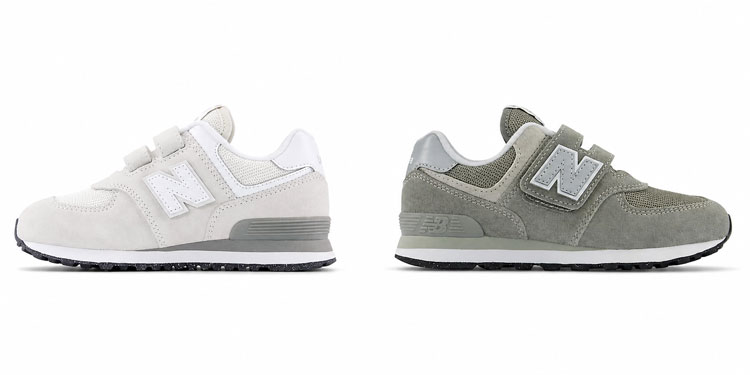
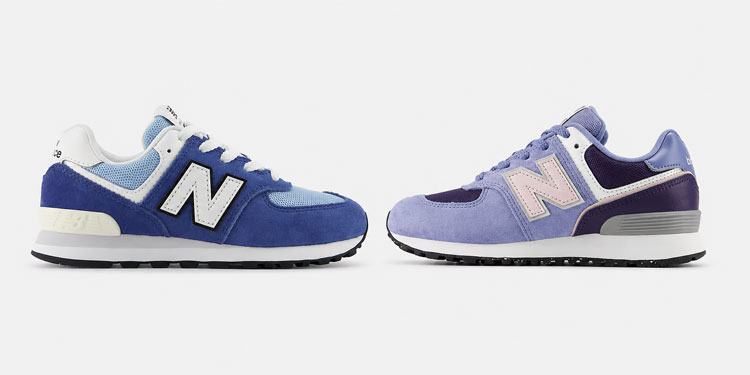
4. Shoe style 574 by New Balance
The 574 delivers all three structural features — stable outsole, firm heel counter, straight last — at a meaningfully lower price than the 990v6. It’s the strongest everyday option for families who need capable support without the premium investment. The wide width range makes it particularly practical for toddlers with broader feet.
Key Features
- Order on Amazon or the New Balance website
- Also available with laces on the New Balance website or Amazon
- Accommodates medium, wide, or extra wide feet
- Ideal for mild to moderate cases of pronation
- Firm heel counters
- APMA Seal of Acceptance
- Sizing tip: Order a half size larger than your child’s current foot size
5. Shoe Style Tracks by Timberland
The Tracks is water-friendly, high-topped, and built for rugged outdoor use. The high-top adds direct ankle support alongside the firm heel counter, and the dense outsole handles uneven terrain without allowing the foot to roll inward. A strong choice for toddlers who spend a lot of time outside.
The trade-off is weight — the heaviest shoe on this list, which may cause fatigue in younger toddlers.

Key Features
- Order on Amazon
- Accommodates medium or wide feet
- Ideal for mild to moderate cases of pronation
- High-top design for extra ankle support
- Water-friendly construction
- Sizing tip: Order a whole size larger than your child’s current foot size
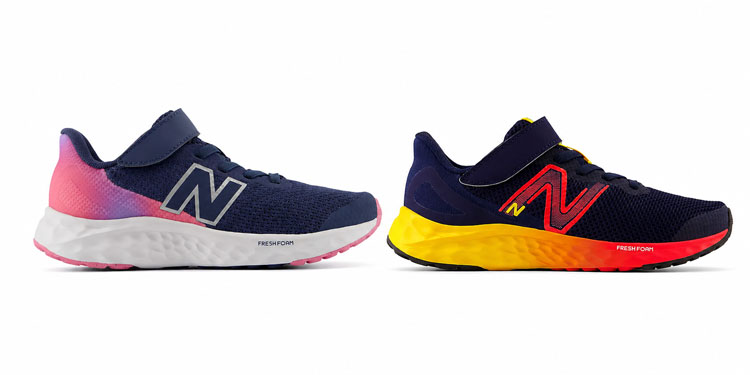
6. Shoe Style Fresh Foam Arishi v4 by New Balance
Some toddlers resist firmer structural shoes because they find the feel uncomfortable — particularly children with sensory sensitivities. The Arishi v4 uses New Balance’s Fresh Foam cushioning to deliver a noticeably softer underfoot feel while still maintaining the structural features that support developing flat feet. For toddlers who have refused other supportive shoes, this is often the solution.
Key Features
- Order on the New Balance website or Amazon
- Accommodates medium, wide, or extra wide feet
- Ideal for mild to moderate cases of pronation
- Semi-firm heel counters
- Sizing tip: Order a whole size larger than your toddler’s current foot size
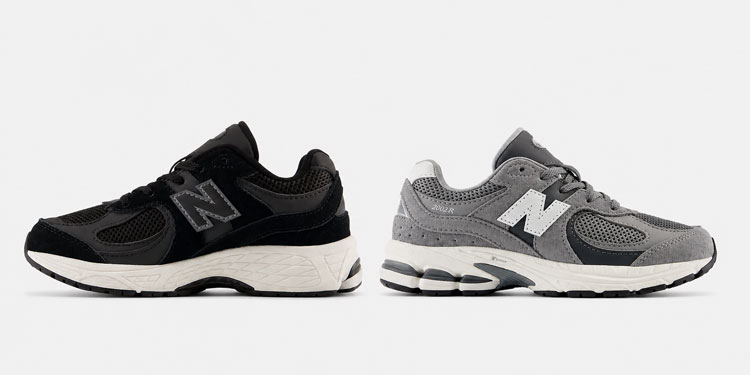
7. Shoe Style 2002 by New Balance
The 2002 sits between the Arishi and the 990v6 in both price and structural support. A dependable all-round option for families who want New Balance quality without the 990v6 price tag.
Key Features
- Order on the New Balance website or Amazon (wide widths available only on the New Balance website)
- Accommodates medium or wide feet
- Ideal for moderate to strong cases of pronation
- Firm heel counters, stable base of support, and semi-straight lasts
- Sizing tip: Order a whole size larger than your toddler’s current foot size
Getting the Right Fit
A shoe with excellent structural features in the wrong size provides no corrective benefit, and a shoe that’s too long allows the foot to slide forward, pulling the heel away from the heel counter — completely defeating its purpose. A shoe that’s too short compresses the toes.
Measure both feet and size for the larger one. As a general rule, order half a size to a full size larger than your toddler’s measured foot length. Learn how to measure your toddler’s foot at home here.
Watch: Key Features to Look for in Toddler Shoes with Arch Support
The video below walks through the three structural features visually — what to look for and how to test them before buying.
Should My Toddler Also Use Orthotics?
Start with supportive shoes and give them two to three months. Many toddlers see significant improvement with footwear alone — particularly those with mild to moderate flat feet, where the structural features of a good shoe directly address the root mechanics.
If ankle rolling or gait issues persist after consistent shoe wear, orthotics are the logical next step. They provide targeted arch and heel correction that complements the shoe’s structural support.
The two over-the-counter options I recommend most for toddlers are the Footlogics 3/4-length orthotic (fits toddler sizes 5 through little kid size 13, no insole removal needed) and the Footlogics full-length orthotic (fits toddler size 5 through big kid size 3, remove original insole first). For moderate to strong cases, choose the LittleSTEPS orthotics as they provide more significant heel and arch correction.
If your toddler does use orthotics, order shoes a full size larger than their measured foot size to accommodate the added volume.
Personalized Shoe Suggestions
For personalized guidance based on your toddler’s specific foot shape and condition, reach out at customerservice@fittingchildrenshoes.com.

I need help picking out best shoes for my 4 year old. He’s currently with chiropractic treatments
Hello Sejal,
I need more information in order to help you. Do you know your current child’s shoe size? I need his/her length and width (narrow, medium, wide, or extra wide). Is your child going to be wearing an orthotic with his/her shoes?
Once I have this information I can recommend the best shoe style to fit the shape of your child’s feet.