Best Toddler Walking Shoes with Ankle Support – Align and Strengthen Developing Ankles
By Juan Valenzuela | Certified Children’s Shoe Fitter with 10+ Years of Experience Last updated: June 2026
If your toddler’s ankles roll inward when they walk, or if a pediatrician, physical therapist, or occupational therapist has recommended supportive footwear, you’re in the right place. Toddler ankles are still developing — and the right walking shoes make a meaningful, often immediate difference in alignment, stability, and confidence during those early walking years.
This guide explains why toddler ankle support matters, what to look for in a shoe, and which specific styles provide the right combination of ankle coverage, heel control, and stability for young children with developing or challenged feet.
Why Toddler Ankles Need Extra Support
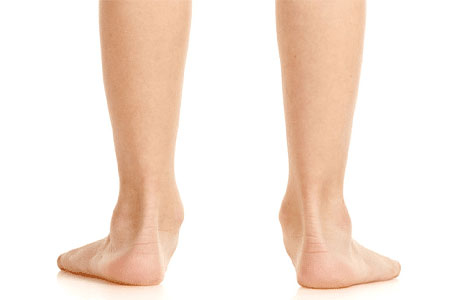
Toddlers learning to walk are still developing the muscles, ligaments, and bone structures that will eventually stabilize their ankles naturally. During this period, the ankle is particularly vulnerable to rolling inward — especially in children who have flat feet, overpronation, low muscle tone, or hypermobility.
When an ankle rolls inward repeatedly without support, several things happen:
- The arch collapses further with every step, worsening any underlying flatness
- The knee rotates inward in compensation, creating stress at the knee joint
- Gait patterns that develop during toddlerhood can become entrenched habits that persist into childhood
The right shoe doesn’t just cushion the foot — it actively holds the ankle in the correct position, interrupting the inward rolling pattern before it becomes a structural habit.
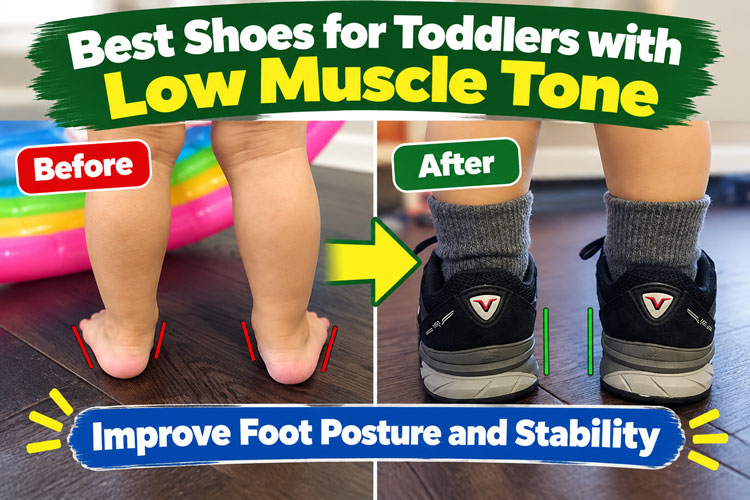
Before and After: What the Right Shoe Does
The before-and-after when a toddler with rolling ankles is fitted in the right shoe is one of the most immediate improvements in all of children’s footwear. The same child, the same moment — the difference is visible the instant they stand up.
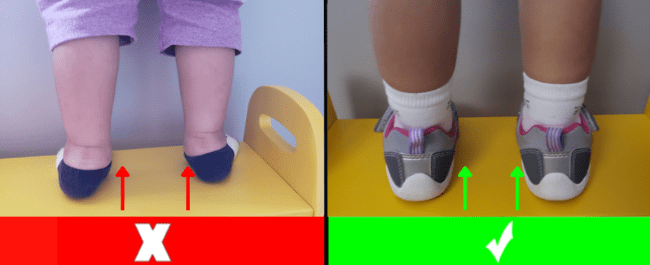
These are not braces or medical devices. They are everyday walking shoes with the right structural features. The improvement is entirely from the shoe design — specifically the features described below.
What to Look for in Toddler Walking Shoes with Ankle Support
Two features work together to provide ankle support in a toddler walking shoe:
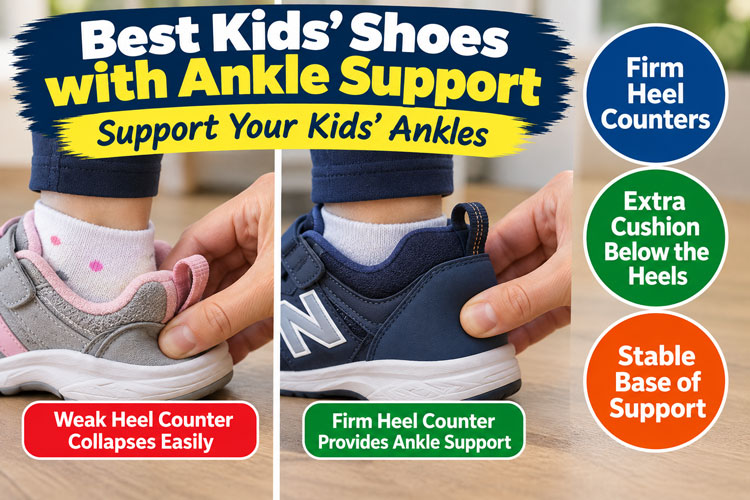
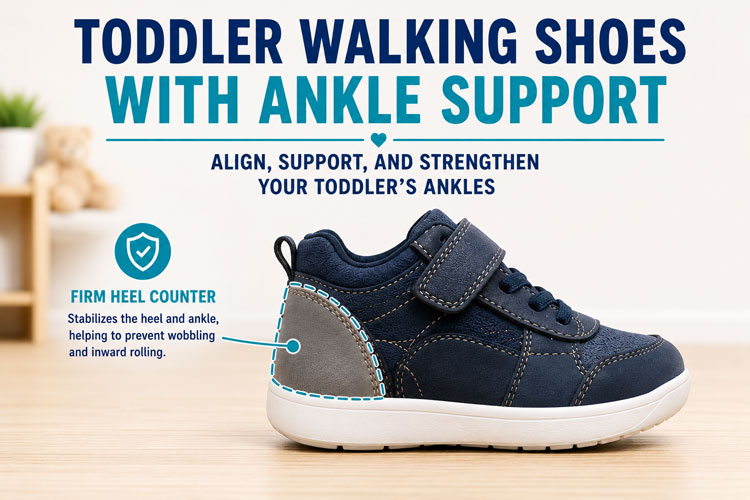
1. Firm Heel Counter.The heel counter is the rigid cup at the back of the shoe that wraps around the heel bone. For ankle support, this is the most critical structural element. A firm heel counter holds the heel in a vertical, centered position — preventing the inward tilt that causes ankle rolling and arch collapse.

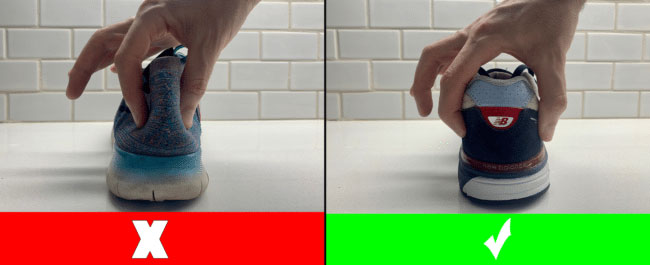
Shoes are never labeled “firm heel counter” on the packaging, which is why parents are often surprised to discover that many shoes marketed as supportive don’t pass this test. The shoes I recommend below have all been physically tested.
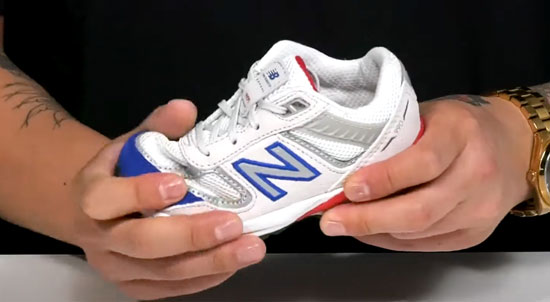
2. Flexible at the Forefoot, Stable Through the Midsection. Supportive does not mean rigid throughout. Toddlers need their feet to flex naturally at the toe area during walking — overly stiff forefoot construction causes fatigue and resistance to wearing. The right walking shoe is firm through the heel and midsection but flexes easily at the ball of the foot.
The Best Toddler Walking Shoes with Ankle Support
Every shoe below has been selected based on hands-on fitting experience. All have firm heel counters, high-top or bootie designs that provide lateral ankle coverage, and appropriate forefoot flexibility. All can accommodate orthotics. Disclosure: Some links in this article are affiliate links. Any commission earned comes at no extra cost to you and helps keep this resource free.
1. Shoe Style Elliott by Stride Rite
The Elliott is my top recommendation for toddlers who need ankle support. The high-top bootie design wraps the ankle directly, the heel counter is firm and well-constructed, and the base provides good stability without excessive weight. It’s affordable, easy to get on and off with its wide opening, and consistently produces the kind of improvement in ankle alignment that parents notice immediately.
For toddlers who are new walkers or whose ankles are significantly rolling, this is the shoe I’d fit first.

Key Features
- Order on Amazon
- Accommodates medium, wide, or extra wide feet
- Ideal for mild to moderate cases of pronation
- 100% leather construction
- High-top design provides extra ankle support
- APMA Seal of Acceptance
- Sizing tip: Order a whole size larger than your toddler’s current foot size
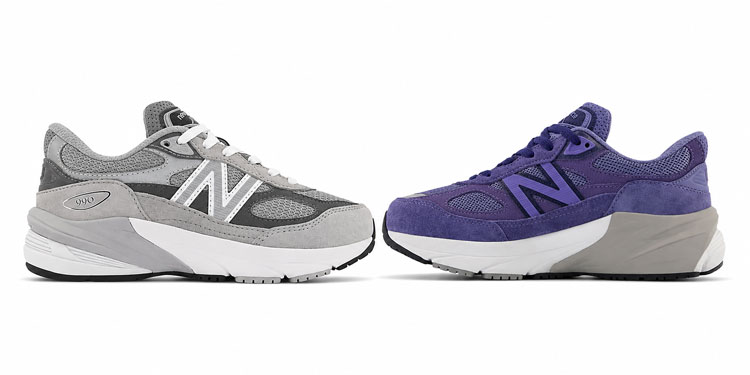
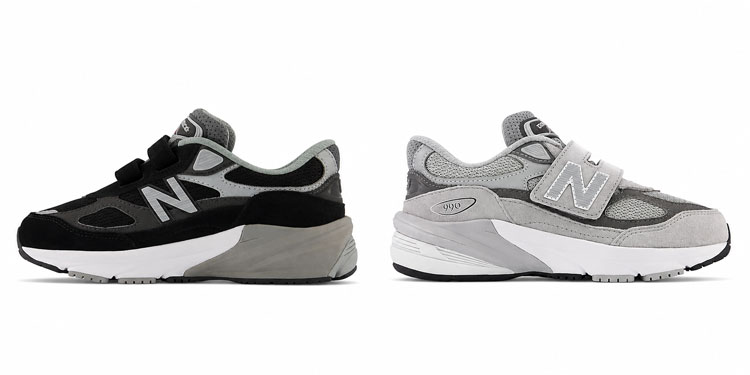
2. Shoe Style 990v6 by New Balance.
The 990v6 is a low-cut shoe, not a high-top — but its heel counter is the firmest available in any mainstream toddler shoe, which makes it exceptionally effective at holding the heel upright and reducing ankle rolling. For toddlers whose rolling is primarily driven by flat feet or overpronation rather than pure ankle instability, the 990v6 addresses the root cause more directly than a high-top with a weaker heel counter would.
For toddlers who need both ankle coverage and maximum heel support, pair the 990v6 with a Footlogics orthotic for the most comprehensive approach.
Key Features
- Order with laces on the New Balance website or Amazon
- Velcro version also available on the New Balance website or Amazon
- Accommodates medium, wide, or extra wide feet
- Firm heel counters, stable base of support, and semi-straight lasts
- Ideal for moderate to strong cases of pronation
- Removable insoles
- Sizing tip: Order a half size larger than your toddler’s current foot size
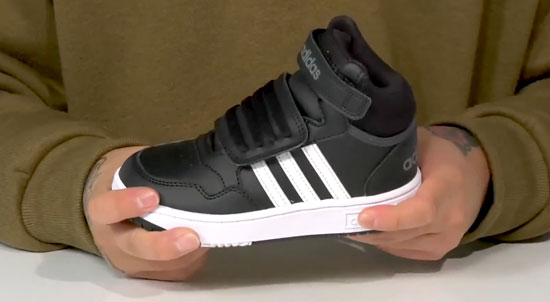
3. Hoops Mid 3.0 AC by Adidas
The Hoops Mid 3.0 is a basketball-inspired high-top that provides solid lateral ankle coverage alongside a firm heel counter and stable outsole. The Velcro closure makes it practical for toddlers and caregivers, and the mid-top height provides meaningful ankle coverage without the full bootie design of the Elliott.
A good mid-range option for families who want ankle coverage at a lower price point than some of the specialized styles.
Key Features
- Order the shoe style Hoops Mid 3.0 by Adidas on Amazon
- Fits medium and wide feet
- I suggest that you get this shoe a whole size larger than your toddler’s current foot size
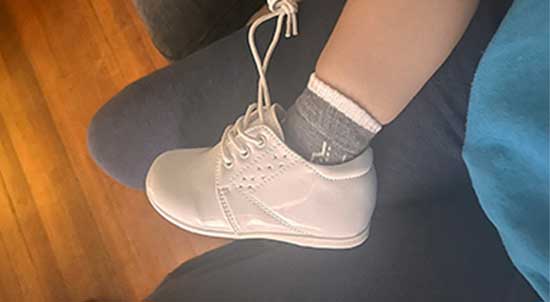
4. Leatherette Derby by Josmo
The Josmo Leatherette Derby is a classic high-top bootie style with a firm heel counter, stable base, and lace-up closure. The lace-up design is worth noting — laces allow you to tighten the ankle area more precisely than Velcro, which is beneficial for toddlers with more significant ankle rolling. It has a clean, classic look that works for both everyday and dressier occasions.
Key Features
- Order the shoe style Leatherette Derby by Josmo on Amazon
- Fits medium and wide feet
- Lace-up closure
- I suggest that you get this shoe a half size larger than your toddler’s current foot size
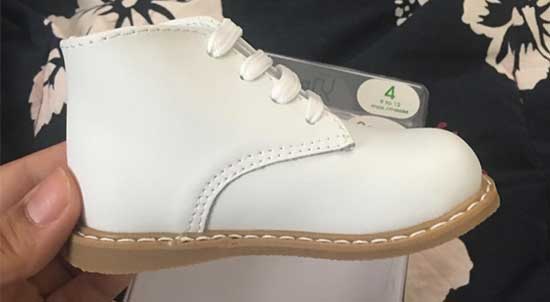
5. High-Top Leather Shoe by Baby Deer
The Baby Deer high-top is constructed from 100% leather with a lace-up closure and firm construction throughout. It provides ankle coverage and heel support in a style appropriate for more formal occasions — useful for families who need ankle support in a shoe that looks smart for events, photos, or occasions where a sneaker doesn’t fit.
Key Features
- Order the shoe style Baby Deer on Amazon
- Fits medium and wide feet
- 100% leather
- Lace-up closure
- I suggest that you get this shoe a half size larger than your toddler’s current foot size
Laces vs. Velcro for Toddler Ankle Support
For toddlers with ankle pain or more significant ankle rolling, laced shoes are preferable. Laces allow you to tighten the shoe precisely around the ankle and midfoot, holding the foot more securely in place. Velcro is more practical for young toddlers who can’t yet manage laces and for caregivers who need to get shoes on and off quickly — but when ankle support is the priority, laces provide a meaningfully better outcome.
If your toddler wears Velcro, ensure both straps are fastened snugly at every wearing. Loose Velcro allows the foot to shift inside the shoe, reducing the corrective effect of the heel counter.
Should My Toddler Also Use Orthotics?
Start with supportive shoes and give them two to three months. Many toddlers see significant improvement in ankle alignment and gait with footwear alone — particularly where the rolling is driven by mild to moderate flat feet that a supportive shoe directly addresses.
If rolling persists or if a physical therapist has recommended additional support, orthotics are the appropriate next step. The two options I recommend most for toddlers:
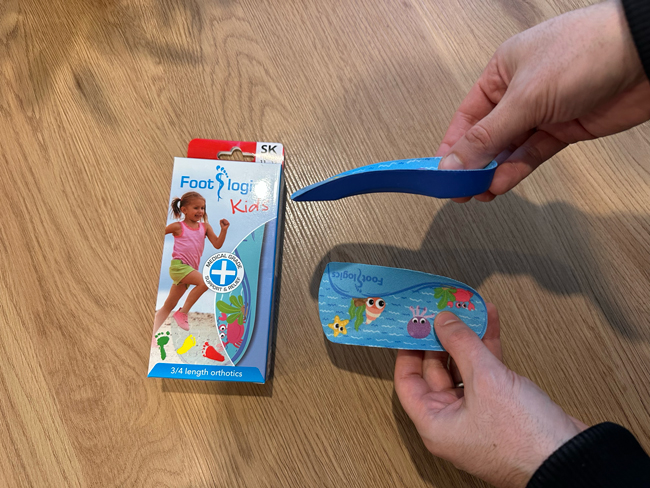
Footlogics 3/4-length orthotic — fits toddler sizes 5 through little kid size 13. Fits inside most shoes without removing the original insole.
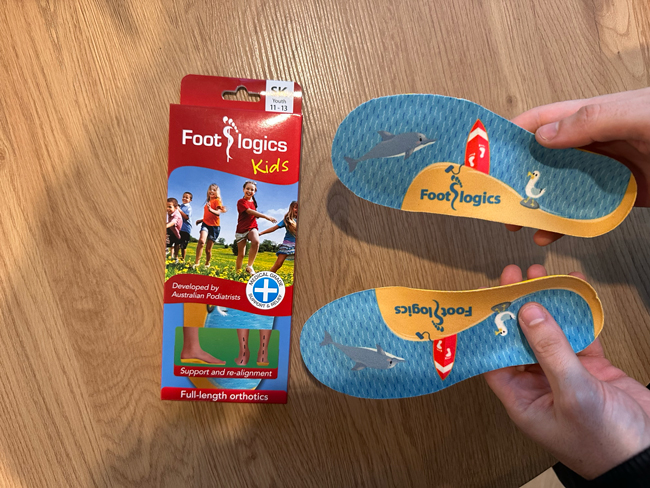
Footlogics full-length orthotic — fits toddler size 5 through big kid size 3. Remove the original insole before inserting.
For a full overview, see Best Orthotics for Toddlers Ages 2–3.
Every shoe on this list is deep enough to accommodate orthotics. If your toddler does use them, order shoes a full size larger than their measured foot size to accommodate the added volume.
Frequently Asked Questions
Not necessarily. A high-top adds lateral ankle coverage that a low-cut shoe can’t provide — which is genuinely valuable for toddlers with weak or developing ankles. But the heel counter quality matters more than the cut height for most conditions. A low-top with a very firm heel counter (like the New Balance 990v6) outperforms a high-top with a soft, collapsible back. When both are present — firm heel counter plus high-top — as in the Stride Rite Elliott, the combination is most effective.
Yes — the shoes on this list are the same ones I recommend for children with low muscle tone. The ankle coverage and firm heel counters help provide the external stabilization that low muscle tone makes difficult to generate internally.
Some toddlers resist structured shoes, particularly if they’re used to very soft or flexible footwear. A gradual introduction — wearing the new shoe for an hour or two per day and increasing over a week — often helps. The New Balance 990v6 with Fresh Foam cushioning is the softest option on this list that still maintains proper structure; it’s a useful middle ground for resistant toddlers.
The most immediate indicator is visual — look at your toddler’s ankles from behind while they stand. In the right shoe, the ankle bones should sit more vertically rather than dipping inward. You should also see fewer instances of tripping or stumbling during normal play, and reduced fatigue during walking. If you’re not seeing any improvement after four to six weeks of consistent wear, it’s worth consulting a physical therapist or considering whether orthotics would add further benefit.
For personalized guidance based on your toddler’s specific foot shape and ankle condition, reach out at customerservice@fittingchildrenshoes.com.