Best Ikiki Shoes for Kids with AFOs: Are They a Good Choice for Everyday Wear?
Last Updated: August 2026 | Juan Valenzuela, Certified Children’s Shoe Fitter
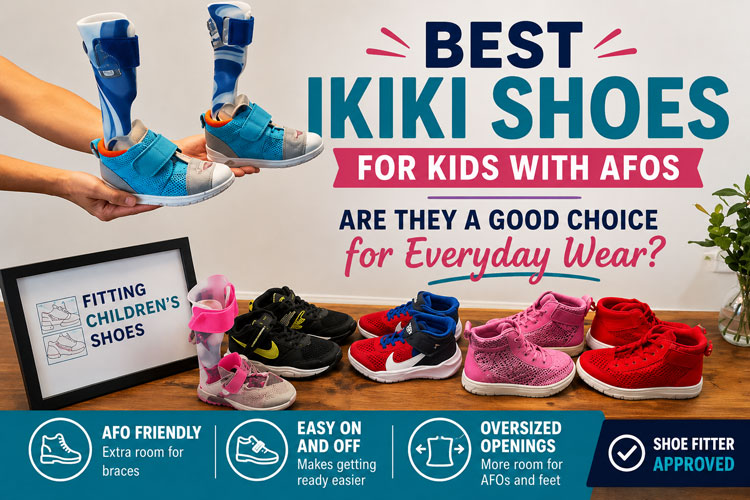
Looking for the best Ikiki shoes for kids who wear AFOs? Finding the right fit can be tricky, but Ikiki is a top choice among parents and fitters alike. As a shoe fitter with years of experience, I’ve found that Ikiki shoes work exceptionally well with AFOs — they open wide, offer enough depth to accommodate braces, and provide real comfort for daily wear. If someone recommended Ikiki to you, they’re likely on the right track.
The Main Drawback of Ikiki Shoes
Ikiki shoes are playful, lightweight, and easy to slip on — but they do have one real limitation: the heel counter is on the softer side, and doesn’t offer the firm support some kids need for all-day wear. That said, not every child with an AFO needs rigid heel support, which is exactly why many medical professionals still recommend Ikiki for a meaningful number of kids.
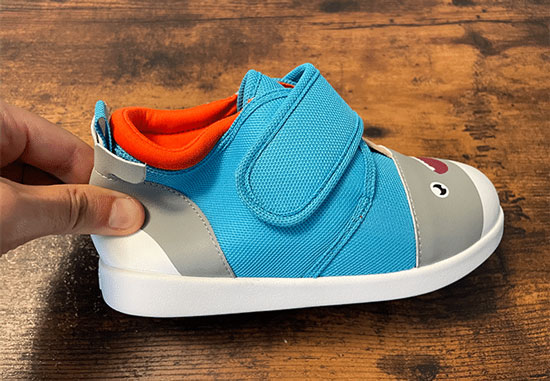
Based on this, I recommend Ikiki mainly for indoor use or limited outdoor play — roughly 4 to 5 hours a day. For a child who needs firmer heel support for genuinely all-day stability, see my guide to shoes with firmer support instead.
Are Ikiki Shoes Still a Good Choice for Kids Who Wear AFOs?
Absolutely — many families of kids who wear AFOs genuinely love Ikiki, not just for how it functions, but for how fun and kid-friendly it feels. Playful designs, breathable materials, and a wide, deep fit that works well with AFOs. One standout feature: the optional squeaker, which encourages proper heel-to-toe walking and can be switched off when it’s not needed. Ikiki is also noticeably more budget-friendly than most other AFO-compatible options.
Two Things Worth Knowing Before You Order
Ikiki doesn’t offer half sizes — when your child’s measurement falls between sizes, round up rather than down.
Ikiki lets you order each shoe individually, in different sizes. This is genuinely useful for AFO fitting specifically: some kids need one shoe sized larger than the other because one AFO takes up more room than the other. Not every brand offers this flexibility, which is part of why I recommend Ikiki even with the heel-counter tradeoff.
Best Ikiki Shoes for Kids with AFOs
Disclosure: some links below are affiliate links — I may earn a small commission at no extra cost to you if you click and purchase.
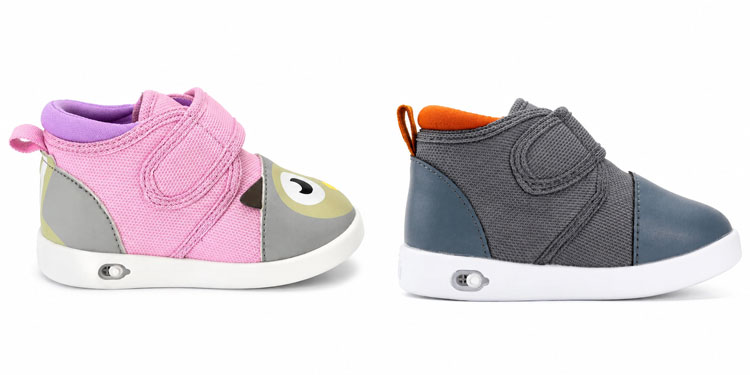
Ikiki High-Top
The same wide opening and squeaker feature as the sneaker, in a high-top build for a little extra ankle coverage.
Key Features
- Order on Amazon
- Not available in wide or extra wide widths but fits naturally wide
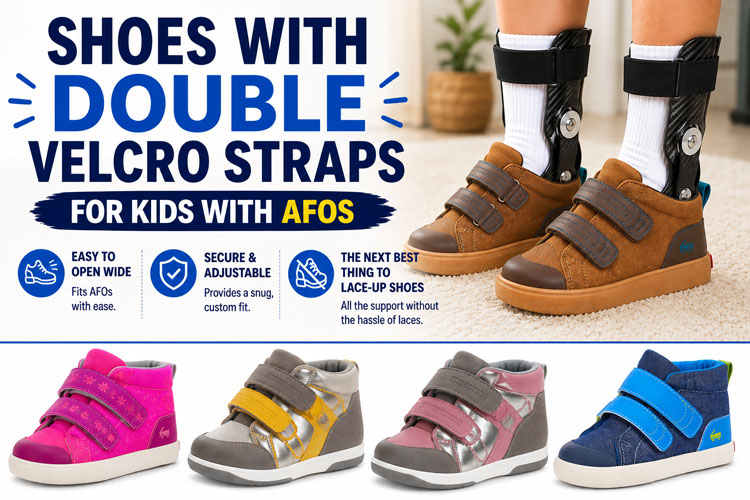
- Wide opening to make it easy to put on and take off shoes
- Synthetic Vegan Leather
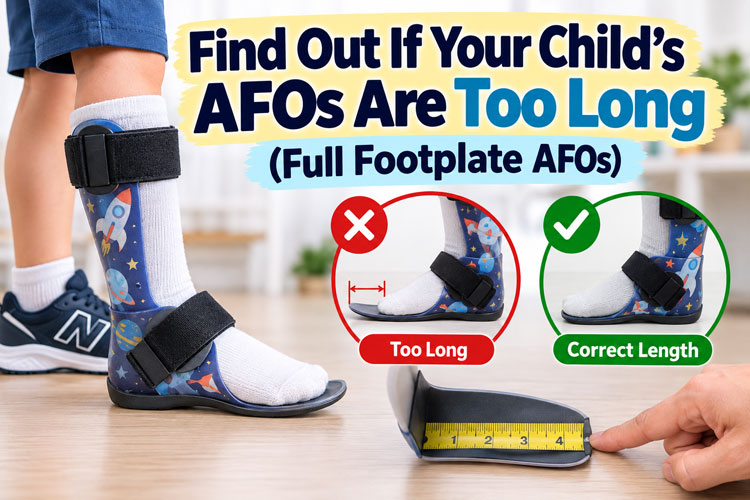
- Sizing tip: Measure from the end of your child’s AFO or SMO footplate, then order a half size larger than that measurement — not just your child’s regular foot size.
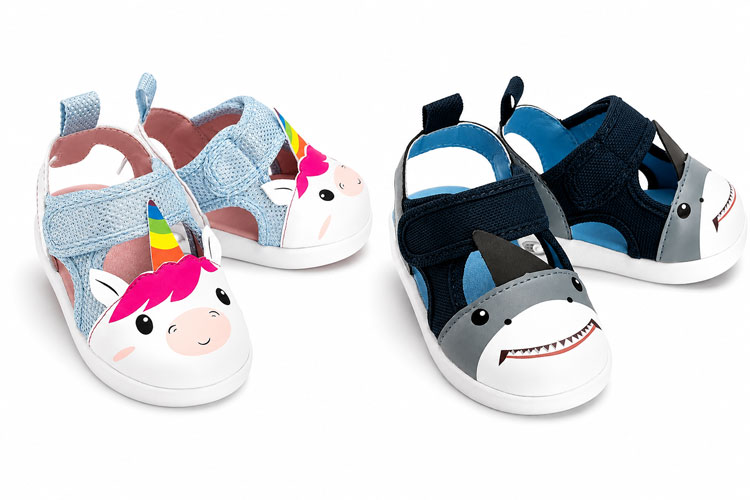
Ikiki Sandal
A warm-weather option with the same oversized opening and squeaker, for kids who need AFO-friendly footwear beyond closed shoes.
Key Features
- Order on Amazon
- Not available in wide or extra wide widths but fits naturally wide
- Closed-toe design helps protect the toes
- Breathable fabric
- Non-marking rubber outsole
- Sizing tip: Measure from the end of your child’s AFO or SMO footplate, then order a half size larger than that measurement — not just your child’s regular foot size.
When your Ikiki shoes arrive, try them on first with the original insoles in place. If the AFO feels too tight, presses against the fabric, or doesn’t sit low enough inside the shoe, remove the insoles to create the extra space it needs.
Keep in mind that how well Ikiki works still depends on your child’s specific AFO — some are bulkier than others. And remember: sizing up dramatically to compensate for a tight fit can undercut the AFO’s effectiveness just as much as a shoe that’s genuinely too small.
How to Measure for the Right Size
I built a simple system to help families figure out exactly what size to order. All you need is a measuring tape to measure your child’s AFO — I then use those measurements with a Brannock Device (something you can do yourself at home too) to determine the correct shoe size.
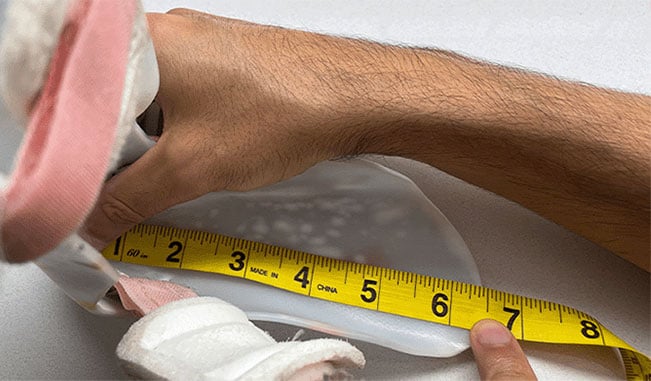
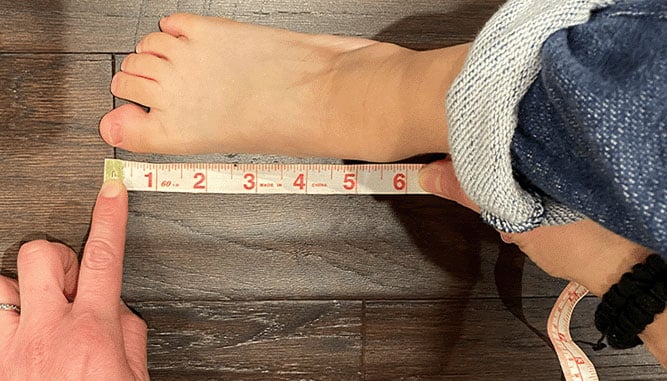
Step 3: Determine your child’s foot width. A short video showing your child’s foot from a few angles helps me confirm whether they have narrow, medium, wide, or extra wide feet.
What to send me: your child’s foot and AFO measurements, plus the foot-shape video, to fittingchildrensshoes@gmail.com. I’ll respond within 24 hours with the exact size to order.
How Do Ikiki Shoes Compare to Other Brands?
Several brands offer AFO-compatible shoes, but Ikiki stands out for its child-friendly design and genuinely useful features — the switchable squeaker, the wide opening, and the ability to order mismatched sizes per foot. If you’re looking for more supportive options with a firmer heel counter, see my comprehensive guide to AFO-friendly shoe brands for detailed recommendations beyond Ikiki.
Watch My Video: Are Ikiki Shoes Good for AFOs?
I break down how these shoes offer wide openings, a workable fit, and genuine comfort for kids with AFOs, plus an honest look at where they fall short.
Why Standard Shoes Often Fall Short
Standard shoes typically aren’t built with the extra space and adjustability an AFO needs. That mismatch shows up as discomfort, pressure points, and real difficulty getting the shoe on or off in the first place — exactly what AFO-specific shoes like these are designed to solve.
Reach Out for Specific Shoe Recommendations
If you have questions or need recommendations tailored to your child’s needs, reach out — I’m happy to help you find the best fit.
Frequently Asked Questions
Not necessarily — it depends on how much of the day your child is active and standing versus sitting or resting. If your child is in and out of the shoe throughout the day rather than on their feet continuously, Ikiki may still work fine within the 4-5 hour guideline above.
This applies across Ikiki’s line, including the styles above — genuinely useful if one of your child’s AFOs is noticeably bulkier than the other and needs a size up on just that side.
It’s a genuine tool, not just a novelty — the squeak only sounds when the heel strikes properly, which gives parents and therapists an audible cue for heel-to-toe walking. It can be switched off anytime it’s not needed.