
Best Socks for Kids with Sensory Issues: Seamless and Breathable
Last updated: August 2026 | By Juan Valenzuela, Certified Children’s Shoe Fitter | Est. reading time: 8 minutes
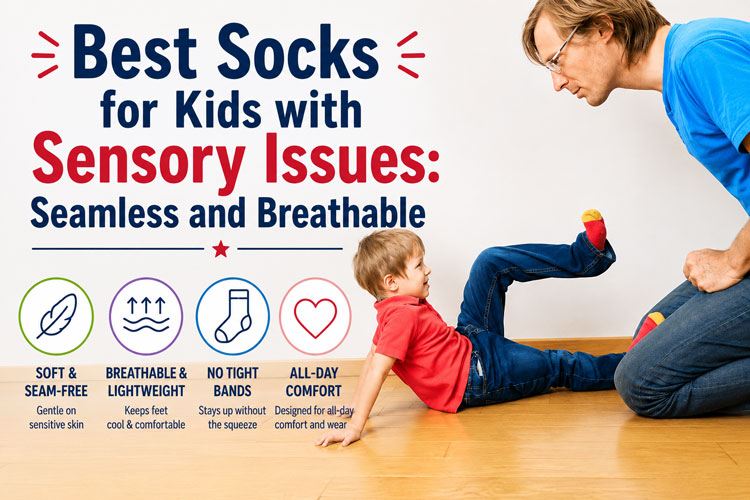
Is your child refusing to wear socks? Sensory issues can make something as simple as putting on socks a genuinely difficult daily battle. Many children are sensitive to seams, tags, and rough textures, and a sock that doesn’t feel right can trigger real distress — not exaggerated discomfort, but something that can feel intolerable to the child experiencing it. The best socks for kids with sensory issues are as close to fully seamless as possible, with a form-fitting design that avoids wrinkling and bunching.
Benefits of Sensory-Friendly Socks
Traditional socks often have seams at the toe and heel that can cause irritation and discomfort. Sensory-friendly socks aim to eliminate or minimize those seams, providing a smoother fit that reduces the risk of sensory overload. They’re also typically made from soft, breathable materials that are gentler on sensitive skin.
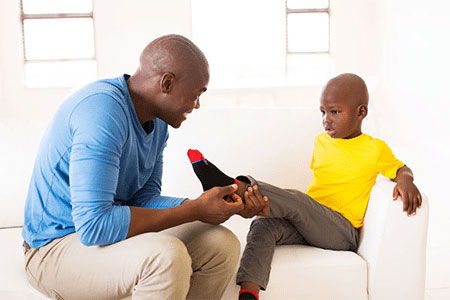
If you’re exhausted from searching for a single pair of socks your child will actually agree to wear, you’re in the right place. Before I show you my recommendations, let’s make sure you know how to order the correct sock size — since even the “right” sock in the wrong size will get rejected.
The Importance of Getting the Correct Sock Size
It doesn’t matter how comfortable or seamless a sock is — if it’s the wrong size, your child will likely refuse to wear it. Socks that are too large or baggy are a non-starter for kids with sensory issues, and socks that are too short or too tight cause their own irritation. The fit has to be right.
How to Order the Correct Sock Size
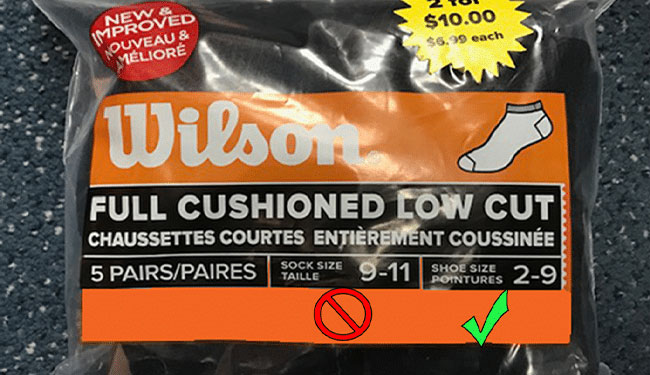
Ignore the label that says “sock size” or gives an age range — instead, look for the label that lists a shoe size range. Ordering based on your child’s actual shoe size is the most reliable way to get the correct sock size.
Now that you know how to order the right size, let’s get into the socks themselves. Steer clear of any sock that claims to be “seamless” but still has a visible flat or hand-linked seam across the toes — read the fine print, since this marketing phrase gets used loosely.
Seamless Socks for Kids with Sensory Issues
The socks below come in a range of styles, colors, and materials. I’m listing them in the order I generally recommend trying them, but — and this is worth saying clearly upfront — no single brand works for every sensitive child. Every child’s sensory profile is different, and it often takes real trial and error to land on the right one. Disclosure: some links in this post may be affiliate links, and I may earn a small commission at no extra cost to you.
1. Jefferies Seamless Socks for Kids
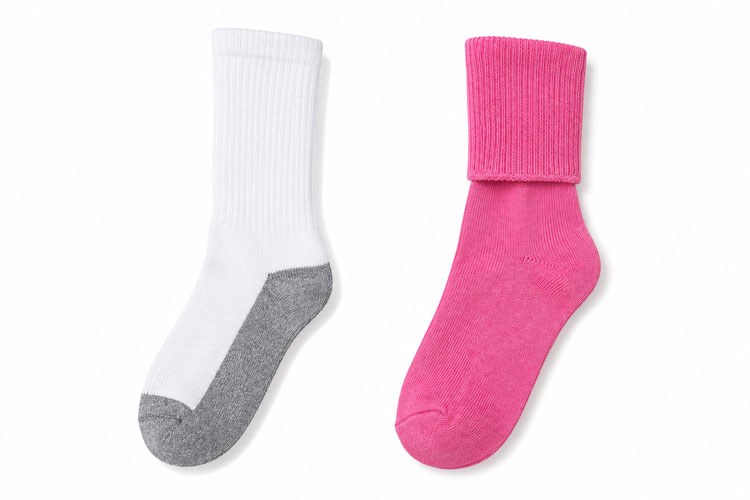
Made from high-quality materials for a comfortable, irritation-free fit. Reinforced heels and toes add durability, and the “stay up” design prevents slipping and bunching for all-day wear.
- Order on Amazon
- Sensory friendly smooth toe seam provides less irritation and bulk for sensitive toes and feet
- Half cushion foot for added support and impact protection
- Ribbed leg support stays up on the leg and provides added support
- Cotton rich blend provides optimal softness and durability
2. Rambutan Seamless Socks for Kids
Comfortable and genuinely durable, with a design that resists slipping. There’s technically still a seam here, but it’s hand-stitched and typically much less noticeable than a standard machine seam. Made of bamboo, which is breathable and holds up well over time.
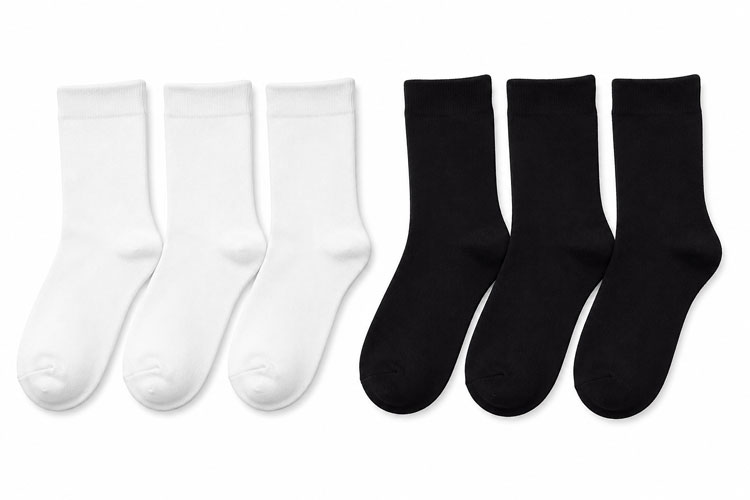
- Order on Amazon
- 75% Rayon derived from Bamboo, 22% Polyamide, 3% Spandex
- Comfortable Comfort Seam Toe – Sensitive Toes Friendly (Hand Linked Toe)
- Odor Resistant Bamboo (Rayon) Fabric
3. SmartKnit Seamless Socks for Kids
Knit in a continuous circle from the toe up rather than sewn together, which means there’s no traditional seam by construction. The main downside is the higher price tag — and one honest caveat below worth reading before you order.
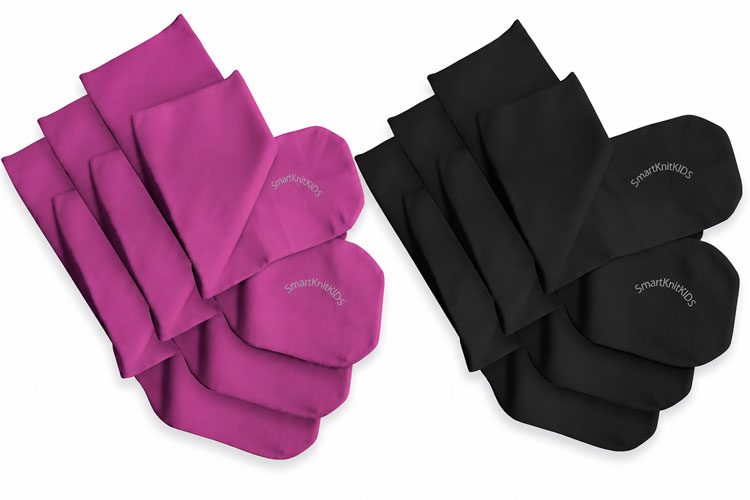
- Order on Amazon
- Knit circularly from the toe up, eliminating a traditional stitched seam
- “No heel” design lets young children put them on with confidence and helps them last longer before being outgrown
- Stretchy yarn creates a form-fitting design that resists wrinkling and bunching
A note on SmartKnit’s “seamless” claim: several parents have told me that even SmartKnit socks have a faint line across the toe that their child could still feel and reject. Here’s the honest explanation: after the socks are knitted, they go through a pressing process (similar to heavy-duty ironing) that can leave a faint pressing line. It genuinely isn’t a stitched seam — the circular knitting process makes a true seam structurally impossible — but for some highly sensitive kids, that pressing line is still enough to cause rejection. Most seam-sensitive kids do fine in SmartKnit socks, but not every child will, and that’s a real limitation worth knowing before you buy.
What to Do If None of These Socks Work
If you’ve tried multiple “seamless” brands and your child still rejects all of them, you’re not alone — several parents have told me the exact same thing. A few things that have helped other families in this situation:
Accept that some trial and error is normal. It’s genuinely common to go through several brands before finding the one that works — or the one that works “well enough,” even if it’s not perfect every day.
Try a true hand-linked seam brand, not just circular knits. Rambutan’s hand-stitched seam is different in feel from a machine seam and works for some kids who reject SmartKnit’s pressing line.
Pair the sock with a sensory routine. Some parents have found success running a brief sensory activity right before putting socks on, and a distraction (a favorite show, a song, a countdown game) immediately after, to get through the moment of contact.
Be Patient and Understanding
Adjusting to new socks or shoes can take real time, especially for children with sensory issues. It’s hard for a parent to watch their child kick, scream, cry, or yell over something that seems small — but for a child with sensory sensitivities, that discomfort can genuinely feel intolerable, even if it’s hard for others to understand from the outside. Be patient, encourage your child to communicate what specifically feels wrong, and stay willing to keep adjusting.
Complementing Socks with Sensory-Friendly Shoes
Getting the socks right is only part of the picture. Sensory-friendly shoes are designed with the same considerations in mind, providing a comfortable, supportive fit for sensitive feet — worth pairing with whichever sock ends up working for your child.
Contact Me for Specific Sock or Shoe Recommendations
What works for one child with sensory issues might not work for another. If you’re unsure about the best socks for your child, or need advice on shoe fitting, don’t hesitate to reach out by email. Whether you’re looking for guidance on sizing, material, or specific brands, I’m here to help you through the process.
Please share your own experiences and findings in the comments — other parents going through the same trial-and-error process can genuinely benefit from your input.

Try city of clouds wonderfully splendid school sock range
Hello Dave,
Thank you for your feedback. I believe that sock brand is only sold in the UK, am I right?
None of these are TRULY seamless. I ordered a pair of the SmartKnit and they have ‘bumps’ on both sides, so my daughter couldn’t get them off fast enough. They have the ‘claim to be seamless’, “but have a flat or hand linked seam across the toes.” I’m at a total loss. Other suggestions? Boombas make the same ‘seamless’ claim but have the same issue.
Hello Anna,
I cannot comment on Bombas socks, as I don’t know their process. As far as the socks I recommend in this article are concerned (SmartKnit),the confusion typically comes from what it’s call a pressing line. Essentially, after the socks are knitted, they are finished by pressing them – kind of a heavy duty iron, for lack of better description. This process sometimes makes a very faint line in the knitting. But, it is absolutely not a seam. In fact, because of the patented process of how they knit their socks, a seam is impossible. The socks are knitted circularly, starting at the toe and knitting in a circle to the top of the sock.
Most seam sensitive children are able to wear SmartKnit socks with no issue. However, there will always be children that still find irritation with wearing socks.
As an alternative to SmartKnit socks I suggest trying Rambutan Socks. Please make sure that you order the socks in the correct size.
Same issue here. They all still have seams. Going to try Q for Quinn next. But I hate spending so much on socks that get lost so easily.
Hello Laura,
Let us know how they work out for your son.
I’m totally with you, Anna. Whether it’s a “seam” technically is just semantics. It’s a line across the toes with bunches on both sides. They lasted less than 3 seconds.
Did you ever find a brand of truly seamless socks? I’m desperate. I have tried every so called seamless sock for my son and he has issue with them all.
Hello Shaylyn,
I am not sure whether your comment was directed to Anna or me but SmartKnit socks are truly seamless. I explain this in more detail in the comment above.
I don’t think there are any other options. Have you tried a sensory diet before she puts socks on and then sensory activities immediately after or distraction? My daughter struggles as well but Smartknit are the only ones we can make work. (It is still painful at times) Sorry to hear of your struggles, it sucks going through sock troubles 🙁
Thank you Cayley for sharing your experiences.