
Best Supportive Sneakers for Kids – Top 10 Choices for Kids with Foot Problems
Last updated: March 2026
Written by Juan Valenzuela, children’s shoe fitting specialist with over a decade of experience helping children with foot and gait conditions find properly fitted footwear.
Is your child struggling with flat feet, weak ankles, or other foot concerns—and your doctor recommended supportive shoes but didn’t specify which ones? Choosing the right sneakers can make a significant difference in your child’s comfort, stability, and walking gait.
The first seven years of childhood are often referred to as the “golden years of treatment opportunity.” During this time, supportive footwear—and orthotics when necessary—can help guide proper foot development, improve balance, and reduce strain on growing feet.
As a children’s shoe fitting specialist with years of experience fitting kids with foot and gait conditions, I’ve helped many families find supportive sneakers that improve stability, posture, and walking gait.
In this guide, I’ll explain what actually makes a sneaker supportive and which children benefit most from wearing supportive shoes.
Which Children Benefit Most from Supportive Sneakers?
Supportive sneakers can be particularly helpful for kids who have:
- flat feet or overpronation
- toe walking tendencies
- weak ankles
- knock knees
- low muscle tone
- foot, knee, or leg pain
Supportive shoes do not fix underlying conditions, but they can provide a stable base that helps children move more comfortably and efficiently.
The Role of Supportive Shoes in Treating Foot Conditions
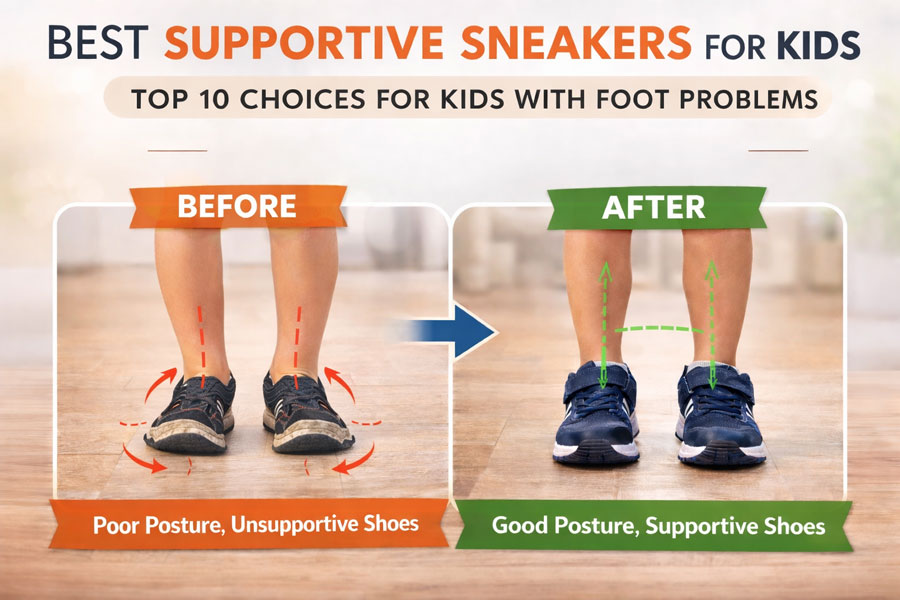
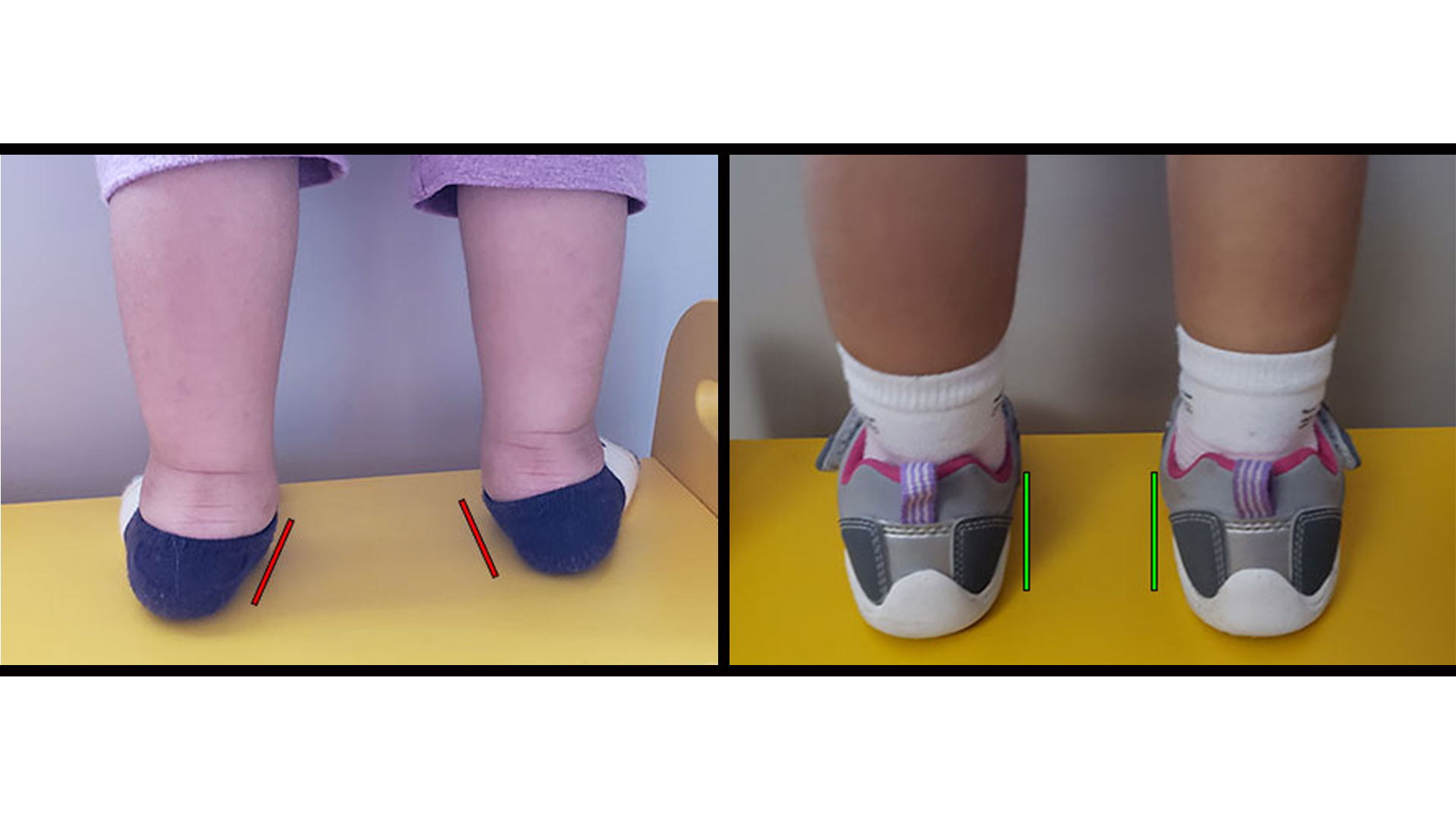
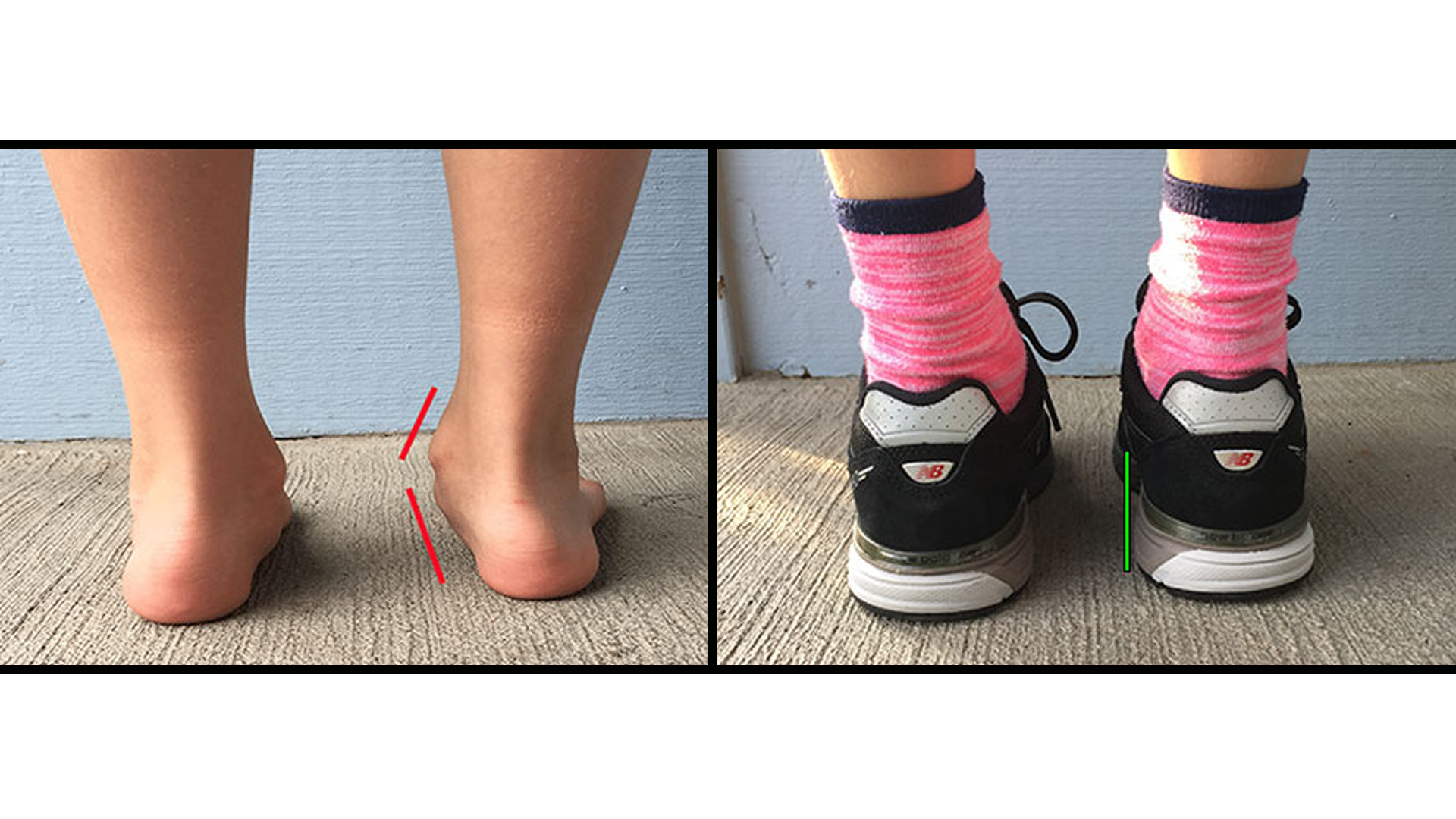
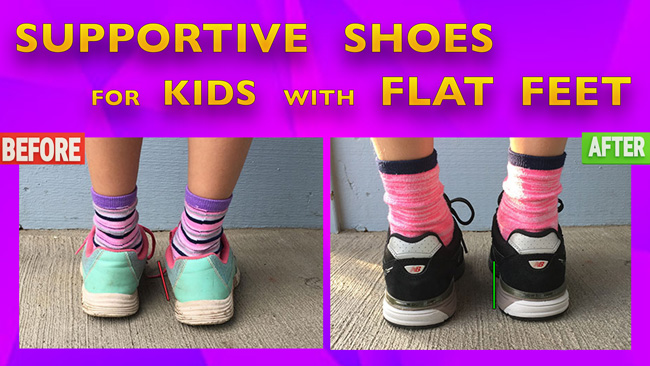
The images below show how powerful supportive shoes can be—they don’t just improve foot posture, they can also enhance walking gait and overall alignment.
The first image shows a two-year-old flat-footed toddler with a mild degree of pronation standing barefoot and then wearing a pair of supportive sneakers.
The second image shows an older flat footed child with a moderate degree of pronation standing barefoot versus wearing supportive sneakers.
How to Tell if Your Child’s Shoes Are Supportive
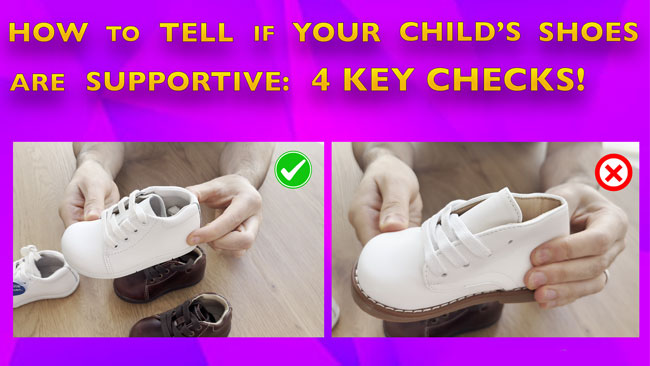
Parents can quickly check whether a sneaker provides proper support by performing three simple tests:
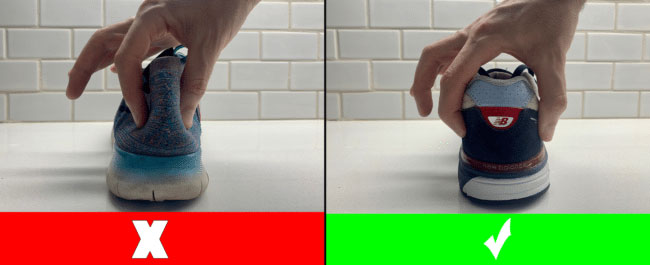
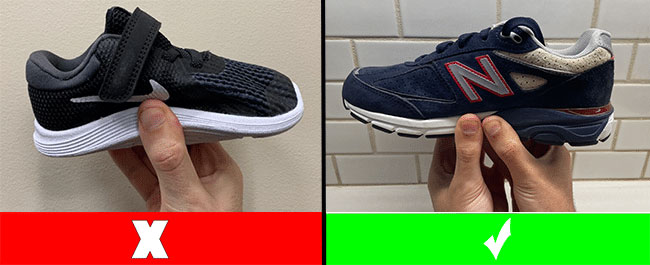
Heel Counter Test: Press inward on the back of the shoe. A supportive sneaker should feel firm and resist pressure. A strong heel counter helps stabilize the heel and prevents the foot from rolling inward.
Flex Test: Hold the shoe at both ends and bend it. A supportive sneaker should bend at the toes but remain stable through the middle. Shoes that fold in half usually lack the structure needed to support growing feet.
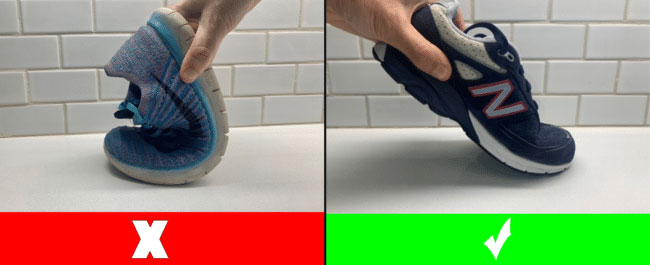
Twist Test: Hold the shoe at both ends and try to twist it like a towel. Supportive sneakers should resist twisting and maintain their shape.
Customizing Fit for Unique Foot Shapes with My Virtual Guide
Every child’s foot is unique, with variations in arch height, width, and instep height. It’s crucial to find shoes that accommodate these differences. A shoe that fits well will provide better support and comfort, reducing the likelihood of blisters or pressure points.
I created a virtual fitting guide that makes finding the right shoes for your child simple and stress-free. It helps you determine your child’s exact foot shape (narrow, medium, wide, or extra wide), identify foot conditions like flat feet or high arches, and determine you the exact shoe size to order online—complete with the right growing room.
My Top Supportive Shoe Recommendations for 2026
Below you can access my updated list of supportive sneaker recommendations for kids, based on real shoe-fitting experience and structural features that promote stability and alignment:
• firm heel counters
• stable bases of support
• proper flexibility
• multiple width options
These structural features help improve stability, support proper foot alignment, and accommodate a wide range of children’s foot shapes and conditions.
Scan or click the QR code below to view my updated list of the top supportive sneaker recommendations. The recommendations include shoes for toddlers, little kids, and big kids with a variety of foot shapes and support needs.

The list is updated regularly to reflect new supportive sneaker models and discontinued styles.
Do Arch Support Sneakers for Kids Exist?
Technically, most kids’ sneakers do not come with built-in arch support like adult orthotics or specialty shoes. However, well-designed children’s shoes provide a stable base of support and firm heel counters, which help keep the foot aligned and reduce overpronation. This structural support compensates for the lack of a traditional arch insert, helping your child maintain proper posture, walking gait, and overall foot stability while their feet are still developing.
Barefoot vs. Supportive Shoes
There has been long been debate over whether kids benefit more from walking barefoot or wearing supportive shoes. Going barefoot can help strengthen foot muscles in children with healthy feet, but it’s not practical—or safe—for kids with poor foot posture, pain, or stability issues. For everyday activities, supportive sneakers are the smarter choice, providing comfort, protection, and the stability growing feet need.
Should Your Child Also Wear Orthotics?
Many parents wonder if their child needs orthotics. While orthotics can be helpful for certain foot conditions, it’s best to start with supportive shoes and see how your child responds. If you notice ongoing pain or discomfort, consulting a healthcare professional is a smart next step. I also recommend checking out my guide to the two most effective orthotics for children—these were the top picks I fitted at the children’s shoe store, and I’ve seen firsthand how well they support growing feet and help address common foot issues.
Not all children need supportive shoes. However, kids with flat feet, weak ankles, toe walking tendencies, or foot pain often benefit from shoes that provide additional structure and stability.
Parents can quickly check whether a sneaker is supportive by performing the heel counter test, flex test, and twist test. Supportive sneakers should have a firm heel counter, bend only at the toes, and resist twisting through the middle.
The Long-Term Impact of Supportive Footwear
Investing in supportive footwear can have long-term benefits for your child’s health. Properly supported feet can prevent the development of chronic issues like plantar fasciitis or knee pain later in life. By choosing the right sneakers now, you’re setting the foundation for a lifetime of good foot health.

Do you have any recommendations for winter boots?
When it comes to snow boots, support isn’t really a concern since most snow boots don’t offer much support, and they’re typically worn for short periods (no more than 4 hours at a time). However, if you’re looking for an insulated hiking boot with good support, I do have a few great options in mind.
To give you the best recommendations, could you please let me know:
1- Your child’s foot shape (narrow, medium, wide, or extra wide)
2- Their current shoe size
3- The country you’re contacting me from, so I can suggest models available in your region
Hi! Thank you so much. I emailed over a video and some pictures of her feet. We live in Alaska, so boots are needed pretty frequently 🙂
Hello Taylor,
I just responded to your email. Let me know if you have any other questions.