How to Tie Shoes for Kids Who Wear AFOs: 3 Simple Steps
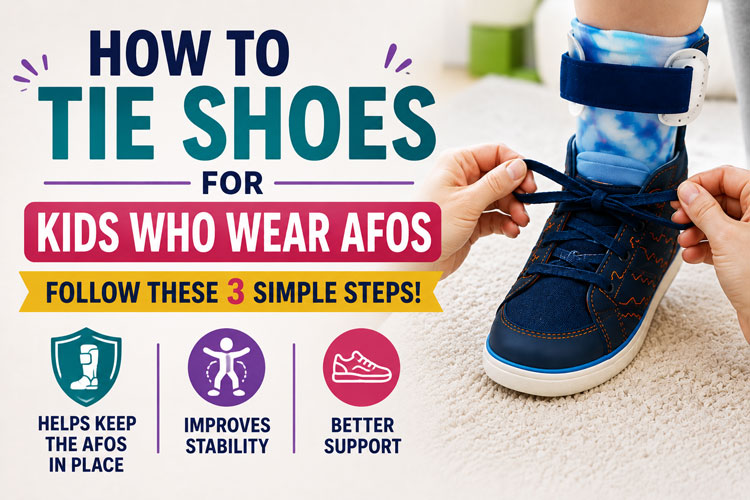
Does your child wear AFOs due to a foot or leg condition? The way you tie their shoes can make a real difference in how well the braces actually function. Even after finding shoes that work with AFOs, you might notice extra space around the heel — and that space can undercut support and stability. A coworker with over 20 years of experience in children’s shoe fitting taught me the most effective lacing method for AFOs, and I’ll walk you through it here in three simple steps.
Why This Technique Helps
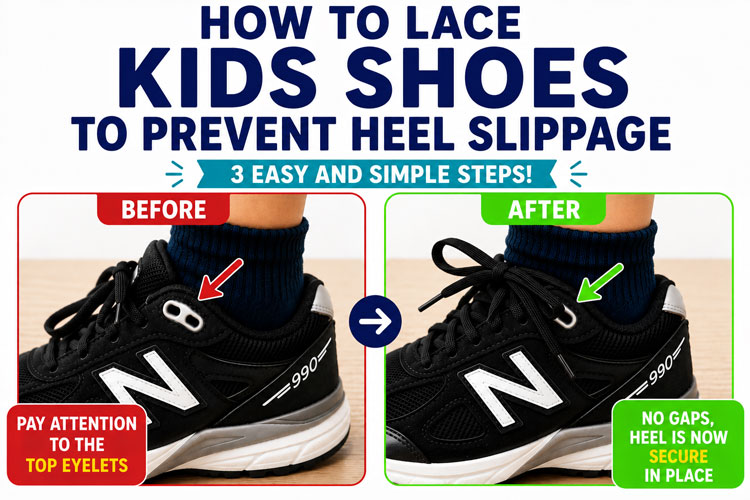
Properly lacing your child’s shoes helps the foot stay secure, gets the most support out of the AFO, and prevents unwanted movement inside the shoe. This technique gently pulls the foot toward the back of the shoe, creating a snug, stable fit that a standard lacing pattern doesn’t provide.
How to Tie Shoes for Kids Who Wear AFOs
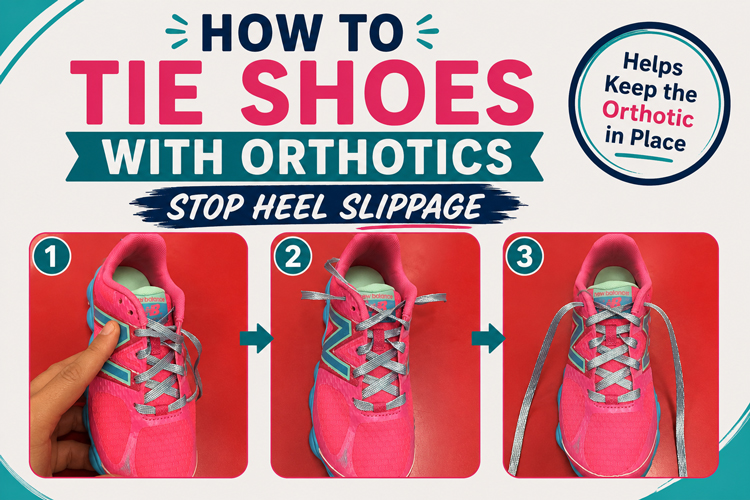
Step 1: Lace up as usual, but leave the top two eyelets open. Thread the laces through the lower eyelets and cross them as you normally would, stopping before you reach the last two holes on each side.
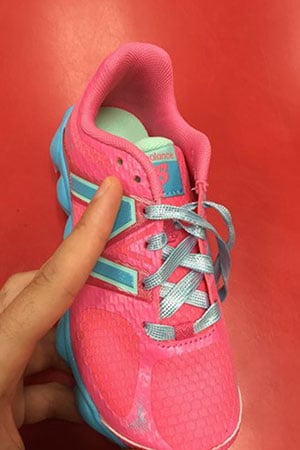
Step 2: Thread each lace straight up through the top eyelet on its own side. Instead of crossing them like the eyelets below, run each lace up and through the top hole directly above it, creating a small loop on each side of the shoe.
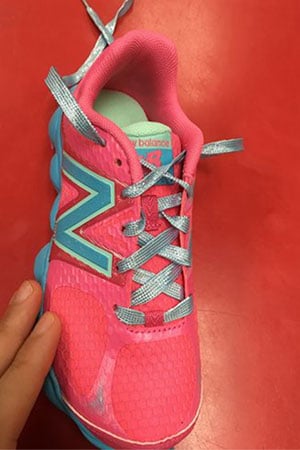
Step 3: Cross each lace and feed it through the loop on the opposite side, then pull snug. This locks the heel back and in place before you tie the final knot, giving the shoe real extra support that standard lacing doesn’t offer.
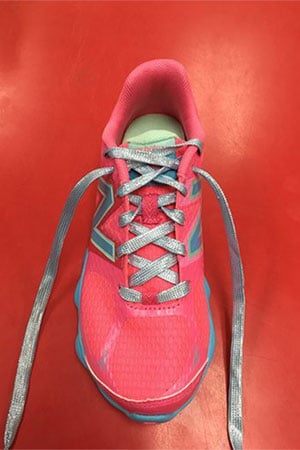
You’ll likely need to replace the shoe’s original laces, since factory laces are often too short once an AFO is inside the shoe. Longer laces are essential for this technique to work comfortably over the brace.
Getting the Right Shoelaces for Your Child’s Shoes
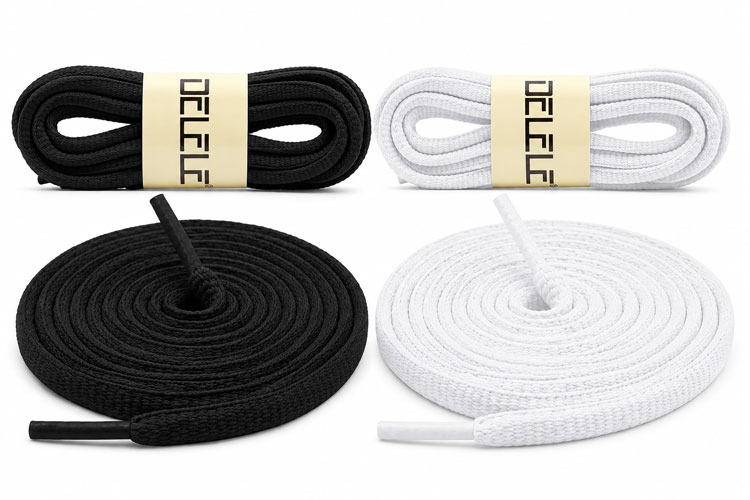
Choosing the right laces matters as much as the technique itself. I recommend a durable oval lace with some texture or grip — this holds a knot better than a slick, round lace and stands up to the daily wear of a child who’s active in AFOs.
- Order on Amazon
- 1/4″ oval (half-round) profile, polyester construction
- Sold in packs of 2 pairs (4 individual laces)
- Available in 40+ colors and multiple lengths
- Count your child’s eyelets to order the correct length
- Disclosure: this post contains affiliate links
How to Get the Correct Shoelace Length
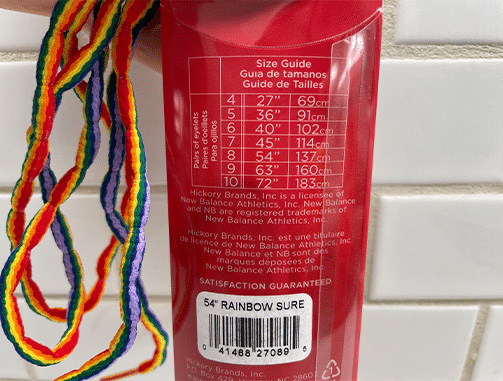
I typically replace the original laces with longer ones to accommodate the extra bulk of an AFO. Start by counting your child’s eyelets, then size up one length category beyond what you’d normally order for that eyelet count.
Bonus Resource: Best Sneakers for Kids Who Wear AFOs
The right shoe matters just as much as the lacing technique. There are only a handful of supportive shoes genuinely compatible with AFOs — the shoe is what connects the AFO to the ground, and if it doesn’t offer the right structure and support, the AFO won’t do its job as intended, no matter how well it’s laced.
Contact Me for Personalized Recommendations
If you have questions about lacing, shoe selection, or fit for your child’s AFOs, reach out — I’m happy to help.
Frequently Asked Questions
It works with any shoe that has at least one extra pair of eyelets near the top — most of the AFO-friendly laced shoes I recommend have this. If a shoe only has a single row of eyelets, this specific loop-lock technique won’t work, and standard lacing pulled snug is the next best option.
Check for pinching, red marks, or your child pulling at the shoe during or after wear. The goal is snug and secure, not restrictive — if there’s visible discomfort, loosen slightly and retie rather than leaving it too tight for the sake of a locked-down fit.