Best Sandals for Kids with Curly Toes – Round Toe Boxes with Extra Depth
By Juan Valenzuela | Certified Children’s Shoe Fitter with 10+ Years of Experience | Last updated: June 2026
Have you noticed your child’s toes curling under, or has a doctor mentioned the term “curly toes”? It’s a common condition, and while it often improves on its own as children grow, the shoes your child wears in the meantime can make a real difference — for better or worse. The right sandals can ease pressure and discomfort during the warmer months; the wrong ones can make the curling more pronounced over time.
This guide explains what curly toes are, why footwear matters so much for this specific condition, what features to look for in a sandal, and which specific styles work best.
What Are Curly Toes?
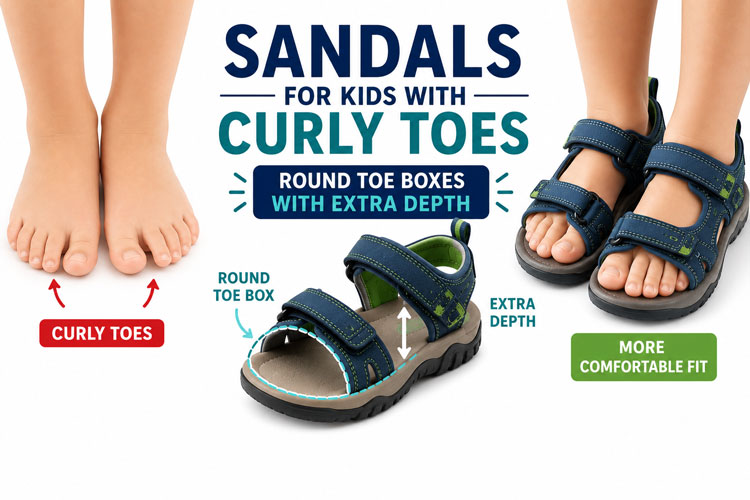
Curly toes are a contracture of the smaller toes — most often the third, fourth, or fifth — where the toe curls downward and tucks under the toe next to it, rather than lying flat. It can affect a single toe, several toes, or occasionally the same toes on both feet. The condition is usually present from birth and is one of the more common toe conditions I see in young children.
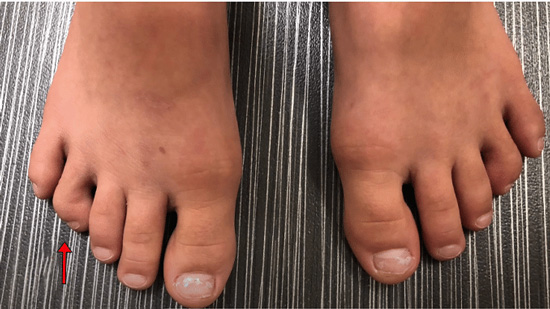

Curly toes are sometimes called overlapping or underlapping toes, depending on whether the curled toe sits on top of or underneath its neighbor.
Why Does My Child Have Curly Toes?
The most common contributing factors are:
Hereditary predisposition. If one or both parents have curly toes, their children are meaningfully more likely to have them as well.
Tight flexor tendons. The tendons that curl the toes downward are abnormally tight, pulling the toe under and toward the big toe.
Shoes that are too short or too narrow. Footwear that crowds the toes can actively contribute to the contracture, particularly during the years when the foot is still developing.
Is It a Problem That Needs Treatment?
In most cases, no formal medical intervention is needed, and the condition often improves naturally with growth. I don’t recommend pursuing treatment for curly toes unless it’s specifically advised by a foot specialist — what I do strongly recommend, in every case, is making sure your child is in the correct shoe in the correct size.
That said, it’s worth having your child examined by a foot specialist if you notice:
- Flattening or thickening of the toenail on the affected toe
- Pain or discomfort during normal daily activities
- Sores, corns, or blisters forming from pressure on the curled toe
Acting early matters here in a very specific way: the contracture is flexible in younger children and becomes progressively more rigid with age. Non-surgical measures — primarily shoes with adequate width and depth across the toes — tend to be far more effective when started early, before the deformity has had years to stiffen.
How Footwear Affects Curly Toes
Shoes that are the wrong size or shape can genuinely make curly toes worse. A toe box that crowds the toes forces them into continued contact under pressure, which can cause the flexor tendons to stay contracted and tighten further over time. Extended periods in a too-narrow or too-shallow shoe can gradually shift the shape of the foot in a way that reinforces the curling rather than relieving it.
The inverse is also true: the right shoe — with enough width and depth for the toes to lie as flat as possible — reduces pressure, reduces friction, and gives the foot the best chance of natural improvement over time.
What to Look for in a Sandal for Curly Toes
Two features matter most:
1. Round, Roomy Toe Box. A rounded toe box gives the toes space to spread out naturally rather than being squeezed into a narrow or pointed shape. For a child with curly toes, this reduces the pressure that drives further contraction and minimizes friction against the curled toe specifically.
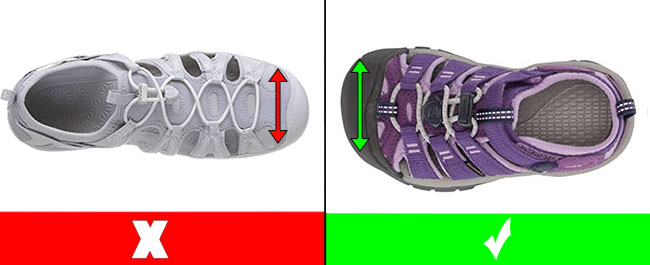
2. Extra Depth. Depth matters as much as width here. A curled toe takes up more vertical space inside the shoe than a flat one — a shallow sandal will press down on the curled toe from above, even if the width is generous. Extra depth lets the foot sit without being cramped from any direction.

Open-Toed vs. Closed-Toed Sandals
Open-toed sandals are generally the better choice for curly toes. The adjustable strap across the front lets you control exactly how much pressure sits on the toes — something a closed-toe design can’t offer. If your child’s curling is more pronounced on one or two specific toes, an open-toe design also lets you visually monitor the toe position throughout the day.
The Best Sandals for Kids with Curly Toes
Every sandal below offers a round toe box and extra depth — the two features that matter most for this condition. Many also come in multiple widths to help you dial in the right fit. Disclosure: Some links in this article are affiliate links. Any commission earned comes at no extra cost to you and helps keep this resource free.
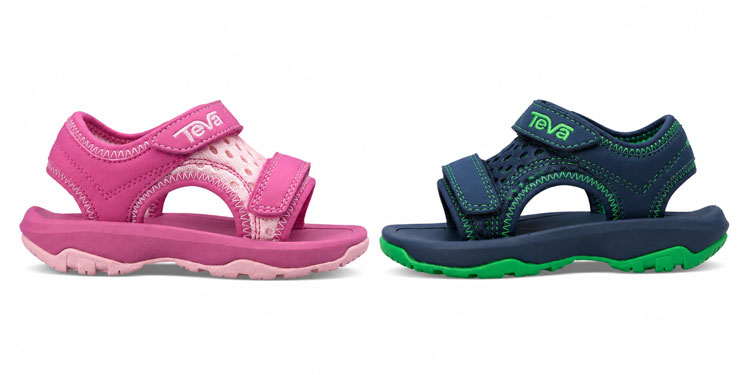
1. Psyclone by Teva. These open-toe sandals feature adjustable straps that let you fine-tune pressure across the front of the foot — particularly useful for a toe that curls more than the others. The EVA foam footbed cushions and supports without crowding the toes.
Key Features
- Order on Amazon
- Fits medium, wide, and extra wide feet (fits high insteps)
- EVA foam footbed cushions and softly supports the foot
- Rubber outsole for great traction
- Fitting tip: size a half size up from your child’s current foot length
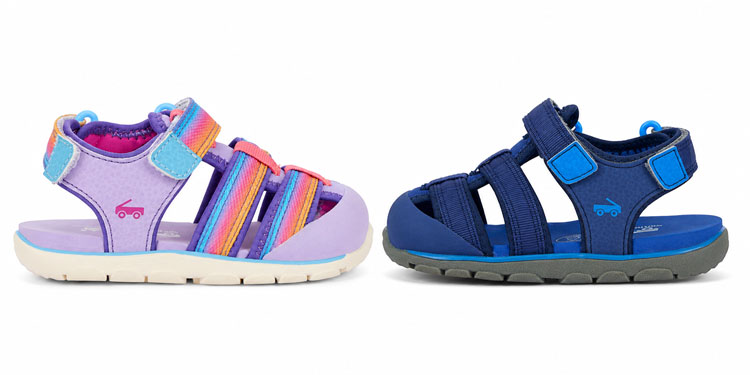
2. Cyrus IV by See Kai Run. A flexible, breathable sandal with a generously sized toe box and an EVA molded footbed. Water-friendly and machine washable, making it practical for active summer days.
Key Features
- Order on Amazon
- Fits medium, wide, and extra wide feet (fits high insteps)
- Water-friendly and machine washable
- Generous toe box and EVA molded footbed promotes healthy foot development
- Adjustable Velcro strap around the heels
- Fitting tip: size a half size up from your child’s current foot length
3. Seaturtle by Kamik. A durable open-toe option with triple Velcro straps for an easy, adjustable fit and traction designed to hold up across different surfaces — useful for active kids who move between pavement, grass, and playground equipment in the same afternoon.
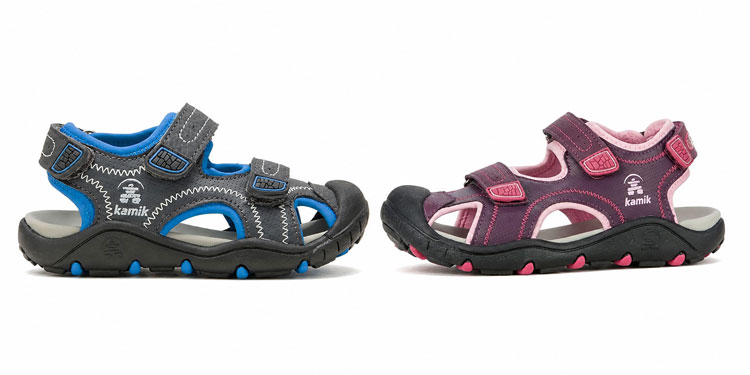
Key Features
- Order on Amazon
- Fits medium, wide, and extra wide feet (fits high insteps)
- Triple Velcro straps for easy on and off
- Quick-drying, moisture-wicking lining Vegan-friendly
- Fitting tip: size a full size up from your child’s current foot length
4. Adventurous Light-Weight by Dream Pairs. A lightweight, comfortable option built for durability during outdoor play. The triple hook-and-loop closure makes for quick on-and-off, and the cushioned footbed supports all-day wear.
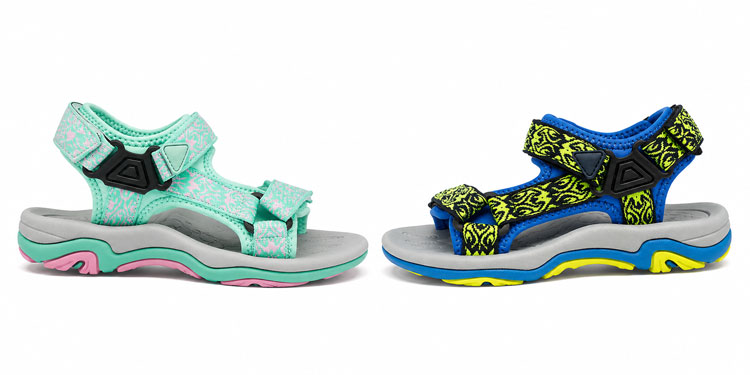
Key Features
- Order on Amazon
- Fits medium, wide, and extra wide feet (fits high insteps)
- Triple hook-and-loop closure for quick, easy on and off
- Excellent grip
- Lightweight, cushioned MD footbed for all-day comfort
- Fitting tip: size a full size up from your child’s current foot length
5. Hurricane by Teva. A round-toe open sandal with adjustable straps for a snug, comfortable fit around the toes. The anatomically engineered footbed provides genuine arch support alongside the toe-friendly fit.
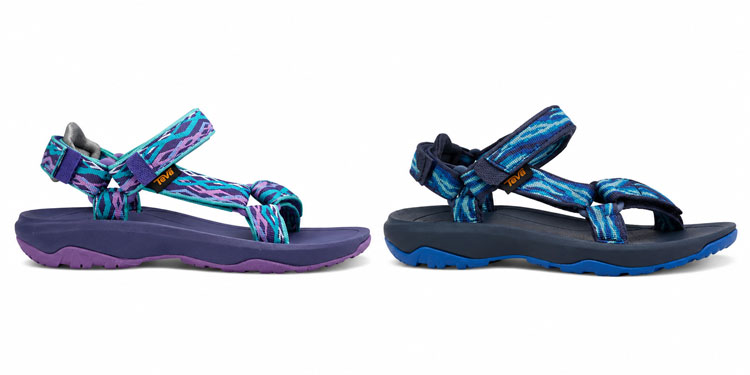
Key Features
- Order on Amazon
- Fits medium, wide, and extra wide feet (fits high insteps)
- Easy hook-and-loop closure comes on and off quickly and gets the fit just right
- Rubber outsole for durability and traction
- Fitting tip: size a half size up from your child’s current foot length, since the strap pattern runs slightly snug
6. Lucky Brand. A practical option with a rear Velcro strap that opens the sandal widely for fast, fuss-free dressing — useful for kids who resist having their feet handled due to toe sensitivity.
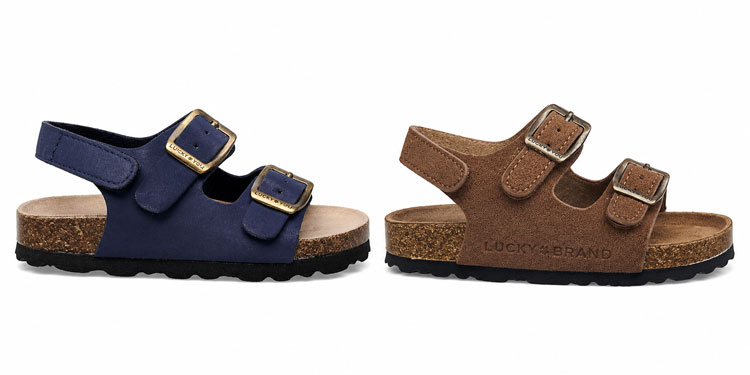
Key Features
- Order on Amazon
- Fits medium and wide feet
- Supportive footbed
- Adjustable front buckles with a rear Velcro strap for easy on and off
- Fitting tip: size a half size up from your child’s current foot length
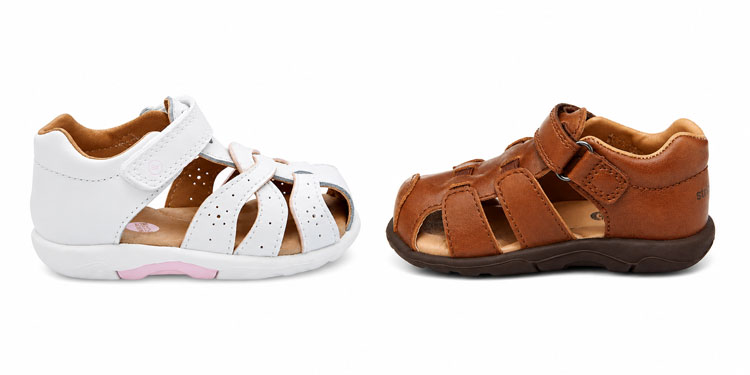
7. Archie by Stride Rite. A fisherman-style sandal with an oversized opening and hook-and-loop closure, designed specifically around extra wide feet. The sensory pod outsole technology adds tactile feedback that helps with balance and ground-feel — a nice secondary benefit alongside the toe-friendly fit.
Key Features
- Order on Amazon
- Fits medium, wide, and extra wide feet (fits high insteps)
- Fisherman-style sandal with hook-and-loop closure
- Easy on and off thanks to an oversized opening
- Slip-resistant traction with sensory pod technology for better ground-feel
- Fitting tip: size a half size up from your child’s current foot length
A Tip for Putting Sandals On
When fitting your child’s sandals, gently press the curled toe flat against the sole first, then apply light, steady pressure while sliding the foot toward the front of the sandal. This helps the toe settle into a more natural position inside the shoe rather than catching or folding further as the foot goes in.
Getting the Right Size
Most sandals are only available in whole sizes, not half sizes — so when in doubt, size up rather than down, especially since your child will likely be wearing these for an entire season.
Use this guide to measure your child’s foot length and width at home, which will also tell you whether your child has narrow, medium, wide, or extra wide feet, and whether they have a high instep to account for.
What About Everyday Sneakers?
Sandals are great for warm weather, but your child needs supportive everyday footwear the rest of the time too. See Best Sneakers for Kids with Curly Toes for the full breakdown of sneaker styles with the same wide toe box and extra depth this condition needs, suited for daily wear, school, and active play.
Reach Out for Specific Shoe Recommendations
Every child’s feet are different — if you’d like guidance specific to your child’s foot shape, reach out through our contact page.
Frequently Asked Questions
Often, yes — particularly when the condition is mild and caught early. The toe contracture tends to be flexible in younger children and becomes progressively stiffer with age, which is why footwear choices matter most during these earlier years. There’s no guaranteed timeline, and some cases do persist into later childhood or require specialist input, but proper footwear gives your child the best chance at natural improvement.
Both have a place. Sandals — especially open-toe styles — offer the most adjustable, least restrictive fit and are excellent for warm weather and for monitoring the toe’s position visually throughout the day. Sneakers are necessary for school, sports, and cooler weather, and the same principles (round toe box, extra depth) apply when choosing them.
Yes. A hereditary predisposition is one of the most common factors behind curly toes — if you or your partner had them as a child, it’s quite possible your child inherited the same tendency.