Best Shoes for Kids with Rolled Ankles – Straighten Ankles and Prevent Pain

By Juan Valenzuela | Certified Children’s Shoe Fitter with 10+ Years of Experience | Last updated: June 2026
If your child’s ankles visibly roll inward when they stand or walk, the right shoes can make an immediate and meaningful difference. Rolled ankles in children are one of the most common conditions I see in fittings — and one of the most straightforward to address with the right footwear. A well-chosen shoe with a firm heel counter can hold the ankle in a correct position from the moment the child puts it on.
This guide explains what causes rolled ankles in children, why the condition matters, what to look for in a shoe, and which specific styles work best across different ages and foot widths.
What Are Rolled Ankles?
Rolled ankles — also called ankle eversion or valgus ankles — occur when the ankle joint tilts inward rather than sitting vertically above the heel. When you look at a child with rolled ankles from behind, you’ll see the ankle bones dipping toward each other and the lower leg appearing to bow inward at the ankle.
This is closely related to — and often caused by — flat feet and overpronation. When the arch collapses, the foot can no longer support the weight of the body in a neutral position, and the ankle rolls inward to compensate. The two conditions are so frequently found together that addressing one typically requires addressing the other.
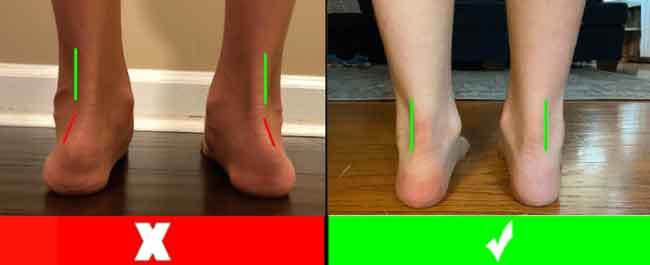
Rolled ankles are different from ankle sprains. A sprain is an acute injury — a sudden event where the ligament is stretched or torn. Rolled ankles are a chronic structural condition — the ankle is in a persistently misaligned position during all weight-bearing activity. Both can be helped by supportive footwear, but the approach and urgency differ.
What Causes Rolled Ankles in Children?
Several factors contribute to ankle rolling in children:
Flat feet. The single most common cause. Without an arch to distribute weight across the foot, the inner edge of the foot collapses under load — pulling the ankle inward. For a dedicated guide, see Best Shoes for Kids with Flat Feet.
Overpronation. The excessive inward rolling of the foot during walking directly causes the ankle to tilt. The more severe the pronation, the more pronounced the ankle rolling. See Best Shoes for Kids with Overpronation.
Heel misalignment (heel eversion). When the heel bone itself tilts inward, the ankle follows. Heel eversion, ankle rolling, and flat feet are a triad that frequently appear together. See Best Shoes for Kids with Misaligned Heels.
Low muscle tone. Children with low muscle tone have reduced ability to actively stabilize their joints. Their ankles are particularly vulnerable because the muscles that should hold the ankle upright can’t generate enough force to do so consistently. See Best Shoes for Kids with Low Muscle Tone.
Hypermobility. Children with hypermobile joints have ligaments that are more lax than normal. This excess range of motion means the ankle can roll past the point where a normal joint would stop — increasing the frequency and degree of rolling. See Best Shoes for Kids with Hypermobility.
Weak ankle ligaments following previous sprains. Once an ankle ligament has been stretched by a sprain, it often becomes permanently more lax — making future rolling more likely. In active children who have had repeated ankle sprains, supportive shoes are particularly important to break the cycle.
What Rolled Ankles Can Cause If Left Unaddressed
Rolled ankles are often dismissed as something children will grow out of. While very mild ankle rolling in toddlers is developmentally normal, persistent moderate to significant rolling rarely self-corrects — and the consequences compound over time:
- Chronic ankle pain and fatigue from the continuously stressed ligaments and tendons
- Increased frequency of ankle sprains as the misaligned ankle is more vulnerable to sudden rolling
- Knee pain from the inward torque the rolled ankle creates at the knee joint
- Hip and lower back pain from the compensatory patterns that develop up the kinetic chain
- Bunions from the abnormal inward pressure on the big toe joint
- Poor overall posture from the foundation of misaligned feet and ankles
- Reduced athletic performance and coordination from an unstable base
The first seven years of childhood are the most important window for intervention. The bones, ligaments, and connective tissue are still forming and respond well to the guidance of correctly structured footwear. Acting now — rather than waiting — gives your child the best chance of lasting improvement.
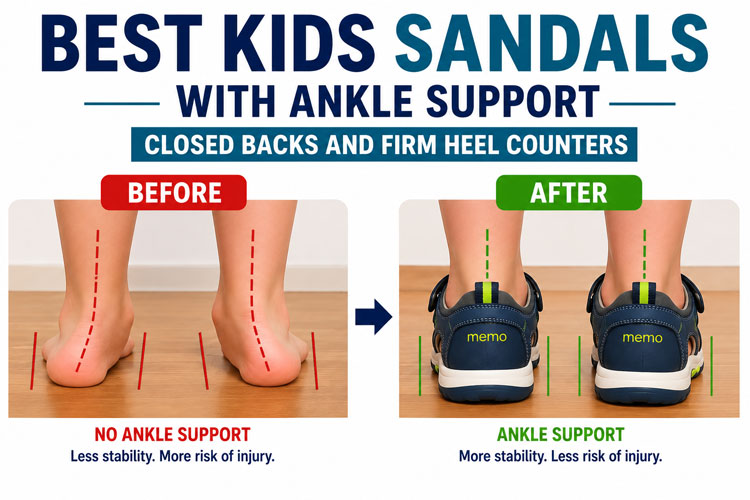
Before and After: What Supportive Shoes Do
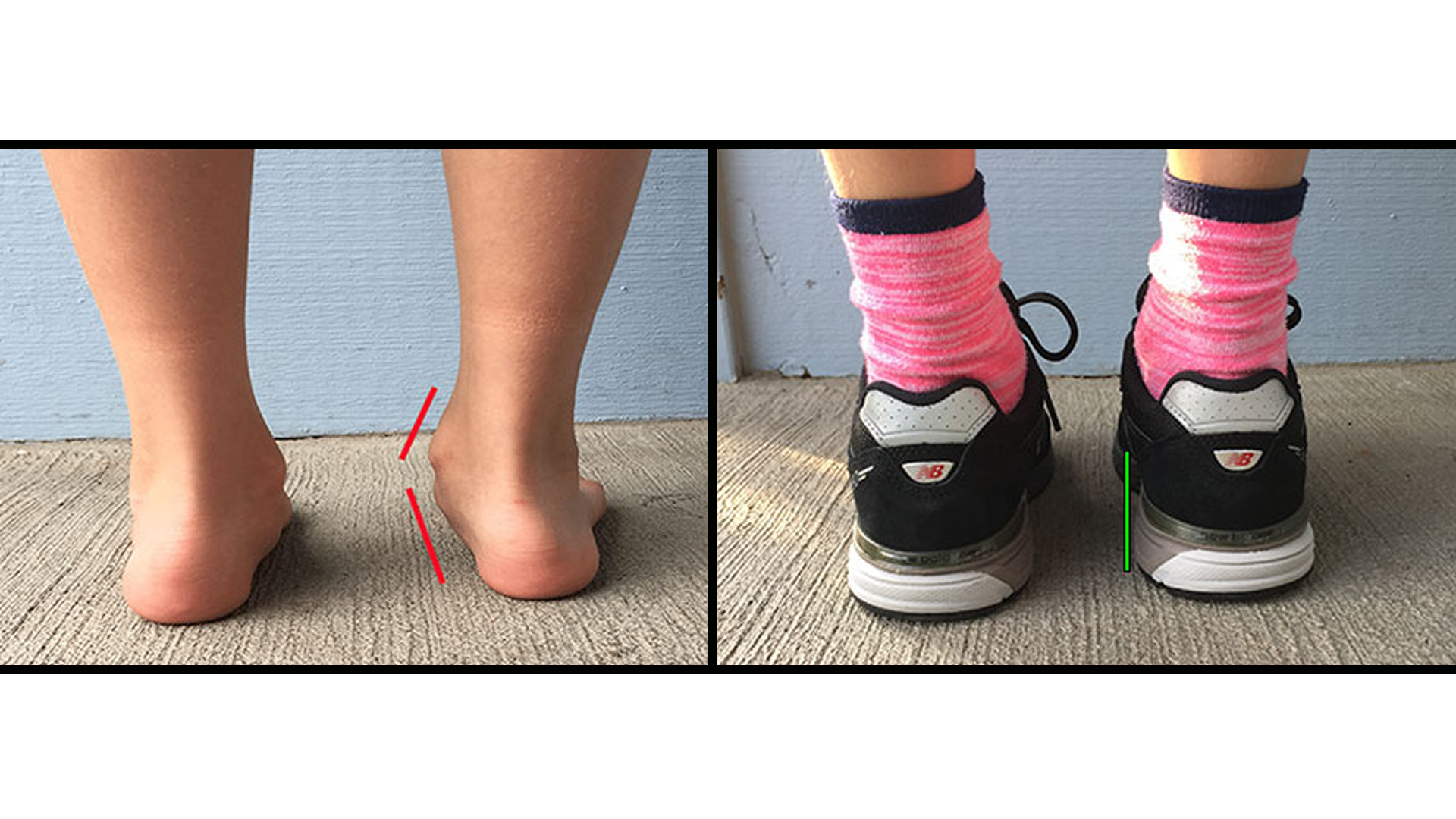
The difference between a child standing barefoot with rolled ankles and the same child in a pair of supportive shoes is often striking — and it’s visible immediately.
Barefoot, you’ll see the ankle bones dipping inward, the arch collapsed toward the floor, and the lower leg appearing to bow at the ankle.
In a well-fitted supportive shoe, the heel counter cups the heel bone and holds it upright. The ankle straightens, the arch lifts slightly, and the overall lower leg posture improves noticeably — without any other intervention.
These are not orthopedic sneakers. They are everyday supportive sneakers. The right shoe, worn consistently from early childhood, is often all that is needed — particularly for children with mild to moderate rolled ankles.
Do Supportive Shoes Make Muscles Weaker?
This is one of the most common concerns I hear from parents — and it’s worth addressing directly.
Supportive shoes do not make foot and leg muscles weaker or “lazy.” The muscles in the foot and leg still function fully while wearing a supportive shoe — they still fire, still develop, and still grow stronger with use. What the shoe does is provide structural support that the foot’s passive structures (bones, ligaments) cannot provide on their own when those structures are misaligned or underdeveloped.
Think of it like glasses for eyesight: wearing glasses doesn’t weaken the eyes or prevent them from developing. It provides the correction needed to function properly while development continues.
For children with rolled ankles, unsupportive shoes allow the ankle to remain in a misaligned position for hours every day — placing chronic stress on ligaments that are already struggling. Supportive shoes interrupt that cycle. They are a corrective tool during the developmental window, not a crutch.
What to Look for in a Shoe for Rolled Ankles
Three features are essential:
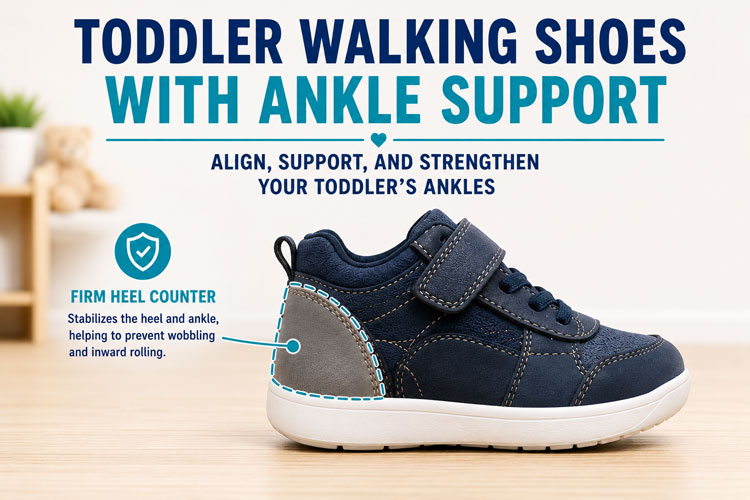
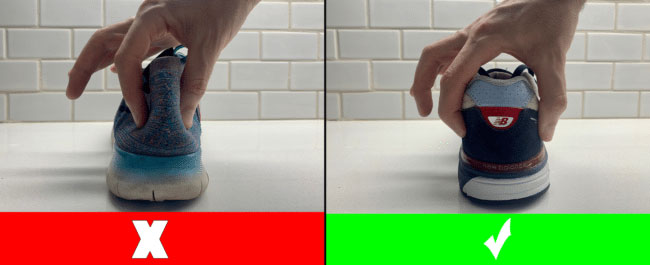
1. Firm Heel Counter. The heel counter is the rigid cup at the back of the shoe that wraps around and cradles the heel. This is the most critical structural feature for rolled ankles. A firm heel counter holds the heel bone in a more vertical position, preventing the inward tilt that drives the ankle rolling.
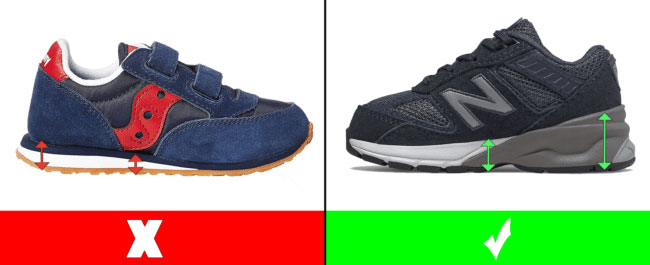
2. Stable Base of Support. A wide, dense outsole distributes weight evenly across the foot and resists the torsional forces that drive ankle rolling. It creates a stable platform that keeps the foot — and the ankle above it — in a more neutral position during walking and running.
Thin, flat outsoles — common in fashion sneakers, canvas shoes, and many school shoes — offer no torsional resistance. They allow the foot and ankle to roll freely and can worsen the condition over time.
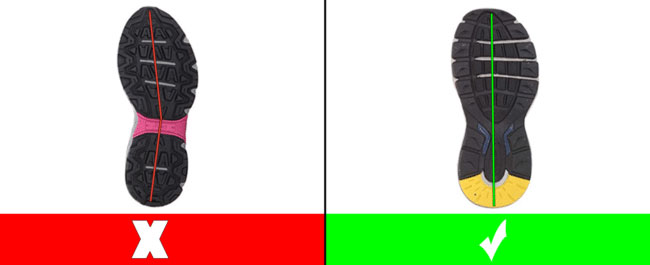
3. Straight Last. The last is the form around which the shoe is constructed. A straight last runs in a nearly straight line from heel to toe, helping guide the foot toward a neutral position during gait. For children whose rolled ankles are associated with flat feet or overpronation, a straight last directly counteracts the inward rolling pattern that compromises the ankle.
The Best Shoes for Kids with Rolled Ankles
Every shoe below has been selected based on hands-on fitting experience with children who have rolled ankles. The criteria for inclusion are a firm heel counter, stable outsole, and straight last — verified by physical testing.
Disclosure: Some links in this article are affiliate links. Any commission earned comes at no extra cost to you and helps keep this resource free.
1. Shoe Style 990v6 by New Balance
The 990v6 is my top recommendation for children with rolled ankles. Its heel counter is among the firmest available in a mainstream children’s athletic shoe, its outsole provides a wide and stable base, and the straight last guides the foot consistently toward a neutral position. The results are consistently impressive — this is the shoe most frequently recommended by the pediatric physical therapists and orthopedists I work alongside.
The price is the main objection from parents — and it’s a fair one. But for a child during the developmental window, this is the shoe worth investing in first.
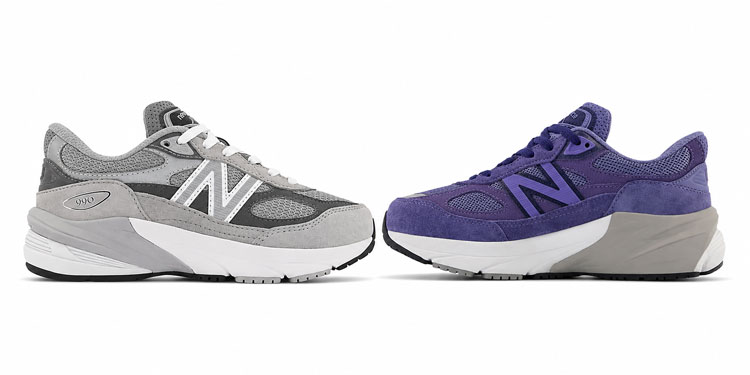
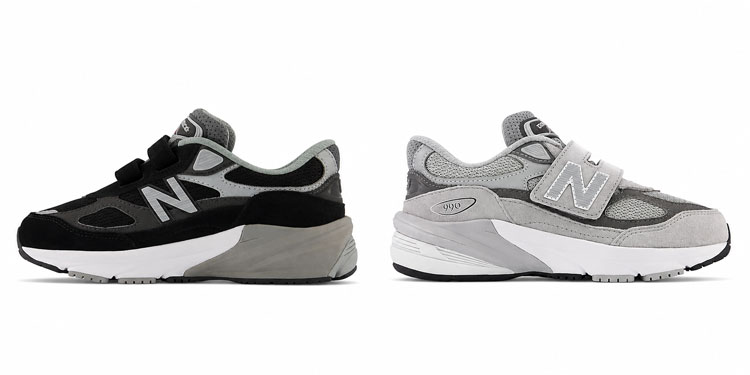
Key Features
- Available for toddlers, little, and big kids
- Order with laces on the New Balance website or Amazon
- Velcro version also available on the New Balance website or Amazon
- Accommodates medium, wide, or extra wide feet
- Firm heel counters, stable base of support, and semi-straight lasts
- Ideal for moderate to strong cases of pronation
- Removable insoles
- Sizing tip: Order a half size larger than your child’s current foot size
2. Shoe Style Gabi and Alvin by Memo (Orthopedic Shoe)
The Memo Gabi is a purpose-built orthopedic shoe for children whose ankle rolling requires more structural correction than a standard athletic shoe provides. The reinforced heel counter, rigid outsole, and double velcro strap system hold the foot and ankle in correct alignment more aggressively than any mainstream sneaker. This is the shoe to consider when supportive footwear alone hasn’t been sufficient, or when a physical therapist or orthopedist has specifically recommended orthopedic footwear.
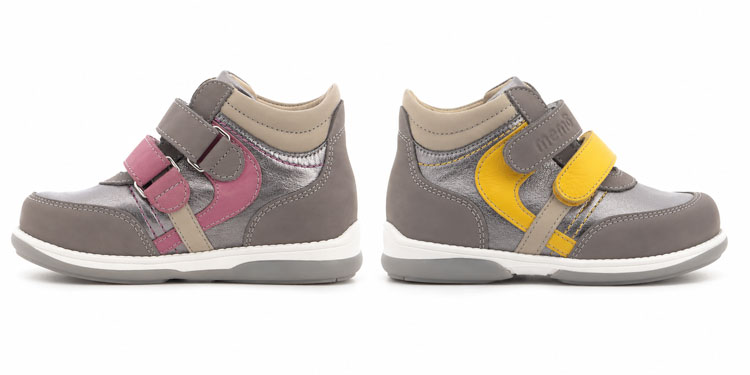
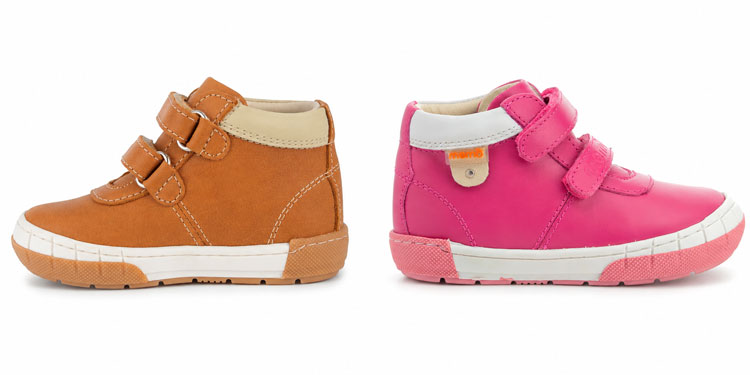
Key Features
- Available for toddlers and little kids
- Order the model Gabi or Alvin on Amazon
- Also available in a Mary Jane style and a version for older kids called Memo Polo
- Accommodates medium and wide feet
- Ideal for moderate to strong cases of pronation
- High-top design with stiff heel counters
- Sizing tip: Order a half size larger than your child’s current foot size. Refer to Memo sizing chart
3. Shoe Style Elliott by Stride Rite
For toddlers, the high-top bootie design of the Elliott provides ankle coverage that a low-cut shoe simply cannot offer. The high-top wraps the ankle directly, adding a layer of lateral stability that reinforces the heel counter’s corrective effect. For very young children whose ankles are still developing and particularly vulnerable to rolling, this is the most effective toddler option on the list.

Key Features
- Available for toddlers
- Order on Amazon
- Accommodates medium, wide, or extra wide feet
- Ideal for mild to moderate cases of pronation
- 100% leather construction
- High-top design provides extra ankle support
- APMA Seal of Acceptance
- Sizing tip: Order a whole size larger than your child’s current foot size
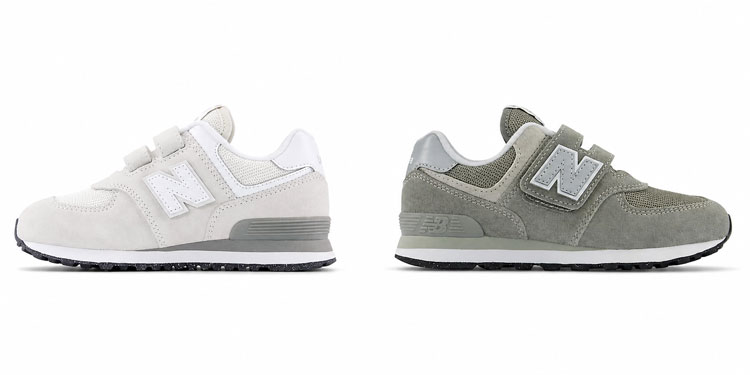
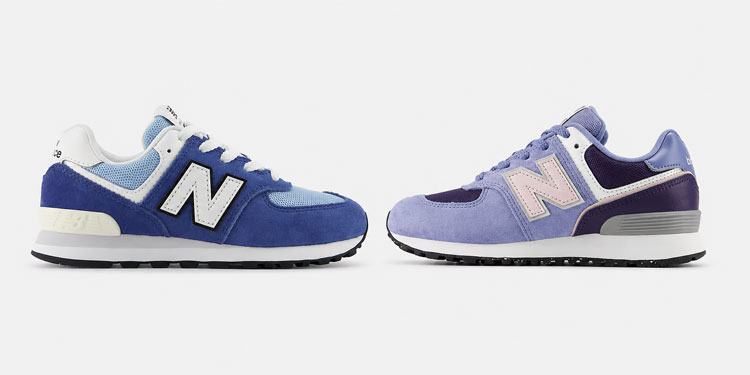
4. Shoe style 574 by New Balance
The 574 delivers a firm heel counter, stable outsole, and straight last at a significantly lower price than the 990v6. The wide width range makes it well-suited for children with broader feet — common in children with flat feet and rolled ankles. For families who need a capable everyday shoe without the premium investment, this is my first alternative recommendation.
Key Features
- Available for toddlers, little, and big kids
- Order on Amazon or the New Balance website
- Also available with laces on the New Balance website or Amazon
- Accommodates medium, wide, or extra wide feet
- Ideal for mild to moderate cases of pronation
- Firm heel counters
- APMA Seal of Acceptance
- Sizing tip: Order a half size larger than your child’s current foot size
5. Shoe Style Tracks by Timberland
The Tracks is built for rugged outdoor use — water-friendly, high-topped, and structurally robust. The high-top design adds direct ankle support alongside the firm heel counter, making it particularly valuable for children who spend time on uneven terrain where ankle stability is most challenged.
The trade-off is weight — the heaviest shoe on this list, which may be a factor for younger walkers.

Key Features
- Available for toddlers and little kids
- Order on Amazon
- Accommodates medium or wide feet
- Ideal for mild to moderate cases of pronation
- High-top design for extra ankle support
- Water-friendly construction
- Sizing tip: Order a whole size larger than your child’s current foot size
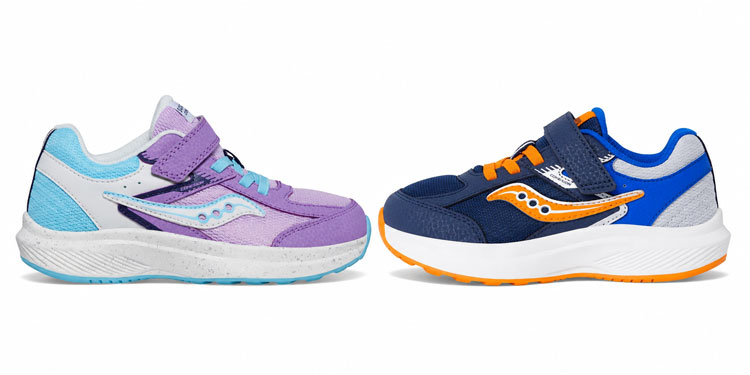
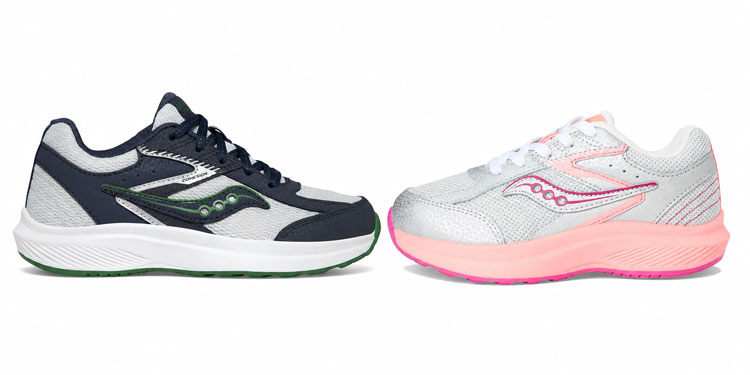
6. Shoe Style Cohesion by Saucony
The Cohesion delivers a firm heel counter, stable outsole, and solid cushioning at the most accessible price on this list. For families managing tighter budgets or looking for a reliable second pair for school, this is the strongest value option available.
Key Features
- Available for little and big kids
- Order on Amazon
- Also available with laces on Amazon
- Accommodates medium or wide feet
- Ideal for mild to moderate cases of pronation
- Firm heel counters and stable base of support
- Sizing tip: Order a whole size larger than your child’s current foot size
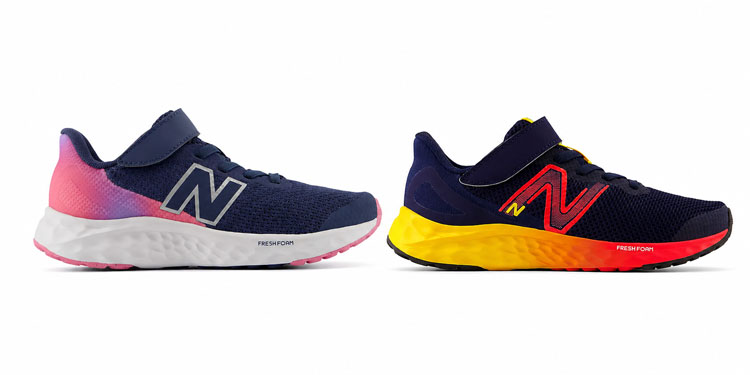
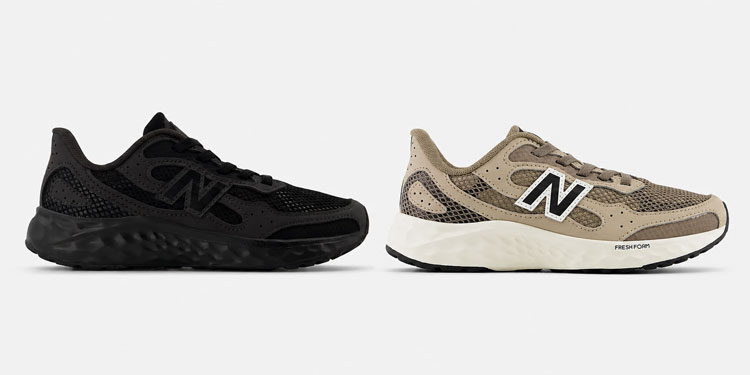
7. Shoe Style Fresh Foam Arishi v4 by New Balance
Some children resist firmer structural shoes due to sensory sensitivities or simply preference. The Arishi v4 delivers a noticeably softer ride through New Balance’s Fresh Foam platform while still maintaining the heel counter firmness and outsole stability that rolled ankles require. A shoe worn consistently every day outperforms a technically better shoe the child won’t put on.
Key Features
- Available for toddlers, little, and big kids
- Order on the New Balance website or Amazon
- Also available with laces on Amazon or the New Balance website
- Accommodates medium, wide, or extra wide feet
- Ideal for mild to moderate cases of pronation
- Semi-firm heel counters
- Sizing tip: Order a whole size larger than your child’s current foot size
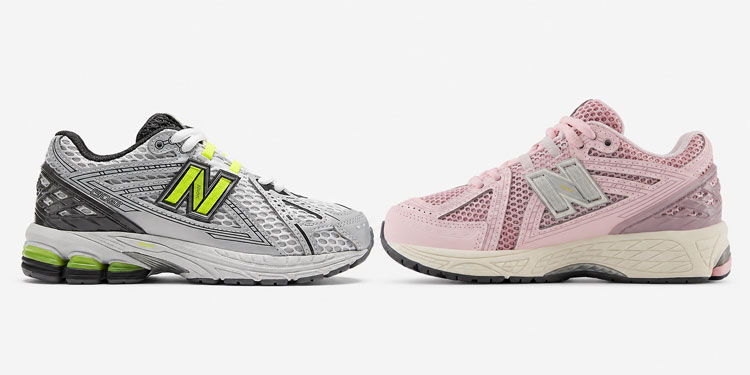
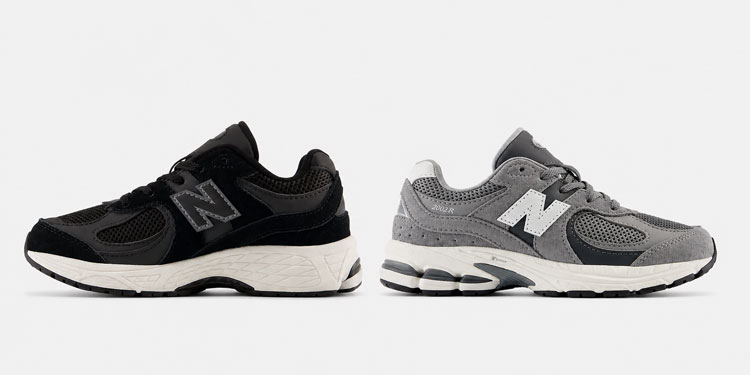
8. Shoe Style 2002/1906 by New Balance
The 2002 sits between the Arishi and the 990v6 in both price and structural support. A dependable all-round pick for families who want New Balance quality without the 990v6 price tag.
Key Features
- Available for toddlers, little, and big kids
- Order the 2002 or 1906 on the New Balance website
- Accommodates medium or wide feet
- Ideal for moderate to strong cases of pronation
- Firm heel counters, stable base of support, and semi-straight lasts
- Sizing tip: Order a whole size larger than your child’s current foot size
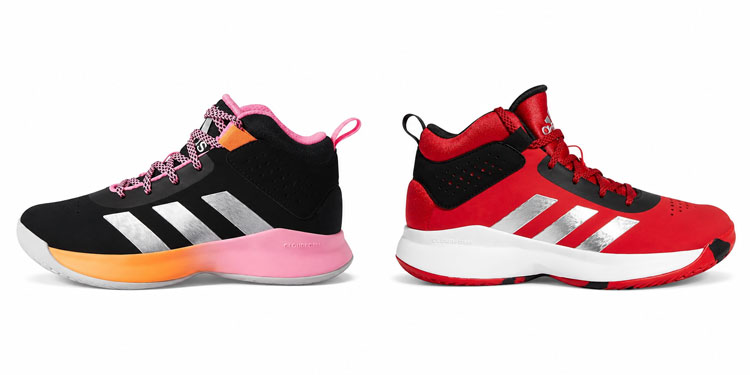
9. Shoe Style Cross Em Up by Adidas
The basketball-inspired high-top design delivers excellent ankle support and lateral stability — both directly relevant for children with rolled ankles who are active in sports. The high-top height braces the ankle against inward rolling during dynamic movement, and the midsole handles the impact demands of court sports and active play well.
Key Features
- Available for little and big kids
- Order on Amazon
- Accommodates medium or wide feet
- Ideal for mild to moderate cases of pronation
- High-top design for additional ankle support
- Versatile — suitable for sports and everyday wear
- Sizing tip: Order a whole size larger than your child’s current foot size
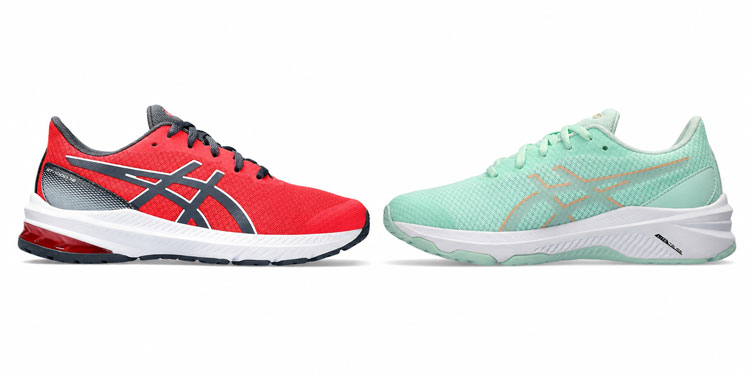
10. Shoe Style GT-1000 by Asics
Most supportive children’s shoes run wide — a problem for narrow-footed children. The GT-1000 fits a narrower profile naturally while still delivering a firm heel counter, stable outsole, and straight last. If your child has slim feet and rolled ankles, start here.
Key Features
- Available for little and big kids
- Order on Amazon
- Accommodates narrow or medium feet
- Ideal for mild to moderate cases of pronation
- Firm heel counters, stable base of support, and semi-straight lasts
- Sizing tip: Order a whole size larger than your child’s current foot size
Reach Out for Specific Shoe Recommendations
For personalized guidance based on your child’s specific foot shape and degree of ankle rolling, reach out at customerservice@fittingchildrenshoes.com.
Getting the Right Fit
Correct sizing matters as much as correct shoe selection. A shoe that’s too long allows the foot to slide forward, pulling the heel away from the heel counter — which completely defeats its purpose for a child with rolled ankles. A shoe that’s too short compresses the toes and causes blisters.
Measure both feet and size for the larger one. Learn how to measure your child’s foot accurately at home here.
Best Orthotics for Kids with Rolled Ankles
The design of LittleSteps orthotics helps to guide the foot into a more natural position, reducing strain and improving function. This correction not only alleviates immediate discomfort but also supports proper foot development.
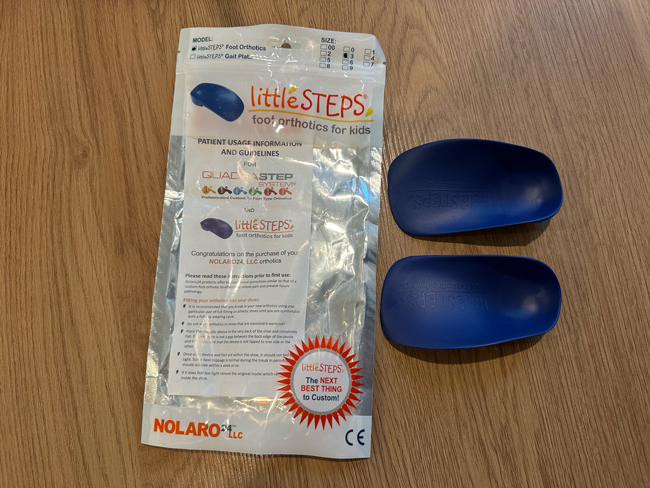
1. Order littleSTEPS® Orthotics from their official website. You must submit a Referral Code to complete your order: JVFCS100121
2. It’s not necessary to remove the original insoles of the shoes when fitting this orthotic.
3. The 3/4 length design makes it easier to fit into various shoe styles.
4. Take a look at this chart to figure out what size to order based on your child’s shoe size.
You won’t have to remove the original insoles of your child’s shoes before placing this orthotic inside the shoes.
Frequently Asked Questions
Related but not identical. Rolled ankles describe a structural alignment problem — the ankle tilts inward in a resting or walking position. Weak ankles describe a stability problem — the ankle gives way under load or during dynamic movement. Many children have both: the structural rolling creates ligament laxity over time, and the weakness makes the rolling worse. Supportive shoes address both by holding the ankle in the correct position and reducing the chronic stress on the ligaments.
Yes — significantly. Repeated ankle sprains in children are often a cycle driven by ligament laxity from previous sprains combined with an underlying structural rolling tendency. A supportive shoe with a firm heel counter reduces the degree of inward rolling during every step, decreasing the likelihood of the ankle reaching the range of motion where a sprain occurs.
Yes. Pain is not a reliable indicator of whether a condition needs treatment in children — young bodies are very adaptable and often compensate silently for years before pain arrives. The chronic misalignment that causes future pain is already happening. Acting during the developmental window, before pain begins, is always the preferred approach.
Improvement in ankle position is often visible immediately when the right shoe is put on — the before-and-after change is one of the most dramatic in children’s footwear fittings. Improvement in gait quality and reduction in fatigue typically develops over two to four weeks of consistent wear. If significant ankle rolling persists after two to three months of consistent shoe wear, adding orthotics is the appropriate next step.
Juan Valenzuela is a certified children’s shoe fitter with over 10 years of experience specializing in fitting shoes for children with rolled ankles, flat feet, hypermobility, low muscle tone, and related foot and gait conditions.