
Best Shoes for Toddlers with Flat Feet – Improve Posture, Stability, and Gait

By Juan Valenzuela | Certified Children’s Shoe Fitter with 10+ Years of Experience | Last updated: June 2026
If your toddler has been diagnosed with flat feet — or you’ve noticed their ankles rolling inward and their feet appearing to have no arch — the right shoes can make an immediate and visible difference. Flat feet in toddlers is one of the most common conditions I fit shoes for, and it’s one where parents consistently tell me they wished they had acted sooner.
This guide explains what flat feet mean for toddlers specifically, what to look for in a supportive toddler shoe, and which specific styles I recommend based on years of fitting experience.
Is It Normal for Toddlers to Have Flat Feet?
Yes — flat feet are developmentally normal in toddlers. All children are born with flat feet, and the arch develops gradually during the first few years of life as the bones, ligaments, and muscles strengthen. Most toddlers look flat-footed because the fat pad under the arch is still thick and the structural arch hasn’t fully emerged yet.
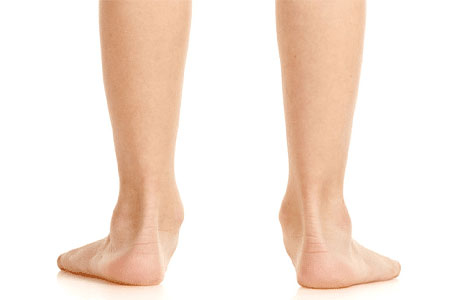
The concern begins when the arch doesn’t develop by age four or five. About two in every ten children never develop a proper arch — and for these children, waiting and watching is not a neutral choice. Every month spent in unsupportive shoes is time spent loading the foot, ankle, and knee in a misaligned position.
The first seven years of childhood are the most important window for intervention. The bones and connective tissue are still forming and respond to the guidance of properly structured footwear. Acting during this period — with supportive shoes and orthotics where needed — produces better outcomes than waiting.
Why Toddlers with Flat Feet Need Special Attention
A flat foot has no arch to distribute body weight across the foot. Instead, the entire inner edge of the foot collapses under load — causing the ankle to roll inward, the knee to rotate, and the posture of the whole lower body to compensate.
For most children, this goes unnoticed until they start walking more — and then more actively. The signs to watch for in toddlers:
- Ankles that visibly tilt inward when standing or walking
- Frequent falling or clumsiness, particularly during running
- Tiring quickly or asking to be carried during activities their peers handle easily
- Feet pointing outward rather than straight ahead (out-toeing driven by arch collapse)
- Reluctance to walk or run for normal distances
Many toddlers with flat feet don’t yet complain of pain — the young body compensates remarkably well. But the absence of pain doesn’t mean the condition isn’t affecting development. The compensatory patterns that form now become the gait habits of childhood.
Before and After: What Supportive Shoes Do
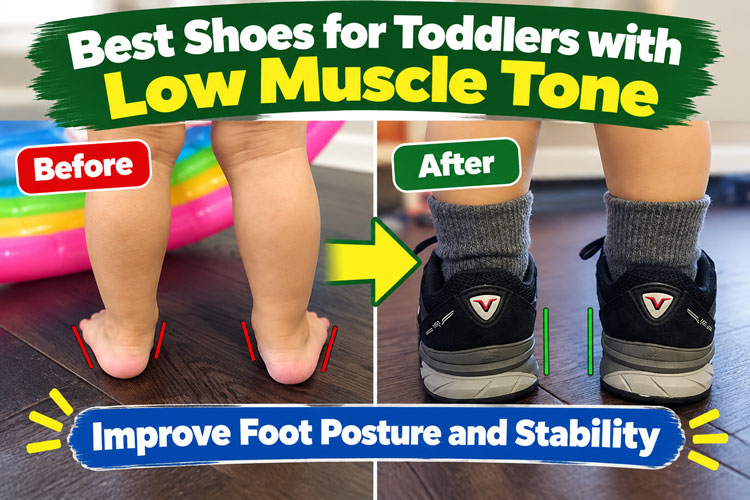
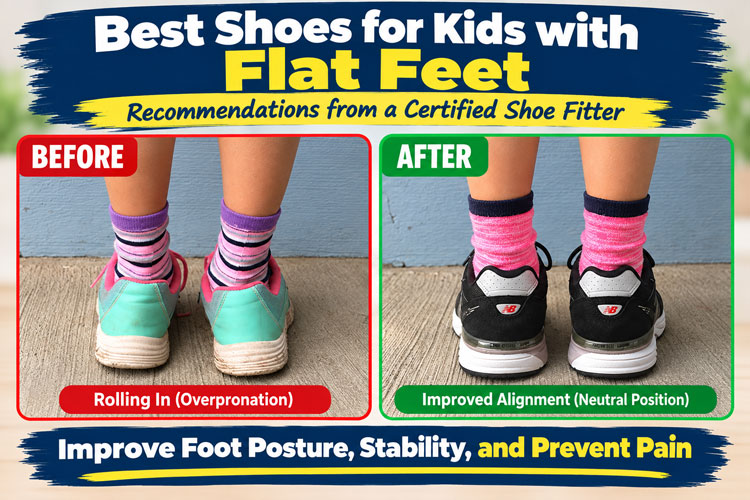
The before-and-after difference when a toddler with flat feet is fitted in the right shoe is one of the most striking things I show parents. It’s immediate — the same child, the same feet, the same moment.
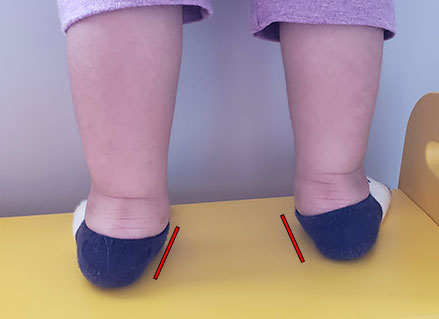
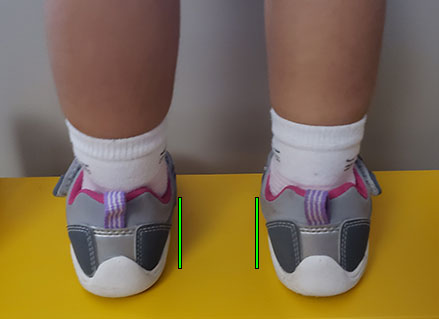
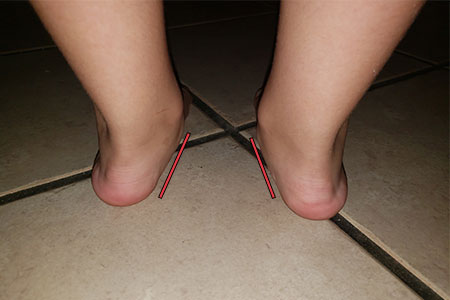
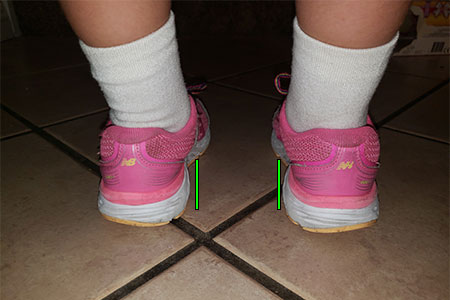
These are not orthopedic shoes or custom devices. They are everyday supportive sneakers. The difference comes entirely from the structural features described below.
Do Toddler Shoes Provide Arch Support?
Most toddler shoes don’t include a dedicated arch support insert. What well-designed supportive toddler shoes provide instead is a combination of features that work together to keep the foot properly aligned — which functionally achieves the same goal.
The four features that matter most:
1. Substantial, Supportive Outsole. A wide, dense outsole distributes body weight evenly across the foot and provides the torsional rigidity that resists the inward rolling characteristic of flat feet. A thin, soft outsole allows the foot to collapse in any direction and provides no corrective benefit.
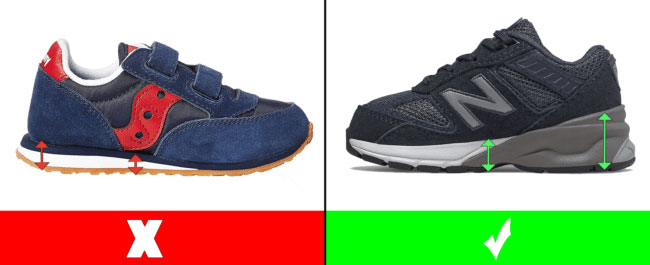
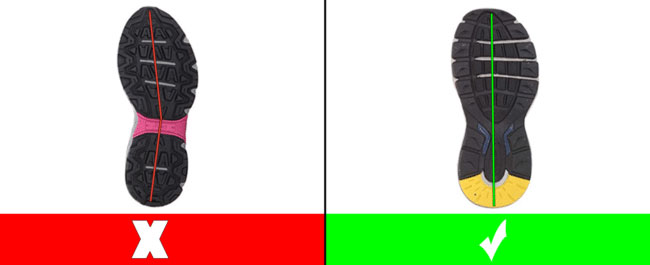
2. Straight Last. The last is the form around which the shoe is constructed. A straight last runs in a nearly straight line from heel to toe, helping guide the foot toward a more neutral position during walking. A curved last — common in fashion sneakers — encourages the inward rolling that flat-footed toddlers are already prone to.
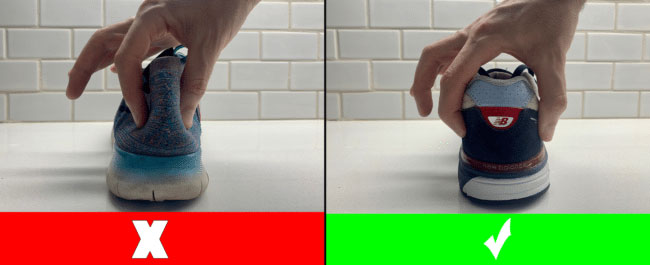
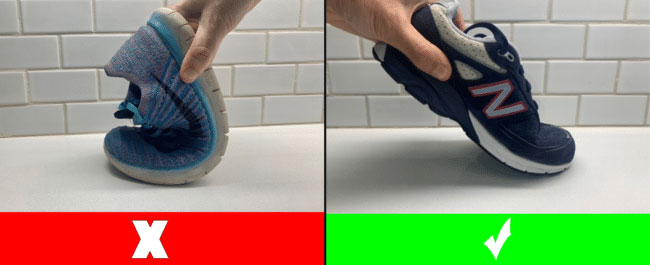
3. Firm Heel Counter. The heel counter is the rigid cup at the back of the shoe. This is the most mechanically important feature for flat feet. A firm heel counter holds the heel bone upright, preventing the inward tilting that drives ankle rolling and arch collapse. Always squeeze the back of any shoe before buying — it should resist firmly and spring back. If it collapses under light thumb pressure, it won’t hold a flat-footed toddler’s heel in place.
4. Lightweight and Flexible at the Forefoot. Supportive doesn’t mean stiff throughout. Toddlers’ legs tire quickly, and a shoe that’s too heavy or rigid at the toe area will cause fatigue and resistance to wearing. The shoe should be firm through the midsection and heel but flex naturally at the ball of the foot — allowing natural toe-off during walking.
The Best Shoes for Toddlers with Flat Feet
Every shoe below has been selected based on hands-on fitting experience. All pass the four criteria above — outsole density, straight last, firm heel counter, and appropriate forefoot flexibility. All can accommodate orthotics if needed. Disclosure: Some links in this article are affiliate links. Any commission earned comes at no extra cost to you and helps keep this resource free.
Important note on width: Most toddlers have wide or extra wide feet. Always check the width options for each shoe and choose accordingly — a shoe that’s the right length but too narrow will cause the foot to spill over the footbed, defeating the corrective purpose entirely.
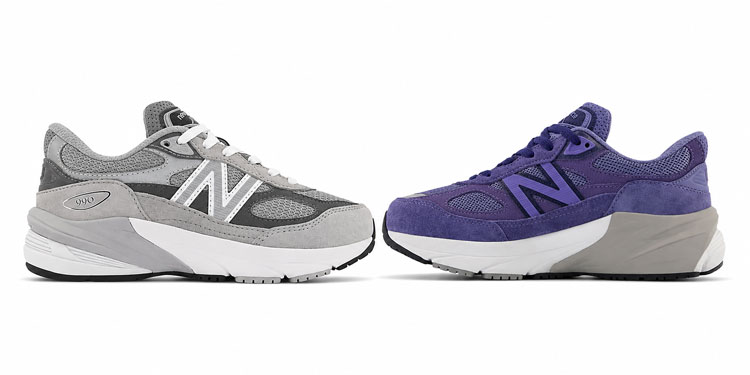
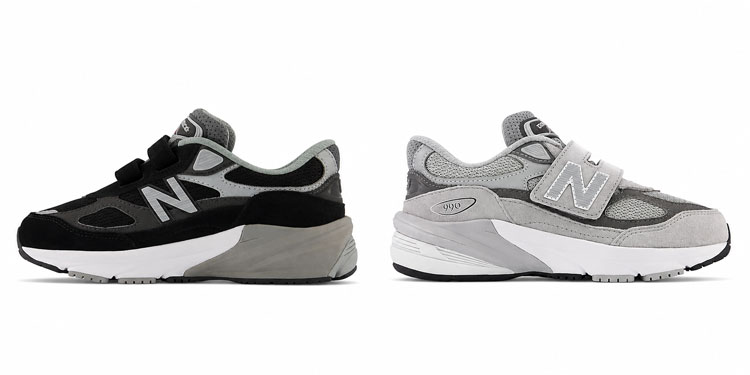
1. Shoe Style 990v6 by New Balance
The 990v6 is the best shoe available for toddlers with flat feet. The straight last, dense ENCAP midsole, and firmest-in-class heel counter work together to hold the foot in correct alignment from the moment the child puts it on. The results I see consistently in fittings — and what the pediatric physical therapists I work with confirm — make this the first shoe I recommend to every parent of a flat-footed toddler.
The price is higher than most toddler shoes. It’s the most common objection I hear, and it’s fair. But consider: this is the shoe that makes the most meaningful structural difference during the years that matter most. For a child in the developmental window, it is the right investment.
Key Features
- Order with laces on the New Balance website or Amazon
- Velcro version also available on the New Balance website or Amazon
- Accommodates medium, wide, or extra wide feet
- Firm heel counters, stable base of support, and semi-straight lasts
- Ideal for moderate to strong cases of pronation
- Removable insoles
- Sizing tip: Order a half size larger than your toddler’s current foot size
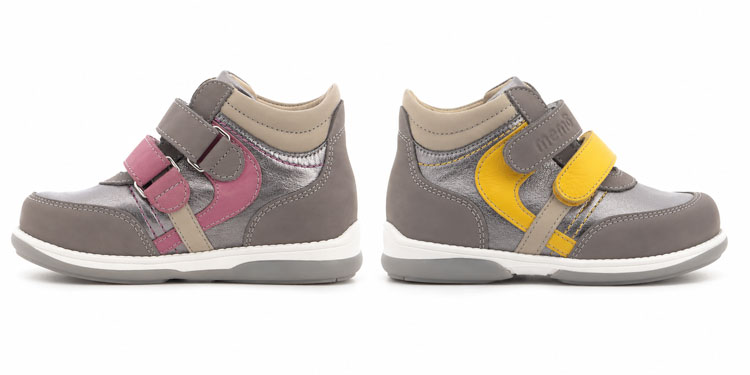
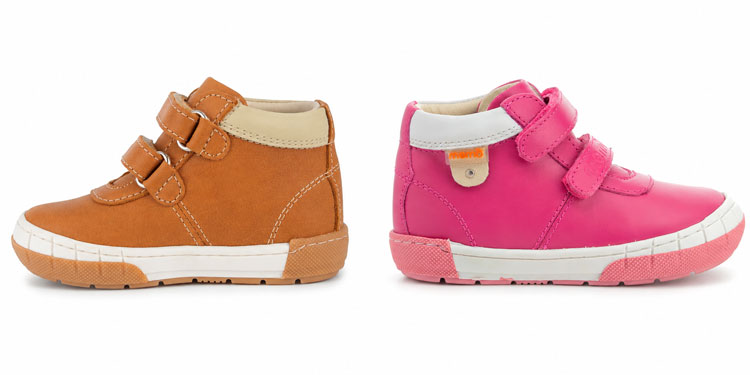
2. Shoe Style Gabi and Alvin by Memo (Orthopedic Shoe)
The Memo Gabi is a purpose-built orthopedic shoe for toddlers whose flat feet are significant enough that a standard athletic shoe hasn’t been sufficient. The reinforced heel counter, rigid outsole, and double velcro strap closure provide correction that mainstream shoes can’t match. This is the shoe to reach for when a physical therapist or pediatrician has recommended orthopedic footwear specifically, or when standard supportive shoes haven’t produced improvement.
Key Features
- Order the model Gabi or Alvin on Amazon
- Also available in a Mary Jane style
- Accommodates medium and wide feet
- Ideal for moderate to strong cases of pronation
- High-top design with stiff heel counters
- Sizing tip: Order a half size larger than your toddler’s current foot size. Refer to Memo sizing chart
3. Shoe Style Elliott by Stride Rite
The Elliott’s high-top bootie design addresses a specific challenge for toddlers: their ankles are still developing and particularly vulnerable to the inward rolling that flat feet cause. The high-top wraps the ankle directly, providing an extra layer of stability that a low-cut shoe can’t offer. It’s affordable, easy to get on and off, and significantly more supportive than a typical toddler sneaker.

Key Features
- Order on Amazon
- Accommodates medium, wide, or extra wide feet
- Ideal for mild to moderate cases of pronation
- 100% leather construction
- High-top design provides extra ankle support
- APMA Seal of Acceptance
- Sizing tip: Order a whole size larger than your toddler’s current foot size
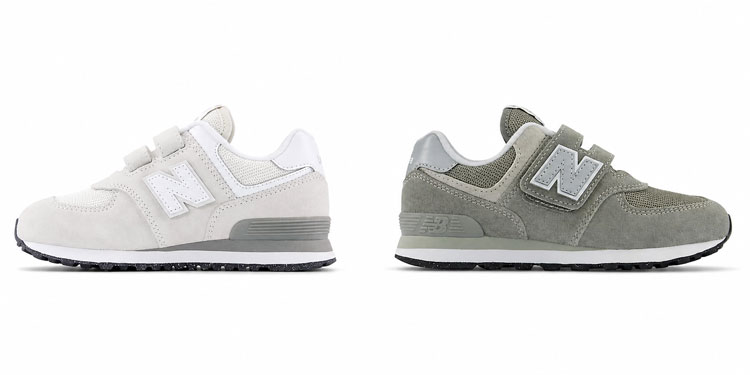
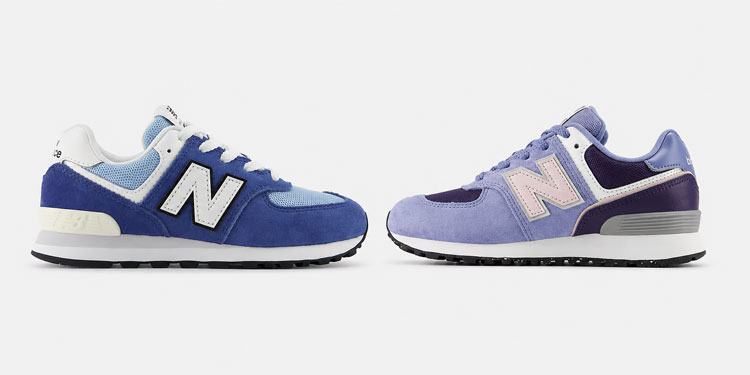
4. Shoe style 574 by New Balance
The 574 delivers a firm heel counter, straight last, and stable outsole at a meaningfully lower price than the 990v6. It’s a reliable everyday option for families who need capable support without the premium investment. The wide width range makes it particularly practical for toddlers with broader feet.
Key Features
- Order on Amazon or the New Balance website
- Also available with laces on the New Balance website or Amazon
- Accommodates medium, wide, or extra wide feet
- Ideal for mild to moderate cases of pronation
- Firm heel counters
- APMA Seal of Acceptance
- Sizing tip: Order a half size larger than your child’s current foot size
5. Shoe Style Tracks by Timberland
The Tracks is built for rugged use — water-friendly, high-topped, and structurally robust. The high-top design adds ankle stability, and the dense outsole handles uneven terrain without allowing the foot to roll inward. A strong choice for active toddlers who spend time outdoors or in wet conditions.
The trade-off is weight — it’s the heaviest shoe on this list, which may cause fatigue in younger or smaller toddlers.

Key Features
- Order on Amazon
- Accommodates medium or wide feet
- Ideal for mild to moderate cases of pronation
- High-top design for extra ankle support
- Water-friendly construction
- Sizing tip: Order a whole size larger than your child’s current foot size
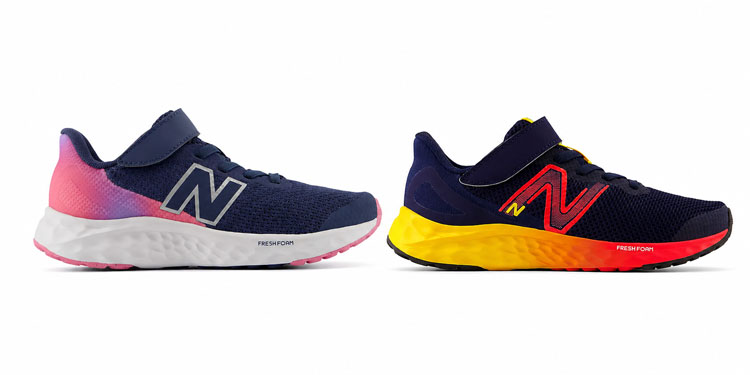
6. Shoe Style Fresh Foam Arishi v4 by New Balance
Some toddlers resist firmer shoes — particularly those with sensory sensitivities who find structured footwear uncomfortable. The Arishi v4 uses New Balance’s Fresh Foam cushioning to deliver a noticeably softer feel while still maintaining the straight last and heel counter firmness that flat feet require. For children who have refused other supportive shoes, this is often the solution.
Key Features
- Order on the New Balance website or Amazon
- Accommodates medium, wide, or extra wide feet
- Ideal for mild to moderate cases of pronation
- Semi-firm heel counters
- Sizing tip: Order a whole size larger than your toddler’s current foot size
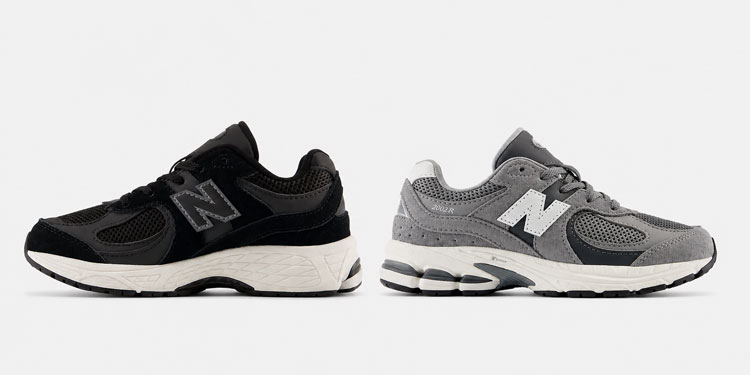
7. Shoe Style 2002 by New Balance
The 2002 sits between the Arishi and the 990v6 in both price and structural support. A dependable all-round option for families who want New Balance quality without the 990v6 price tag.
Key Features
- Order on the New Balance website or Amazon (wide widths available only on the New Balance website)
- Accommodates medium or wide feet
- Ideal for moderate to strong cases of pronation
- Firm heel counters, stable base of support, and semi-straight lasts
- Sizing tip: Order a whole size larger than your toddler’s current foot size
For personalized guidance based on your toddler’s specific foot shape and degree of pronation, reach out at customerservice@fittingchildrenshoes.com.
Are High-Top Shoes Always Better for Toddlers with Flat Feet?
Not necessarily. High-tops add ankle coverage, which is genuinely valuable for toddlers whose ankles are still developing and prone to rolling. But the most important factor is the heel counter quality — not the height of the shoe. A low-cut shoe with an excellent firm heel counter (like the New Balance 990v6) outperforms a high-top with a soft, collapsible heel.
When both features are present — firm heel counter plus high-top — as in the Stride Rite Elliott and Timberland Tracks, the combination provides the most comprehensive support. But don’t assume any high-top is automatically supportive. Always do the squeeze test on the heel counter before buying.
Should I Choose Laces or Velcro?
For toddlers who are severely pronating, laced shoes are preferable — laces allow you to tighten the midfoot securely, which holds the foot more firmly against the shoe’s straight last and maximizes the corrective contact. Velcro is a practical necessity for young toddlers who can’t manage laces — but as your child gets older and the pronation is more significant, transitioning to laces is worth doing.
Does My Toddler Also Need Orthotics?
Start with supportive shoes and give them two to three months. Many toddlers with flat feet see significant improvement with footwear alone — particularly those with mild to moderate degrees of arch collapse.
If your toddler is still showing significant ankle rolling or gait issues after consistent wear of a supportive shoe, orthotics are the logical next step. The two options I recommend most for toddlers:
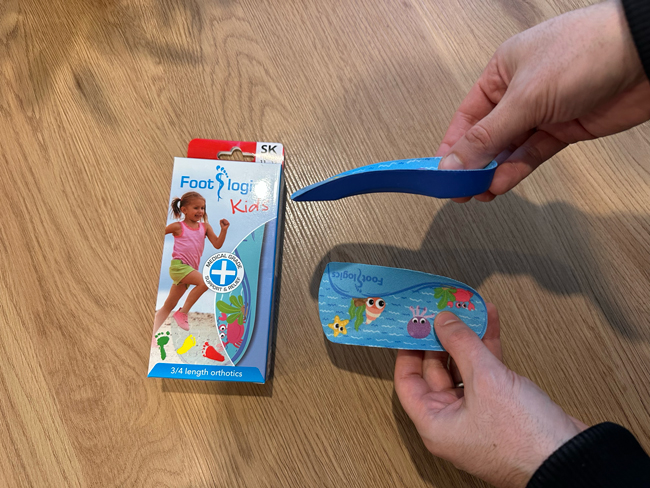
Footlogics 3/4-length orthotic — fits toddler sizes 5 through little kid size 13. The 3/4-length design fits inside most shoes without removing the original insole.
Footlogics full-length orthotic — fits toddler size 5 through big kid size 3. Remove the original insole before inserting.
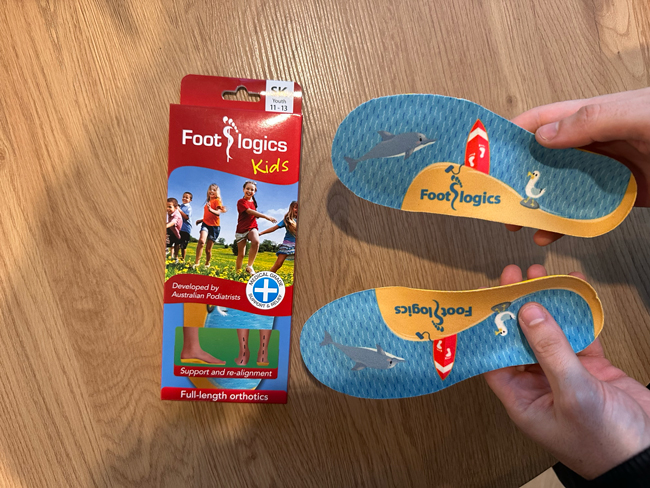
Both are developed by orthopedic experts and are effective for mild to moderate pronation. For moderate to strong cases, see LittleSTEPS orthotics — a 3/4-length insert designed specifically for more significant arch and heel correction in toddlers.
See the Difference: Before and After Video
The video below shows before-and-after footage of toddlers with flat feet in supportive shoes, along with a visual explanation of what shoe features to look for.
Getting the Right Fit
Correct sizing matters as much as correct shoe selection. A shoe that’s too long allows the foot to slide forward, pulling the heel away from the heel counter — completely defeating its corrective purpose. A shoe that’s too short compresses the toes and causes blisters.
As a general rule, order half a size to a full size larger than your toddler’s measured foot length. Specific guidance is listed under each shoe above.
Learn how to measure your toddler’s foot accurately at home here.
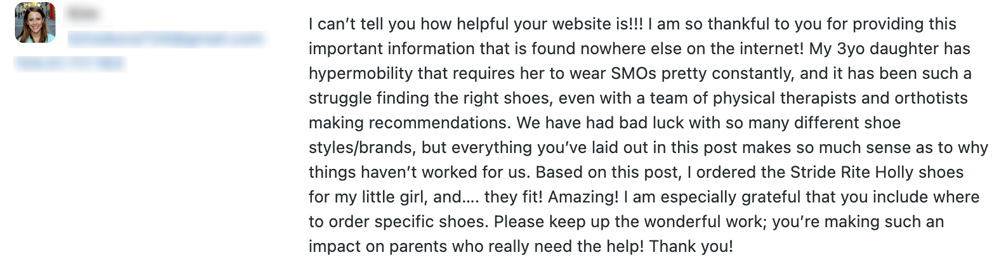
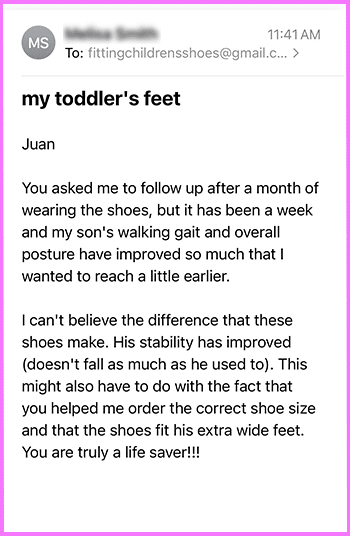
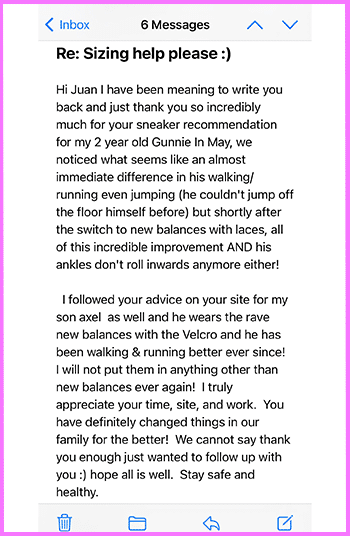
Reviews from Families – Get inspired!
Feedback from families plays a significant role in understanding how these shoes perform in real-world scenarios.
Frequently Asked Questions
At 18 months, flat feet are entirely normal and expected — all toddlers this age have flat feet. You don’t need specialized shoes yet. The time to act is closer to age two to three, particularly if you’re seeing significant ankle rolling, or if a physical therapist has raised concerns. If your toddler is already showing signs of significant pronation at 18 months, an early evaluation by a physical therapist is worthwhile.
Wide feet are actually common in flat-footed toddlers — the collapsed arch spreads the foot laterally. The New Balance 990v6, 574, and Fresh Foam Arishi v4 are all available in extra wide (XW) widths, which accommodate most toddler foot shapes. If your toddler is leaving red marks or their foot is spilling over the footbed, go up a width before going up a size.
No. This is a common concern but it’s not supported by the evidence. The muscles in the foot still develop and strengthen during walking in a supportive shoe. What the shoe does is prevent the misaligned loading that occurs when the foot collapses — which, if it goes on long enough, actually inhibits healthy development by placing chronic stress on immature structures. Supporting the foot while it develops is not the same as replacing the need for development.

My toddler has very chunky/fat feet and most shoes leave red marks on the top part of his feet. How do I know these shoes will be wide enough for his feet?
Take a look at the description below each of the shoes that I recommend. You will notice that some models are available in extra wide widths.
Thank you for this resource! The visuals, general recommendations, and specific recommendations are so helpful for sharing with families in our Early Intervention program!
Hello Stephenie.
I am happy to hear that you find the website informative! Don’t hesitate to contact me if you have any questions.
Hi my daughter is 2 years old and has flat feet, i’m Looking to find solution to solve this issue Professionally and Completely for her
Would you suggest shoes for her?
Hello Motasem,
There is a couple of extra information I need from you before I provide you with a specific shoe recommendations. I need to know your daughter’s shoe size (I need to know her shoe size in length and width). I also would like to know if she is overpronating.
Hi my daughter is 6 years old and has flat feet and often complains of knee,ankle and leg pain. Would you suggest geox winter boots for her?(we live in a mainly cold climate)
Hello Saba,
Yes I do, as long as that Geox style is waterproofed or insulated. Geox provide really good support. Does your daughter wear orthotics inside her shoes?
My Kid is 2 year old and have flat foot with valgus.
Can you please recommend from where I can purchase the right manufactured shoe
Hello Anand,
Do you have a local children’s shoe store in your area? If you have a shoe store in your area I will recommend that you take your child to be properly fitted there. I created a map that showcases the best children’s shoe stores by state:
The Best Shoe Stores In The United States – Where To Go For Proper Fittings
If you don’t have one in your area, please get back at me with your child’s shoe size (length and width), and I will recommend shoes that will help him/her walk and run straighter.
Same thing! My 3 year old has flat feet with valgus. What is the best shoe/sneaker for him?
Hello Karen,
The key is to find a deeper shoe that comes with a round toe-box. All the eight shoe recommendations that you see in this article fall in that category.
Do you know your child’s shoe size? If you tell me his exact shoe size (length and width), I can provide you with specific recommendations if none of the shoes shown in the article come in his size.
He wears 10.5.
Hello Karen,
I am assuming you don’t know your child’s shoe width. If your child has wide or extra wide feet, just choose “W”or “XW”
Supportive Shoe Style For Flat Feet: Option 1
Supportive Shoe Style For Flat Feet: Option 2
If after trying one of those styles your child walk patter does not improve or he is still experiencing foot or leg pain, you should consider trying an orthotic inside the shoes.
I hope this helps!