
The Best Shoes for Kids with Disabilities: Find the Right Resource for Your Child
Last Updated: August 2026 | Juan Valenzuela, Certified Children’s Shoe Fitter
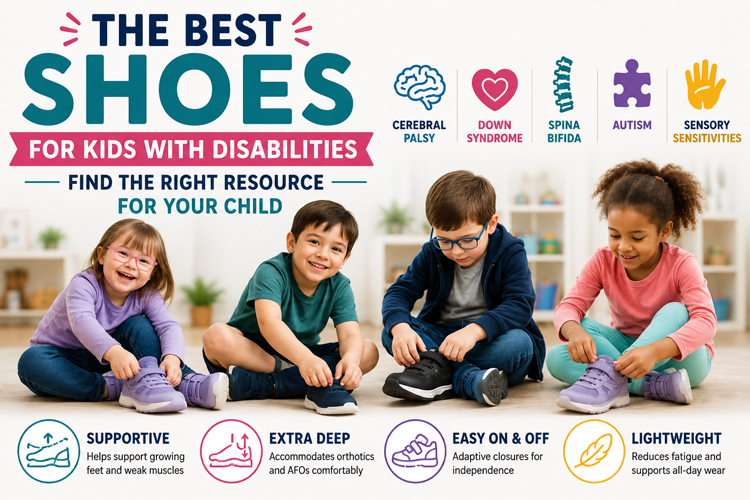
“Disabilities” covers a wide range of conditions, and no single shoe list can properly serve all of them — a child with cerebral palsy often needs something very different from a child with sensory sensitivities or Down syndrome. Rather than give you one generic product list, I’ve put together this guide to point you toward the resource that actually matches your child’s specific needs.
Understanding the Needs of Kids with Disabilities
Children with disabilities often face specific footwear challenges tied to physical, sensory, or developmental conditions. The right pair of shoes can make a real difference — not just in comfort, but in mobility, independence, and confidence.
The first seven years of a child’s life are often called the “golden years of treatment opportunity” — during this window, structural changes in the foot and lower leg are relatively easy to influence with the right shoes and supportive interventions. Getting this right early can meaningfully affect how a child walks and stands for years to come.
Find the Right Guide for Your Child’s Condition
Down Syndrome
Kids with Down syndrome often have lower muscle tone, flatter feet, and a wider forefoot, which changes what “supportive” actually means for their specific foot shape. See my dedicated guide to shoes for kids with Down syndrome for picks built around those specific needs.
Cerebral Palsy
Cerebral palsy often affects muscle tone, balance, and gait, and many children with CP also wear AFOs or SMOs to help with alignment and stability. If this describes your child, my guide to shoes for kids with AFOs is the best starting point — it covers exactly the extra depth, firm heel counters, and wide openings that matter most for this combination of needs.
Autism and Sensory Sensitivities
For kids with sensory processing needs, the priority often shifts away from orthotic depth and toward things like seamless interiors, familiar textures, and predictable, comfortable closures. See my dedicated guide to shoes for kids with sensory issues for picks organized around whether your child prefers a tighter or looser fit — a distinction that matters more for sensory needs than almost anything else.
Spina Bifida
Spina bifida can affect sensation and muscle function in the feet and legs, which often means a child needs a shoe with extra depth to accommodate an orthosis, plus features that account for reduced sensation (like avoiding pressure points a child might not be able to feel or communicate). I don’t yet have a dedicated article for this specific need — if this is what you’re looking for, reach out and I’m happy to help directly while I work on building that resource out properly.
My Child Wears Orthotics, Regardless of Diagnosis
If your child’s specific condition isn’t listed above but they wear orthotics or need an adaptive, easy-on shoe, these two guides cover the broadest range of needs:
- Shoes for kids with AFOs — for kids who need real depth and structure for a brace
- Supportive Velcro shoes for kids who wear orthotics — for kids who need an easy, secure closure instead of laces
Key Features That Matter Across Most Conditions
Whatever your child’s specific diagnosis, a few features tend to matter broadly:
1. Comfort and cushioning — ample cushioning absorbs impact and prevents discomfort, especially for children who spend extended periods standing or walking.
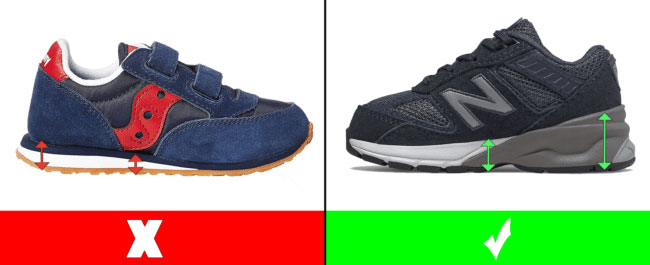
2. Lightweight and flexible — shoes need to stay supportive without being so rigid they tire out a child’s feet and legs.
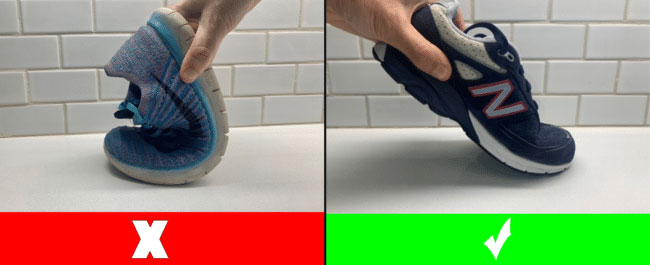
3. A firm heel counter — crucial for stability, helping maintain proper foot alignment and reducing the risk of overpronation or supination.
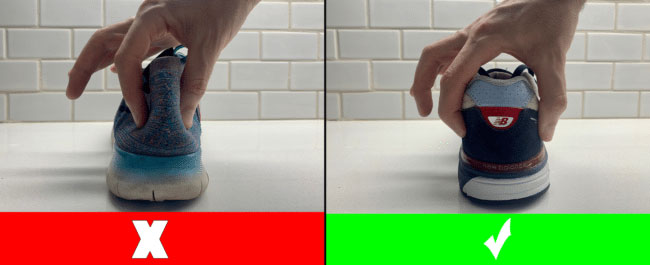
4. A wider opening for easy on and off — genuinely helpful for kids with limited dexterity or who need assistance. Velcro straps or elastic laces make this process much easier.
A Genuine Safety Note: Orthotics and Sandals Don’t Mix
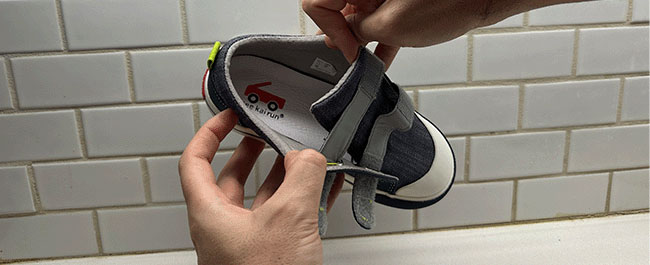
This comes up often enough that it’s worth stating plainly: I don’t recommend putting your child’s orthotic inside a sandal. Sandals simply don’t offer the structure needed to hold an orthotic in place or let it do its job — the orthotic needs a shoe that actually contains and supports the foot around it, which an open sandal design can’t provide. If your child needs supportive summer footwear, look for a genuinely supportive closed-toe option (Keen’s Newport style is a reasonable starting point for a more structured sandal-style shoe) rather than trying to fit the orthotic into an open sandal.
How to Order the Correct Shoe Size Online
Getting the size right matters for both comfort and support, regardless of your child’s specific condition. My virtual shoe fitting guide helps you determine whether your child has narrow, medium, wide, or extra wide feet, and walks you through ordering the correct size online.
Contact Me for Specific Shoe Recommendations
Every child’s needs are unique, and personalized recommendations can make a real difference. If none of the resources above feel like the right fit, reach out — I’m happy to help you find the right shoes for your child’s specific condition.
Frequently Asked Questions
Start with whichever of the guides above most closely matches your child’s actual footwear needs (orthotic depth, adaptive closures, or sensory considerations), or reach out directly with details about your child’s condition and I can point you in the right direction.
It’s almost always about specific features rather than brand — extra depth, a firm heel counter, and the right closure type matter more than which company makes the shoe. That’s why the guides above are organized by what your child actually needs, not by brand.
No — sandals don’t provide the structure needed to properly hold an orthotic in place. Look for a supportive, closed-toe shoe instead, even for warm-weather activities.
Not necessarily — support comes from structure (a firm heel counter, a stable outsole, the right depth), not just weight. Some of the most supportive shoes I recommend are also genuinely lightweight, since a heavy shoe can tire out a child’s legs just as much as one with no support at all. Don’t assume a lighter shoe means less support, or that a heavier one automatically means more.
Ordering online without trying shoes on first is genuinely tricky, especially with the added variables a disability or orthotic can bring. My virtual shoe fitting guide walks you through measuring your child’s foot length, width, and shape from home, so you can order with real confidence instead of guessing.

Hi again, We love the shoes you recommended for my son’s insert. He needs some beach shoes. Should I just go with the Keens you recommend on your site? (can we put an insert in it?)
Thanks,
Sabrina
Hello Sabrina,
I suggest getting the Keen Newport which is the most supportive Keen style. I strongly suggest that you don’t put your chid’s orthotics inside the sandals as it will not do any good.
Hi I am looking for some shoes for my son he has extra extra wide foot (just one) with also a really high instep area so needs a really large vamp Area i am looking for a EU27 or looking for someone who can make him some I have tried the new Balance range but can not get his foot in the hole area.
Hello Chelsea,
Please follow the instructions on this article so I get a better idea of what type of foot I am working with:
How to Measure Your Kids’ Foot – 2 Simple Steps to Determine Foot Length and Foot Width
In which country are you located?
Please help me find girls xx wide size 2 shoes?
Can you please help me find girls shoes x x. Wide in size 2? Thank you
Can you please help me find xx wide girls shoes?
Hi Josie:
Please go to the link below to see a selection of the deepest and widest shoes for girls:
Extra Wide Shoes for Girls – The Best Shoe Style for Girls with Extra Wide Feet!
I hope this helps!