
Soccer Shoes for Kids with Heel Pain — Best Cleats for Sever’s Disease in 2026
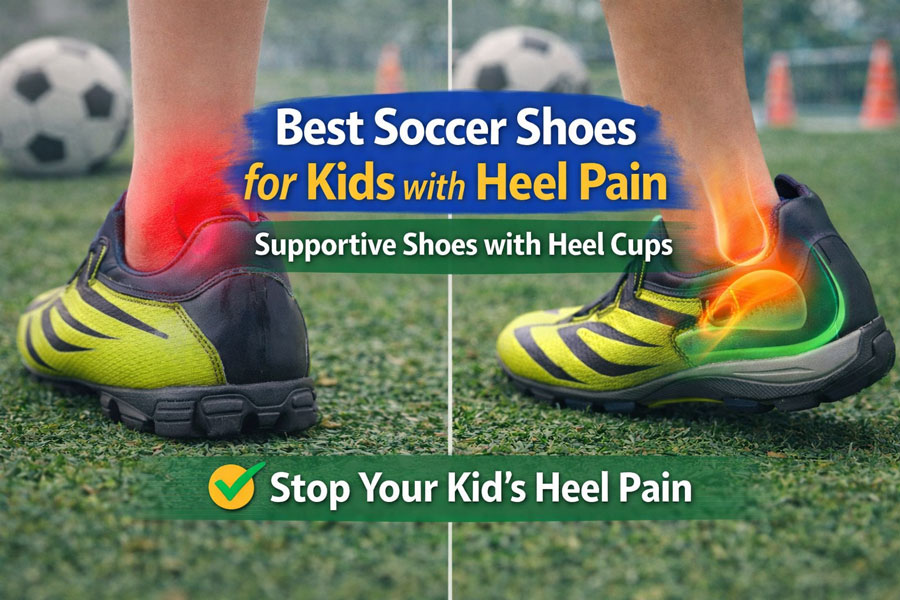
Does your child love playing soccer but has been complaining about heel pain lately?
As a certified children’s shoe fitter with over 10 years of experience, I hear this from parents constantly — especially during soccer season. The good news is that the right pair of soccer cleats can make a significant difference, helping reduce pain, enhance performance, and keep your child on the field.
The wrong pair, however, can make things considerably worse.
In this guide I’ll walk you through everything you need to know — from what is causing your child’s heel pain, to the specific cleat features that matter most, to my top-rated recommendations for 2026.
What Is Causing Your Child’s Heel Pain?
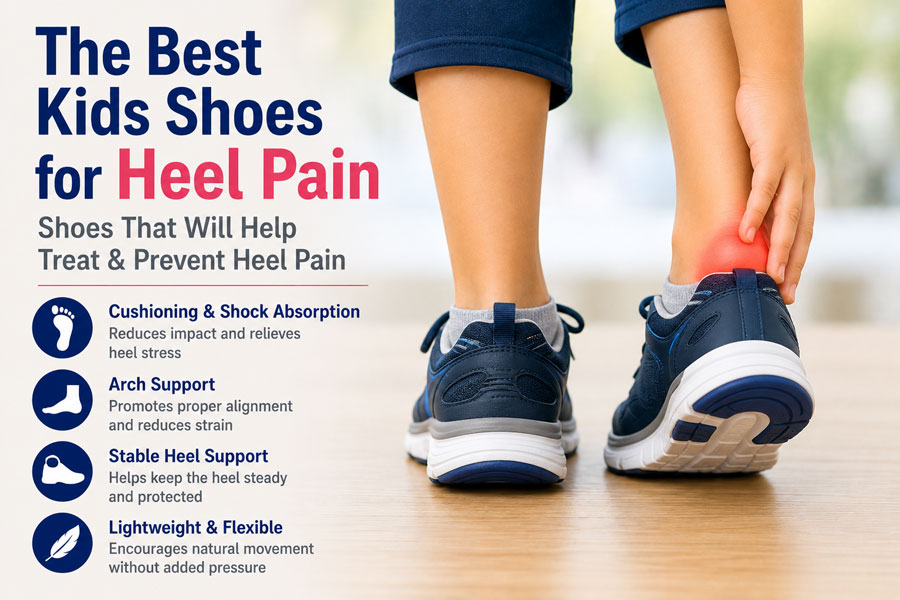
Heel pain in children is more common than most parents realize — and it is almost always caused by the repeated trauma that occurs during high-impact activities like running and jumping. Every time your child’s foot strikes the ground, force travels directly through the heel. Without adequate cushioning and support, that force accumulates — and pain follows.
Children who are dealing with foot conditions such as flat feet are also more prone to experiencing heel pain.
The two most common causes of heel pain in young soccer players are Sever’s disease and plantar fasciitis. Understanding which one your child is dealing with is the first step toward finding the right solution.
Sever’s Disease
Sever’s disease — also known as calcaneal apophysitis — is the most common cause of heel pain in growing children and adolescents. It occurs when the growth plate in the heel becomes inflamed, typically during periods of rapid growth when the heel bone is developing faster than the surrounding muscles and tendons.
Children with Sever’s disease typically experience pain that gets worse with activity and improves with rest. The heel may feel tender when squeezed from the sides, and your child may walk with a slight limp after playing.
When children have Sever’s disease they can either rest and recover — which means sitting out of sports — or find a way to minimize or fully eliminate the pain through proper footwear and support. Most families and players prefer the latter.
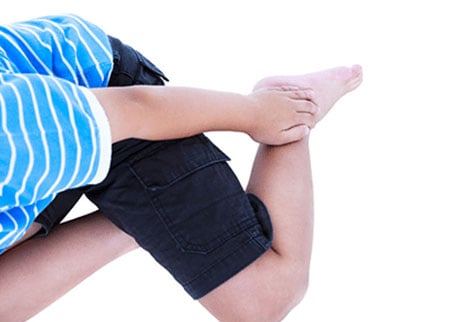
Plantar Fasciitis
Plantar fasciitis involves inflammation of the plantar fascia — the thick band of tissue that runs along the bottom of the foot connecting the heel bone to the toes. While more common in adults, it does affect children, particularly those who are very active.
The key difference from Sever’s disease is timing. Children with plantar fasciitis generally experience the most pain at the beginning of an activity, and it tends to ease after 10 to 15 minutes of movement. With Sever’s disease, the pain tends to increase as activity continues.
| Sever’s Disease | Plantar Fasciitis | |
|---|---|---|
| Pain location | Back of the heel | Bottom of the heel |
| Pain pattern | Worsens with activity | Worst at start, eases after warmup |
| Most common age | Girls 8–10, Boys 10–12 | Any age |
| Tender when squeezed | Yes | Sometimes |
What Age Does Heel Pain Typically Affect Children?
Sever’s disease most commonly affects girls between the ages of 8 and 10 and boys between 10 and 12 — typically during the early stages of their growth spurt when the heel bone is growing rapidly. It is the most frequently seen cause of heel pain in young soccer players and is often mistaken for growing pains or plantar fasciitis.
The good news is that children will outgrow Sever’s disease once their growth plate fuses — but that can take anywhere from six months to two years. In the meantime, the right footwear and support can keep your child playing comfortably.
When Should You See a Doctor?
While supportive footwear and heel cups can significantly reduce pain, I always recommend consulting a medical professional if your child experiences any of the following:
- Heel pain that does not improve after two weeks of wearing supportive footwear
- Pain severe enough to cause limping during or after play
- Swelling or visible changes around the heel
- Pain that wakes your child up at night
- Heel pain in a child under 5 or over 15
A pediatrician or podiatrist can confirm the diagnosis and rule out any underlying conditions that may require additional treatment.
Are More Expensive Soccer Shoes More Supportive?
This is one of the most common misconceptions I encounter as a shoe fitter. A higher price tag does not automatically mean better support. In fact, many of the most expensive soccer cleats on the market are designed primarily for lightweight speed performance — which means they often sacrifice the heel cushioning and support that children with heel pain need most.
The cleats I recommend are specifically chosen for their firm heel counters and cushioned heels — not their price. Several of my top picks are available at very reasonable price points.
Key Features of Supportive Soccer Shoes for Kids
When evaluating soccer cleats for children with heel pain, here are the two features I look for first:
1. Firm Heel Counters
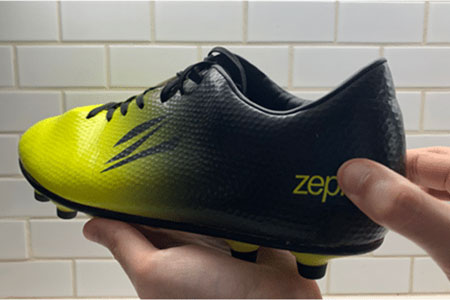
The heel counter is the back part of the shoe that wraps around and supports the heel. The firmer it is, the better it controls heel movement and reduces strain on the growth plate. Before buying any soccer cleat, press on the back of the shoe — it should feel firm and not collapse under pressure.
2. Cushioned Heels
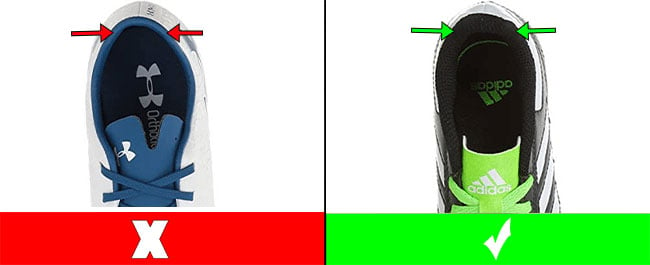
Soccer shoes with extra padding in the heel area absorb shock and reduce pressure on the growth plate during sudden movements, direction changes, and jumps — all of which are constant in soccer. The more cushioning around your child’s heel, the higher the chances of reducing or eliminating pain.
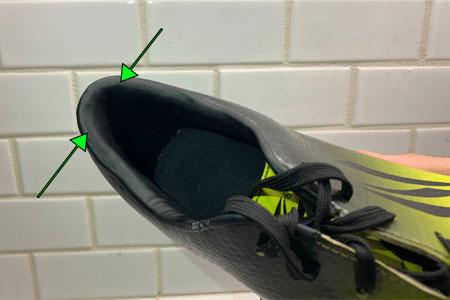
Notice the difference in padding between a pair of Adidas soccer shoes and a pair of Under Armour ones. While Under Armour shoes have gained popularity among young players, they may not be the best choice for a child dealing with heel pain due to their limited heel cushioning.
The Importance of Wearing the Correct Shoe Size
Fit is just as important as support. Shoes that are too tight can cause blisters, calluses, and worsen existing heel pain. Shoes that are too loose can lead to instability and increase the risk of falls and injury.
A properly fitting soccer cleat supports the foot’s natural development and provides a stable base for all the explosive movements soccer demands. If you are unsure of your child’s exact foot size and shape, I recommend using a virtual shoe fitting service before ordering.
Best Soccer Shoes for Kids with Heel Pain in 2026
Choosing the right cleat can feel overwhelming, but here are my top picks. All of the cleats I recommend below provide firm heel counters and extra cushioning around the heels — the two most important features for reducing heel pain in young soccer players. They all fit medium and wide feet unless otherwise noted, and every style provides enough depth to accommodate heel cups without compromising fit.
Sizing varies by style and is noted in each listing. Disclosure: Some links in this post may be affiliate links and we may receive a small commission at no extra cost to you.
1. Zephz
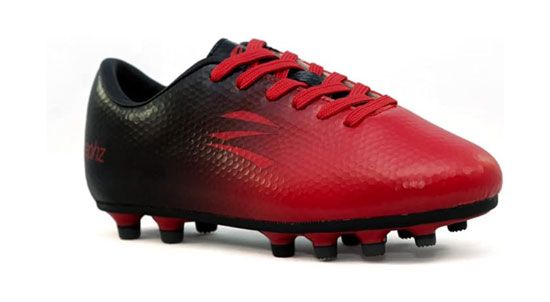
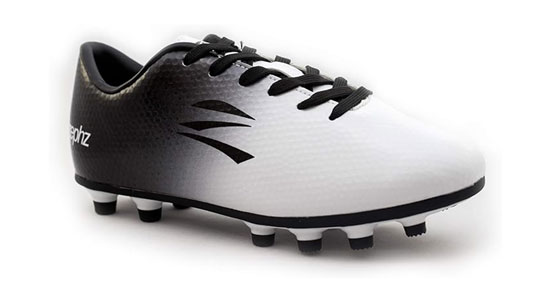
My top pick for children with wider feet, the Zephz stands out for its superior heel cushioning and deep construction that keeps heel cups firmly in place during intense play. If your child has wide or extra wide feet and is struggling with heel pain, this is the cleat I recommend first.
Key Features
- Order the soccer shoe by Zephz on Amazon
- Fits medium, wide, and extra wide feet
- Superior heel cushioning minimizes impact during intense play
- Extra padding around the ankles for added comfort
- One of the deepest cleats on the market — heel cups stay firmly in place
- Order a half size larger than your child’s current foot size
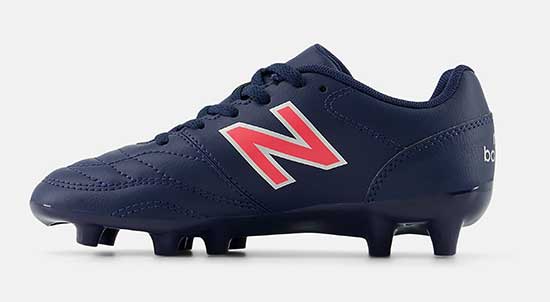
2. 442 V2 Academy by New Balance
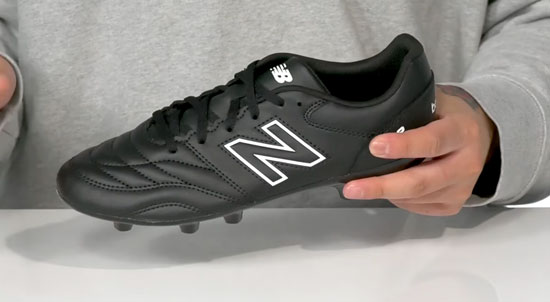
A consistent parent favorite offered at a very reasonable price. The genuine suede leather upper provides long-lasting durability, while the reinforced heel counter keeps the foot properly aligned throughout the game — making it one of the most reliable everyday cleats for children managing heel pain.
Key Features
- Order the soccer shoe 442 V2 Academy by New Balance on the New Balance website or Amazon
- Genuine suede leather upper for long-lasting durability
- Reinforced heel counter enhances stability and supports proper foot alignment
- Smooth padded interior for a comfortable first foot feel
- Order a whole size larger than your child’s current foot size
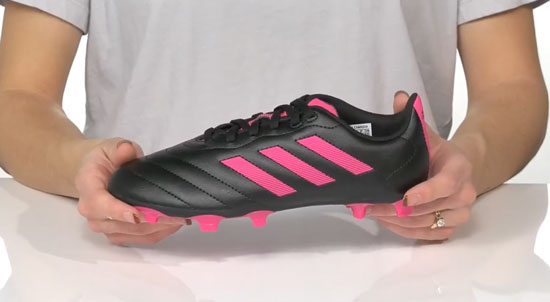
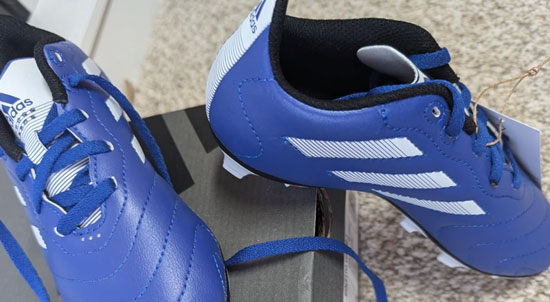
3. Goletto VIII by Adidas
A solid and affordable cleat that delivers reliable cushioning and padding around and below the heels. The Goletto VIII is the most accessible option on this list for families who need a supportive cleat without a high price tag — and it does not compromise on the features that matter most for heel pain.
Key Features
- Order the soccer shoe Goletto VIII by Adidas on Amazon
- Good cushioning around and below the heels for shock absorption
- Firm heel counter for rear foot stability
- Durable construction built for regular play and practice
- Order a whole size larger than your child’s current foot size
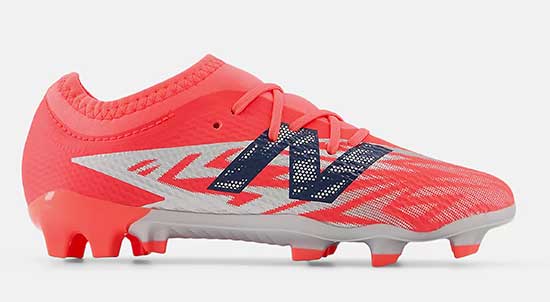
4. Furon Dispatch by New Balance
The Furon Dispatch is a step up from the 442 V2 in terms of cushioning, featuring dedicated cushioned insoles that specifically target heel pressure during active play. A strong choice for children who need a bit more underfoot comfort than a standard cleat provides.
Key Features
- Order the soccer shoe Furon Dispatch by New Balance on the New Balance website or Amazon
- Dedicated cushioned insoles reduce pressure on the heel during play
- Firm heel counter for strong rear foot support
- Lightweight construction for agile movement on the field
- Order a whole size larger than your child’s current foot size
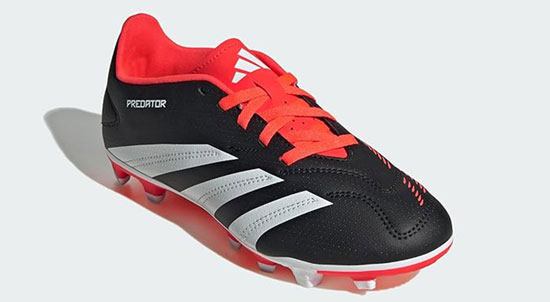
5. Predator by Adidas
The Predator is Adidas’s most performance-oriented cleat on this list, offering a stable heel counter and durable construction that holds up through a full season of competitive play. A great option for older or more serious players who need reliable heel support without sacrificing performance.
Key Features
- Order the soccer shoe Predator by Adidas on Amazon
- Stable heel counter keeps the foot properly aligned during play
- Premium durable construction designed for competitive soccer
- Snug precise fit that minimizes heel movement inside the cleat
- Order a whole size larger than your child’s current foot size
Heel Cups vs. Sports Insoles for Heel Pain
If your child is still experiencing heel pain after switching to a supportive cleat, the next step is to add a heel cup inside the shoe. Heel cups provide additional cushioning and shock absorption directly at the growth plate, which can make a significant difference for children with Sever’s disease.
Here are the two heel cups I recommend most:
Tuli’s Heel Cups
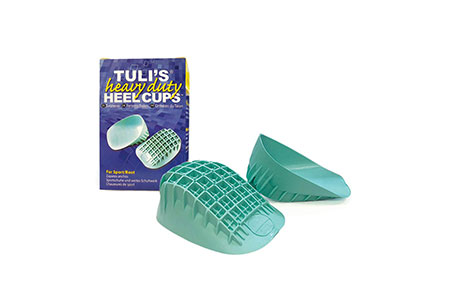
- Order Tuli’s Heel Cups on Amazon
- These heel cups for plantar fasciitis can fit in most shoes
- Small Size – Fits from a little kid shoe size 10.5 to a big kid shoe size 6. Best for children under 80 lbs.
- Regular Size – Fits big kid shoe size 6 and above. Weight up to 175 lbs.
KidSole Heel Cups
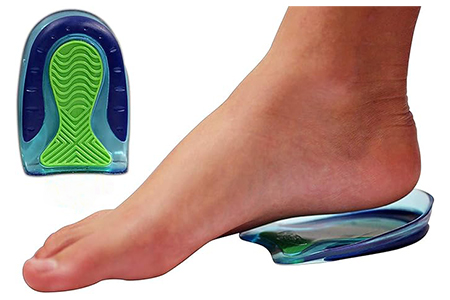
- Order KidSole heel cups on Amazon
- Available from a little kid shoe size 11 through big kid shoe size 7
- Sport grip design allows the heel pad to stay in place while kids run and play
One important note: heel cups require extra depth inside the shoe to fit properly without causing discomfort. All five cleats I recommend above provide enough depth to accommodate heel cups without compromising fit.
What Is the Best Way to Tie Your Kids’ Soccer Cleats?
The way your child laces their cleats makes a real difference in heel support and stability. I recommend a specific lacing technique that locks the heel in place and prevents it from sliding up and down inside the shoe — which is one of the key contributors to heel pain in young players.
You can watch my video guide on this lacing technique here:
Don’t Forget to Have Your Child Stretch and Ice!
Footwear and heel cups address the impact side of heel pain — but stretching and recovery are equally important. Here is what I recommend:
Stretching — have your child stretch their calves and Achilles tendon both before and after every practice and game. Tight calves are one of the primary contributors to Sever’s disease pain, and consistent stretching can significantly reduce flare-ups over time.
Icing — after every game or practice, apply ice to the heel for 15 to 20 minutes. Ice helps reduce inflammation and swelling, which provides relief in the short term. It will not cure the condition, but it is one of the most effective tools for managing day-to-day pain.
Do Cheap Soccer Shoes Lead to Heel Pain?
Not necessarily. The price of your child’s soccer shoes is not an accurate indicator of the support or quality they provide. I showed you several excellent options in this guide that are available at very reasonable price points — the 442 V2 Academy by New Balance and the Goletto VIII by Adidas being two strong examples.
What matters most is not how much the cleat costs but whether it provides a firm heel counter and extra cushioning around and below the heels. A $200 cleat designed for speed performance will do far less for your child’s heel pain than a $50 cleat with the right structural features.
When shopping for soccer cleats for a child with heel pain, ignore the price tag and focus on the two features that matter — firm heel counters and cushioned heels.
Frequently Asked Questions
In most cases yes — as long as the pain is manageable and your child is wearing properly supportive footwear. Many children continue playing throughout their treatment with the help of supportive cleats and heel cups. However, if the pain is severe enough to cause limping or significantly affect performance, rest is the best option and a medical professional should be consulted.
The key difference is in the pain pattern. With Sever’s disease pain worsens as activity continues and the tender point is at the back of the heel. With plantar fasciitis pain is typically worst at the start of activity and eases after warming up, with the tender point at the bottom of the heel. Both conditions benefit from supportive footwear and heel cushioning.
Sever’s disease typically resolves once the growth plate fuses, which usually happens by age 15 in boys and age 13 in girls. However, it can take anywhere from six months to two years to fully resolve. In the meantime, proper footwear, heel cups, stretching, and icing can keep your child playing comfortably throughout the season.
Yes — but the cleat needs to provide enough depth to accommodate the heel cup without crowding the foot. All five cleats I recommend in this article provide the extra depth needed to fit a heel cup properly. The Zephz in particular is one of the deepest cleats on the market and is especially well suited for heel cup use.
Contact Me for a Personalized Soccer Shoe Recommendation
Every child’s foot is unique. If you are unsure which cleat will work best for your child’s heel pain, foot shape, or width, feel free to contact me directly at fittingchildrensshoes@gmail.com. With over 10 years of experience fitting children’s shoes I am happy to provide specific recommendations tailored to your child’s needs — so they can get back on the field and play without pain.


Thanks Juan! My 10 year old has had foot pain since March. We took a break for the summer about 2 months and his pain went away with orthopedic inserts inside his New Balance sneakers 996. After just a couple of days of soccer practice his heel pain started back up. I am so glad to come across your YouTube page. Thanks for the recommendation. Hope he finds comfort soon as he refuses to stop playing soccer.
Hello Maria,
I’m so glad to hear that!
Is your son still feeling heel pain while playing soccer? If so, I recommend trying cleats with firm heel counters for better stability. If the discomfort continues, adding a supportive sports insole can make a big difference.
It is a great explanation and quite helpfull too but are they recomended for heel pain?
Hello Andrel,
The soccer cleats I recommend work well for children with heel pain as they provide firm heel counters and targeted support right below the heel area. Whether the child might need a heel cup fitted inside the soccer cleats depends on the degree of the child’s heel pain.