
Best Shoes for Kids with Pronation – Improve Posture and Gait
Key Features
- Available for little and big kids
- Order on Amazon
- Accommodates medium or wide feet
- Ideal for mild to moderate cases of pronation
- High-top design for additional ankle support
- Versatile — suitable for sports and everyday wear
- Sizing tip: Order a whole size larger than your child’s current foot size
10. Shoe Style GT-1000 by Asics
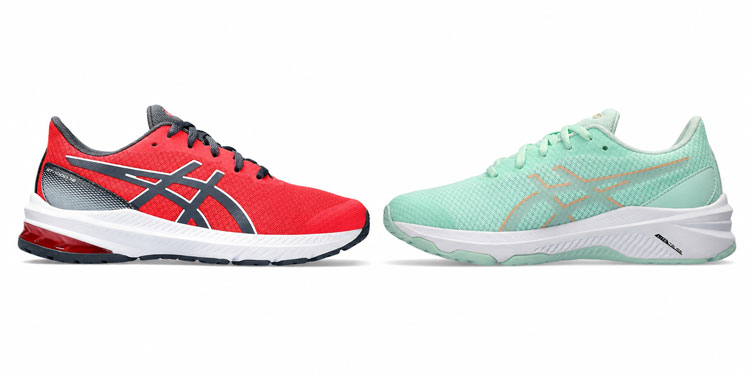
The GT-1000 by Asics is a popular choice for kids who require extra stability and support. This specific shoe is capable of fitting children with narrow feet. This shoe works best for kids with mild to moderate degrees of pronation.
Best for: Mild to moderate pronation
Key Features:
Key Features
- Available for little and big kids
- Order on Amazon
- Accommodates narrow or medium feet
- Ideal for mild to moderate cases of pronation
- Firm heel counters, stable base of support, and semi-straight lasts
- Sizing tip: Order a whole size larger than your child’s current foot size
Should My Child Also Wear Orthotics?
For children with moderate to strong pronation — especially when associated with flat feet, knock knees, or significant pain — orthotics combined with supportive shoes can be one of the most effective approaches available. I always recommend trying the correct shoes first before investing in orthotics. Many families see significant improvement from shoes alone.
If your child’s physical therapist or podiatrist has recommended orthotics, I have dedicated guides here:
- Orthotics for Toddlers 2–3 Years
- Orthotics for Children 4–13 Years
- Best Orthotics for Kids with Flat Feet
Looking for Supportive Sandals?
For warmer months, I have dedicated guides on the best sandals for overpronation:
How to Find the Right Shoe Size
Getting the correct shoe size is just as important as choosing the correct shoe. An ill-fitting shoe — even a highly supportive one — will not deliver the full benefits it is designed to provide.
Learn How to Measure Your Child’s Foot Here
Need a Personalized Recommendation?
Every child’s pronation presents differently. If you are unsure which shoe is right for your child’s specific foot shape, degree of pronation, or orthotic needs, reach out to me directly at customerservice@fittingchildrenshoes.com and I will provide a personalized recommendation at no cost.
Families Success Stories
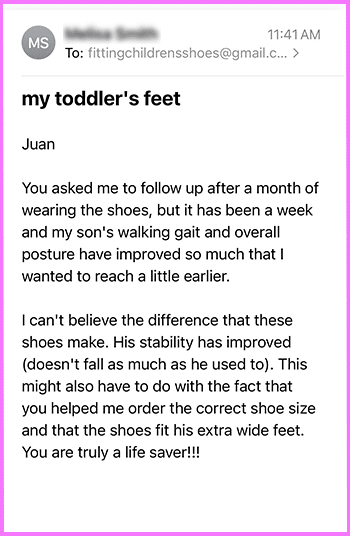
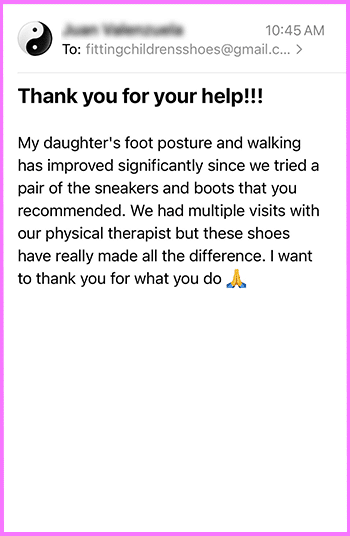
Parents often share their experiences with me of how the right shoes have made a significant difference in their child’s life. These stories highlight the importance of proper footwear in enhancing mobility and confidence. Here are some success stories that highlight the impact of choosing the right footwear:
Frequently Asked Questions
Pronation is the normal inward rolling of the foot during walking — every person pronates to some degree. Overpronation is when the foot rolls inward excessively, causing the arch to collapse and the ankle to roll inward beyond the normal range. Overpronation at moderate and strong degrees requires intervention with supportive shoes.
In most cases, Nike should be avoided — their children’s shoes typically feature curved lasts and soft heel counters that do not adequately support an overpronating foot. Most Adidas styles have the same drawback, though the Adidas Cross Em Up is an exception: its high-top design and firmer structure make it a viable option for children with mild to moderate pronation. For moderate to strong pronation, I recommend New Balance as the most reliable choice, with Saucony’s Cohesion as a solid budget-friendly alternative for milder cases.
Many parents report noticing visible improvements in their child’s posture and gait within the first four to six weeks of consistent wear. For significant improvement in pronation, allow three to six months of daily use. If no meaningful improvement after five months, consider adding orthotics.
Mild pronation in toddlers under age three is completely normal and typically resolves on its own. If your toddler has moderate or strong pronation, or if a doctor or physical therapist has expressed concern, getting them into supportive shoes early is a low-risk intervention that can make a meaningful long-term difference.
Still searching for the right fit? Drop a comment below with your child’s foot shape and degree of pronation and I will point you in the right direction — I read and respond to every one.
Key Features
- Available for toddlers, little, and big kids
- Order the 2002 or 1906 on the New Balance website
- Accommodates medium or wide feet
- Ideal for moderate to strong cases of pronation
- Firm heel counters, stable base of support, and semi-straight lasts
- Sizing tip: Order a whole size larger than your child’s current foot size
9. Shoe Style Cross Em Up by Adidas
A basketball-inspired high-top shoe that offers excellent ankle support and stability. Unlike most Adidas styles, the Cross Em Up has enough structure to work for children with mild to moderate pronation — particularly for older children who want a sports-appropriate look.
Best for: Mild to moderate pronation
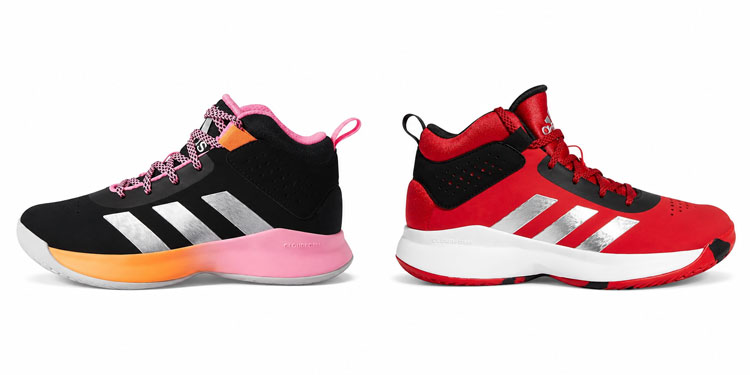
Key Features:
Key Features
- Available for little and big kids
- Order on Amazon
- Accommodates medium or wide feet
- Ideal for mild to moderate cases of pronation
- High-top design for additional ankle support
- Versatile — suitable for sports and everyday wear
- Sizing tip: Order a whole size larger than your child’s current foot size
10. Shoe Style GT-1000 by Asics
The GT-1000 by Asics is a popular choice for kids who require extra stability and support. This specific shoe is capable of fitting children with narrow feet. This shoe works best for kids with mild to moderate degrees of pronation.
Best for: Mild to moderate pronation
Key Features:
Key Features
- Available for little and big kids
- Order on Amazon
- Accommodates narrow or medium feet
- Ideal for mild to moderate cases of pronation
- Firm heel counters, stable base of support, and semi-straight lasts
- Sizing tip: Order a whole size larger than your child’s current foot size
Should My Child Also Wear Orthotics?
For children with moderate to strong pronation — especially when associated with flat feet, knock knees, or significant pain — orthotics combined with supportive shoes can be one of the most effective approaches available. I always recommend trying the correct shoes first before investing in orthotics. Many families see significant improvement from shoes alone.
If your child’s physical therapist or podiatrist has recommended orthotics, I have dedicated guides here:
- Orthotics for Toddlers 2–3 Years
- Orthotics for Children 4–13 Years
- Best Orthotics for Kids with Flat Feet
Looking for Supportive Sandals?
For warmer months, I have dedicated guides on the best sandals for overpronation:
How to Find the Right Shoe Size
Getting the correct shoe size is just as important as choosing the correct shoe. An ill-fitting shoe — even a highly supportive one — will not deliver the full benefits it is designed to provide.
Learn How to Measure Your Child’s Foot Here
Need a Personalized Recommendation?
Every child’s pronation presents differently. If you are unsure which shoe is right for your child’s specific foot shape, degree of pronation, or orthotic needs, reach out to me directly at customerservice@fittingchildrenshoes.com and I will provide a personalized recommendation at no cost.
Families Success Stories
Parents often share their experiences with me of how the right shoes have made a significant difference in their child’s life. These stories highlight the importance of proper footwear in enhancing mobility and confidence. Here are some success stories that highlight the impact of choosing the right footwear:
Frequently Asked Questions
Pronation is the normal inward rolling of the foot during walking — every person pronates to some degree. Overpronation is when the foot rolls inward excessively, causing the arch to collapse and the ankle to roll inward beyond the normal range. Overpronation at moderate and strong degrees requires intervention with supportive shoes.
In most cases, Nike should be avoided — their children’s shoes typically feature curved lasts and soft heel counters that do not adequately support an overpronating foot. Most Adidas styles have the same drawback, though the Adidas Cross Em Up is an exception: its high-top design and firmer structure make it a viable option for children with mild to moderate pronation. For moderate to strong pronation, I recommend New Balance as the most reliable choice, with Saucony’s Cohesion as a solid budget-friendly alternative for milder cases.
Many parents report noticing visible improvements in their child’s posture and gait within the first four to six weeks of consistent wear. For significant improvement in pronation, allow three to six months of daily use. If no meaningful improvement after five months, consider adding orthotics.
Mild pronation in toddlers under age three is completely normal and typically resolves on its own. If your toddler has moderate or strong pronation, or if a doctor or physical therapist has expressed concern, getting them into supportive shoes early is a low-risk intervention that can make a meaningful long-term difference.
Still searching for the right fit? Drop a comment below with your child’s foot shape and degree of pronation and I will point you in the right direction — I read and respond to every one.
Key Features
- Available for toddlers, little, and big kids
- Order on the New Balance website or Amazon
- Also available with laces on Amazon or the New Balance website
- Accommodates medium, wide, or extra wide feet
- Ideal for mild to moderate cases of pronation
- Semi-firm heel counters
- Sizing tip: Order a whole size larger than your child’s current foot size
8. Shoe Style 2002/1906 by New Balance
A more affordable alternative to the 990v6 that still provides a straight last and solid structural support for moderate to strong pronation. Works well for school and everyday wear.
Best for: Moderate to strong pronation
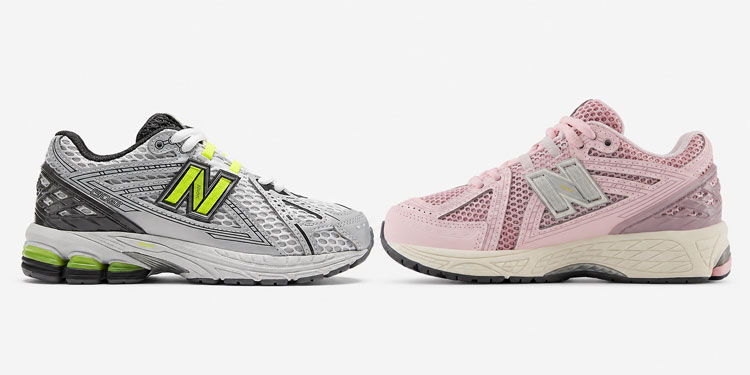
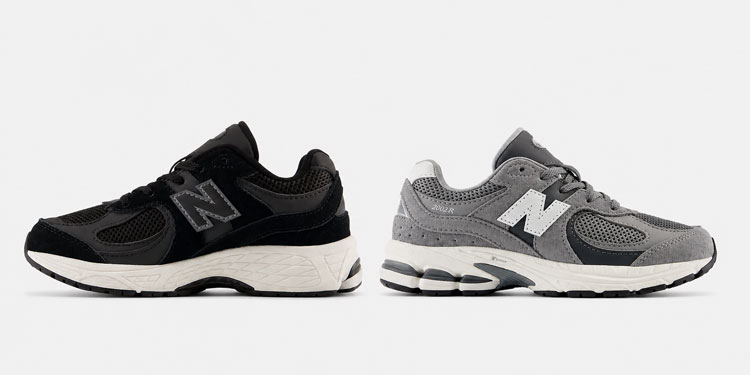
Key Features:
Key Features
- Available for toddlers, little, and big kids
- Order the 2002 or 1906 on the New Balance website
- Accommodates medium or wide feet
- Ideal for moderate to strong cases of pronation
- Firm heel counters, stable base of support, and semi-straight lasts
- Sizing tip: Order a whole size larger than your child’s current foot size
9. Shoe Style Cross Em Up by Adidas
A basketball-inspired high-top shoe that offers excellent ankle support and stability. Unlike most Adidas styles, the Cross Em Up has enough structure to work for children with mild to moderate pronation — particularly for older children who want a sports-appropriate look.
Best for: Mild to moderate pronation
Key Features:
Key Features
- Available for little and big kids
- Order on Amazon
- Accommodates medium or wide feet
- Ideal for mild to moderate cases of pronation
- High-top design for additional ankle support
- Versatile — suitable for sports and everyday wear
- Sizing tip: Order a whole size larger than your child’s current foot size
10. Shoe Style GT-1000 by Asics
The GT-1000 by Asics is a popular choice for kids who require extra stability and support. This specific shoe is capable of fitting children with narrow feet. This shoe works best for kids with mild to moderate degrees of pronation.
Best for: Mild to moderate pronation
Key Features:
Key Features
- Available for little and big kids
- Order on Amazon
- Accommodates narrow or medium feet
- Ideal for mild to moderate cases of pronation
- Firm heel counters, stable base of support, and semi-straight lasts
- Sizing tip: Order a whole size larger than your child’s current foot size
Should My Child Also Wear Orthotics?
For children with moderate to strong pronation — especially when associated with flat feet, knock knees, or significant pain — orthotics combined with supportive shoes can be one of the most effective approaches available. I always recommend trying the correct shoes first before investing in orthotics. Many families see significant improvement from shoes alone.
If your child’s physical therapist or podiatrist has recommended orthotics, I have dedicated guides here:
- Orthotics for Toddlers 2–3 Years
- Orthotics for Children 4–13 Years
- Best Orthotics for Kids with Flat Feet
Looking for Supportive Sandals?
For warmer months, I have dedicated guides on the best sandals for overpronation:
How to Find the Right Shoe Size
Getting the correct shoe size is just as important as choosing the correct shoe. An ill-fitting shoe — even a highly supportive one — will not deliver the full benefits it is designed to provide.
Learn How to Measure Your Child’s Foot Here
Need a Personalized Recommendation?
Every child’s pronation presents differently. If you are unsure which shoe is right for your child’s specific foot shape, degree of pronation, or orthotic needs, reach out to me directly at customerservice@fittingchildrenshoes.com and I will provide a personalized recommendation at no cost.
Families Success Stories
Parents often share their experiences with me of how the right shoes have made a significant difference in their child’s life. These stories highlight the importance of proper footwear in enhancing mobility and confidence. Here are some success stories that highlight the impact of choosing the right footwear:
Frequently Asked Questions
Pronation is the normal inward rolling of the foot during walking — every person pronates to some degree. Overpronation is when the foot rolls inward excessively, causing the arch to collapse and the ankle to roll inward beyond the normal range. Overpronation at moderate and strong degrees requires intervention with supportive shoes.
In most cases, Nike should be avoided — their children’s shoes typically feature curved lasts and soft heel counters that do not adequately support an overpronating foot. Most Adidas styles have the same drawback, though the Adidas Cross Em Up is an exception: its high-top design and firmer structure make it a viable option for children with mild to moderate pronation. For moderate to strong pronation, I recommend New Balance as the most reliable choice, with Saucony’s Cohesion as a solid budget-friendly alternative for milder cases.
Many parents report noticing visible improvements in their child’s posture and gait within the first four to six weeks of consistent wear. For significant improvement in pronation, allow three to six months of daily use. If no meaningful improvement after five months, consider adding orthotics.
Mild pronation in toddlers under age three is completely normal and typically resolves on its own. If your toddler has moderate or strong pronation, or if a doctor or physical therapist has expressed concern, getting them into supportive shoes early is a low-risk intervention that can make a meaningful long-term difference.
Still searching for the right fit? Drop a comment below with your child’s foot shape and degree of pronation and I will point you in the right direction — I read and respond to every one.
Key Features
- Available for little and big kids
- Order on Amazon
- Also available with laces on Amazon
- Accommodates medium or wide feet
- Ideal for mild to moderate cases of pronation
- Firm heel counters and stable base of support
- Sizing tip: Order a whole size larger than your child’s current foot size
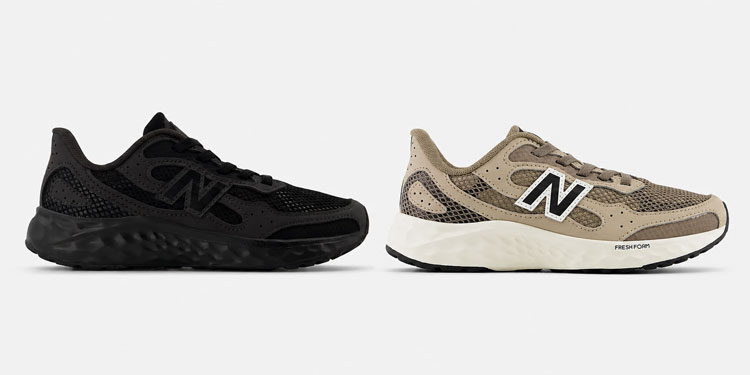
7. Shoe Style Fresh Foam Arishi v4 by New Balance
A lightweight, comfortable everyday sneaker available in medium, wide, and extra wide widths at a very reasonable price. One of my most popular recommendations for families who need proper pronation support without the premium price tag.
Best for: Mild to moderate pronation
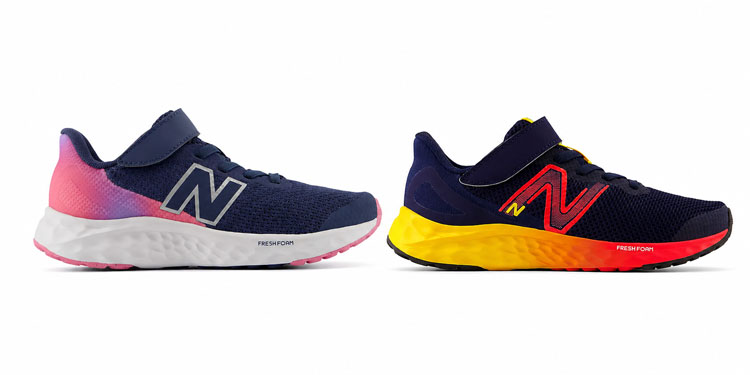
Key Features:
Key Features
- Available for toddlers, little, and big kids
- Order on the New Balance website or Amazon
- Also available with laces on Amazon or the New Balance website
- Accommodates medium, wide, or extra wide feet
- Ideal for mild to moderate cases of pronation
- Semi-firm heel counters
- Sizing tip: Order a whole size larger than your child’s current foot size
8. Shoe Style 2002/1906 by New Balance
A more affordable alternative to the 990v6 that still provides a straight last and solid structural support for moderate to strong pronation. Works well for school and everyday wear.
Best for: Moderate to strong pronation
Key Features:
Key Features
- Available for toddlers, little, and big kids
- Order the 2002 or 1906 on the New Balance website
- Accommodates medium or wide feet
- Ideal for moderate to strong cases of pronation
- Firm heel counters, stable base of support, and semi-straight lasts
- Sizing tip: Order a whole size larger than your child’s current foot size
9. Shoe Style Cross Em Up by Adidas
A basketball-inspired high-top shoe that offers excellent ankle support and stability. Unlike most Adidas styles, the Cross Em Up has enough structure to work for children with mild to moderate pronation — particularly for older children who want a sports-appropriate look.
Best for: Mild to moderate pronation
Key Features:
Key Features
- Available for little and big kids
- Order on Amazon
- Accommodates medium or wide feet
- Ideal for mild to moderate cases of pronation
- High-top design for additional ankle support
- Versatile — suitable for sports and everyday wear
- Sizing tip: Order a whole size larger than your child’s current foot size
10. Shoe Style GT-1000 by Asics
The GT-1000 by Asics is a popular choice for kids who require extra stability and support. This specific shoe is capable of fitting children with narrow feet. This shoe works best for kids with mild to moderate degrees of pronation.
Best for: Mild to moderate pronation
Key Features:
Key Features
- Available for little and big kids
- Order on Amazon
- Accommodates narrow or medium feet
- Ideal for mild to moderate cases of pronation
- Firm heel counters, stable base of support, and semi-straight lasts
- Sizing tip: Order a whole size larger than your child’s current foot size
Should My Child Also Wear Orthotics?
For children with moderate to strong pronation — especially when associated with flat feet, knock knees, or significant pain — orthotics combined with supportive shoes can be one of the most effective approaches available. I always recommend trying the correct shoes first before investing in orthotics. Many families see significant improvement from shoes alone.
If your child’s physical therapist or podiatrist has recommended orthotics, I have dedicated guides here:
- Orthotics for Toddlers 2–3 Years
- Orthotics for Children 4–13 Years
- Best Orthotics for Kids with Flat Feet
Looking for Supportive Sandals?
For warmer months, I have dedicated guides on the best sandals for overpronation:
How to Find the Right Shoe Size
Getting the correct shoe size is just as important as choosing the correct shoe. An ill-fitting shoe — even a highly supportive one — will not deliver the full benefits it is designed to provide.
Learn How to Measure Your Child’s Foot Here
Need a Personalized Recommendation?
Every child’s pronation presents differently. If you are unsure which shoe is right for your child’s specific foot shape, degree of pronation, or orthotic needs, reach out to me directly at customerservice@fittingchildrenshoes.com and I will provide a personalized recommendation at no cost.
Families Success Stories
Parents often share their experiences with me of how the right shoes have made a significant difference in their child’s life. These stories highlight the importance of proper footwear in enhancing mobility and confidence. Here are some success stories that highlight the impact of choosing the right footwear:
Frequently Asked Questions
Pronation is the normal inward rolling of the foot during walking — every person pronates to some degree. Overpronation is when the foot rolls inward excessively, causing the arch to collapse and the ankle to roll inward beyond the normal range. Overpronation at moderate and strong degrees requires intervention with supportive shoes.
In most cases, Nike should be avoided — their children’s shoes typically feature curved lasts and soft heel counters that do not adequately support an overpronating foot. Most Adidas styles have the same drawback, though the Adidas Cross Em Up is an exception: its high-top design and firmer structure make it a viable option for children with mild to moderate pronation. For moderate to strong pronation, I recommend New Balance as the most reliable choice, with Saucony’s Cohesion as a solid budget-friendly alternative for milder cases.
Many parents report noticing visible improvements in their child’s posture and gait within the first four to six weeks of consistent wear. For significant improvement in pronation, allow three to six months of daily use. If no meaningful improvement after five months, consider adding orthotics.
Mild pronation in toddlers under age three is completely normal and typically resolves on its own. If your toddler has moderate or strong pronation, or if a doctor or physical therapist has expressed concern, getting them into supportive shoes early is a low-risk intervention that can make a meaningful long-term difference.
Still searching for the right fit? Drop a comment below with your child’s foot shape and degree of pronation and I will point you in the right direction — I read and respond to every one.
Key Features
- Available for toddlers and little kids
- Order on Amazon
- Accommodates medium or wide feet
- Ideal for mild to moderate cases of pronation
- High-top design for extra ankle support
- Water-friendly construction
- Sizing tip: Order a whole size larger than your child’s current foot size
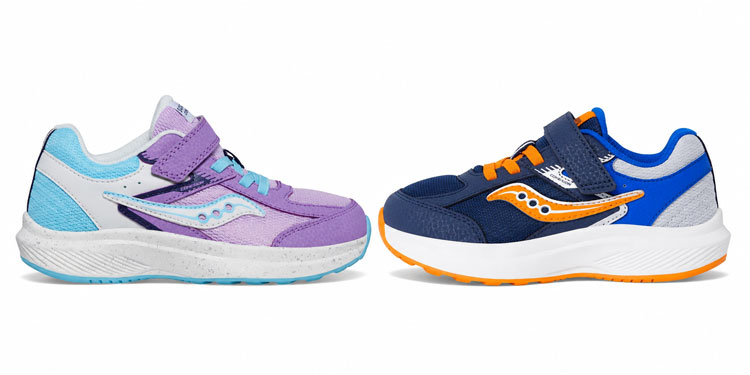
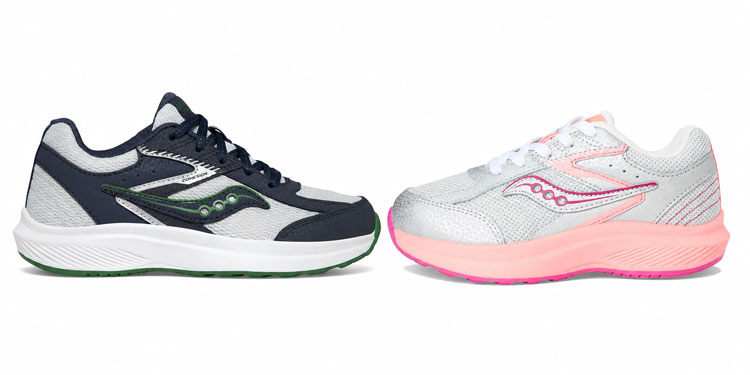
6. Shoe Style Cohesion by Saucony
An affordable straight last option for little and big kids with excellent cushioning and stability. Available in both Velcro and lace versions — one of my most recommended budget-friendly options for families who need proper pronation support without the premium price.
Best for: Mild to moderate pronation
Key Features:
Key Features
- Available for little and big kids
- Order on Amazon
- Also available with laces on Amazon
- Accommodates medium or wide feet
- Ideal for mild to moderate cases of pronation
- Firm heel counters and stable base of support
- Sizing tip: Order a whole size larger than your child’s current foot size
7. Shoe Style Fresh Foam Arishi v4 by New Balance
A lightweight, comfortable everyday sneaker available in medium, wide, and extra wide widths at a very reasonable price. One of my most popular recommendations for families who need proper pronation support without the premium price tag.
Best for: Mild to moderate pronation
Key Features:
Key Features
- Available for toddlers, little, and big kids
- Order on the New Balance website or Amazon
- Also available with laces on Amazon or the New Balance website
- Accommodates medium, wide, or extra wide feet
- Ideal for mild to moderate cases of pronation
- Semi-firm heel counters
- Sizing tip: Order a whole size larger than your child’s current foot size
8. Shoe Style 2002/1906 by New Balance
A more affordable alternative to the 990v6 that still provides a straight last and solid structural support for moderate to strong pronation. Works well for school and everyday wear.
Best for: Moderate to strong pronation
Key Features:
Key Features
- Available for toddlers, little, and big kids
- Order the 2002 or 1906 on the New Balance website
- Accommodates medium or wide feet
- Ideal for moderate to strong cases of pronation
- Firm heel counters, stable base of support, and semi-straight lasts
- Sizing tip: Order a whole size larger than your child’s current foot size
9. Shoe Style Cross Em Up by Adidas
A basketball-inspired high-top shoe that offers excellent ankle support and stability. Unlike most Adidas styles, the Cross Em Up has enough structure to work for children with mild to moderate pronation — particularly for older children who want a sports-appropriate look.
Best for: Mild to moderate pronation
Key Features:
Key Features
- Available for little and big kids
- Order on Amazon
- Accommodates medium or wide feet
- Ideal for mild to moderate cases of pronation
- High-top design for additional ankle support
- Versatile — suitable for sports and everyday wear
- Sizing tip: Order a whole size larger than your child’s current foot size
10. Shoe Style GT-1000 by Asics
The GT-1000 by Asics is a popular choice for kids who require extra stability and support. This specific shoe is capable of fitting children with narrow feet. This shoe works best for kids with mild to moderate degrees of pronation.
Best for: Mild to moderate pronation
Key Features:
Key Features
- Available for little and big kids
- Order on Amazon
- Accommodates narrow or medium feet
- Ideal for mild to moderate cases of pronation
- Firm heel counters, stable base of support, and semi-straight lasts
- Sizing tip: Order a whole size larger than your child’s current foot size
Should My Child Also Wear Orthotics?
For children with moderate to strong pronation — especially when associated with flat feet, knock knees, or significant pain — orthotics combined with supportive shoes can be one of the most effective approaches available. I always recommend trying the correct shoes first before investing in orthotics. Many families see significant improvement from shoes alone.
If your child’s physical therapist or podiatrist has recommended orthotics, I have dedicated guides here:
- Orthotics for Toddlers 2–3 Years
- Orthotics for Children 4–13 Years
- Best Orthotics for Kids with Flat Feet
Looking for Supportive Sandals?
For warmer months, I have dedicated guides on the best sandals for overpronation:
How to Find the Right Shoe Size
Getting the correct shoe size is just as important as choosing the correct shoe. An ill-fitting shoe — even a highly supportive one — will not deliver the full benefits it is designed to provide.
Learn How to Measure Your Child’s Foot Here
Need a Personalized Recommendation?
Every child’s pronation presents differently. If you are unsure which shoe is right for your child’s specific foot shape, degree of pronation, or orthotic needs, reach out to me directly at customerservice@fittingchildrenshoes.com and I will provide a personalized recommendation at no cost.
Families Success Stories
Parents often share their experiences with me of how the right shoes have made a significant difference in their child’s life. These stories highlight the importance of proper footwear in enhancing mobility and confidence. Here are some success stories that highlight the impact of choosing the right footwear:
Frequently Asked Questions
Pronation is the normal inward rolling of the foot during walking — every person pronates to some degree. Overpronation is when the foot rolls inward excessively, causing the arch to collapse and the ankle to roll inward beyond the normal range. Overpronation at moderate and strong degrees requires intervention with supportive shoes.
In most cases, Nike should be avoided — their children’s shoes typically feature curved lasts and soft heel counters that do not adequately support an overpronating foot. Most Adidas styles have the same drawback, though the Adidas Cross Em Up is an exception: its high-top design and firmer structure make it a viable option for children with mild to moderate pronation. For moderate to strong pronation, I recommend New Balance as the most reliable choice, with Saucony’s Cohesion as a solid budget-friendly alternative for milder cases.
Many parents report noticing visible improvements in their child’s posture and gait within the first four to six weeks of consistent wear. For significant improvement in pronation, allow three to six months of daily use. If no meaningful improvement after five months, consider adding orthotics.
Mild pronation in toddlers under age three is completely normal and typically resolves on its own. If your toddler has moderate or strong pronation, or if a doctor or physical therapist has expressed concern, getting them into supportive shoes early is a low-risk intervention that can make a meaningful long-term difference.
Still searching for the right fit? Drop a comment below with your child’s foot shape and degree of pronation and I will point you in the right direction — I read and respond to every one.
Key Features
- Available for toddlers, little, and big kids
- Order on Amazon or the New Balance website
- Also available with laces on the New Balance website or Amazon
- Accommodates medium, wide, or extra wide feet
- Ideal for mild to moderate cases of pronation
- Firm heel counters
- APMA Seal of Acceptance
- Sizing tip: Order a half size larger than your child’s current foot size
5. Shoe Style Tracks by Timberland
A durable high-top boot with a straight last and sturdy construction. The high-top design provides additional ankle stability — beneficial for children with pronation who need extra support at the ankle joint. Slightly heavier than my other recommendations, worth noting for children who fatigue easily.
Best for: Mild to moderate pronation

Key Features:
Key Features
- Available for toddlers and little kids
- Order on Amazon
- Accommodates medium or wide feet
- Ideal for mild to moderate cases of pronation
- High-top design for extra ankle support
- Water-friendly construction
- Sizing tip: Order a whole size larger than your child’s current foot size
6. Shoe Style Cohesion by Saucony
An affordable straight last option for little and big kids with excellent cushioning and stability. Available in both Velcro and lace versions — one of my most recommended budget-friendly options for families who need proper pronation support without the premium price.
Best for: Mild to moderate pronation
Key Features:
Key Features
- Available for little and big kids
- Order on Amazon
- Also available with laces on Amazon
- Accommodates medium or wide feet
- Ideal for mild to moderate cases of pronation
- Firm heel counters and stable base of support
- Sizing tip: Order a whole size larger than your child’s current foot size
7. Shoe Style Fresh Foam Arishi v4 by New Balance
A lightweight, comfortable everyday sneaker available in medium, wide, and extra wide widths at a very reasonable price. One of my most popular recommendations for families who need proper pronation support without the premium price tag.
Best for: Mild to moderate pronation
Key Features:
Key Features
- Available for toddlers, little, and big kids
- Order on the New Balance website or Amazon
- Also available with laces on Amazon or the New Balance website
- Accommodates medium, wide, or extra wide feet
- Ideal for mild to moderate cases of pronation
- Semi-firm heel counters
- Sizing tip: Order a whole size larger than your child’s current foot size
8. Shoe Style 2002/1906 by New Balance
A more affordable alternative to the 990v6 that still provides a straight last and solid structural support for moderate to strong pronation. Works well for school and everyday wear.
Best for: Moderate to strong pronation
Key Features:
Key Features
- Available for toddlers, little, and big kids
- Order the 2002 or 1906 on the New Balance website
- Accommodates medium or wide feet
- Ideal for moderate to strong cases of pronation
- Firm heel counters, stable base of support, and semi-straight lasts
- Sizing tip: Order a whole size larger than your child’s current foot size
9. Shoe Style Cross Em Up by Adidas
A basketball-inspired high-top shoe that offers excellent ankle support and stability. Unlike most Adidas styles, the Cross Em Up has enough structure to work for children with mild to moderate pronation — particularly for older children who want a sports-appropriate look.
Best for: Mild to moderate pronation
Key Features:
Key Features
- Available for little and big kids
- Order on Amazon
- Accommodates medium or wide feet
- Ideal for mild to moderate cases of pronation
- High-top design for additional ankle support
- Versatile — suitable for sports and everyday wear
- Sizing tip: Order a whole size larger than your child’s current foot size
10. Shoe Style GT-1000 by Asics
The GT-1000 by Asics is a popular choice for kids who require extra stability and support. This specific shoe is capable of fitting children with narrow feet. This shoe works best for kids with mild to moderate degrees of pronation.
Best for: Mild to moderate pronation
Key Features:
Key Features
- Available for little and big kids
- Order on Amazon
- Accommodates narrow or medium feet
- Ideal for mild to moderate cases of pronation
- Firm heel counters, stable base of support, and semi-straight lasts
- Sizing tip: Order a whole size larger than your child’s current foot size
Should My Child Also Wear Orthotics?
For children with moderate to strong pronation — especially when associated with flat feet, knock knees, or significant pain — orthotics combined with supportive shoes can be one of the most effective approaches available. I always recommend trying the correct shoes first before investing in orthotics. Many families see significant improvement from shoes alone.
If your child’s physical therapist or podiatrist has recommended orthotics, I have dedicated guides here:
- Orthotics for Toddlers 2–3 Years
- Orthotics for Children 4–13 Years
- Best Orthotics for Kids with Flat Feet
Looking for Supportive Sandals?
For warmer months, I have dedicated guides on the best sandals for overpronation:
How to Find the Right Shoe Size
Getting the correct shoe size is just as important as choosing the correct shoe. An ill-fitting shoe — even a highly supportive one — will not deliver the full benefits it is designed to provide.
Learn How to Measure Your Child’s Foot Here
Need a Personalized Recommendation?
Every child’s pronation presents differently. If you are unsure which shoe is right for your child’s specific foot shape, degree of pronation, or orthotic needs, reach out to me directly at customerservice@fittingchildrenshoes.com and I will provide a personalized recommendation at no cost.
Families Success Stories
Parents often share their experiences with me of how the right shoes have made a significant difference in their child’s life. These stories highlight the importance of proper footwear in enhancing mobility and confidence. Here are some success stories that highlight the impact of choosing the right footwear:
Frequently Asked Questions
Pronation is the normal inward rolling of the foot during walking — every person pronates to some degree. Overpronation is when the foot rolls inward excessively, causing the arch to collapse and the ankle to roll inward beyond the normal range. Overpronation at moderate and strong degrees requires intervention with supportive shoes.
In most cases, Nike should be avoided — their children’s shoes typically feature curved lasts and soft heel counters that do not adequately support an overpronating foot. Most Adidas styles have the same drawback, though the Adidas Cross Em Up is an exception: its high-top design and firmer structure make it a viable option for children with mild to moderate pronation. For moderate to strong pronation, I recommend New Balance as the most reliable choice, with Saucony’s Cohesion as a solid budget-friendly alternative for milder cases.
Many parents report noticing visible improvements in their child’s posture and gait within the first four to six weeks of consistent wear. For significant improvement in pronation, allow three to six months of daily use. If no meaningful improvement after five months, consider adding orthotics.
Mild pronation in toddlers under age three is completely normal and typically resolves on its own. If your toddler has moderate or strong pronation, or if a doctor or physical therapist has expressed concern, getting them into supportive shoes early is a low-risk intervention that can make a meaningful long-term difference.
Still searching for the right fit? Drop a comment below with your child’s foot shape and degree of pronation and I will point you in the right direction — I read and respond to every one.
Key Features
- Available for toddlers
- Order on Amazon
- Accommodates medium, wide, or extra wide feet
- Ideal for mild to moderate cases of pronation
- 100% leather construction
- High-top design provides extra ankle support
- APMA Seal of Acceptance
- Sizing tip: Order a whole size larger than your child’s current foot size
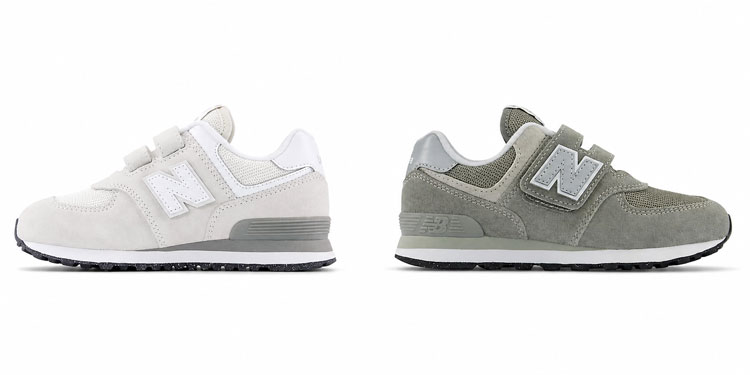
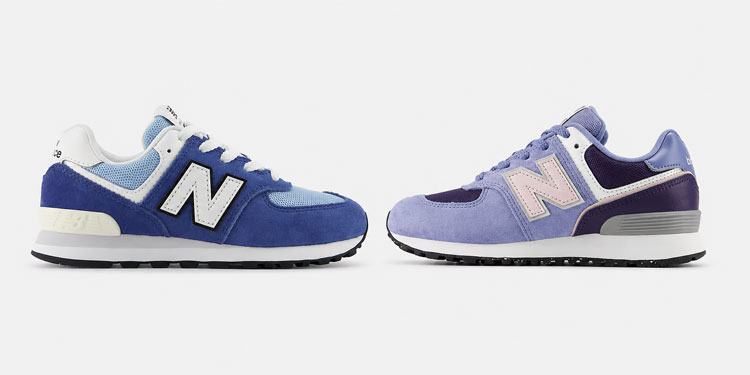
4. Shoe Style 574 by New Balance
A more affordable alternative to the 990v6 that still delivers a straight last, firm heel counter, and excellent width options. Available in medium, wide, and extra wide widths with the APMA Seal of Acceptance — a solid, versatile everyday option for children with mild to moderate pronation.
Best for: Mild to moderate pronation
Key Features:
Key Features
- Available for toddlers, little, and big kids
- Order on Amazon or the New Balance website
- Also available with laces on the New Balance website or Amazon
- Accommodates medium, wide, or extra wide feet
- Ideal for mild to moderate cases of pronation
- Firm heel counters
- APMA Seal of Acceptance
- Sizing tip: Order a half size larger than your child’s current foot size
5. Shoe Style Tracks by Timberland
A durable high-top boot with a straight last and sturdy construction. The high-top design provides additional ankle stability — beneficial for children with pronation who need extra support at the ankle joint. Slightly heavier than my other recommendations, worth noting for children who fatigue easily.
Best for: Mild to moderate pronation
Key Features:
Key Features
- Available for toddlers and little kids
- Order on Amazon
- Accommodates medium or wide feet
- Ideal for mild to moderate cases of pronation
- High-top design for extra ankle support
- Water-friendly construction
- Sizing tip: Order a whole size larger than your child’s current foot size
6. Shoe Style Cohesion by Saucony
An affordable straight last option for little and big kids with excellent cushioning and stability. Available in both Velcro and lace versions — one of my most recommended budget-friendly options for families who need proper pronation support without the premium price.
Best for: Mild to moderate pronation
Key Features:
Key Features
- Available for little and big kids
- Order on Amazon
- Also available with laces on Amazon
- Accommodates medium or wide feet
- Ideal for mild to moderate cases of pronation
- Firm heel counters and stable base of support
- Sizing tip: Order a whole size larger than your child’s current foot size
7. Shoe Style Fresh Foam Arishi v4 by New Balance
A lightweight, comfortable everyday sneaker available in medium, wide, and extra wide widths at a very reasonable price. One of my most popular recommendations for families who need proper pronation support without the premium price tag.
Best for: Mild to moderate pronation
Key Features:
Key Features
- Available for toddlers, little, and big kids
- Order on the New Balance website or Amazon
- Also available with laces on Amazon or the New Balance website
- Accommodates medium, wide, or extra wide feet
- Ideal for mild to moderate cases of pronation
- Semi-firm heel counters
- Sizing tip: Order a whole size larger than your child’s current foot size
8. Shoe Style 2002/1906 by New Balance
A more affordable alternative to the 990v6 that still provides a straight last and solid structural support for moderate to strong pronation. Works well for school and everyday wear.
Best for: Moderate to strong pronation
Key Features:
Key Features
- Available for toddlers, little, and big kids
- Order the 2002 or 1906 on the New Balance website
- Accommodates medium or wide feet
- Ideal for moderate to strong cases of pronation
- Firm heel counters, stable base of support, and semi-straight lasts
- Sizing tip: Order a whole size larger than your child’s current foot size
9. Shoe Style Cross Em Up by Adidas
A basketball-inspired high-top shoe that offers excellent ankle support and stability. Unlike most Adidas styles, the Cross Em Up has enough structure to work for children with mild to moderate pronation — particularly for older children who want a sports-appropriate look.
Best for: Mild to moderate pronation
Key Features:
Key Features
- Available for little and big kids
- Order on Amazon
- Accommodates medium or wide feet
- Ideal for mild to moderate cases of pronation
- High-top design for additional ankle support
- Versatile — suitable for sports and everyday wear
- Sizing tip: Order a whole size larger than your child’s current foot size
10. Shoe Style GT-1000 by Asics
The GT-1000 by Asics is a popular choice for kids who require extra stability and support. This specific shoe is capable of fitting children with narrow feet. This shoe works best for kids with mild to moderate degrees of pronation.
Best for: Mild to moderate pronation
Key Features:
Key Features
- Available for little and big kids
- Order on Amazon
- Accommodates narrow or medium feet
- Ideal for mild to moderate cases of pronation
- Firm heel counters, stable base of support, and semi-straight lasts
- Sizing tip: Order a whole size larger than your child’s current foot size
Should My Child Also Wear Orthotics?
For children with moderate to strong pronation — especially when associated with flat feet, knock knees, or significant pain — orthotics combined with supportive shoes can be one of the most effective approaches available. I always recommend trying the correct shoes first before investing in orthotics. Many families see significant improvement from shoes alone.
If your child’s physical therapist or podiatrist has recommended orthotics, I have dedicated guides here:
- Orthotics for Toddlers 2–3 Years
- Orthotics for Children 4–13 Years
- Best Orthotics for Kids with Flat Feet
Looking for Supportive Sandals?
For warmer months, I have dedicated guides on the best sandals for overpronation:
How to Find the Right Shoe Size
Getting the correct shoe size is just as important as choosing the correct shoe. An ill-fitting shoe — even a highly supportive one — will not deliver the full benefits it is designed to provide.
Learn How to Measure Your Child’s Foot Here
Need a Personalized Recommendation?
Every child’s pronation presents differently. If you are unsure which shoe is right for your child’s specific foot shape, degree of pronation, or orthotic needs, reach out to me directly at customerservice@fittingchildrenshoes.com and I will provide a personalized recommendation at no cost.
Families Success Stories
Parents often share their experiences with me of how the right shoes have made a significant difference in their child’s life. These stories highlight the importance of proper footwear in enhancing mobility and confidence. Here are some success stories that highlight the impact of choosing the right footwear:
Frequently Asked Questions
Pronation is the normal inward rolling of the foot during walking — every person pronates to some degree. Overpronation is when the foot rolls inward excessively, causing the arch to collapse and the ankle to roll inward beyond the normal range. Overpronation at moderate and strong degrees requires intervention with supportive shoes.
In most cases, Nike should be avoided — their children’s shoes typically feature curved lasts and soft heel counters that do not adequately support an overpronating foot. Most Adidas styles have the same drawback, though the Adidas Cross Em Up is an exception: its high-top design and firmer structure make it a viable option for children with mild to moderate pronation. For moderate to strong pronation, I recommend New Balance as the most reliable choice, with Saucony’s Cohesion as a solid budget-friendly alternative for milder cases.
Many parents report noticing visible improvements in their child’s posture and gait within the first four to six weeks of consistent wear. For significant improvement in pronation, allow three to six months of daily use. If no meaningful improvement after five months, consider adding orthotics.
Mild pronation in toddlers under age three is completely normal and typically resolves on its own. If your toddler has moderate or strong pronation, or if a doctor or physical therapist has expressed concern, getting them into supportive shoes early is a low-risk intervention that can make a meaningful long-term difference.
Still searching for the right fit? Drop a comment below with your child’s foot shape and degree of pronation and I will point you in the right direction — I read and respond to every one.
Key Features
- Available for toddlers and little kids
- Order the model Gabi or Alvin on Amazon
- Also available in a Mary Jane style and a version for older kids called Memo Polo
- Accommodates medium and wide feet
- Ideal for moderate to strong cases of pronation
- High-top design with stiff heel counters
- Sizing tip: Order a half size larger than your child’s current foot size. Refer to Memo sizing chart
3. Shoe Style Elliott by Stride Rite
A high-top bootie that provides excellent ankle support alongside a straight last — one of the most effective combinations for toddlers with overpronation. The high-top design gives additional ankle stability, and the 100% leather construction molds to the foot over time. Affordable and APMA-approved.
Best for: Mild to moderate pronation

Key Features:
Key Features
- Available for toddlers
- Order on Amazon
- Accommodates medium, wide, or extra wide feet
- Ideal for mild to moderate cases of pronation
- 100% leather construction
- High-top design provides extra ankle support
- APMA Seal of Acceptance
- Sizing tip: Order a whole size larger than your child’s current foot size
4. Shoe Style 574 by New Balance
A more affordable alternative to the 990v6 that still delivers a straight last, firm heel counter, and excellent width options. Available in medium, wide, and extra wide widths with the APMA Seal of Acceptance — a solid, versatile everyday option for children with mild to moderate pronation.
Best for: Mild to moderate pronation
Key Features:
Key Features
- Available for toddlers, little, and big kids
- Order on Amazon or the New Balance website
- Also available with laces on the New Balance website or Amazon
- Accommodates medium, wide, or extra wide feet
- Ideal for mild to moderate cases of pronation
- Firm heel counters
- APMA Seal of Acceptance
- Sizing tip: Order a half size larger than your child’s current foot size
5. Shoe Style Tracks by Timberland
A durable high-top boot with a straight last and sturdy construction. The high-top design provides additional ankle stability — beneficial for children with pronation who need extra support at the ankle joint. Slightly heavier than my other recommendations, worth noting for children who fatigue easily.
Best for: Mild to moderate pronation
Key Features:
Key Features
- Available for toddlers and little kids
- Order on Amazon
- Accommodates medium or wide feet
- Ideal for mild to moderate cases of pronation
- High-top design for extra ankle support
- Water-friendly construction
- Sizing tip: Order a whole size larger than your child’s current foot size
6. Shoe Style Cohesion by Saucony
An affordable straight last option for little and big kids with excellent cushioning and stability. Available in both Velcro and lace versions — one of my most recommended budget-friendly options for families who need proper pronation support without the premium price.
Best for: Mild to moderate pronation
Key Features:
Key Features
- Available for little and big kids
- Order on Amazon
- Also available with laces on Amazon
- Accommodates medium or wide feet
- Ideal for mild to moderate cases of pronation
- Firm heel counters and stable base of support
- Sizing tip: Order a whole size larger than your child’s current foot size
7. Shoe Style Fresh Foam Arishi v4 by New Balance
A lightweight, comfortable everyday sneaker available in medium, wide, and extra wide widths at a very reasonable price. One of my most popular recommendations for families who need proper pronation support without the premium price tag.
Best for: Mild to moderate pronation
Key Features:
Key Features
- Available for toddlers, little, and big kids
- Order on the New Balance website or Amazon
- Also available with laces on Amazon or the New Balance website
- Accommodates medium, wide, or extra wide feet
- Ideal for mild to moderate cases of pronation
- Semi-firm heel counters
- Sizing tip: Order a whole size larger than your child’s current foot size
8. Shoe Style 2002/1906 by New Balance
A more affordable alternative to the 990v6 that still provides a straight last and solid structural support for moderate to strong pronation. Works well for school and everyday wear.
Best for: Moderate to strong pronation
Key Features:
Key Features
- Available for toddlers, little, and big kids
- Order the 2002 or 1906 on the New Balance website
- Accommodates medium or wide feet
- Ideal for moderate to strong cases of pronation
- Firm heel counters, stable base of support, and semi-straight lasts
- Sizing tip: Order a whole size larger than your child’s current foot size
9. Shoe Style Cross Em Up by Adidas
A basketball-inspired high-top shoe that offers excellent ankle support and stability. Unlike most Adidas styles, the Cross Em Up has enough structure to work for children with mild to moderate pronation — particularly for older children who want a sports-appropriate look.
Best for: Mild to moderate pronation
Key Features:
Key Features
- Available for little and big kids
- Order on Amazon
- Accommodates medium or wide feet
- Ideal for mild to moderate cases of pronation
- High-top design for additional ankle support
- Versatile — suitable for sports and everyday wear
- Sizing tip: Order a whole size larger than your child’s current foot size
10. Shoe Style GT-1000 by Asics
The GT-1000 by Asics is a popular choice for kids who require extra stability and support. This specific shoe is capable of fitting children with narrow feet. This shoe works best for kids with mild to moderate degrees of pronation.
Best for: Mild to moderate pronation
Key Features:
Key Features
- Available for little and big kids
- Order on Amazon
- Accommodates narrow or medium feet
- Ideal for mild to moderate cases of pronation
- Firm heel counters, stable base of support, and semi-straight lasts
- Sizing tip: Order a whole size larger than your child’s current foot size
Should My Child Also Wear Orthotics?
For children with moderate to strong pronation — especially when associated with flat feet, knock knees, or significant pain — orthotics combined with supportive shoes can be one of the most effective approaches available. I always recommend trying the correct shoes first before investing in orthotics. Many families see significant improvement from shoes alone.
If your child’s physical therapist or podiatrist has recommended orthotics, I have dedicated guides here:
- Orthotics for Toddlers 2–3 Years
- Orthotics for Children 4–13 Years
- Best Orthotics for Kids with Flat Feet
Looking for Supportive Sandals?
For warmer months, I have dedicated guides on the best sandals for overpronation:
How to Find the Right Shoe Size
Getting the correct shoe size is just as important as choosing the correct shoe. An ill-fitting shoe — even a highly supportive one — will not deliver the full benefits it is designed to provide.
Learn How to Measure Your Child’s Foot Here
Need a Personalized Recommendation?
Every child’s pronation presents differently. If you are unsure which shoe is right for your child’s specific foot shape, degree of pronation, or orthotic needs, reach out to me directly at customerservice@fittingchildrenshoes.com and I will provide a personalized recommendation at no cost.
Families Success Stories
Parents often share their experiences with me of how the right shoes have made a significant difference in their child’s life. These stories highlight the importance of proper footwear in enhancing mobility and confidence. Here are some success stories that highlight the impact of choosing the right footwear:
Frequently Asked Questions
Pronation is the normal inward rolling of the foot during walking — every person pronates to some degree. Overpronation is when the foot rolls inward excessively, causing the arch to collapse and the ankle to roll inward beyond the normal range. Overpronation at moderate and strong degrees requires intervention with supportive shoes.
In most cases, Nike should be avoided — their children’s shoes typically feature curved lasts and soft heel counters that do not adequately support an overpronating foot. Most Adidas styles have the same drawback, though the Adidas Cross Em Up is an exception: its high-top design and firmer structure make it a viable option for children with mild to moderate pronation. For moderate to strong pronation, I recommend New Balance as the most reliable choice, with Saucony’s Cohesion as a solid budget-friendly alternative for milder cases.
Many parents report noticing visible improvements in their child’s posture and gait within the first four to six weeks of consistent wear. For significant improvement in pronation, allow three to six months of daily use. If no meaningful improvement after five months, consider adding orthotics.
Mild pronation in toddlers under age three is completely normal and typically resolves on its own. If your toddler has moderate or strong pronation, or if a doctor or physical therapist has expressed concern, getting them into supportive shoes early is a low-risk intervention that can make a meaningful long-term difference.
Still searching for the right fit? Drop a comment below with your child’s foot shape and degree of pronation and I will point you in the right direction — I read and respond to every one.
Key Features
- Available for toddlers, little, and big kids
- Order with laces on the New Balance website or Amazon
- Velcro version also available on the New Balance website or Amazon
- Accommodates medium, wide, or extra wide feet
- Firm heel counters, stable base of support, and semi-straight lasts
- Ideal for moderate to strong cases of pronation
- Removable insoles
- Sizing tip: Order a half size larger than your child’s current foot size
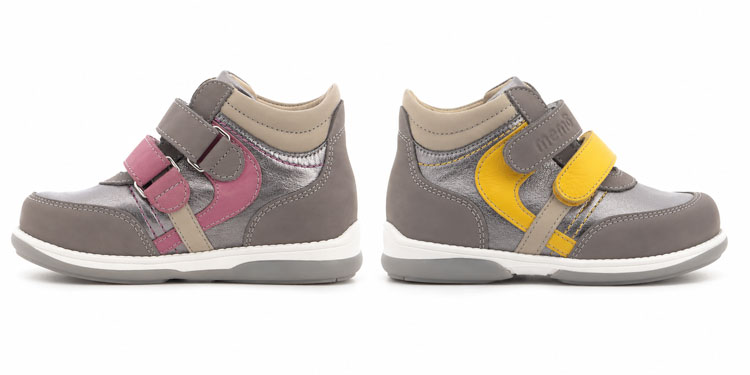
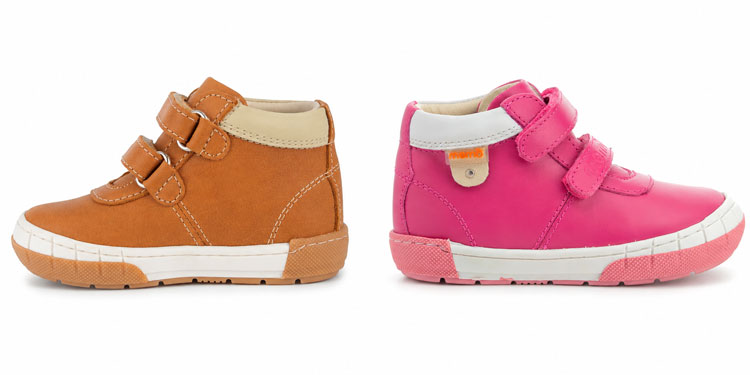
2. Shoe Style Gabi and Alvin by Memo (Orthopedic Shoe)
A true orthopedic shoe specifically designed to improve foot posture and correct overpronation. The Gabi features a rigid heel counter and a wide base of support — my top recommendation for toddlers and little kids with moderate to strong pronation who need clinical-grade correction.
Best for: Moderate to strong pronation
Key Features:
Key Features
- Available for toddlers and little kids
- Order the model Gabi or Alvin on Amazon
- Also available in a Mary Jane style and a version for older kids called Memo Polo
- Accommodates medium and wide feet
- Ideal for moderate to strong cases of pronation
- High-top design with stiff heel counters
- Sizing tip: Order a half size larger than your child’s current foot size. Refer to Memo sizing chart
3. Shoe Style Elliott by Stride Rite
A high-top bootie that provides excellent ankle support alongside a straight last — one of the most effective combinations for toddlers with overpronation. The high-top design gives additional ankle stability, and the 100% leather construction molds to the foot over time. Affordable and APMA-approved.
Best for: Mild to moderate pronation
Key Features:
Key Features
- Available for toddlers
- Order on Amazon
- Accommodates medium, wide, or extra wide feet
- Ideal for mild to moderate cases of pronation
- 100% leather construction
- High-top design provides extra ankle support
- APMA Seal of Acceptance
- Sizing tip: Order a whole size larger than your child’s current foot size
4. Shoe Style 574 by New Balance
A more affordable alternative to the 990v6 that still delivers a straight last, firm heel counter, and excellent width options. Available in medium, wide, and extra wide widths with the APMA Seal of Acceptance — a solid, versatile everyday option for children with mild to moderate pronation.
Best for: Mild to moderate pronation
Key Features:
Key Features
- Available for toddlers, little, and big kids
- Order on Amazon or the New Balance website
- Also available with laces on the New Balance website or Amazon
- Accommodates medium, wide, or extra wide feet
- Ideal for mild to moderate cases of pronation
- Firm heel counters
- APMA Seal of Acceptance
- Sizing tip: Order a half size larger than your child’s current foot size
5. Shoe Style Tracks by Timberland
A durable high-top boot with a straight last and sturdy construction. The high-top design provides additional ankle stability — beneficial for children with pronation who need extra support at the ankle joint. Slightly heavier than my other recommendations, worth noting for children who fatigue easily.
Best for: Mild to moderate pronation
Key Features:
Key Features
- Available for toddlers and little kids
- Order on Amazon
- Accommodates medium or wide feet
- Ideal for mild to moderate cases of pronation
- High-top design for extra ankle support
- Water-friendly construction
- Sizing tip: Order a whole size larger than your child’s current foot size
6. Shoe Style Cohesion by Saucony
An affordable straight last option for little and big kids with excellent cushioning and stability. Available in both Velcro and lace versions — one of my most recommended budget-friendly options for families who need proper pronation support without the premium price.
Best for: Mild to moderate pronation
Key Features:
Key Features
- Available for little and big kids
- Order on Amazon
- Also available with laces on Amazon
- Accommodates medium or wide feet
- Ideal for mild to moderate cases of pronation
- Firm heel counters and stable base of support
- Sizing tip: Order a whole size larger than your child’s current foot size
7. Shoe Style Fresh Foam Arishi v4 by New Balance
A lightweight, comfortable everyday sneaker available in medium, wide, and extra wide widths at a very reasonable price. One of my most popular recommendations for families who need proper pronation support without the premium price tag.
Best for: Mild to moderate pronation
Key Features:
Key Features
- Available for toddlers, little, and big kids
- Order on the New Balance website or Amazon
- Also available with laces on Amazon or the New Balance website
- Accommodates medium, wide, or extra wide feet
- Ideal for mild to moderate cases of pronation
- Semi-firm heel counters
- Sizing tip: Order a whole size larger than your child’s current foot size
8. Shoe Style 2002/1906 by New Balance
A more affordable alternative to the 990v6 that still provides a straight last and solid structural support for moderate to strong pronation. Works well for school and everyday wear.
Best for: Moderate to strong pronation
Key Features:
Key Features
- Available for toddlers, little, and big kids
- Order the 2002 or 1906 on the New Balance website
- Accommodates medium or wide feet
- Ideal for moderate to strong cases of pronation
- Firm heel counters, stable base of support, and semi-straight lasts
- Sizing tip: Order a whole size larger than your child’s current foot size
9. Shoe Style Cross Em Up by Adidas
A basketball-inspired high-top shoe that offers excellent ankle support and stability. Unlike most Adidas styles, the Cross Em Up has enough structure to work for children with mild to moderate pronation — particularly for older children who want a sports-appropriate look.
Best for: Mild to moderate pronation
Key Features:
Key Features
- Available for little and big kids
- Order on Amazon
- Accommodates medium or wide feet
- Ideal for mild to moderate cases of pronation
- High-top design for additional ankle support
- Versatile — suitable for sports and everyday wear
- Sizing tip: Order a whole size larger than your child’s current foot size
10. Shoe Style GT-1000 by Asics
The GT-1000 by Asics is a popular choice for kids who require extra stability and support. This specific shoe is capable of fitting children with narrow feet. This shoe works best for kids with mild to moderate degrees of pronation.
Best for: Mild to moderate pronation
Key Features:
Key Features
- Available for little and big kids
- Order on Amazon
- Accommodates narrow or medium feet
- Ideal for mild to moderate cases of pronation
- Firm heel counters, stable base of support, and semi-straight lasts
- Sizing tip: Order a whole size larger than your child’s current foot size
Should My Child Also Wear Orthotics?
For children with moderate to strong pronation — especially when associated with flat feet, knock knees, or significant pain — orthotics combined with supportive shoes can be one of the most effective approaches available. I always recommend trying the correct shoes first before investing in orthotics. Many families see significant improvement from shoes alone.
If your child’s physical therapist or podiatrist has recommended orthotics, I have dedicated guides here:
- Orthotics for Toddlers 2–3 Years
- Orthotics for Children 4–13 Years
- Best Orthotics for Kids with Flat Feet
Looking for Supportive Sandals?
For warmer months, I have dedicated guides on the best sandals for overpronation:
How to Find the Right Shoe Size
Getting the correct shoe size is just as important as choosing the correct shoe. An ill-fitting shoe — even a highly supportive one — will not deliver the full benefits it is designed to provide.
Learn How to Measure Your Child’s Foot Here
Need a Personalized Recommendation?
Every child’s pronation presents differently. If you are unsure which shoe is right for your child’s specific foot shape, degree of pronation, or orthotic needs, reach out to me directly at customerservice@fittingchildrenshoes.com and I will provide a personalized recommendation at no cost.
Families Success Stories
Parents often share their experiences with me of how the right shoes have made a significant difference in their child’s life. These stories highlight the importance of proper footwear in enhancing mobility and confidence. Here are some success stories that highlight the impact of choosing the right footwear:
Frequently Asked Questions
Pronation is the normal inward rolling of the foot during walking — every person pronates to some degree. Overpronation is when the foot rolls inward excessively, causing the arch to collapse and the ankle to roll inward beyond the normal range. Overpronation at moderate and strong degrees requires intervention with supportive shoes.
In most cases, Nike should be avoided — their children’s shoes typically feature curved lasts and soft heel counters that do not adequately support an overpronating foot. Most Adidas styles have the same drawback, though the Adidas Cross Em Up is an exception: its high-top design and firmer structure make it a viable option for children with mild to moderate pronation. For moderate to strong pronation, I recommend New Balance as the most reliable choice, with Saucony’s Cohesion as a solid budget-friendly alternative for milder cases.
Many parents report noticing visible improvements in their child’s posture and gait within the first four to six weeks of consistent wear. For significant improvement in pronation, allow three to six months of daily use. If no meaningful improvement after five months, consider adding orthotics.
Mild pronation in toddlers under age three is completely normal and typically resolves on its own. If your toddler has moderate or strong pronation, or if a doctor or physical therapist has expressed concern, getting them into supportive shoes early is a low-risk intervention that can make a meaningful long-term difference.
Still searching for the right fit? Drop a comment below with your child’s foot shape and degree of pronation and I will point you in the right direction — I read and respond to every one.
Last updated: June 2026 | By Juan Valenzuela, Certified Children’s Shoe Fitter
Has your child been complaining about foot or leg pain? Have you noticed them walking differently — feet turning inward, ankles rolling, or an unusual gait? If so, your child may have overpronation — one of the most common foot conditions I see at the specialized children’s shoe store where I work.
As a certified children’s shoe fitter with over 10 years of experience, I have helped hundreds of children with overpronation find shoes that genuinely improve their foot posture, walking gait, and stability. In this guide I will explain what pronation is, when it requires intervention, what shoe features matter most, and give you my top 10 recommendations — all personally tested and verified.
What Is Pronation and When Is It a Problem?
Pronation is the natural inward rolling motion of the foot during walking and running. A certain degree of pronation is completely normal — it is part of how the foot absorbs shock with each step.
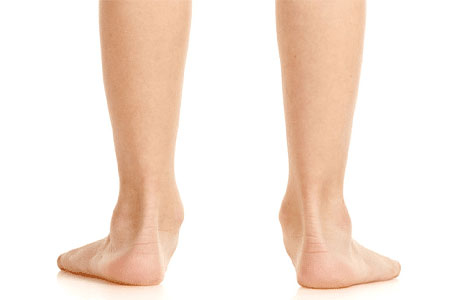
The problem occurs when the foot rolls inward excessively — a condition called overpronation. When overpronation goes uncorrected, the chain reaction travels upward: the ankles roll inward, the knees angle inward, the hips become misaligned, and the lower back compensates. Over time, this leads to foot pain, leg pain, knee pain, and postural problems that become harder to address the longer they are left untreated.
The Three Degrees of Pronation
Not all overpronation is the same. I assess every child for their specific degree before making a shoe recommendation:
Mild pronation — The foot rolls slightly inward. In most cases mild pronation does not require intervention and resolves naturally as the child develops.
Moderate pronation — A noticeable inward rolling of the foot and ankle. Supportive shoes can make a significant difference and are strongly recommended.
Strong pronation — Significant collapse of the arch with pronounced inward rolling. Supportive shoes are essential and orthotics are often recommended in addition.
Signs Your Child May Have Moderate or Strong Pronation
- Feet appear flat when standing — arches collapse and touch the ground
- Shoes wear out unevenly, especially on the inner edge
- Complaints of foot, knee, or leg pain — particularly after activity
- Awkward gait or frequent tripping and falling
- Ankles rolling inward when standing or walking
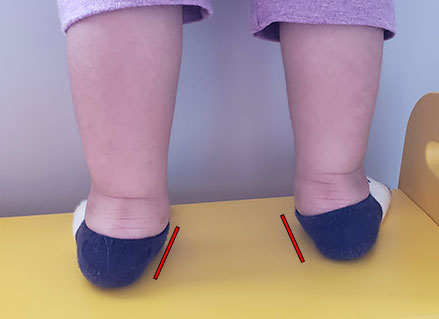
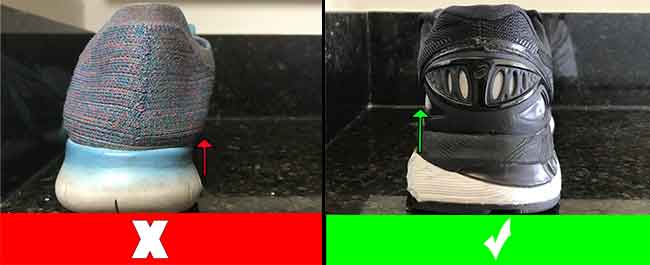
Why the “Wait and See” Approach Is a Mistake
Many parents are told to wait and see if their child will outgrow their pronation. While mild pronation often does improve naturally, moderate and strong pronation rarely self-corrects — and waiting allows the condition to progress and the compensatory patterns to become more ingrained.
The first seven years of a child’s life are what I call the golden years of treatment opportunity. During this period, the bones, muscles, and tendons are still forming and are highly responsive to external correction. Supportive shoes worn consistently during these years can produce lasting structural improvements. After the foot matures, the same results become significantly harder to achieve.
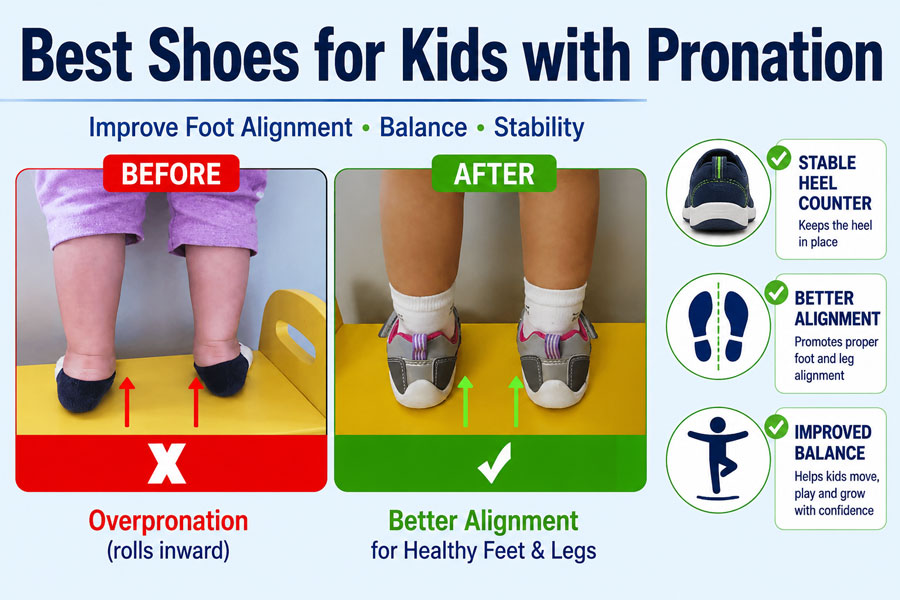
Before and After: The Impact of Supportive Shoes
The before and after images in this article tell the story better than words. When a child with overpronation stands barefoot, the arches collapse completely and the feet roll inward — you can see the entire inner edge of the foot pressing down against the ground.
When the same child wears a pair of supportive shoes with a straight last, firm heel counter, and stable outsole, the feet are noticeably straighter. The arch is partially restored. The ankles are more upright. And in most cases, the child reports significantly less pain within the first few weeks.
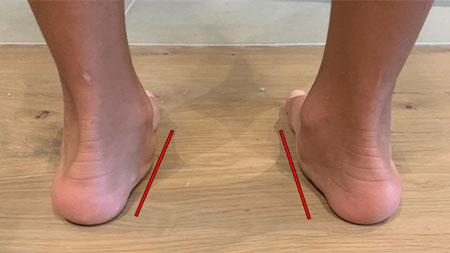
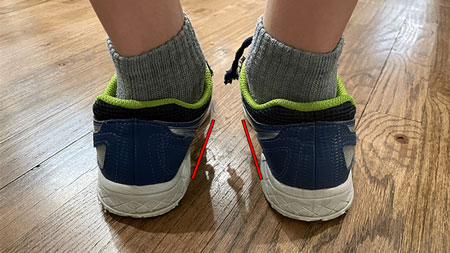
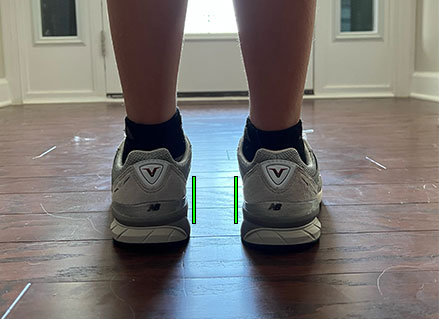
This family was concerned about their daughter’s pronation and consulted with us for advice. Choosing a pair of New Balance shoes, they saw a difference in her walking pattern within weeks. Their daughter is now more confident and less prone to tripping.
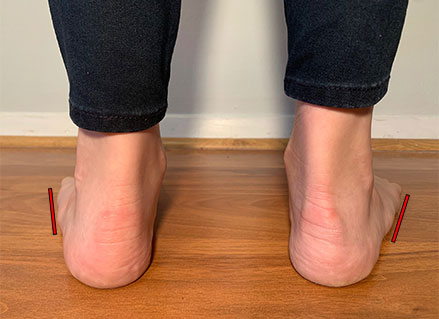
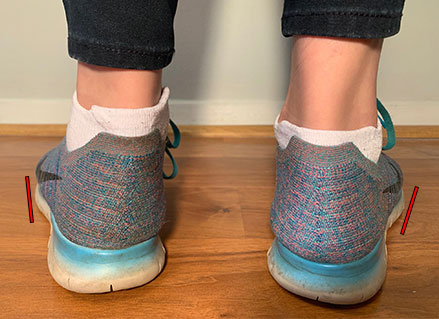
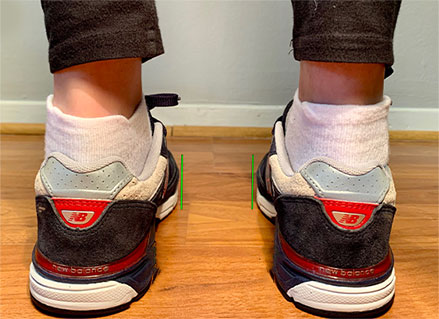
I have seen this transformation hundreds of times at the store. The right shoe is not a cure — but it is one of the most accessible and effective interventions available.
Key Features to Look for in Shoes for Kids with Pronation
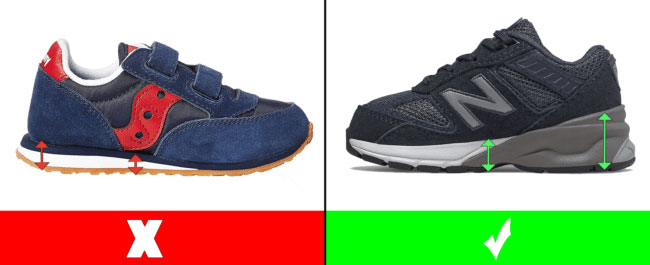
1. Stable Base of Support (Supportive Outsole) The outsole must provide a firm, stable foundation that prevents the foot from collapsing inward. Press on the midsole from the side — it should feel firm, not soft and squishy. A quick flex test: bend the shoe gently — it should flex at the ball of the foot, not fold in the middle of the arch.
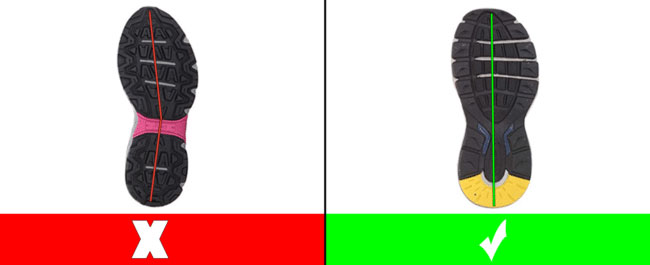
2. Straight Last Turn the shoe upside down and look at the outsole. The inner edge should run in a relatively straight line from heel to toe — not curve inward. A straight last is one of the most important and most overlooked features for overpronation. It guides the foot toward a more neutral position with every step.
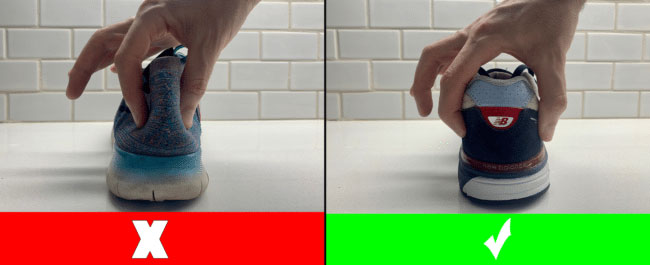
3. Firm Heel Counter Press on the back of the shoe. It should feel rigid and firm — not soft and foldable. A firm heel counter stabilizes the calcaneus, prevents excessive inward rolling at the ankle, and maintains proper alignment from the foot upward. This is the single most important feature for overpronation.
Top Picks for Kids’ Athletic Shoes with Pronation Support
All shoes below provide firm heel counters, straight or semi-straight lasts, and supportive outsoles that I have personally verified for children with overpronation. I have also noted which degree of pronation each style works best for. Disclosure: This post contains affiliate links. We may earn a small commission at no extra cost to you.
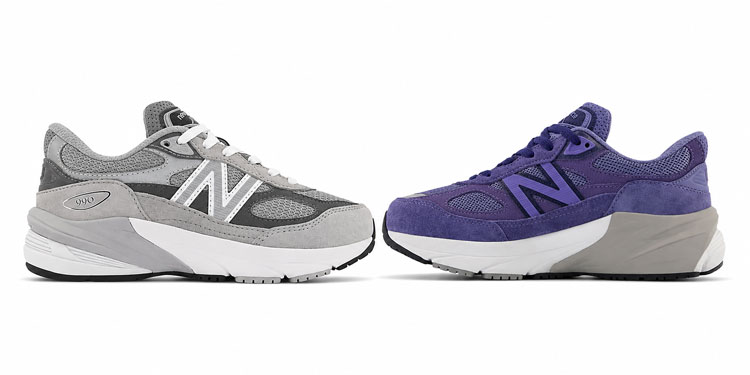
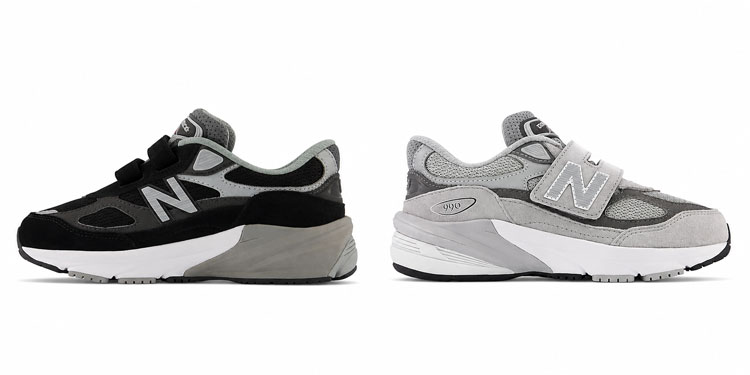
1. Shoe Style 990v6 by New Balance
My top overall recommendation for children with pronation. The 990v6 has the straightest last, firmest heel counter, and most robust outsole of any mainstream children’s shoe I have tested. The higher price is the most common concern — but for children with moderate to strong pronation who genuinely need this level of structural support, the investment is justified.
Best for: Moderate to strong pronation
Key Features:
Key Features
- Available for toddlers, little, and big kids
- Order with laces on the New Balance website or Amazon
- Velcro version also available on the New Balance website or Amazon
- Accommodates medium, wide, or extra wide feet
- Firm heel counters, stable base of support, and semi-straight lasts
- Ideal for moderate to strong cases of pronation
- Removable insoles
- Sizing tip: Order a half size larger than your child’s current foot size
2. Shoe Style Gabi and Alvin by Memo (Orthopedic Shoe)
A true orthopedic shoe specifically designed to improve foot posture and correct overpronation. The Gabi features a rigid heel counter and a wide base of support — my top recommendation for toddlers and little kids with moderate to strong pronation who need clinical-grade correction.
Best for: Moderate to strong pronation
Key Features:
Key Features
- Available for toddlers and little kids
- Order the model Gabi or Alvin on Amazon
- Also available in a Mary Jane style and a version for older kids called Memo Polo
- Accommodates medium and wide feet
- Ideal for moderate to strong cases of pronation
- High-top design with stiff heel counters
- Sizing tip: Order a half size larger than your child’s current foot size. Refer to Memo sizing chart
3. Shoe Style Elliott by Stride Rite
A high-top bootie that provides excellent ankle support alongside a straight last — one of the most effective combinations for toddlers with overpronation. The high-top design gives additional ankle stability, and the 100% leather construction molds to the foot over time. Affordable and APMA-approved.
Best for: Mild to moderate pronation
Key Features:
Key Features
- Available for toddlers
- Order on Amazon
- Accommodates medium, wide, or extra wide feet
- Ideal for mild to moderate cases of pronation
- 100% leather construction
- High-top design provides extra ankle support
- APMA Seal of Acceptance
- Sizing tip: Order a whole size larger than your child’s current foot size
4. Shoe Style 574 by New Balance
A more affordable alternative to the 990v6 that still delivers a straight last, firm heel counter, and excellent width options. Available in medium, wide, and extra wide widths with the APMA Seal of Acceptance — a solid, versatile everyday option for children with mild to moderate pronation.
Best for: Mild to moderate pronation
Key Features:
Key Features
- Available for toddlers, little, and big kids
- Order on Amazon or the New Balance website
- Also available with laces on the New Balance website or Amazon
- Accommodates medium, wide, or extra wide feet
- Ideal for mild to moderate cases of pronation
- Firm heel counters
- APMA Seal of Acceptance
- Sizing tip: Order a half size larger than your child’s current foot size
5. Shoe Style Tracks by Timberland
A durable high-top boot with a straight last and sturdy construction. The high-top design provides additional ankle stability — beneficial for children with pronation who need extra support at the ankle joint. Slightly heavier than my other recommendations, worth noting for children who fatigue easily.
Best for: Mild to moderate pronation
Key Features:
Key Features
- Available for toddlers and little kids
- Order on Amazon
- Accommodates medium or wide feet
- Ideal for mild to moderate cases of pronation
- High-top design for extra ankle support
- Water-friendly construction
- Sizing tip: Order a whole size larger than your child’s current foot size
6. Shoe Style Cohesion by Saucony
An affordable straight last option for little and big kids with excellent cushioning and stability. Available in both Velcro and lace versions — one of my most recommended budget-friendly options for families who need proper pronation support without the premium price.
Best for: Mild to moderate pronation
Key Features:
Key Features
- Available for little and big kids
- Order on Amazon
- Also available with laces on Amazon
- Accommodates medium or wide feet
- Ideal for mild to moderate cases of pronation
- Firm heel counters and stable base of support
- Sizing tip: Order a whole size larger than your child’s current foot size
7. Shoe Style Fresh Foam Arishi v4 by New Balance
A lightweight, comfortable everyday sneaker available in medium, wide, and extra wide widths at a very reasonable price. One of my most popular recommendations for families who need proper pronation support without the premium price tag.
Best for: Mild to moderate pronation
Key Features:
Key Features
- Available for toddlers, little, and big kids
- Order on the New Balance website or Amazon
- Also available with laces on Amazon or the New Balance website
- Accommodates medium, wide, or extra wide feet
- Ideal for mild to moderate cases of pronation
- Semi-firm heel counters
- Sizing tip: Order a whole size larger than your child’s current foot size
8. Shoe Style 2002/1906 by New Balance
A more affordable alternative to the 990v6 that still provides a straight last and solid structural support for moderate to strong pronation. Works well for school and everyday wear.
Best for: Moderate to strong pronation
Key Features:
Key Features
- Available for toddlers, little, and big kids
- Order the 2002 or 1906 on the New Balance website
- Accommodates medium or wide feet
- Ideal for moderate to strong cases of pronation
- Firm heel counters, stable base of support, and semi-straight lasts
- Sizing tip: Order a whole size larger than your child’s current foot size
9. Shoe Style Cross Em Up by Adidas
A basketball-inspired high-top shoe that offers excellent ankle support and stability. Unlike most Adidas styles, the Cross Em Up has enough structure to work for children with mild to moderate pronation — particularly for older children who want a sports-appropriate look.
Best for: Mild to moderate pronation
Key Features:
Key Features
- Available for little and big kids
- Order on Amazon
- Accommodates medium or wide feet
- Ideal for mild to moderate cases of pronation
- High-top design for additional ankle support
- Versatile — suitable for sports and everyday wear
- Sizing tip: Order a whole size larger than your child’s current foot size
10. Shoe Style GT-1000 by Asics
The GT-1000 by Asics is a popular choice for kids who require extra stability and support. This specific shoe is capable of fitting children with narrow feet. This shoe works best for kids with mild to moderate degrees of pronation.
Best for: Mild to moderate pronation
Key Features:
Key Features
- Available for little and big kids
- Order on Amazon
- Accommodates narrow or medium feet
- Ideal for mild to moderate cases of pronation
- Firm heel counters, stable base of support, and semi-straight lasts
- Sizing tip: Order a whole size larger than your child’s current foot size
Should My Child Also Wear Orthotics?
For children with moderate to strong pronation — especially when associated with flat feet, knock knees, or significant pain — orthotics combined with supportive shoes can be one of the most effective approaches available. I always recommend trying the correct shoes first before investing in orthotics. Many families see significant improvement from shoes alone.
If your child’s physical therapist or podiatrist has recommended orthotics, I have dedicated guides here:
- Orthotics for Toddlers 2–3 Years
- Orthotics for Children 4–13 Years
- Best Orthotics for Kids with Flat Feet
Looking for Supportive Sandals?
For warmer months, I have dedicated guides on the best sandals for overpronation:
How to Find the Right Shoe Size
Getting the correct shoe size is just as important as choosing the correct shoe. An ill-fitting shoe — even a highly supportive one — will not deliver the full benefits it is designed to provide.
Learn How to Measure Your Child’s Foot Here
Need a Personalized Recommendation?
Every child’s pronation presents differently. If you are unsure which shoe is right for your child’s specific foot shape, degree of pronation, or orthotic needs, reach out to me directly at customerservice@fittingchildrenshoes.com and I will provide a personalized recommendation at no cost.
Families Success Stories
Parents often share their experiences with me of how the right shoes have made a significant difference in their child’s life. These stories highlight the importance of proper footwear in enhancing mobility and confidence. Here are some success stories that highlight the impact of choosing the right footwear:
Frequently Asked Questions
Pronation is the normal inward rolling of the foot during walking — every person pronates to some degree. Overpronation is when the foot rolls inward excessively, causing the arch to collapse and the ankle to roll inward beyond the normal range. Overpronation at moderate and strong degrees requires intervention with supportive shoes.
In most cases, Nike should be avoided — their children’s shoes typically feature curved lasts and soft heel counters that do not adequately support an overpronating foot. Most Adidas styles have the same drawback, though the Adidas Cross Em Up is an exception: its high-top design and firmer structure make it a viable option for children with mild to moderate pronation. For moderate to strong pronation, I recommend New Balance as the most reliable choice, with Saucony’s Cohesion as a solid budget-friendly alternative for milder cases.
Many parents report noticing visible improvements in their child’s posture and gait within the first four to six weeks of consistent wear. For significant improvement in pronation, allow three to six months of daily use. If no meaningful improvement after five months, consider adding orthotics.
Mild pronation in toddlers under age three is completely normal and typically resolves on its own. If your toddler has moderate or strong pronation, or if a doctor or physical therapist has expressed concern, getting them into supportive shoes early is a low-risk intervention that can make a meaningful long-term difference.
Still searching for the right fit? Drop a comment below with your child’s foot shape and degree of pronation and I will point you in the right direction — I read and respond to every one.
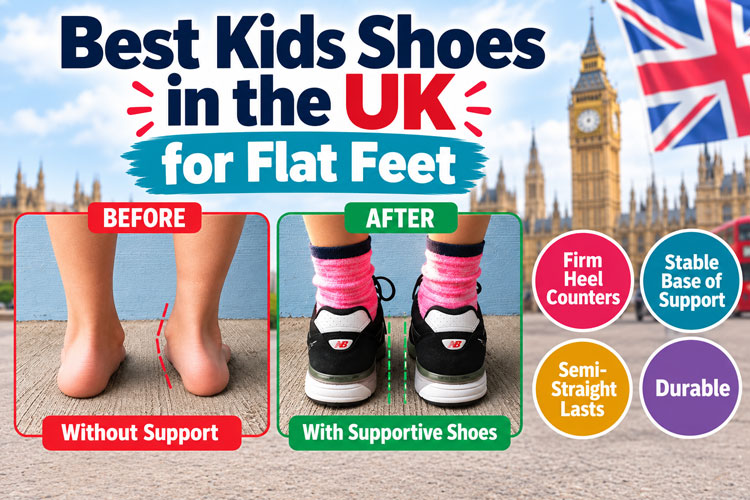
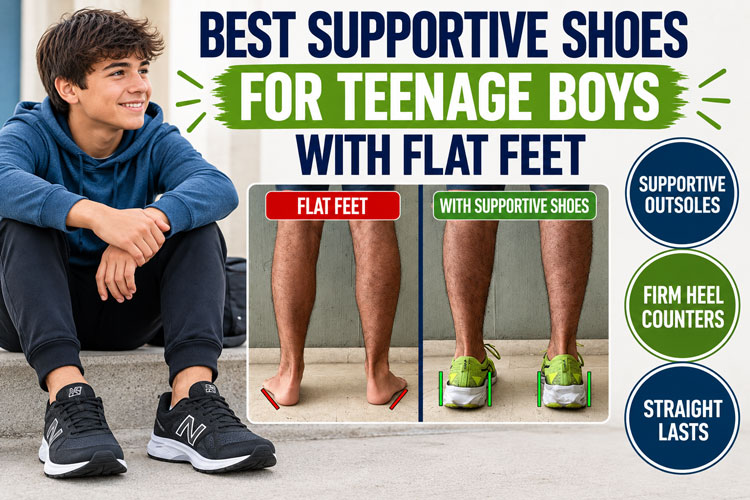
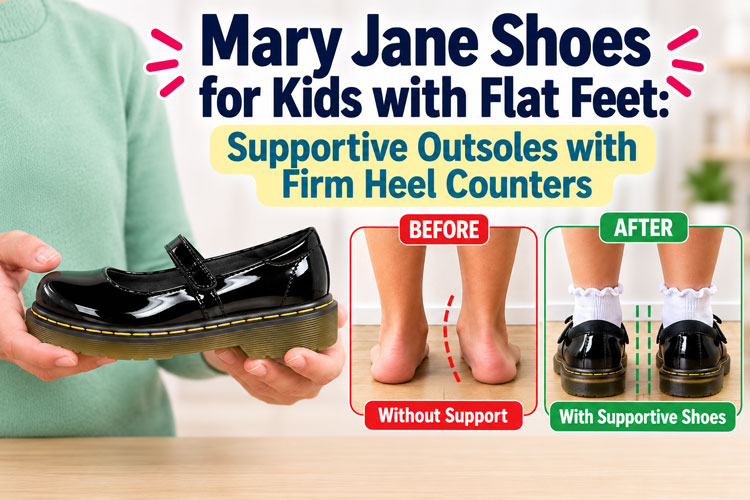

Hello! Thanks so much for your expertise on pronation in kids! I have a 2.5 yo daughter who seems to have moderate pronation. I want to get her your top recommendation NB 990v6 but she dislikes the greyish colors… I’m wondering if the new balance 9060 are equally as good? They’re different shoes so I’m not sure if they would be as helpful. Here’s a link to them below. If they’re not as helpful could you please suggest others?
https://www.newbalance.ca/en_ca/pd/9060/IV9060V1-46770-PMG-NA.html
Hello Seraphina,
I don’t recommend the 9060 for children with a moderate degree of pronation. Two alternatives to the New Balance 990v6 are:
Option 1
Option 2
Make sure that your daughter’s shoes are properly tied at all times so she can get the full support and stability that the shoes have to offer.
Let me know if you have any other questions.
Hello,
I have a 2 year old with strong pronation. Her feet are medium to wide and currently wears a 7 toddler in shoes. She loves to run, climb, and dance so having a good fit shoe would be great. We are currently in the USA and color doesn’t matter.
Hello Sonja,
Below you can find my shoe recommendations based on your daughter’s foot shape and degree of pronation:
Option 1
Option 2
Option 3
Option 4
Let me know if you have any other questions.
Hello Juan,
I have a 3 year old with mild overpronation. I’m not able to find the ‘right’ NB shoes for him yet, but a I was recommended “Biomecanics”. Do you have any observation if that brand will be suitable? They do have a piece of plastic on the side of the heal, for support, I think. Thank you in advance!
Hello Yanitsa,
Yes, I am familiar with the shoe brand Biomecanics and it manufactures good supportive shoes for children. Make sure that the shoes fit the shape of your son’s feet correctly so he can get the full support and stability that the shoes have to offer.
issue with supportive shoes is if your flexible and have ultra wide feet, you lose muscle strength and you start spraining ankles all the time… i live in country with cold winters so shoes are mandatory garment for warmth. as kid i learned to snap my ankles back in place after been done so many times by healthcare professionals, usually during summer i rarely sprained my ankles but i was almost exclusively barefooted… so i had to do training to strengthen feet&ankle during winter months to get out of the circle of pain. and when i served in military i had zero ankle sprains… shoe fit issues and all sorts of other feet&leg troubles because of that, but no more dislocating ankles.
Hello John,
Thank you for sharing your feedback. While I disagree that supportive shoes can make people lose muscle strength, I do agree about the importance of a proper fit. I believe that shoes that don’t fit properly can lead to foot conditions as well ass foot issues such as sprained ankles. Luckily, there are shoe brands that manufacture shoes that accommodate children with wide or extra wide feet.
Thank you for writing this! Prayers answered!
Hello Heather,
I am happy to help.
Hi – just wanted to say a massive thank you to Juan for his advice. For getting feet measured (those uk/London based) I would highly recommend the new balance flagship store on Oxford street – they have a 3D scanner which my two year old son stood on and it took all measurements including width/ size etc.
It is very hard to find shoes in the UK – I used the pronation guide on this website which recommended new balance trainers. So, I got the correct sizing at the store and then ordered from America to the UK. Completely worth it in my opinion – my son has moderate pronation and these shoes have significantly helped his posture, ability to move comfortably, and one foot is naturally straightening. 990v5 is the model – I went for the American ones as they have laces instead of velcro.
Hello Lauren,
I am happy to help!
Thank you for sharing this valuable information that a lot of families from the UK will be able to take advantage of.
thanks for the article. Very helpful. Can you tell me if the New Balance 680v5 is a good shoe for overpronation? it is recommended on another site for kids flat feet.
Hello Stephen,
The New Balance 680V5 is a good shoe for children with mild overpronation. If your child has moderate to strong overpronation I suggest the 990V5 or the 888V2.
Do you by chance have any suggestions for toddlers with hypermobile pronating ankles and narrow feet? I see the New Balance which are great, but we have a hard time even finding shoes that aren’t too wide to stay on our 2.5 year old’s foot. Her physical therapist says she needs a more supportive shoe. She wears a toddler size 8.
Hello Caitlyn,
Yes, take a look at the option below:
Stride Rite Elliot
Let me know if you have any other questions.
Hi Juan,
I just sent you an email but another quick question, is See Kai Run a good brand for over pronation? The doctor recommended any type of high top shoes. I also got my daughter inserts from Amazon but can you also recommend some good insert brands?
Thank you!
Hi Annie,
I just responded to your email. I usually don’t fit a child with overpronation in a pair of See Kai Run shoes. You need to look for shoes with substantial outsoles and firm heel counters. A high top shoe does’t necessarily provides better support than a regular sneaker. Let’s keep our conversation via email. Let me know what See Kai Run shoe style you like and also tell me which orthotics you ordered. I requested some images of your daughter’s feet, that will also give me a better perspective of which orthotic might be most beneficial for her.
Hi Juan,
I am just learning about how severe pronation causes pain because I have it and noticed in my 7 year old, who plays sports, how his feet roll in pretty badly. I will order some of the things recommended for him. As an adult, should I be consistently wearing orthotics and/ or stabilizing shoes too? Do you have a recommendation for someone that treats adults so I can read more about how to address my issues? Thank you so much. This article was so helpful.
Hi Latisha,
Which specific sport does your son play? Before you order shoes for your son I suggest that you make sure that you know your exact foot length and width. I mention this because ordering the shoes in the correct size is the only way for the shoes to be effective. If you are unsure of your son’s foot shape take a look at the article below:
How to Measure Your Kids Foot – 2 Simple Steps to Determine Foot Length and Foot Width
I can help you address your issues but I need to evaluate your feet first. Are you experiencing foot or leg pain? Do you have flat feet and/or rolled ankles?
If you need an evaluation of your feet go to the article below:
How to Figure Out if You Have Flat Feet
I’m sorry. I just found your reply. I will going to take good pictures and send them to you later today. Yes she fall a lot sometimes even worse with shoes. Thank you so much for your time. I appreciate it.
No problem. I am happy to help.
Please I need help choosing the right shoes for my daughter. I sent an email couple of days ago. Thanks in advance.
Hi JoMarie,
Are you sure you emailed me at the correct address? I looked for your email but didn’t find it. This is the correct email address: fittingchildrensshoes@gmail.com
I actually found your email and I already responded but never heard back from you:
Thu, Jun 11, 11:11 PM (13 days ago)
Hello Rodriguez family —
Yes, the pictures are going to help me determine what her foot issues are and I also will be able to tell her foot shape. We need to know if your daughter has narrow, medium, wide, or extra wide feet.
Does she fall a lot when she is barefoot or when she is wearing shoes?
Juan Valenzuela
Founder of Fitting Children’s Shoes
fittingchildrenshoes.com
Hey Juan, wonder if you can help. I have a nearly 4 yr old boy with a genetic condition which meant he walked late (27 months to be precise) now nearly 4 he still loses balance and will trip every now and then. Now he does have over pronation and extremely bendy ankles. He had piedro boots up until he was about 2.5 yrs old We were then given supportive insoles which I could place in any shoes/trainers. We chose Nike Air Force ones as found those to be quite sturdy on the back and our orthotic dr said they were fine but after reading your views on Nike I’m thinking this could be one of the reasons as to why he is still tripping, falling and walks very heavy footed. Any advice would be very much appreciated. We are based in the UK. Thanks
Hi Kathryn –
I want to start by clarifying that in order for your son’s insoles/orthotics to be effective they need to be fitted in the correct pair of shoes. On a different note, did you remove the original shoe insoles before placing the orthotics inside your son’s shoes?
Are you tying your son’s shoes correctly? By this I mean are you pulling them tightly? The tighter you make the shoelaces the better stability your son gets.
We also need to make sure that the shoes are not too long or too short, as this might be a cause of why your son is tripping/falling often.
There are certain shoes that are capable of fitting orthotics better, and they are my go-to sneakers as they provide a substantial sole for arch support and a firm heel counter for ankle support. I can send you specific shoe recommendations but I would like to take a look at the orthotic and shoes that your son is currently wearing. Please email me at fittingchildrensshoes@gmail.com
Thank you so much, Mr. Valenzuela, for the advice on finding the right shoe for my 11 yr old daughter. She has been complaining about leg pain for years. She doesn’t like to run, she would start to run and then stop really quickly. It wasn’t until I started reading up on pronation that I found your page. Although it seems that my daughter might not overpronate, you have helped me figure out that she has high arches and a high instep by looking at photos of her feet. I bought her a pair of New Balance 888v2 that you recommended. Wow. Already she was so relieved because her whole foot fit in the shoe. Now I understand about the instep and how certain shoes, like her old Asics, weren’t deep enough. Asics are great for me, I don’t have an high instep. But for our daughter, the New Balance works better. Also, she seems to have a wide foot. I didn’t know! We haven’t been able to get her professionally fit because we have a state-wide stay-at-home order. But soon, I will. But in the meantime you have helped me find comfortable shoes for her. She is looking forward to trying to run and play tag with her friends again someday soon! Thank you!
Hi Tracy –
I am glad that the sneakers worked out for your daughter. Sometimes something so simple such as wearing the correct type of shoes can have a huge impact in improving the child’s walking gait and overall posture. Please keep in touch and let me know if you have any other questions.
Hi
Thanks for sharing this useful information. Extremely helpful.
I am glad that you found the article informative. Please let me know if you have any questions.
Hello, My son is 8 years old and has weak ankles. Doctor prescribe him an insole and shoes, however i need to get him running shoes for PE activities. I saw you posted some suggestions, but they do not have them on sizes 4 and up for big kids.
Your assistance is greatly appreciated.
Hello Teresa,
Please find below my recommendations:
Supportive Running Shoe for Orthotics: Option 1
Supportive Running Shoe for Orthotics: Option 2
I hope this helps.
Hello Juan!
I am currently on the hunt for some shoes for my 2.5 year old daughter. She is wearing size 7M Stride Rite Stone Sneakers.
A little about her: we have seen a developmental pediatrician and she says my daughter has hypermobility in her joints, has weak knees and ankles which is causing her to pronate… one foot has gotten better, but the other remains with a prominent pronation. The doctor recommended that she wear ankle supportive high top shoes…
I did order a pair of the Stride Rite Grayson booties for her, but I ordered size 7, and upon inspecting the insert she is in the “red”, so I’ll be returning these. So, I am looking for 7.5M ankle supportive shoes, but should I also be looking for something that has arch support as well despite her age??
I look forward to receiving your feedback and recommendations! Thank you for time.
Hello Melissa,
It’s hard for me to tell whether your daughter needs shoes with arch support without looking at her feet. If she is flat footed she probably will need shoes that provide good arch support. Did your doctor recommend an orthotic as well?
The selection of high top sneakers gets very small after a toddler’s size 7.With that said, high top shoes don’t automatically provide better ankle support. You need to find shoes that provide a firm heel counter and a substantial sole. Please find below my recommendations:
Shoe with Ankle Support: Option 1
Shoe with Ankle Support: Option 2
Feel free to send me images of your daughter’s feet if you are unsure of whether she is flat footed or not.
I hope this helps and let me know if you have any other questions.
Hello Juan, i can across your site while searching for best sneakers for kids with weak ankles, my daughter has out ward rotating ankles. she has ankle, leg and foot pain often. She has a pair of Adidias and Nike basketball sneakers.
I am looking to get her a new pair of sneakers that have good ankle and arch support (flat feet) . She loves to run track esp sprints.
I see your in Maryland I was just there 2 week ends ago and wish i had seen this before as i would have brought her to get fitted. we are in NY (45 mins from NYC) close to NJ.
which shoe would you recommend?
She takes a 4.5 big kids she has narrow feet.
thanks
Hello Natalie,
These are the most effective shoe styles for kids with weak ankles and narrow feet. I recommend choosing the shoe size 5 since these shoe styles tend to fit short and narrow:
Shoe Style with Firm Heel Counter: Option 1
Shoe Style with Firm Heel Counter: Option 2
Shoe Style with Firm Heel Counter: Option 3
I hope this helps!
Great article and very glad I found it. We have been wondering why my daughter always complains of leg and hip pain. The doctor just said growing pains. Never looked at her feet or her standing. I noticed two weeks ago the pronation in her feet and am now looking to get her better shoes. Getting her into a sneaker is going to be tough. She mostly wears ballet flats. Are there any good non-sneaker suggestions? Maybe a Mary Jane style? I looked into PLAE shoes and See Kai Run, are these good brands?
Hello Ashley,
Yes, those brands manufacture good Mary Jane shoe styles, but you should strongly consider fitting an orthotic inside the Mary Jane shoe styles for extra support. If you tell me your daughter’s shoe size and the width of her feet (narrow, medium, wide, or extra wide), I can send you specific shoe recommendations.
Mary Jane shoe styles are always more supportive and a better choice to ballet flats.
She is between 11.5 and 12 medium.
I think I think I can convince her to try a mary jane. She will wear sneakers occasionally, so I will look into those as well.
What about sandals? Is there something she could wear in the summer that provides support?
Hello Ashley,
As far as sneakers go, here are my recommendations. These are deep and supportive sneakers with arch support and a firm heel counter.
Supportive Shoe for Pronation: Option 1
Supportive Shoe for Pronation: Option 2
Shoes that come with shoelaces provide more support and stability than Velcro closure.
Mary Jane shoe styles:
Supportive Mary Jane for Pronation: Option 1
Supportive Mary Jane for Pronation: Option 2
Supportive Sandal for Pronation: Option 1
Supportive Sandal for Pronation: Option 2
Dressy Supportive Sandal for Pronation: Option 1
Dressy Supportive Sandal for Pronation: Option 2
I hope this helps!
This was very helpful thank you
I recently noticed that my daughter’s shoes were wearing too much on the inside (just like her father’s who wears orthotics). I asked her pediatrician at her 10 year checkup and he said that she has a little active pronation, but that her arches looked ok and she was not pronating all the time. I would like to get her some shoes to help with this before it becomes worse, but I’m in Albuquerque, NM and you do not have any fitting stores listed for my area. She tends to have wide-ish feet and a taller top of the foot (often couldn’t find tall enough shoes when she was a todler). Also she is always in too much of a hurry to tie her shoes every time, so she ties them loosely and just slips the shoes on and off. I’m thinking velcro may be better because of this. Any recommendations?
Hello Joy,
That taller top part of her foot that you are referring to is called the instep. When children have high insteps, you need to look for deeper shoes in order to prevent your kids’ feet from rubbing against the top of the shoes.
I will provide you with some Velcro recommendations, but do keeping in mind that shoelaces provide more support and stability.
Both of these shoe styles are deep to accommodate your daughter’s instep and they work well if you need to fit an orthotic inside the shoes.
Supportive Shoe Style for Mild Pronation: Option 1
Supportive Shoe Style for Mild Pronation: Option 2
Next time please provide me with your daughter’s shoe size (length and width). Please choose the correct shoe width for your daughter since both of these shoe styles are available in medium, wide, and extra wide.
I hope this helps!
Hello.
Size is one of the things I’m having trouble with. My very inexpert measurements with the device at the shoe store seems to indicate either a women’s 7m or a big kids 4w. The New Balance printable size chart indicates a 3 1/2 big kids with the width resting on the line between med and wide. I’m also looking for some good dress shoes for her since I think some of the pronation started when I broke down and let her wear heels. Would inch/centimeter measurements work?
Hello Joy,
It’s important that you provide your daughter with the correct shoe size or she won’t get any of the features that the shoes have to offer.
Are you sure you don’t have any good fitting shoe stores in your area that you can take her to be fitted for shoes? Take a look at this article:
The Best Kids’ Shoe Stores In The United States – Where To Go For Proper Fittings
I wrote an article that explains how to measure your kids’ foot size from home using the standard foot measuring tool (Brannock Device):
How to Measure Your Kids’ Foot – 2 Simple Steps to Determine Foot Length and Foot Width
There are two particular dress shoe styles that will provide good support for her feet:
Dress Shoes for Pronation: Option 1
Dress Shoes for Pronation: Option 2
I hope this helps!
There are no stores listed for fittings on your map. There is a New Balance store near me, so I will try taking her there. If that doesn’t work, I’ll google for an independent shoe store in my area. Thanks for your help.
Hello Joy,
Did you mean that there are no fitting stores listed in your area? Where are you located?
Hello, my daughter wears a school uniform and requires ALL black sneakers including soles. I really like the NB 990s however the school won’t approve them at this time. The only all black NB that I can find is the 680v3 which I assume aren’t as great? What version on Saucony do you recommended? I can check if they have the proper color. She has a fairly average to wider foot. Thank you very much for the great information, I’ll be visiting often!
Hello Darcie,
The 680V3 style is not as supportive as the 990V4. I don’t know any Saucony style that is all black and provides good support.
There is a shoe style by made Stride Rite that is all black and it provides good support. It comes with a substantial sole and a firm heel counter. You con find that shoe style here:
Supportive All Black Shoes for Girls
You can always fit an orthotic inside this shoe style in case you need extra support.
I hope this helps!
My son is 12 and in a size 7 to 7 1/2 boy, his feet overpronate tremendously! Are there any specific athletic shoes you would recommend? I took him to a podiatrist, he didn’t seem to be much help, I think he sees more adults than children. I did buy some orthotics from him, they were not custom made however, but I figured something was better than nothing. I have bought him Nike, under armor, Saucony, and Nike and under armor were the worst ones in my opinion. He is not huge into name brands so that really doesn’t matter, I’m just looking for a good supportive shoe. Also, he wears cowboy boots quite often, for dress and work on our land. Do you suggest adding the orthotics to the boots as well, or are there any particular brand boots you recommend?
Hello Tara,
You forgot to provide me with your boy’s foot width (narrow, medium, wide, or extra wide).
If your boy is overpronating, please stay away from shoe brands such as Nike or Under Armour since their shoes are too flimsy and don’t provide any arch or ankle support.
When children have foot issues and require an orthotic to be fitted inside the shoes, I always stick to a New Balance or Saucony shoe style.
Have you been able to see the shoes I recommend in this article? These shoes come with a substantial sole that provides arch support, a firm heel counter that provides ankle support, and they are available in different widths such as medium, wide, and extra wide. Another great feature about these shoes is that they are very deep, so you will be able to fit an orthotic inside them.
As far as boots are concerned, I suggest supportive hiking boots, and you can find the best styles in an article I wrote called:
Hiking Boots for Kids with Flat Feet – Supportive, Lightweight, Flexible, and Waterproof!
I hope this helps!
I was hoping you could help me out. I have an 11 year old, and he just completed physical therapy to help with his pronation. I want to get him a good pair of shoes. I think shoe companies make lots of changes. The style names I cannot find. Like the saucony ride 9 and the two New Balance styles. I cannot find those style names. But, we need to find a pair of 6 youth shoes that help with pronation. He loves the color red. I’ve learned a lot on this site, thank you.
Hello Valori,
There is a particular shoe style that I have fitted before which provides excellent support and structure (to minimize the impact that your child’s feet take when they come in contact with the ground), comes with a very firm heel counter (to provide ankle support), and it provides stability as well.
I will recommend that you try this shoe style, and if he still has pain or the pronation is still noticeable you should consider providing your child with a pair of orthotics.
You can find that shoe style here:
Supportive Shoe Style for Pronation
Make sure you order him the correct shoe width, and you can always change the shoelaces to red if he wants more red in his shoes.
I hope this helps!
Hi Juan,
My daughter is 11. She overpronates and has a narrow foot. What are your recommendations?
Hello Michele,
If you provide me with your daughter’s shoe size I can send you the shoe styles I recommend for her feet. Does she know how to tie her shoes?
Thank you,
Juan
Thank you so much Juan for sharing your knowledge with us. My daughter over pronates. She has a slightly narrow foot and did well with the Asics GT 1000 6, but now her foot has grown and we are shopping for a new pair. Like other kids, she wants something different and cute. I was also looking at the New Balance 990V4. There are not very many options on the market that I can find. I was also considering buying a regular sneaker and adding an insert with a solid arch support. Is this a good idea? Or a waste of money? Thank so much!
Hello Elizabeth,
I believe I already responded to your comment, please see my response above.
If your question is whether you should add an extra insert with arch support, I recommend that you try the shoes without the insert first, and if your daughter still overpronates then definitely try an insert (orthotic) for extra support.
I hope this clarifies.
Thank you so much for sharing your vast knowledge on this subject with us. My daughter is moderately overpronating with a slightly narrow foot. The Asics GT-1000 6 fit her great, but her foot has grown and it’s time to find new shoes, most likely a 3 or 3.5. And like many others, my daughter likes new colors. The other shoe I have my eye on is the New Balance 990V4. An alternative idea I had was to add an insert to a more colorful and easy to find shoe. What are your thoughts on that? Is that a decent substitution for one of the shoes listed above, or will it be a waste of money? Thank you so much.
https://amzn.to/3IWIauC
https://amzn.to/3kvtWHH
Hello Elizabeth,
I have fitted most Asics shoe styles for children and they not only provide excellent arch and ankle support, but they also tend to fit the narrowest. The New Balance 990V4 is a great shoe style in terms of support and structure, but they don’t fit as narrow as the Asics (I will still recommend that you try it on).
I only recommend adding an insert when the foot is so narrow that there is no other alternative. Since your daughter has foot issues, that extra insert might take away the arch support that the shoes have to offer. If you want to try the 990v4 I will recommend that you add a tongue pad instead of an insert.
A tongue pad goes behind the tongue of the shoe and it pushes the heel back (secures the ankles so there is no extra space) and makes the whole shoe fit narrower. You can learn more about tongue pads here:
Leather Shoe Tongue Pads – Stop Heel Slippage
There are other Asics shoe styles that your daughter might want to try and you can find them here:
Supportive Asics Shoes for Girls: Option 1
Supportive Asics Shoes for Girls: Option 2
I hope this helps!
Wow! I never knew a younger pad existed. I will look into your suggestions. I greatly appreciate your help. And apologies, I sent a second comment when I didn’t see the first one post. I thought I had done something wrong. Sorry!
Hello Elizabeth,
Yes, tongue pads make a tremendous difference in the way the shoes fit and feel.
No worries, please let me know if you have any other questions.
Hi Juan,
Truly grateful for what you are doing here in guiding parents!!
My son is 11 years old(shoe size is 6) and has pronation. Sadly we didnt realize the problem and kept correcting his walking posture as he walks with his feet turned outwards. Now that we have realized it, the first thing we need to correct is his shoes. Can you recommend shoes for him. Should we take him to a foot doctor? I also drew an outline of his feet but not sure how to send it to you. Request your feedback.
Hello Gia,
I am glad that you found the website informative!
You are right, it all starts with a pair of good, supportive shoes. I can definitely recommend certain shoe styles that will help improve the way he walks and run (since they will provide good arch and ankle support), but first I must know your chid’s foot width.
Do you know if his feet are narrow, medium, wide, or extra wide? You can send me the outline of his feet to my email: fittingchildrensshoes@gmail.com
Once you get back at me with his shoe width, I will get back at you with the shoe recommendations as soon as possible.
Thank you so much for your help! I will exchange for the 990s. As we progress through the years, and perhaps he wants more variety, are there any other brands/versions such as Asics that you would recommend? Thank you again. Best, Amanda
Hello Amanda,
Let’s monitor how he does in his new pair of sneakers. It is true that as children get older they want t have more shoe options to choose from.
Asics makes some of the most supportive shoes for children, but they tend to fit a child with a narrow to a medium width foot only. Also they don’t fit children that have high insteps. Do you know your child’s shoe width and whether he has a high instep or not?
I can definitely send you a bigger selection of shoes the next time, but since his PT wanted to stick with New Balance I think we are doing the right thing here.
Hello! I just purchased New Balance shoes, the 860v8, for my 7YO son, Will those help with overpronation? He pronates and his right foot turns in due to something called metatarsal addicutus, which has caused significant weakness on his right side. His PT would like to see him in a New Balance for better support than his current Nikes. I’d also seen the New Balance 880v8 and wondered whether those may work better? He is a size 1 or 1.5 Wide in New Balance and he ties his shoes. I want something that will hold up to the playground in the fall and provide the right support. Thank you!
Hello Amanda,
First of all, if your child has foot issues stay away from shoe brands such as Nike, Under Armour, or Adidas. Their shoes are too flimsy and won’t provide the support that your son’s feet need.
Both of the New Balance shoe styles that you mention are probably more supportive that the Nike sneakers that he was wearing before, but there is another shoe style made by New Balance that is better than the ones you mentioned in terms of support, structure, and durability.
The shoe style I would recommend for your son is called:
New Balance Running Shoe Style
This shoe style provides arch and ankle support (comes with a very firm heel counter), is durable (your child will outgrow the shoes before they get destroyed), and they are deep (your child’s feet will sit comfortably inside the shoes and you will be able to fit an orthotic in case you need to).
Keep in mind that with New Balance shoes the higher the number of the shoe style (869V8 vs 880V8 vs 990V4), the more support the shoe provides.
I hope this helps!
We just were fitted by an independent kid’s shoe store, Tip Top Shoes in NYC and they said our 10 month old is pronating already. We ended up buying Naturino shoes that have more support around the ankle. Is it too soon to address his feet dipping inward??
Hello Alexis,
Keep in mind that your child feet will still develop until age 5 (meaning that if your son’s feet seem flat he might still be able to develop an arch).
Naturino shoes are great but there is a shoe style that might be more efficient since it is still flexible and lightweight but provides more lateral support. This shoe will also help him with his stability.
You can find that shoe style here:
The Best Shoe Style for Toddlers Who Pronate: Option 1
The Best Shoe Style for Toddlers Who Pronate: Option 2
I hope this helps!
I would purchase shoes with laces but cannot find any! I’m in Canada and the selection is minimal and most websites don’t stick the width he needs.
Stacey,
None of the shoe styles I recommended are available in Canada? Here is another option:
New Balance Toddler Shoe
They are on Canadian websites but no where has an 8W in stock or an 8XW in the Saucony pro ride. I can order an 8W in the pro ride from amazon.ca.
The pedorthist said we need two pairs because he has to wear his shoes and orthotics at all times. We want a clean pair for inside. Is it really recommended to wear them all day?
Thanks
Hello Stacey,
The more your son wears the orthotics, the better. However, you can give him a break once in a while and allow him to go barefoot around the house.
Hello,
I came across the article you wrote about over pronation and shoes for children. I am unable to find baby ride shoes in stores and was wondering if you have any other suggestions? Is the ride pro just as good?
My son is 4 and just saw a pedorthist who said he has a severe case of over pronation and wanted him in a motion control shoe. I cannot find those for children. He has been ordered orthotics as well.
Any recommendations would be awesome as the shoe stores don’t know what I’m talking about!
Thank you
I did email you as well, didn’t know if you would get it though!
Hello Stacey,
Are you willing to provide your son with shoes that come with shoelaces? The reason I ask is because they will provide more support and more stability, considering that you already have an orthotic for him. If you do, please get back at me with his shoe size and I will send you mi shoe recommendations.
Remember that if you do find a baby ride shoe you must choose the “XW” (extra wide width) since the orthotic will be already taking space inside the shoes.
How about the New Balance shoes I recommend in that article?
The “Baby Ride Pro” will for as well.
Do you know your child’s shoe size? Because if you do you can order them online ( as long as the offer free returns since you will probably have to order more than one pair to check).
I hope this clarifies.
My son currently wears 7.5w in a stride rite. He was fitted for these at a Children’s specialty shoe store. The pedorthist said they are not supportive enough though. My son is currently wearing these: Spider-Man Spidey Sense Sneaker, Blue/Red, 6 M US Toddler
Initially when we went to the store they did bring out a baby ride for him but he insisted on light up shoes. He understands that this time he needs regular shoes so his knees won’t hurt anymore.
I cannot find lace up shoes in toddler sizes.
This week we go back to get the orthotic. I was thinking of purchasing a few shoes to take with us. A Saucony baby ride, something from New Balance and anything else that may work.
On Friday he was measured at a different store and they said he is a toddler 8.
Stacey,
Based on what you told me, here you can find my recommendations starting with shoelaces:
1st Option: Supportive Toddler Shoes with Shoelaces
2nd Option: Supportive Toddler Shoe with Velcro
3rd Option: Supportive Toddler Shoe with Velcro
I hope this helps!
I cannot find any of those shoes available in Canada in the correct size.
I can get baby ride in a size 8 but only W width.
How are these? Grey are available in W and black are XW. However he did try on a new balance shoe recently that was size 8W and it seemed “baggy” and too spacious at the sides.
Hello Stacey,
New Balance sneakers tend to run really wide, so the extra wide might be too wide for his feet (maybe try the wide width instead of the extra wide).
How about the one that has shoelaces? Are you willing to provide you son wih a pair of shoes that come with shoelaces? I can probably find other options for you.
Let me know,
Juan
I think I forgot the link
https://new-balance-athletics-inc.sjv.io/dod2m2
Hi Juan,
My daughter is 20 months old and has been in PT for 6 months because she has slightly low muscle tone and was late to crawl. She also has hyperpronation and is not walking yet. We take her to PT every week and she wears the Cascade dafos leapfrog with stride rite shoes. Which shoes should we get for her to help her walk on her own? She wears size 4 in stride rite with her brace or size 3 without it. We are in Los Angeles CA are there any stores you recommend out here? Thank you in advance.
Hello Mary,
I hope your daughter is walking better with her orthotics. I know that Cascade orthotics work great for children. There is a particular shoe style that she can really benefit from and that I will recommend she wears with her orthotics. This style provides good support (lateral and arch support) and stability (it comes with shoelaces). At the children’s shoe store that I work for, this is our to-go shoe for children who have low muscle tone and pronation. I will also recommend she wears this shoe style as her shoe without the orthotics. You can find that shoe style here:
The Best Shoe Style for Low Muscle Tone and Pronation
I hope this helps!
Hello,
My son who is almost 3 has pronation and we wear NB on him and they work well. I was hoping to find him some sort of sandal or summer shoe for when he wants to play with his water table and for somewhat regular wear. Are there any sandals or summer shoes you could recommend that have good arch support? Thank you!
Hello Melanie,
Yes, have you heard of Keen sandals? They are our to-go sandal for children who are flat footed and have pronation. I describe the best Keen sandals in an article called:
Keen Sandals for Children – The Best Summer Sandal
I hope this helps!
What about Tsukihoshi? Any experience or advice with this brand?
Thank you,
Tara
Hello Tara,
Tsukihoshi is a great shoe brand. They make very lightweight and flexible (also machine washable) shoes, but I DON’T recommend them for children with foot issues. They don’t have the structure or support that a child that has flat foot needs.I hope this clarifies.
Thank you for your assistance! Your expertise and quick responses are very much appreciated. You are the King Fitter of Shoes! I can’t wait to read all of your articles since every single one I’ve read so far has been helpful.
Thank you Ruth, I am glad you found the website informative! I hope everything works out for your daughter.
Okay, thank you. My 4 year old daughter has custom made orthodics, because her flexible flat feet go inwards, one foot more than the other. She complains of knee pain. We will taking her to an orthopedic once we get the referral, because one of her knees doesn’t rotate as much as it should and it is related to her hip. I would like to purchase hi-top tennis for her, and ones with real shoe laces not zippers or velcro, but it has become a challenge to find any. She just turned 4 years old, and wears a 8.5 or 9. Do you know of any? Thank you in advance.
Ruth,
The issue why the selection of shoelaces is so small is because shoe companies don’t make that many until the child reaches a shoe size 10 1/2 or up.You are telling me she wears an 8 .5 or 9 but what width is she?
I don’t know if you like the style but this is hands down the best shoe style for a child than needs orthotics. It’s deep, supportive, comes with a very firm heel counter and it has shoelaces to provide more support and stability. You can find that shoe style here:
Shoes for Girls who Wear Orthotics: Option 1
Shoes for Girls who Wear Orthotics: Option 2
I hope this helps!
Thank you Juan! I see what you are saying. As far as her width I’m now doubting myself because I never asked, so I’m not 100% sure, but I would always get her a medium. Her foot is not wide. Sorry if I was not clear, but she just got her custom orthodics that cover a little more than 1/2 of the soles of her feet. On a side note, I’ve called many independent shoe stores, but haven’t found one that sells shoes under a size 1. Unfortunately, when I click on the link that you provided it says, “This site can’t be reached.” Thank you for your time.
Hello Ruth,
Sorry about the issue with the link, it’s fixed now. I would recommend you get her the “M” since you told me she has a medium width. If you decide to get her a shoe with shoelaces you must make sure you tied them correctly or she won’t get any of the benefits that the shoes and the orthotics have to offer.
There is a way to tie the shoes when children wear orthotics to make sure the shoes don’t move up and down. You can learn about that shoe tying method here:
How To Tie Shoes With Orthotics – Stop Heel Slippage
Make sure you remove the inner sole of the shoe when fitting the orthotic.
I hope this helps!
Thank you Juan for all this great information. I live in Chino, California. Do you know of any shoe store near me for my 4 year old daughter?
Hello Ruth,
Unfortunately I do not. However, if other parents are located in the same area as you are hopefully they will tell us if they know of a good children’s shoe store.
I don’t see the actual list of recommendations? A fit expert at a local SC store suggested the New Balance 860 for its stability but my 7 year old didn’t like the color options. Do you have any other ideas? New Balance or otherwise?
Hello Sarah,
You might be using an Adblocker that is not allowing you to see the list of options. Try refreshing your browser.
He does have VERY flat feet so I was planning to get green super feet in size A to put inside. He tested some at the shoe store and I could see an immediate difference in his gait.
Excellent! Yes they will help him walk and run straighter! Did you know that shoes that come with shoelaces will give him more support and stability? Does he know how to tie his shoes yet?
Can you recommend anyone in or close to Texas. My daughter is 9 and we confirmed she has flat feet. She loves to run and I would love to get the right shoe for her.
Hello Shaneka,
I know there are a few children’s shoe stores in Texas but I have not been there nor know the type of service they provide. Hopefully other parents from that area will read your comments and be able to recommend a children’s shoe store in Texas that they trust.
Any suggestions for light-up shoes that help with pronation? Our 4 year old has pronounced pronation on her left foot and I want to get her more supportive shoes but she LOVES light up and I’m afraid she won’t wear the shoes recommended above.
Hello,
Yes, there is a type of light up shoe that provides more support than the rest. It won’t be as supportive as the shoes I recommend in this post, but from the light up options is definitely the best one. It comes with a firm heel counter and good structure and is available in wide or extra wide in case you need to fit an orthotic inside the shoe. You can find these shoes in a post I wrote called:
Light Up Shoes for Kids with Flat Feet – Supportive and Flashy!
I hope this helps!
Hi,
I came across your article today as I was researching information with regards to Pronation for my toddler. Thank you for the insight. I don’t live in the US and am interested for shoe options for my baby. He is 22 months old and has Pronation that is very prominent on his right foot. As a baby he has to undergo surgery for dysplasia. It is only recently that he has started to walk. I would want him to start off in the correct posture and rectify the bend. Pls help me.
Hello Reema,
Is there a shoe store in your area you can take him to have his feet properly measured? There is a shoe style I have fitted before that provides excellent support and stability. This shoe its usually our to-go shoes style for our toddler’s with pronation. However, you must make sure it FITS him perfectly.
Without looking at your son’s feet is hard for me to provide with the best advice, but I can definitely tell you this shoe has helped several children walk and run straighter, as well as reduce the impact their feet get every time they come in contact with the ground. You can find that shoe style here:
Supportive Shoe Style
This shoe style is also available in different widths such as medium, wide, and extra wide.
Please let me know if this helps!
Thank you for the prompt reply dear Juan. If you could send me an email from your personal ID I can send you a snapshot of my child’s foot so that you can assess better. I will try to get my son’s foot measured. I live in the Middle-East so a lot of shoes that are available in USA are not very accessible for us here unless ordered online. Do you recommend any brand that I can probably look out for over here or online? Some suggested Pediatric Orthotic as well. If you vouch for any of these products pls do let me know and I will get onboard with it ASAP. Once again thank you for all that you do.
Hello Reema,
You can email me at fittingchildrensshoes@gmail.com
It will be more helpful to me if you email me a picture of your son’s foot traced in a piece of paper. Have you taken your child to your pediatrician or physical therapist and they recommended an orthotic? It will be very hard for me to recommend an orthotic for your child without seeing him walk. However, the brand that I am more familiar is Cascade.
I believe your child can benefit from that particular shoe style that I describe in the other post. It is the best shoe for children with pronation.
Hi,
Can you provide a couple of your favorite New Balance options for infants? My child is a size 4/5.
Thank you!
Kristina
Hello Kristina,
I would like to know if your child is already walking or still learning how to walk. The reason why I mention this is because New Balance provides shoes for children who are already walking, not learning how to walk. Most New Balance shoes start at a size 5 and up, I can show you a selection of m favorite styles but first places clarify whether your child is already walking or not, because if he is not walking yet, there are other options I can provide you with.
Thanks for writing this article, very informative. What do you think of New Balance shoes, just out of curiousity?
Hello Amber,
I love New Balance shoes not just because they provide great support and stability, but because they are also available in different widths such as medium, wide, and extra wide. New Balance is our number one selling brand at the shoe store that I work for.
Hi,
My son has a flat foot and requires supportive shoes . We live in NJ. Is your store in Maryland? Please send me the address. I would like to bring him for a fitting.
Thanks.
Hello Mary,
The shoe store that I work for is called Shoe Train and its located at 1325 Seven Locks Rd, Potomac, MD 20854. If I am not there that day there are other people who have been working there for 25+ years and will fit your child for orthotics. Good luck!
Hi, I see your recommendations but do you have any for Nike or UA? I only ask bc my son will not wearing anything but Nike or UA, I have bought him others and they are still sitting in his closet new in the box. Thanks!
Hello Brittney,
The reason why I don’t recommend Nike or Under Armour is because the shoes are too flismy to hold the orthotic in place. If you get a pair of orthotics and you don’t get a pair of good, supportive shoes, your child won’t get any of the benefits that the orthotic has to offer. I would recommend you get him a pair of good supportive shoes and then a pair of Nike shoes for his not “so intense activities”. If you can’t do that and you MUST provide your child with a pair of Nike shoes, tell me his shoe size and I will be able to show you the “most supportive Nike shoe styles”. I hope that helps!
I am in the same boat also. He has New Balance but always prefers to wear the Nikes . My child measures at a 3 wide. Any suggestions you have would be greatly appreciated!
Hello Kristi,
Most Nike shoes styles don’t provide good support. Is your child experiencing foot or leg pain?
Hi my name is Abram from Johannesburg, I experiencing a flat foot from my 1year 4 months boy can you pleas advise me how I can help him
Hi Abram,
I recommend providing your son with this particular shoe style:
Shoes for Flat Feet
That shoe is going to provide your son with good support but it’s still lightweight and flexible at the same time. The shoelaces are also going to provide your son with better support and stability.
I hope this helps.
Hi! Im very hesitant on buying my son (he just turned 7) another pair of shoes. We both have a connective tissue disorder and his feet and ankles are very bendy because of putting weight on them. Hes been wearing a pair of $55 Keens for about 5-6 weeks now and the back is already giving way to pressure applied with my finger. He wears a pair of custom fit orthotics. He wears the shoes I buy him with the orthotics till the bottoms become worn all the way through and water leaks through, which is a few months no matter what brand or style. The shoes you mentioned are on the low price range, which is great! But a year or so ago I bought him a $30 pair of shoes and they lasted 3 weeks, so Im super hesitant on buying something that seems too good to be true! Do you think a shoe that goes higher on the ankle will help or hinder? Do you have any suggestions? The 6 weeks hes worn these shoes hes been stuck in school, and when hes not in school hes at home not wearing shoes! I have no clue how this can happen! I have been told Keen is an excellent brand for foot issues, and he has orthotics! Hes going to need new shoes soon, and Im hoping they wont cost $5-10 a week to wear! I know wearing higher shoes could cause muscle loss, but hes not very active while wearing shoes/doesnt wear shoes much.
Hello Sarah,
The first thing I would like to know is whether your child has a narrow, medium, wide, or extra wide foot. While the shoes I recommend in this article are available in different widths, I am curious to know the shape of your child’s feet.
When you say that your son has been wearing a pair of Keens do you mean Keen summer sandals or Keen everyday shoes? Keen summer sandals are the best type of sandal you can get for a child who wears orthotics, but when it comes to shoes, there are other brands that might be better for him.
if you are looking for a shoe that will provide good support, durability, and comfort, this might be the shoe for your son (although it’s higher priced than my other recommendations):
Shoes for Kids Who Wear Orthotics
Since you have been having problems with the durability of your son’s shoes you might want to give that shoe a try. Also, are you 100% sure you are providing your child with the correct shoe size?
Realistically, you should be replacing your son’s shoes every 5 months.
I would also recommend that you provide your child with shoes that come with shoelaces instead of velcro closure. Shoelaces will provide more stability and support for him. I hope this helps!
Hi! Where are you located ?? Would to for you to check my son.
Hello Gaby,
The shoe store that I work for is located in Potomac, Maryland. If you live close by I can send you the actual address.
Hi Kay I also live in Bromley Kent and have two girls with pronation aged 7 and 9. They both have been fitted with insets in their school shoes by a podiatrist at Beckenham Beacon (you can self refer online). I have just bought trainers at Run and Become near Victoria Station. Who are excellent , who looked at their gait. we had Asics and New Balance trainers. Hope this helps.
Louise,
Thank you for sharing!
Hi. We are UK based and I’ve tried looking for the New Balance trainers recommended on here but I can’t find them, unfortunately. Louise (perhaps you could share the ones you were recommended in the shop?) or Juan, could you please recommend any particular ones for over pronation that I can find in the UK? My son is only 4 and has just started school so we can only use Velcro at the moment. Many thanks.
Hello Kelly,
Yes,I can recommend a different style. I need to know your child’s shoe size and whether his feet are narrow, medium, wide, or extra wide.
We know that our boy suffers from flat feet and rolling in ankles (Over pronation) but where to go to buy shoes that support his feet. the hospital gave him march supports that were hard didn’t fit well, hurt and gave him blisters so he never used them and now don’t fit anyway! We live in Bromley Kent.
Hello Kay,
The shoe store that I work for is an independent kids’ shoe store, and I am not familiar with what type of shoe stores you have at Bromley Kent. I will avoid taking your child to places such as Nordstrom’s, Payless, Stride Rite (I think most of their stores are closed now). Is there an independent kids shoe store in your area or somewhere close by you can drive your child to? Our customers travel up to 45 minutes to have their kids properly fitted for shoes and orthotics.
It seems like your child can use a different type of orthotic. Have you tried any over the counter orthotic? Some of them offer excellent arch and ankle support.I will also recommend you to look for shoes that come with shoelaces, since they will offer more support and stability to your child, and lock his ankles in place.
I hope this clarifies, if you are looking for supportive over the counter orthotics get back at me and I will help you find them.